
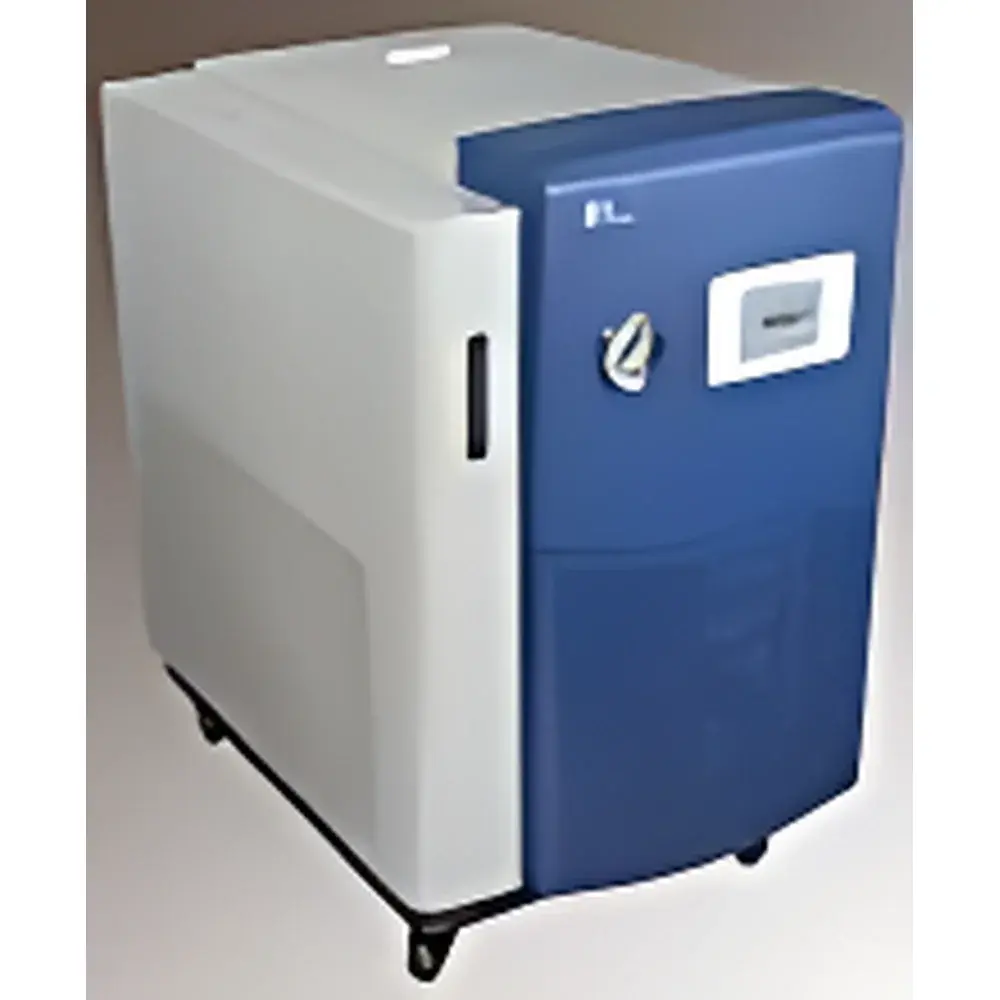
MICHEM MC-2500BP Variable-Frequency Circulating Chiller
| Brand | MICHEM |
|---|---|
| Origin | Beijing, China |
| Model | MC-2500BP |
| Instrument Type | Integrated Circulating Chiller |
| Cooling Method | Water-Cooled |
| Temperature Control Range | 5–35 °C |
| Temperature Stability | ±0.1 °C |
| Refrigeration Capacity | 2500 W |
| Circulation Pump Pressure | 7 bar |
| Circulation Flow Rate | 6 L/min |
| Reservoir Volume | 10 L |
| Operating Mode | Continuous |
Overview
The MICHEM MC-2500BP Variable-Frequency Circulating Chiller is an engineered thermal management solution designed for precision temperature control and stable coolant delivery in demanding laboratory and industrial environments. Based on variable-frequency compressor technology, it dynamically modulates refrigeration output by adjusting compressor speed in real time—enabling proportional power input matching to thermal load requirements. This architecture eliminates the inefficiencies of on/off cycling, reduces mechanical stress, and delivers high reproducibility in temperature maintenance across extended operation periods. The unit operates within a tightly regulated range of 5–35 °C with ±0.1 °C stability (at steady state), making it suitable for applications requiring thermal consistency over hours or days—particularly where heat-sensitive analytical instrumentation must maintain operational integrity without drift-induced measurement error.
Key Features
- Variable-frequency compressor control enables continuous, stepless regulation of refrigeration capacity—optimizing energy use and minimizing thermal overshoot during setpoint transitions.
- Integrated PID-based digital temperature controller with real-time feedback loop ensures rapid stabilization and long-term thermal consistency (±0.1 °C) under varying ambient and load conditions.
- High-pressure circulation pump delivering up to 7 bar pressure and 6 L/min flow rate—compatible with high-resistance cooling circuits, multi-instrument manifolds, and elevated-loop configurations.
- 10-liter stainless steel reservoir with level monitoring and corrosion-resistant internal coating; supports deionized water or inhibited glycol/water mixtures (up to 30% concentration).
- Robust all-in-one chassis with castor-mounted base for lab mobility; vibration-damped mounting for compressors and pumps to suppress structure-borne noise transmission.
- Soft-start compressor activation limits inrush current (<20 s ramp-up), extending component service life and reducing electrical grid impact in shared lab circuits.
- Front-panel LCD interface with intuitive navigation, password-protected parameter access, and configurable alarm thresholds for temperature deviation, low fluid level, and pump failure.
Sample Compatibility & Compliance
The MC-2500BP is compatible with a broad spectrum of heat-generating laboratory instruments—including graphite furnace atomic absorption spectrometers (GFAAS), inductively coupled plasma (ICP-OES/ICP-MS) systems, electron microscopes (SEM/TEM), X-ray diffractometers (XRD), mass spectrometers, FTIR spectrometers, viscometers, rotary evaporators, and laser-based platforms. Its closed-loop design meets ISO 17025-relevant environmental control expectations for calibration laboratories, and its stable thermal output supports GLP-compliant instrument qualification protocols (e.g., IQ/OQ/PQ documentation). While not certified to UL/CE as a standalone medical device, its construction adheres to IEC 61010-1 safety principles for laboratory equipment. Optional external pressure sensors and flow meters may be integrated for audit-ready process monitoring per FDA 21 CFR Part 11 data integrity requirements.
Software & Data Management
The chiller includes RS485 serial communication (Modbus RTU protocol) for integration into centralized lab infrastructure management systems. Optional USB-to-serial adapters enable connection to Windows-based host PCs running third-party SCADA or LIMS software. Logged parameters—including actual temperature, setpoint, pump status, compressor frequency (%), and runtime hours—are timestamped and exportable in CSV format. Firmware supports user-defined logging intervals (1–60 min) and retains up to 30 days of historical data onboard. No proprietary cloud platform is required; raw data files are fully accessible for traceability audits without vendor lock-in.
Applications
- Continuous cooling of high-power plasma sources in ICP-MS systems to prevent torch erosion and signal drift.
- Thermal stabilization of electron optical columns in transmission electron microscopes (TEM), mitigating thermal lensing effects on beam coherence.
- Temperature-controlled condensation in rotary evaporators operating under vacuum, ensuring consistent solvent recovery rates.
- Heat dissipation for RF amplifiers and magnet power supplies in NMR and MRI auxiliary systems.
- Coolant supply to laser diode arrays and fiber-coupled modules in spectroscopic and materials processing setups.
- Support of bioreactor jacket temperature control in upstream bioprocessing development workflows.
FAQ
What is the maximum allowable coolant conductivity for safe operation?
The system is rated for use with deionized water (conductivity ≤5 µS/cm) or aqueous glycol solutions (≤30% v/v ethylene or propylene glycol); higher conductivity fluids may accelerate corrosion and void warranty coverage.
Can the MC-2500BP operate unattended for 72+ hours?
Yes—designed for continuous duty cycles, it includes dry-run protection, overtemperature cutoff, and automatic restart after brief power interruptions (with configurable delay settings).
Is remote monitoring possible without additional hardware?
Basic telemetry (temperature, status, alarms) is available via RS485; Ethernet or Wi-Fi connectivity requires optional gateway modules—not included in standard configuration.
Does the unit support external temperature sensors for process feedback control?
Yes—the controller accepts 2-wire Pt100 inputs; users may configure the system to regulate based on external probe readings rather than internal reservoir temperature.
What maintenance intervals are recommended for optimal longevity?
Compressor oil and refrigerant charge require no scheduled servicing under normal lab conditions; annual inspection of pump seals, filter elements, and electrical connections is advised per ISO 55001 asset management guidelines.



