
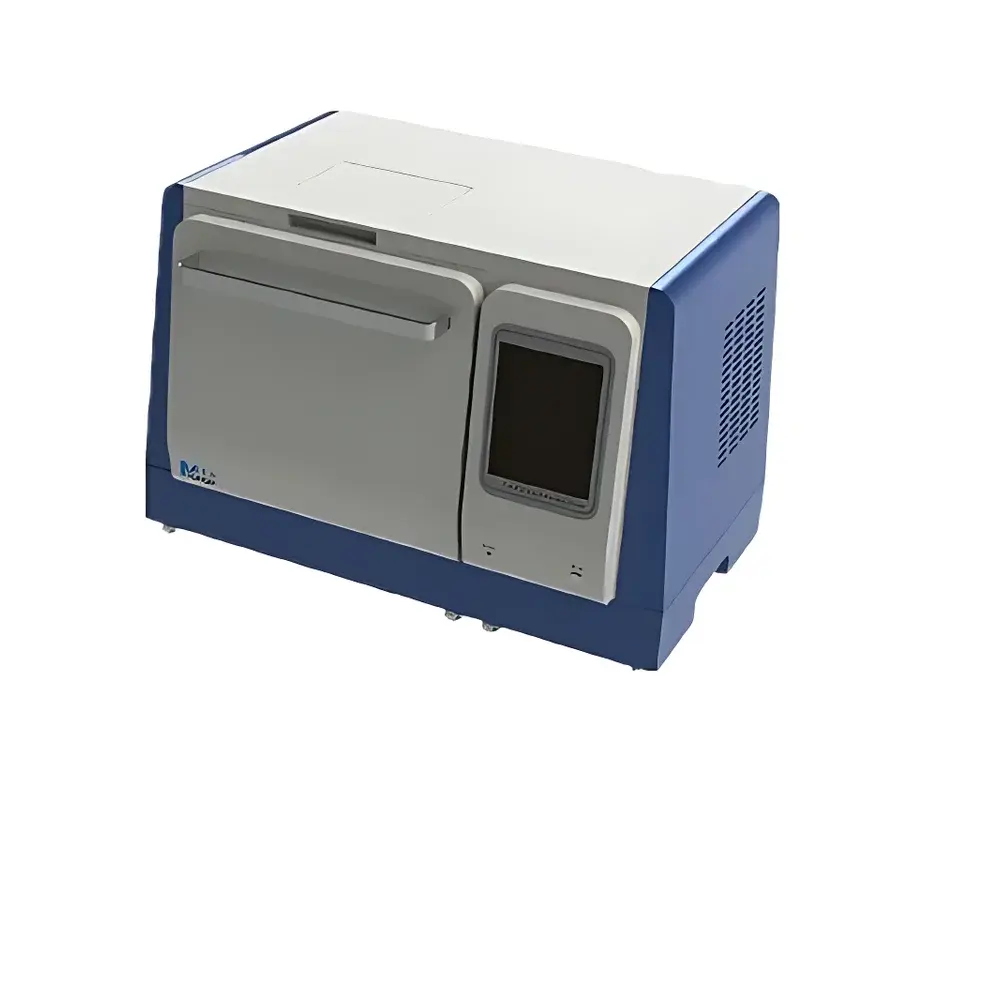
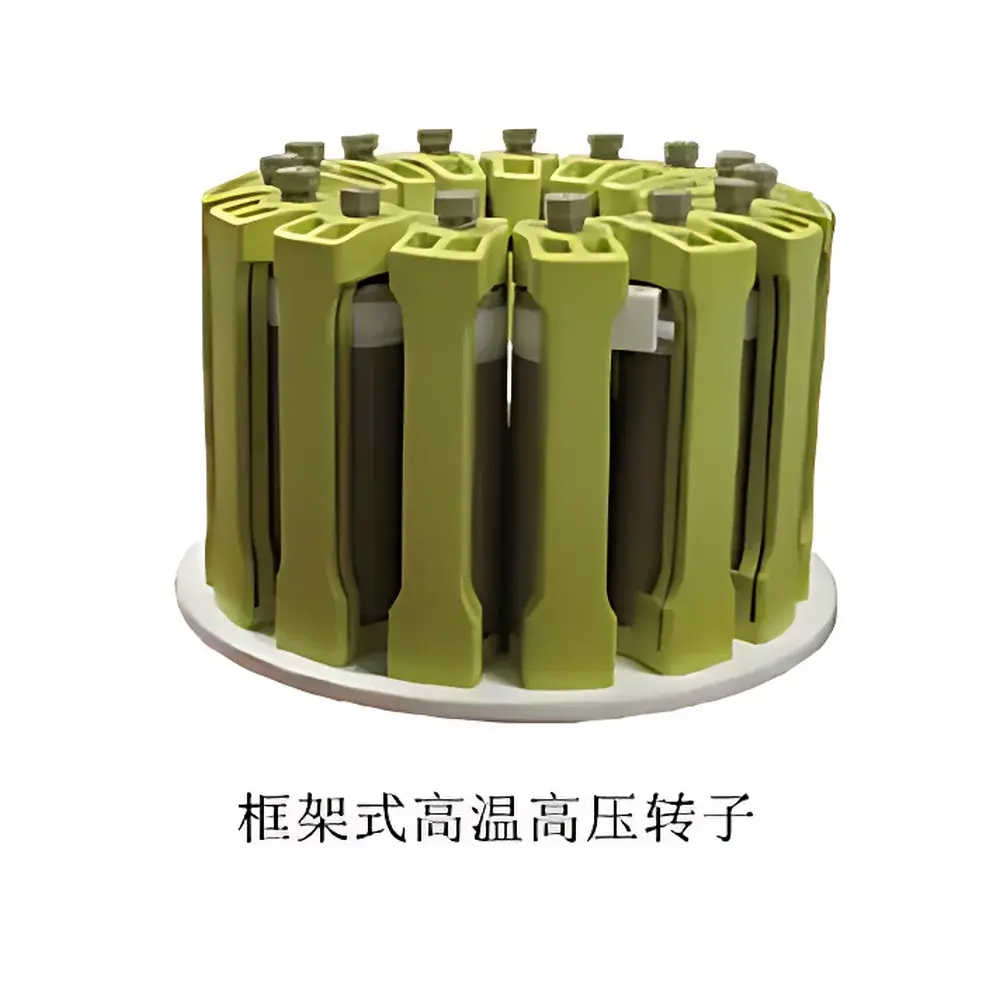
MICHEM Solutions MD Industrial-Grade Microwave Digestion System
| Brand | MICHEM |
|---|---|
| Origin | Beijing, China |
| Model | Solutions MD |
| 炉腔级别 | Industrial-Grade |
| Sample Capacity | 15 vessels/batch |
| Microwave Source | Dual Magnetron |
| Max Temperature | 250 °C |
| Max Pressure | 10 MPa |
| Cavity Volume | 53 L |
| Microwave Output Power | 2400 W |
| Temperature Control Range | 0–300 °C |
| Temp. Accuracy | ±0.5 °C (TA), ±1.0 °C (TC) |
| Pressure Control Range | 0–10 MPa (TA), 0–6 MPa (TC) |
| Pressure Accuracy | ±0.01 MPa |
| Cavity Coating | PFA |
| Outer Vessel Material | PEEK+GF |
| Inner Vessel Material | TFM |
| Safety Leakage | <0.3 mW/cm² |
| Cooling Time | ≤25 min |
| Heating Control | PID with Real-Time Feedback |
| Rotation | 360° Bidirectional Motorized Turntable |
| Operating Systems | TC (Microcontroller-Based) or TA (PC-Integrated) |
Overview
The MICHEM Solutions MD Industrial-Grade Microwave Digestion System is a high-performance, CE-compliant benchtop instrument engineered for rapid, reproducible, and trace-metal-safe sample preparation in analytical laboratories. It operates on the principle of closed-vessel microwave-assisted acid digestion, where controlled electromagnetic energy (2450 MHz) couples directly with polar molecules—primarily HNO₃, HCl, HF, and H₂O—to induce rapid, volumetric heating under sealed conditions. This mechanism enables simultaneous temperature and pressure ramping within chemically inert TFM-lined vessels, achieving complete matrix decomposition while minimizing analyte loss, blank contribution, and reagent consumption. Designed specifically for compatibility with downstream elemental analysis platforms—including ICP-MS, ICP-OES, AAS, and AFS—the Solutions MD meets the stringent throughput and safety requirements of GLP- and ISO/IEC 17025-accredited laboratories.
Key Features
- Industrial-grade 53 L cavity with PFA-coated stainless-steel interior, resistant to concentrated mineral acids (e.g., aqua regia, hydrofluoric acid) and thermal cycling up to 300 °C.
- Dual magnetron configuration (2400 W total output) ensures uniform microwave field distribution across all 15 positions, eliminating hot/cold zones and supporting high-throughput batch processing.
- PID-controlled continuous-wave (non-pulsed) microwave delivery, dynamically modulated via real-time feedback from dual-sensor arrays (fiber-optic temperature + piezoresistive pressure transducers).
- Motorized 360° bidirectional turntable with optical position sensing guarantees homogeneous energy exposure across all vessels—critical for inter-vessel precision in multi-sample runs.
- Patented lateral-sliding door pressure-release mechanism (ZL200420032536), integrated with seven independent hardware-based safety interlocks (including overpressure rupture discs, temperature cutoffs, and door-position sensors).
- Two operational modes: TC (standalone microcontroller interface with preloaded digestion methods) and TA (PC-integrated software platform supporting method archiving, audit trails, and remote monitoring).
Sample Compatibility & Compliance
The Solutions MD accommodates a broad spectrum of solid and semi-solid matrices—including soils, sediments, biological tissues, foodstuffs, polymers, ores, and pharmaceutical excipients—using standardized EPA Methods 3051A, 3052, ASTM D5511, ISO 11466, and USP <231>. All consumables comply with FDA 21 CFR Part 11 requirements when operated in TA mode, enabling electronic signatures, user-level access control, and immutable audit logs. Vessel assemblies (TFM inner liners + PEEK+GF outer shells) are rated for sustained operation at 250 °C and 10 MPa, with safety margins validated per EN 61000-6-3 (EMC) and EN 61000-6-4 (emissions). Microwave leakage remains below 0.3 mW/cm² at 5 cm distance—well within IEC 62233 limits.
Software & Data Management
The TA software suite provides full lifecycle method management: from parameter definition (ramp rate: 1–50 °C/min; hold time: 0–99 min; max pressure setpoint: 0–10 MPa) to automated data export in CSV, XML, or LIMS-compatible formats. Each run generates timestamped metadata including vessel ID, real-time T/P profiles, power modulation history, and cooling-phase kinetics. All changes to method parameters or system settings are recorded with user ID, timestamp, and reason-for-change fields—fully compliant with GLP documentation standards and FDA 21 CFR Part 11 Annex 11 requirements for electronic records integrity.
Applications
This system serves as the primary sample introduction front-end for regulatory and research applications requiring sub-part-per-trillion (ppt) detection sensitivity. Typical use cases include: heavy metal screening in infant formula (EU Commission Directive 2006/141/EC); leachable metals quantification in medical device polymers (ISO 10993-12); rare earth element profiling in battery cathode materials (ASTM D8292); and speciation-ready digestion of seafood samples prior to HPLC-ICP-MS arsenic analysis. Its modular architecture supports method transfer between QC labs and central reference facilities without recalibration.
FAQ
What safety certifications does the Solutions MD hold?
It conforms to IEC 61010-1 (electrical safety), EN 61000-6-3/-6-4 (EMC), and GB 4706.21 (Chinese national microwave safety standard), with third-party verification reports available upon request.
Can the system be integrated into an existing LIMS environment?
Yes—via OPC UA or RESTful API interfaces in TA mode, supporting automated job dispatch, result ingestion, and electronic signature workflows.
Is remote diagnostics supported?
Field service engineers may initiate secure remote sessions using encrypted VNC tunnels, provided network policies permit outbound TLS 1.2 connections.
What is the expected lifetime of TFM vessels under routine use?
Under standard EPA 3052 conditions (HNO₃/HF/H₂O₂, 180 °C, 6 MPa), typical service life exceeds 300 cycles; replacement schedules are tracked automatically in TA software.
Does the instrument support gradient digestion protocols?
Yes—multi-step temperature/pressure ramps with variable hold durations and intermediate cooling phases can be programmed and repeated with <±0.5 °C and <±0.01 MPa repeatability across ≥15 consecutive batches.



