
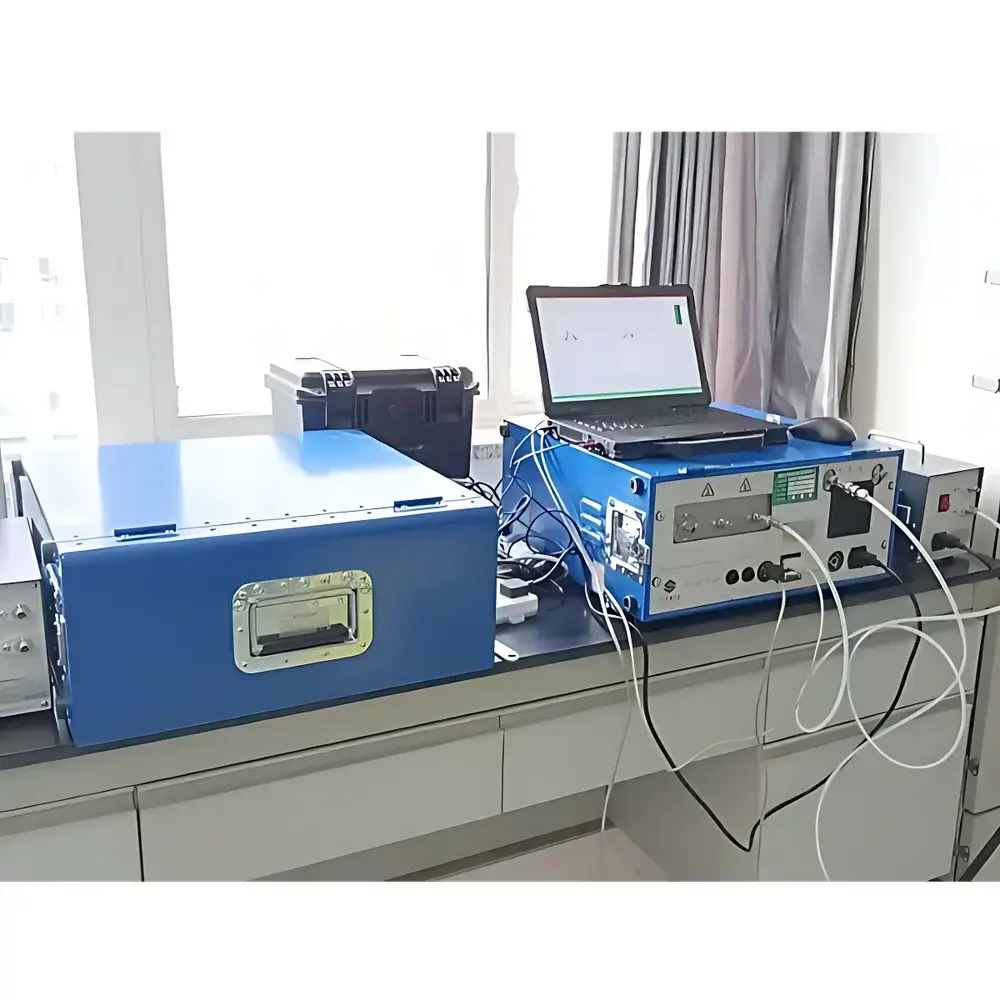
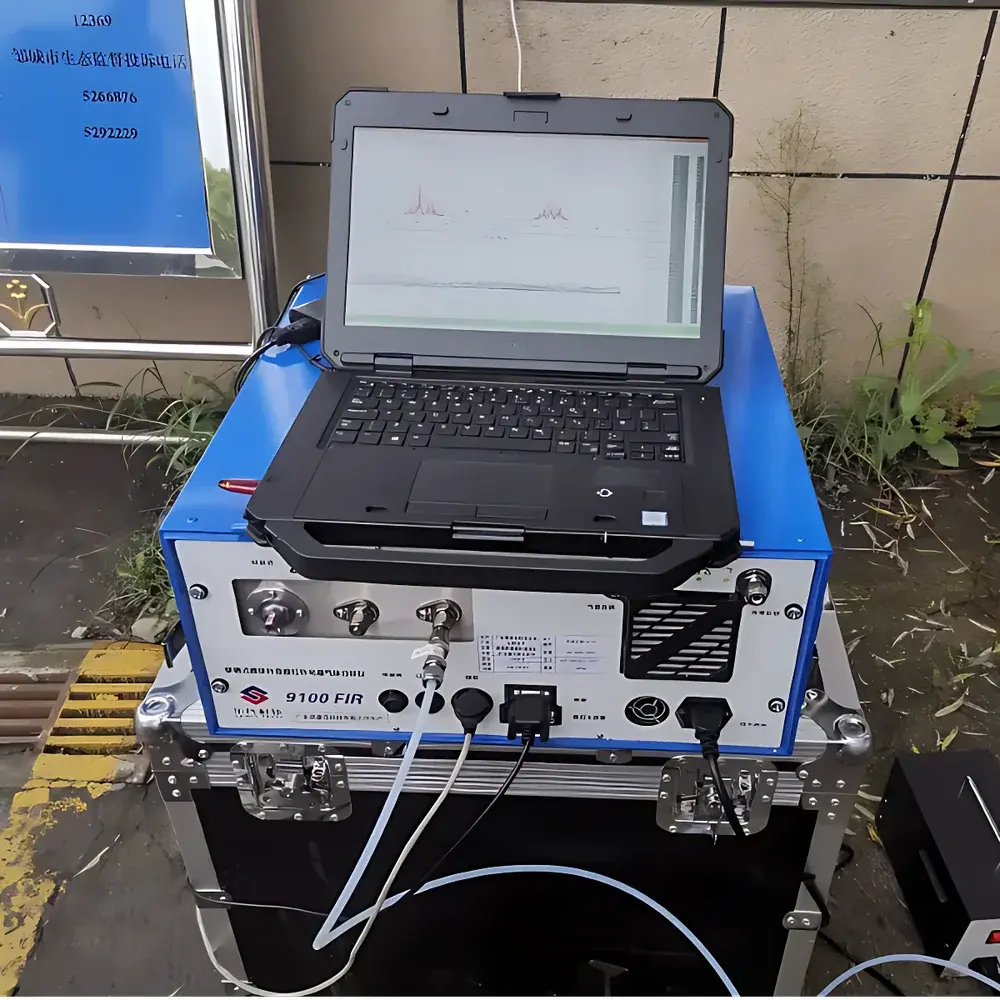
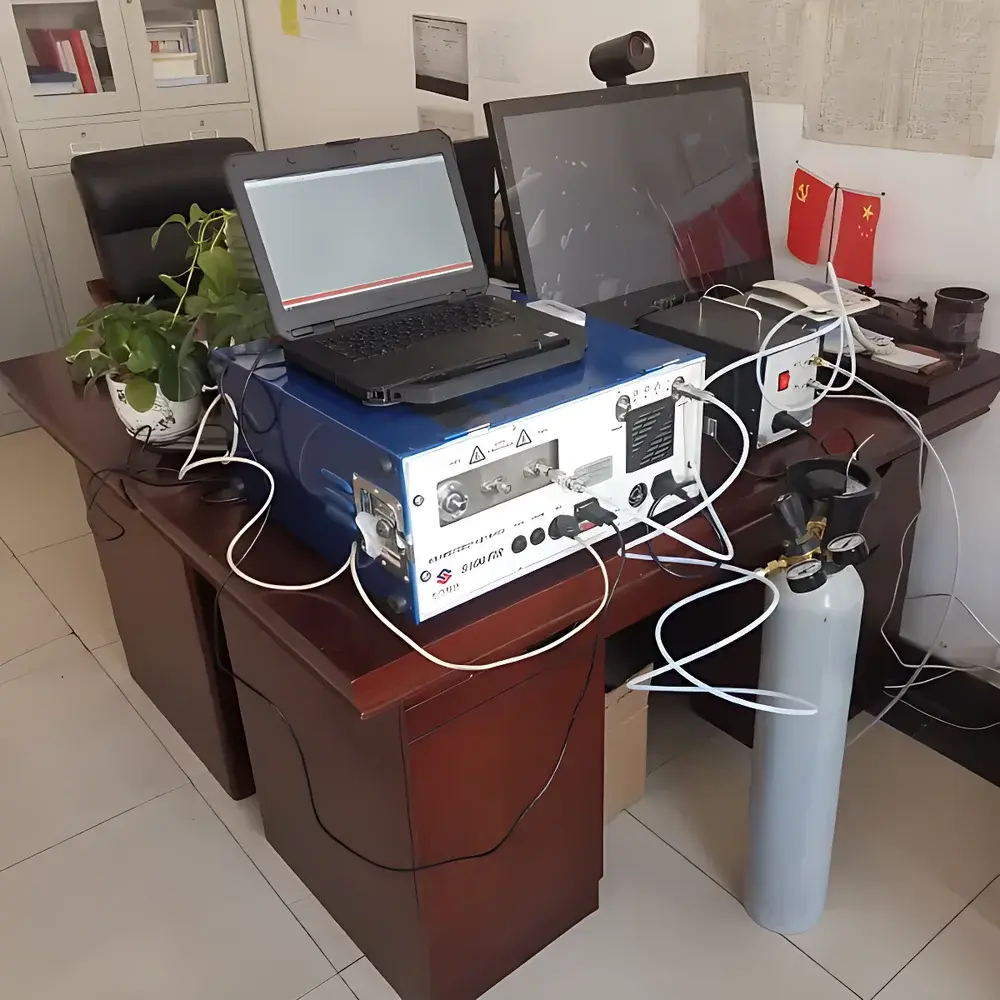
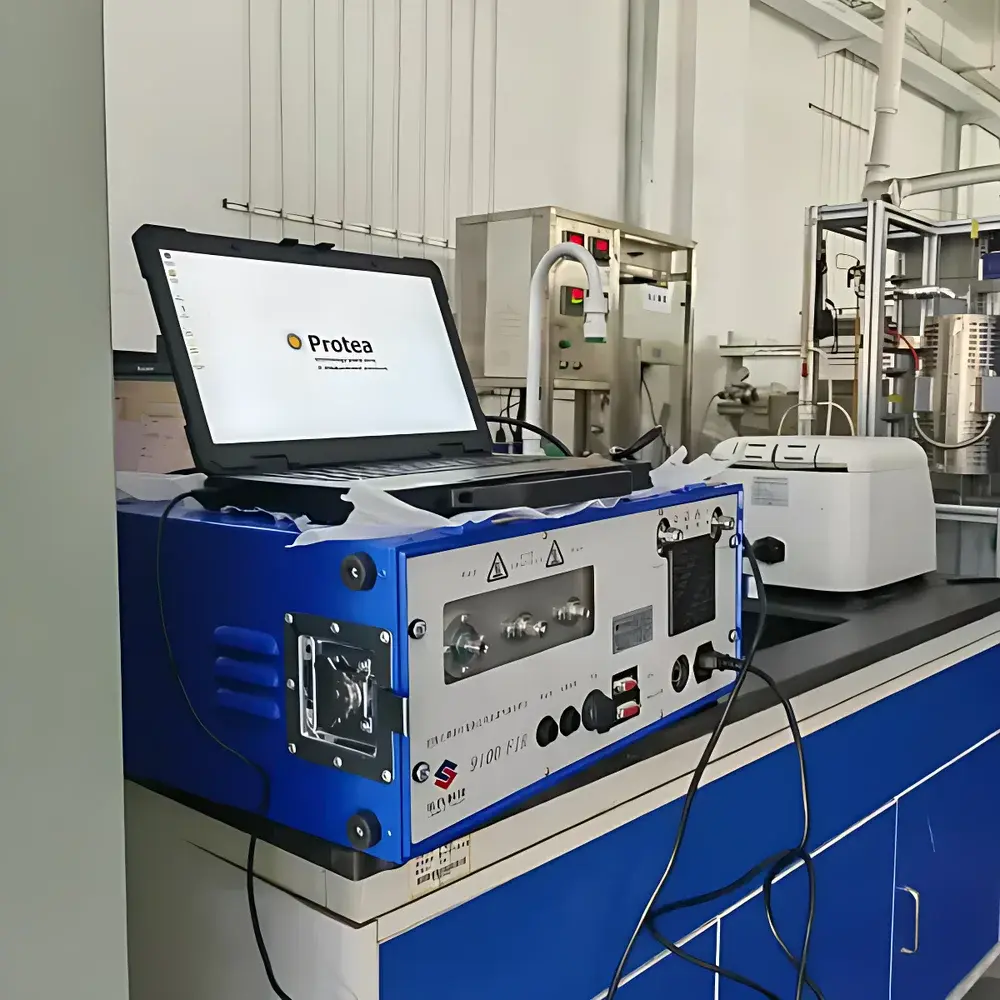
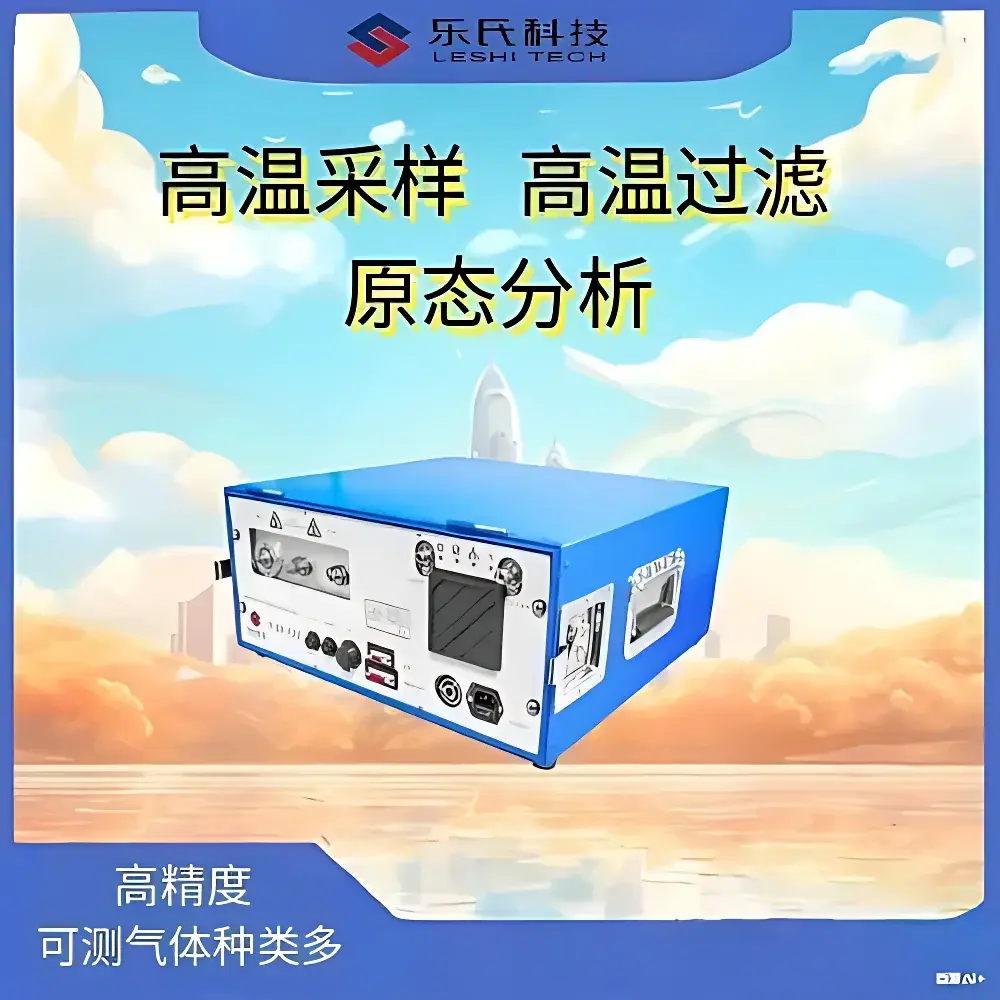
LESHI 9100FIR Portable Fourier Transform Infrared (FTIR) Flue Gas Analyzer
| Brand | LESHI |
|---|---|
| Origin | Beijing, China |
| Manufacturer Type | Authorized Distributor |
| Instrument Type | Portable FTIR Flue Gas Analyzer |
| Price | USD 155,000 (approx.) |
| Measurement Accuracy | ≤ ±2% FS |
| Repeatability | ≤ 1% RSD |
| Response Time | 1 scan/sec (adjustable based on resolution) |
| Baseline Stability | ≤ ±2% over 24 h |
| Quantitative Capability | ≥51 gases (simultaneous) |
| Qualitative Capability | ≥380 compounds (library-matched) |
| Spectral Resolution | 0.7–8 cm⁻¹ (software-selectable, unapodized) |
| Operating Sample Temperature | Up to 180 °C (hot-wet sampling) |
| Particle Filtration | <2 µm (dual-stage heated filter) |
| Detector | Room-temperature DTGS |
| Reference Source | VCSEL laser (10-year lifetime) |
| O₂ Sensor | Integrated zirconia sensor |
| Data Output | Real-time spectral + concentration + metadata (T, P, O₂, resolution) |
| Compliance | HJ 919–2017, HJ 920–2017, HJ 1011–2018, HJ 1240–2021, HJ 1330–2023 |
| Software Standards Support | ASTM D6348, US EPA Method 320, ISO 14912, UK EA TGN 15 |
Overview
The LESHI 9100FIR is a field-deployable, high-fidelity Fourier Transform Infrared (FTIR) flue gas analyzer engineered for simultaneous, real-time qualitative and quantitative analysis of complex gas mixtures under hot-wet conditions. It operates on the principle of interferometric infrared spectroscopy: a broadband IR beam passes through a multipass gas cell, where molecular absorption features are encoded as interferograms; these are Fourier-transformed into high-resolution spectra (0.7–8 cm⁻¹, unapodized), enabling robust identification and quantification via multivariate chemometric modeling. Unlike electrochemical or single-band NDIR analyzers, the 9100FIR captures full mid-IR spectral fingerprints (typically 600–4000 cm⁻¹), eliminating cross-sensitivity artifacts through spectral deconvolution. Its design targets regulatory-grade monitoring of fixed emission sources (e.g., stack outlets, CEMS validation), emergency environmental response, and process R&D—particularly where thermally labile, polar, or isomeric VOCs and inorganic acids (e.g., HCl, HF, NH₃, HCN) coexist at elevated temperatures and humidity.
Key Features
- Hot-wet, in-situ sampling architecture: Heated probe, 180 °C thermostatically controlled sampling line, and integrated high-temperature gas cell enable direct analysis of undiluted, moisture-rich streams without condensation-induced loss or artifact formation.
- High-flexibility spectral resolution: User-selectable resolution (0.7, 1, 2, 4, or 8 cm⁻¹) via software—no hardware modification required—optimizing signal-to-noise ratio for trace-level detection or rapid screening.
- Robust optical subsystem: Vertical-cavity surface-emitting laser (VCSEL) reference source ensures long-term interferometer stability (drift <0.005 cm⁻¹/year); room-temperature DTGS detector eliminates cryogen dependency while maintaining wide dynamic range and linearity.
- Contamination-resistant flow path: Dual-stage heated particulate filtration (<2 µm), automated reverse-purge nitrogen interface for sample cell cleaning, and dedicated internal optical-path nitrogen purge maintain optical throughput and calibration integrity in dusty or corrosive environments.
- Integrated multi-parameter sensing: Onboard zirconia-based O₂ sensor provides concurrent oxygen measurement for stoichiometric correction and dilution calculation per regulatory protocols (e.g., HJ 1240–2021).
- Intelligent auto-ranging: Multi-segment concentration ranges (ppb to % v/v) switch automatically during acquisition, ensuring optimal digitization across orders of magnitude without manual intervention.
Sample Compatibility & Compliance
The 9100FIR is validated for direct analysis of hot, humid, particulate-laden flue gases from coal-fired boilers, waste incinerators, cement kilns, catalytic cracking units, and marine engine exhausts. Its heated sampling train accommodates dew points up to 120 °C and total suspended solids ≤10 mg/m³. The instrument complies with Chinese national standards HJ 919–2017 (ambient VOCs), HJ 920–2017 (emergency inorganic gases), HJ 1011–2018 (VOC speciation), HJ 1240–2021 (fixed-source gaseous pollutants), and HJ 1330–2023 (NH₃/HCl). Chemometric models adhere to ASTM D6348 (FTIR for stack testing), US EPA Method 320 (multi-component IR), and ISO 14912 (gas analysis—calibration principles). All spectral acquisitions embed metadata (temperature, pressure, O₂, resolution, scan count) to support GLP/GMP audit trails and 21 CFR Part 11-compliant data integrity.
Software & Data Management
The proprietary analysis suite implements Partial Least Squares (PLS) and Classical Least Squares (CLS) algorithms for library matching, interference correction, and concentration prediction. It supports offline reprocessing of stored interferograms with updated libraries or custom models—critical for emerging contaminants or site-specific interferences. Real-time display includes overlaid absorbance spectra, time-resolved concentration plots, and instrument status dashboards (laser power, detector voltage, purge flow, temperature gradients). Data export is native to CSV and Excel-compatible formats; spectral libraries require no local storage—only compound identifiers and calibration coefficients are retained. Automated reporting modules compute method-defined parameters: drift correction, limit of detection (LDL), residual error, and compliance flags per HJ or EPA criteria. All raw and processed data include immutable timestamps, operator ID, and system configuration logs.
Applications
- Regulatory stack testing and CEMS performance verification per HJ 1240–2021 and EU EN 15267.
- Real-time monitoring of SCR/SNCR ammonia slip, DeNOx catalyst efficiency, and desulfurization byproduct formation (e.g., NH₄HSO₄).
- Emergency response to chemical spills or industrial accidents—rapid identification of toxic VOCs (e.g., benzene, formaldehyde, acrolein) and acid gases (HF, HCN) in ambient air.
- Process optimization in petrochemical, pharmaceutical, and semiconductor manufacturing—tracking reaction intermediates, purge gas purity, and solvent recovery efficiency.
- Research on thermal decomposition pathways, combustion kinetics, and heterogeneous catalysis—enabled by high-resolution spectral capture and kinetic time-series analysis.
- Occupational health assessments in confined spaces or fenceline monitoring—measuring workplace exposure limits (OELs) for regulated compounds including ethylene oxide, vinyl chloride, and hydrogen sulfide.
FAQ
What gases can the 9100FIR quantify simultaneously?
It delivers calibrated concentrations for ≥51 target gases—including SO₂, NO, NO₂, CO, CO₂, NH₃, HCl, HF, HCN, H₂O, N₂O, CH₄, C₂H₆, C₃H₈, C₂H₄, HCHO, C₆H₆, C₇H₈, C₈H₈, C₈H₁₀, and C₂H₂—using pre-validated, matrix-matched calibration models.
How does it handle water vapor interference in hot-wet sampling?
The instrument applies spectral water subtraction using high-fidelity H₂O reference spectra and adaptive baseline correction algorithms; its 180 °C gas path prevents condensation, preserving spectral fidelity of co-eluting analytes.
Is the 9100FIR suitable for unattended, long-term monitoring?
Yes—it supports scheduled autonomous operation (1 sec–3 min scan intervals), onboard data logging (≥32 GB), battery-powered deployment (8 h typical), and remote diagnostics via Ethernet/WiFi; continuous 24-h stability meets HJ 1240–2021 drift requirements.
Can new compounds be added to the analysis library post-purchase?
Yes—users may import custom reference spectra (in JCAMP-DX format), build PLS/CLS models offline, and deploy them directly to the instrument without firmware updates.
What maintenance is required beyond routine nitrogen purging?
Annual verification of laser alignment and detector responsivity is recommended; the VCSEL source and DTGS detector require no periodic replacement within 10 years under normal operation per manufacturer specifications.







