
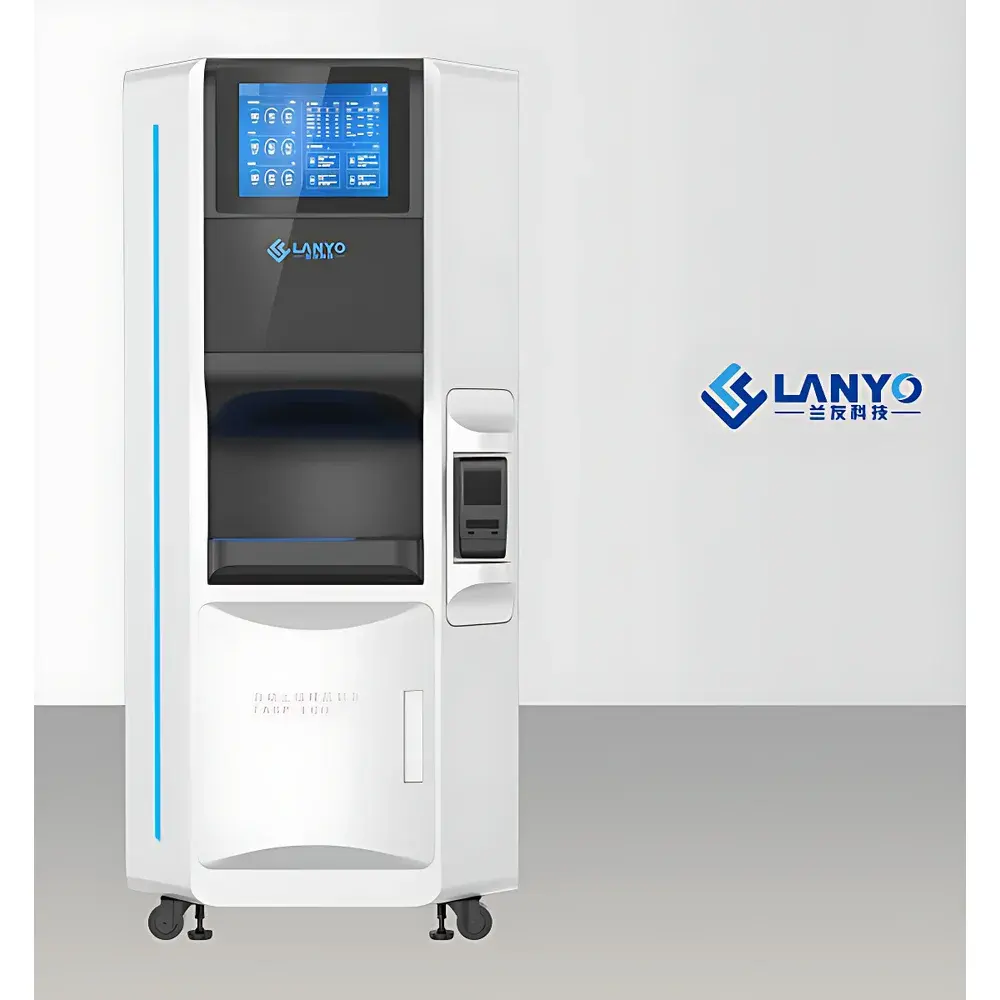
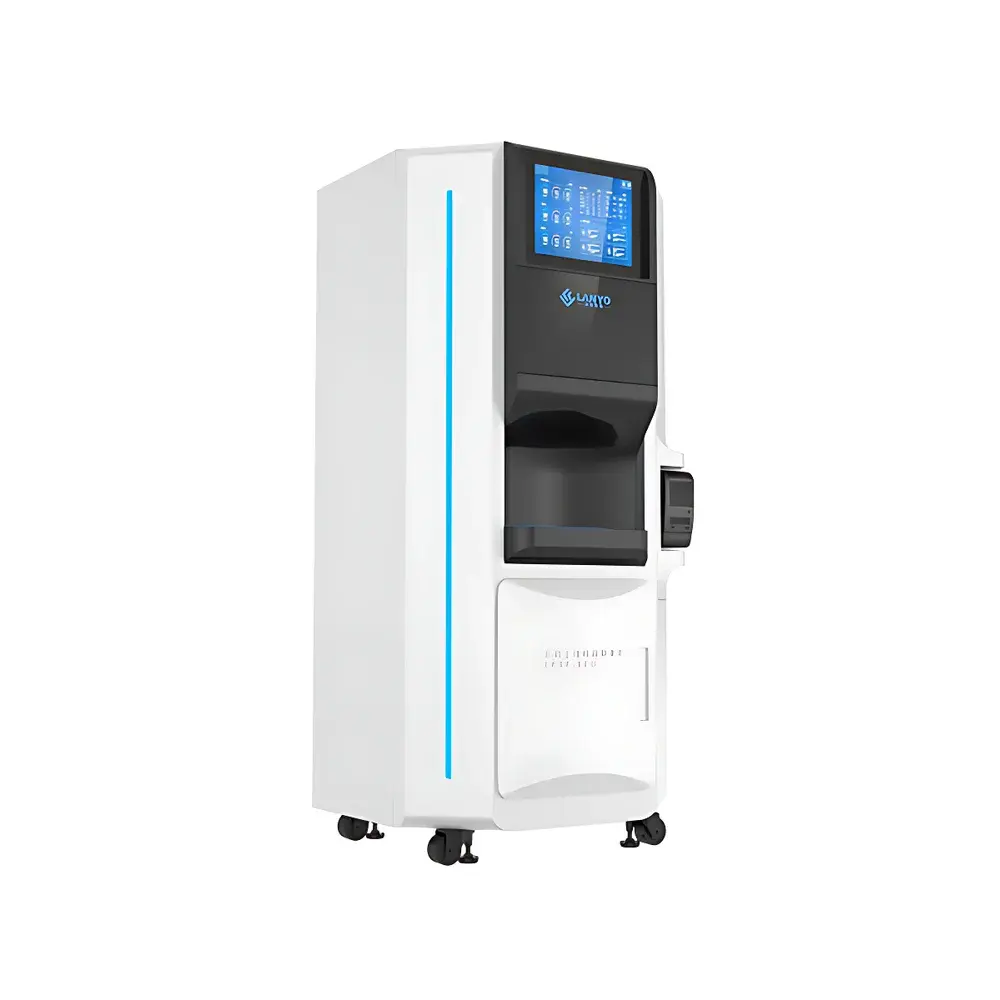
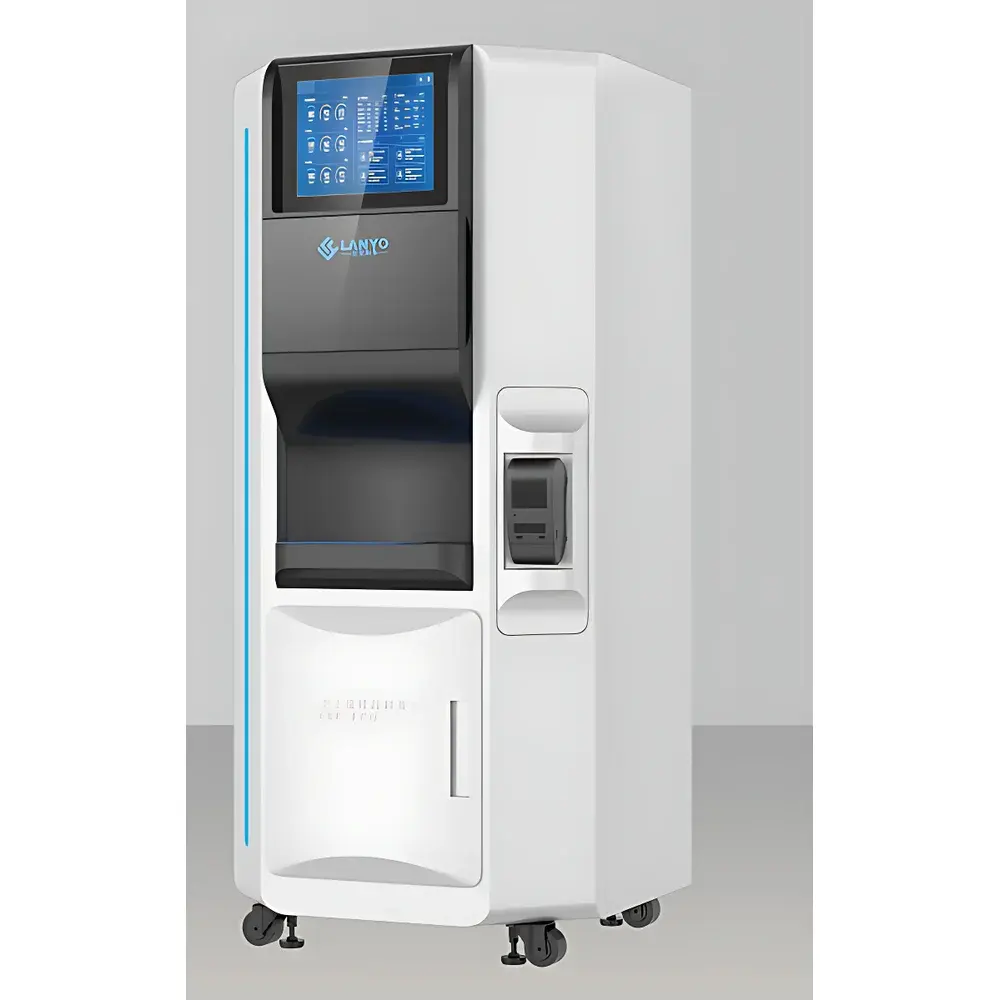
FASP-ECO Automatic Soil Coarse Grinding and Sample Preparation System
| Origin | Beijing |
|---|---|
| Manufacturer Type | Authorized Distributor |
| Origin Category | Domestic (China) |
| Model | FASP-ECO |
| Pricing | Available Upon Request |
Overview
The FASP-ECO Automatic Soil Coarse Grinding and Sample Preparation System is an engineered solution for standardized, high-throughput coarse grinding of air-dried soil samples in compliance with national environmental and agricultural monitoring protocols. Designed specifically to meet the mechanical preparation requirements outlined in HJ/T 166–2004 (Technical Specification for Soil Environmental Monitoring), NY/T 1121.1–2006 (Soil Testing – Part 1: Sampling, Processing and Storage of Soil Samples), and China’s Ministry of Ecology and Environment Circular No. 407 (2018) on soil sample preparation, transfer, and preservation, the system executes full-process coarse grinding—without sample discard—to achieve consistent 10-mesh or 20-mesh particle size distributions. Unlike manual mortar-and-pestle or rotary mill approaches, the FASP-ECO employs a non-contact, two-stage grinding architecture based on controlled impact and shear forces within inert polymer-lined chambers, eliminating metal-induced contamination and ensuring analytical integrity for elemental analysis workflows.
Key Features
- Single-inlet, fully automated coarse grinding and sieving for 10-mesh (2.0 mm) or 20-mesh (0.85 mm) target fractions per regulatory specifications
- Non-metallic material pathway: All sample-contact surfaces constructed from food-grade polymer composites resistant to abrasion and chemical leaching, preventing exogenous elemental contamination
- Two-stage grinding mode: Primary coarse fragmentation followed by regulated secondary sizing—prevents over-grinding and maintains representative particle-size distribution
- Integrated auto-cleaning cycle using compressed air and vacuum aspiration between runs, minimizing carryover and cross-contamination risk
- Digital process logging: Timestamped records of inlet weight, grinding duration, sieve retention time, final mass, and operator ID—fully compliant with GLP documentation standards
- Automated sub-sampling, gravimetric weighing (±0.01 g resolution), and pre-labeled vial loading—all executed within a sealed, dust-controlled enclosure
Sample Compatibility & Compliance
The FASP-ECO accepts air-dried, homogenized soil specimens with moisture content ≤15% w/w and maximum particle diameter ≤25 mm. It is validated for use with mineral soils, agricultural topsoils, sediment-affected matrices, and low-organic-content geological samples. The system conforms to methodological requirements in HJ/T 166–2004, NY/T 395–2012 (Farmland Soil Environmental Quality Monitoring), DZ/T 0130.4–2006 (Geological Laboratory Quality Management), HJ/T 20–1998 (Industrial Solid Waste Sampling and Sample Preparation), EJ 428–1989 (Environmental Radiological Monitoring), and LYT 1210–1999 (Forest Soil Sampling and Preparation). Its operation supports ISO/IEC 17025-accredited laboratories by enabling auditable, repeatable sample conditioning prior to digestion and ICP-OES/ICP-MS analysis.
Software & Data Management
The embedded control software provides real-time status visualization, programmable method templates (e.g., “HJ/T 166 20-mesh protocol”), and secure user authentication (role-based access control). All operational parameters—including ambient temperature, humidity, grinding energy input, sieve dwell time, and final mass—are stored locally in encrypted binary logs with SHA-256 hash verification. Exportable CSV and PDF reports include digital signatures, audit trail timestamps, and calibration certificate references. Optional integration with LIMS platforms via ASTM E1578-compliant API enables seamless traceability from raw field sample to analytical result—supporting FDA 21 CFR Part 11 electronic record requirements where applicable.
Applications
- National soil environmental monitoring programs requiring batch-wise, regulation-compliant coarse grinding
- Agricultural land surveys and detailed soil mapping projects under the National Soil Census framework
- Third-party environmental testing laboratories performing heavy metal, nutrient, and trace element profiling
- Site-specific risk assessment and brownfield characterization where representative bulk-phase particle size is critical
- Research institutions conducting soil geochemistry, bioavailability studies, and long-term stability trials
- Geological survey units preparing reference materials and inter-laboratory comparison samples
FAQ
Does the FASP-ECO require external ventilation or fume hood installation?
No—the system features an integrated HEPA-filtered recirculation unit and sealed grinding chamber, enabling safe benchtop operation without ducted exhaust.
Can it process wet or frozen soil samples?
No—it is designed exclusively for air-dried samples meeting the ≤15% moisture threshold specified in NY/T 1121.1–2006; pre-drying must be performed externally using standardized ovens or desiccators.
Is routine calibration required for grinding consistency?
Yes—gravimetric verification of output mesh fraction is recommended before each analytical batch using NIST-traceable sieve sets; system performance logs support trending and preventive maintenance scheduling.
What data security measures are implemented in the software?
All user actions generate immutable audit trails with cryptographic hashing; local storage uses AES-256 encryption, and remote access requires TLS 1.2+ and multi-factor authentication.
How is compliance with ISO/IEC 17025 demonstrated?
The system includes a validation package documenting installation qualification (IQ), operational qualification (OQ), and performance qualification (PQ) test scripts aligned with CNAS-CL01:2018 requirements.




