
Zhuochi AOX-WK Microcoulometric Analyzer for Adsorbable Organic Halides (AOX) Testing per GB/T 34845-2017
| Brand | Zhuochi |
|---|---|
| Model | AOX-WK |
| Standard Compliance | GB/T 34845-2017 |
| Measurement Principle | Microcoulometric Titration after High-Temperature Combustion |
| Detection Target | Adsorbable Organic Halides (AOX), expressed as Cl⁻ |
| Carbon Range | 0.2–5000 mg/L |
| Chlorine Range | 0.5–5000 mg/L |
| Nitrogen Range | 0.5–5000 mg/L |
| Combustion Temperature | 500–1000 °C (±1% ±5 °C) |
| Generator Current | ±2 mA |
| Amplifier Output Voltage | ±30 V |
| Bias Voltage Range | 0–500 mV (continuously adjustable) |
| Repeatability | ≤50% (at <1.0 mg/L), ≤10% (1.0–10 mg/L), ≤5% (>10 mg/L) |
| Power Supply | AC 220 V ±10%, 50 Hz ±0.5 Hz |
| Rated Power | 3000 W |
| Origin | Zhejiang, China |
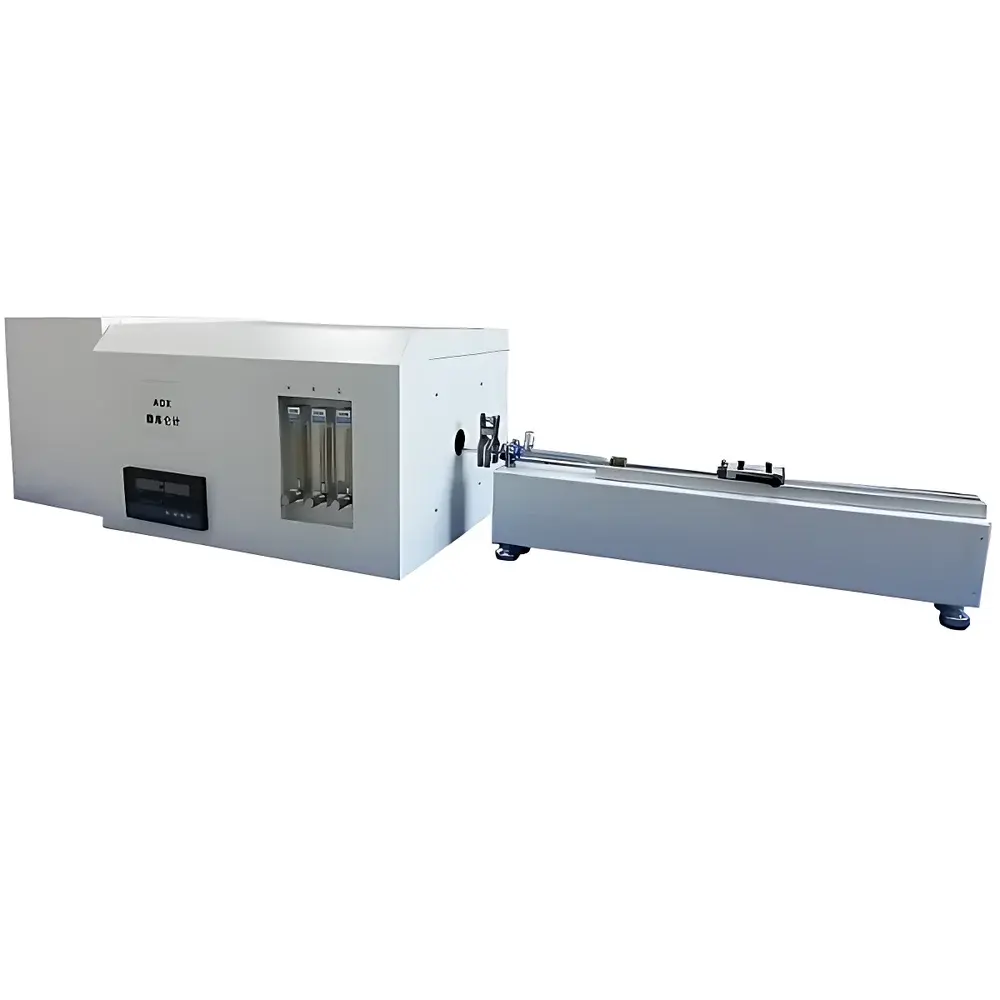
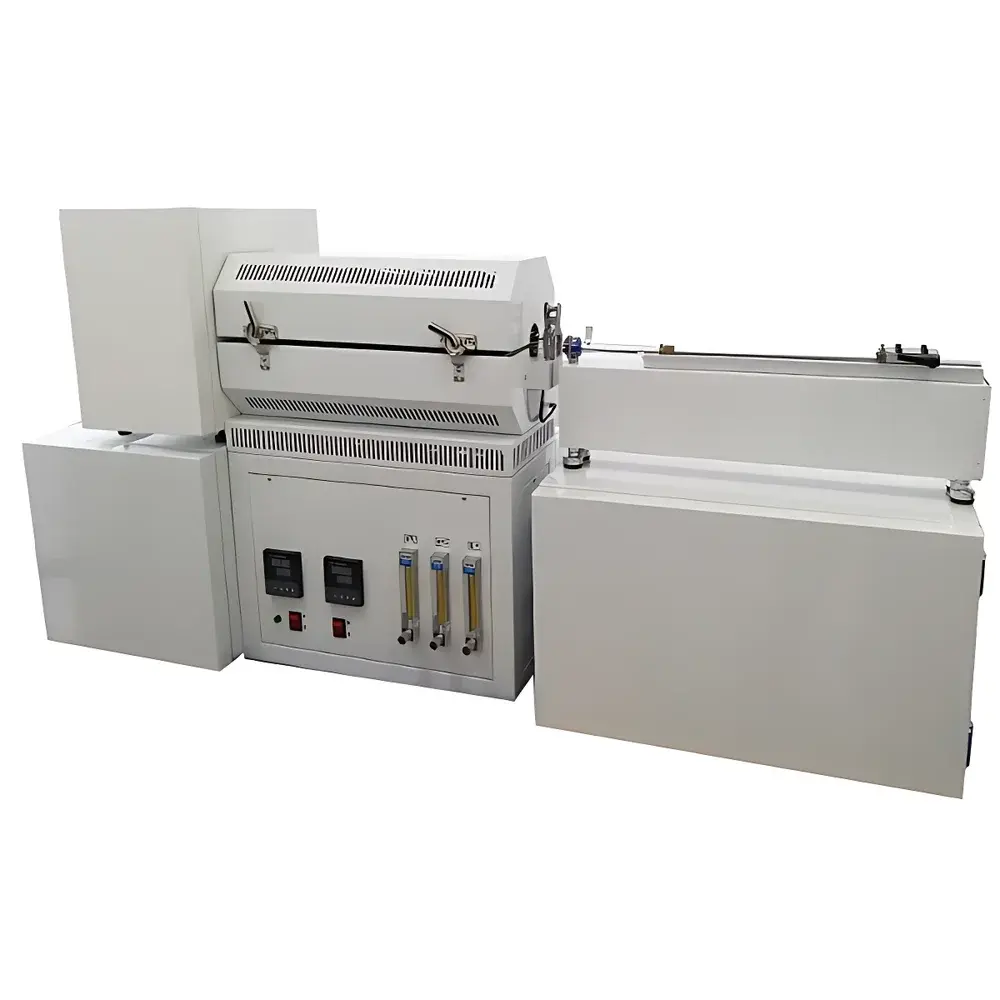
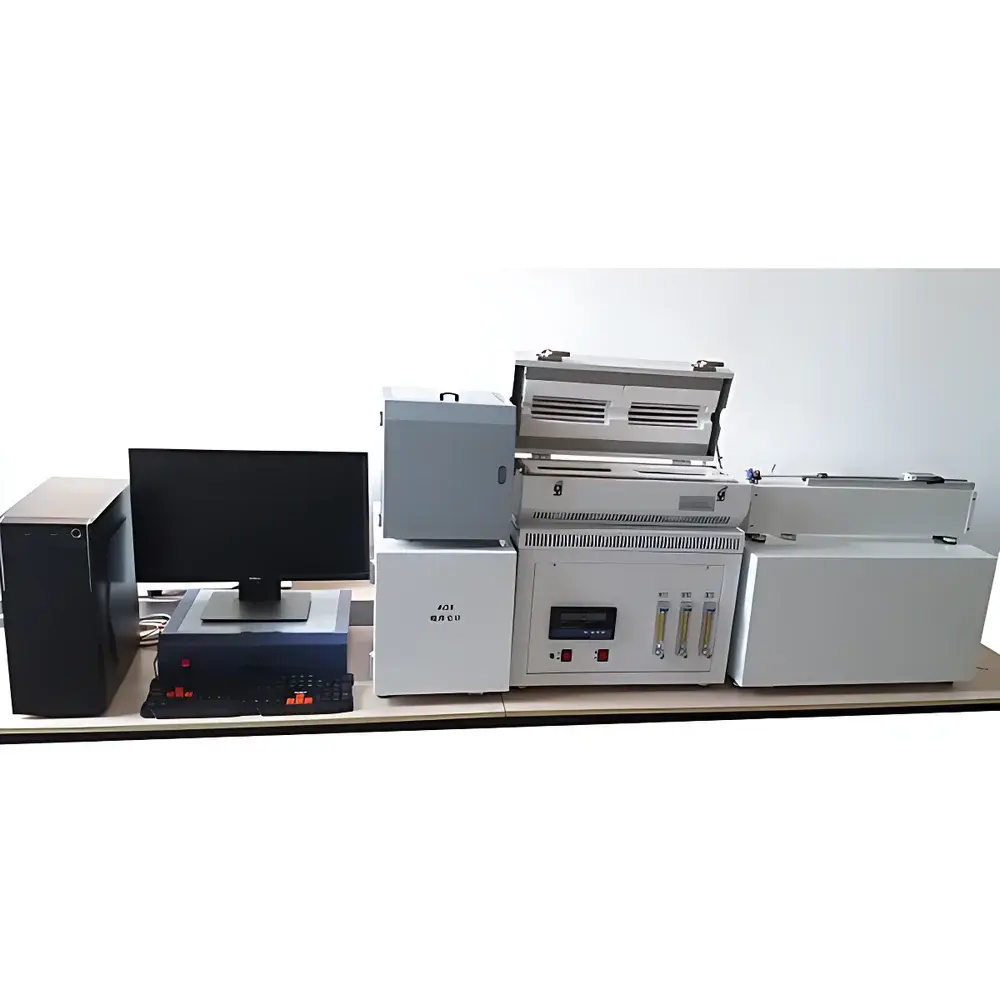
| Configuration | Host unit, high-temperature combustion furnace, autosampler (optional), quartz pyrolysis tube, titration cell, magnetic stirrer, RS-232 interface for PC connection |
Overview
The Zhuochi AOX-WK Microcoulometric Analyzer is a dedicated instrumental system designed for the quantitative determination of Adsorbable Organic Halides (AOX) in aqueous environmental samples—including wastewater, surface water, and process effluents from pulp and paper, textile, pharmaceutical, and chemical manufacturing facilities. It operates in strict accordance with the Chinese national standard GB/T 34845-2017, which specifies the microcoulometric method for AOX analysis following adsorption on activated carbon, acidification, and high-temperature pyrolysis (900–950 °C). The instrument employs controlled-combustion microcoulometry: halogenated organic compounds are thermally decomposed in an oxygen-rich quartz furnace, converting all organically bound halogens (Cl, Br, I) into hydrogen halides (HX), which are subsequently absorbed in an electrolyte solution and quantified via coulometric titration using silver ions (Ag⁺). This principle ensures trace-level sensitivity, matrix tolerance, and compliance with internationally recognized analytical frameworks—including ISO 9562 (water quality — determination of adsorbable organic halogens (AOX)) and EPA Method 1650 (for AOX in wastewater).
Key Features
- Integrated high-temperature combustion furnace with precise temperature control (500–1000 °C, accuracy ±1% ±5 °C), enabling complete mineralization of refractory halogenated compounds.
- Dual-range microcoulometric detection circuitry with generator current up to ±2 mA and amplifier output voltage up to ±30 V, optimized for low-concentration AOX quantification (detection limit ~0.2 mg/L as Cl).
- Adjustable bias voltage (0–500 mV, continuously variable) to fine-tune electrochemical response stability across diverse sample matrices.
- Real-time parameter monitoring and result visualization via Windows-based software interface—displaying combustion status, titration curve, integrated charge, and calculated AOX concentration.
- RS-232 serial interface for seamless integration with external PCs (user-supplied); supports data export in CSV and TXT formats for LIMS compatibility.
- Modular hardware architecture including quartz pyrolysis tube, dual-compartment titration cell, magnetic stirrer, and gas flow regulation system—designed for long-term operational robustness and minimal carryover.
Sample Compatibility & Compliance
The AOX-WK analyzer accommodates liquid samples within pH 2–12 and turbidity ≤100 NTU, provided they undergo pretreatment per GB/T 34845-2017: adsorption on activated carbon, filtration, and acid desorption. It supports batch analysis of up to 20 samples per run when paired with optional autosampling. Instrument validation meets requirements for routine environmental testing laboratories operating under GLP conditions. While GB/T 34845-2017 is its primary regulatory anchor, the system’s measurement traceability, repeatability performance (≤5% RSD above 10 mg/L), and documented uncertainty budget align with ISO/IEC 17025:2017 clause 7.7 (uncertainty of measurement) and support audit readiness for domestic environmental monitoring accreditation (CMA) or third-party verification. Note: For regulatory submissions to EU or North American authorities, supplementary method validation per ISO 9562 or ASTM D5908 may be required.
Software & Data Management
The embedded Windows application provides full instrument control, real-time electrochemical signal acquisition, and automated peak integration. All method parameters—including combustion temperature ramp profile, bias voltage setpoint, titration gain, and integration time window—are user-configurable and saved as named methods. Each analysis generates a timestamped record containing raw current vs. time data, calibration coefficients, sample ID, operator ID, and final AOX concentration (mg/L as Cl). Data files are stored locally with optional password-protected access; audit trail functionality logs all method edits, calibration events, and result modifications—supporting basic 21 CFR Part 11 readiness when deployed on validated, domain-controlled workstations. Exported datasets retain metadata headers for traceability in laboratory information management systems (LIMS) or statistical process control (SPC) platforms.
Applications
- Regulatory compliance testing of industrial wastewater discharges for AOX under China’s “Emission Standards of Pollutants for Pulp and Paper Industry” (GB 3544).
- Monitoring AOX formation during chlorine-based bleaching processes in pulp mills and evaluating alternative oxidation strategies.
- Environmental impact assessment of landfill leachate, hospital effluents, and pesticide formulation runoff.
- Method development and validation studies in accredited environmental testing laboratories seeking alignment with ISO 9562 or OECD TG 305.
- Research on halogenated disinfection byproduct (DBP) formation kinetics in drinking water treatment simulations.
FAQ
What sample volume is required for a single AOX determination?
Typical sample volume is 100–500 mL, depending on expected AOX concentration and adsorption efficiency—per GB/T 34845-2017 Section 7.2.
Is the instrument compatible with US EPA Method 1650?
While the AOX-WK implements the same fundamental microcoulometric principle, formal EPA 1650 compliance requires additional validation steps—including spike recovery testing in representative matrices and demonstration of MDL ≤0.5 µg/L. The system can be adapted for this purpose with documented SOPs.
Does the system include automatic calibration functionality?
Yes—the software supports multi-point calibration using potassium hydrogen phthalate (for carbon) and sodium chloride (for chlorine) standards; calibration curves are stored and applied automatically during sample runs.
Can the furnace accommodate solid or slurry samples?
No. The AOX-WK is configured exclusively for aqueous-phase analysis. Solid samples must first be subjected to Soxhlet extraction or ultrasonic-assisted leaching into water prior to adsorption and analysis.
What maintenance intervals are recommended for the titration cell and pyrolysis tube?
Quartz pyrolysis tubes should be inspected after every 100 analyses and replaced if discoloration or cracking is observed; titration cells require electrolyte replacement every 5–10 days under continuous use and cleaning with dilute nitric acid weekly.
Related Products







