
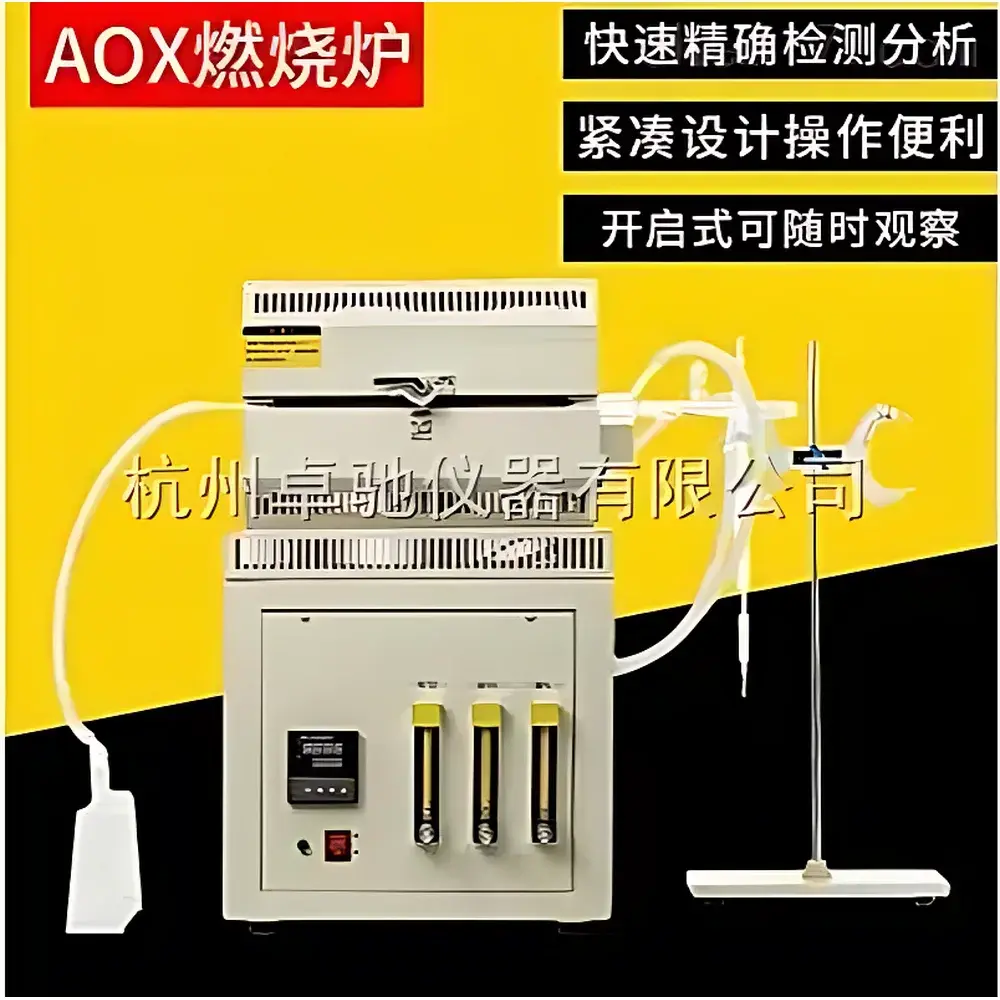
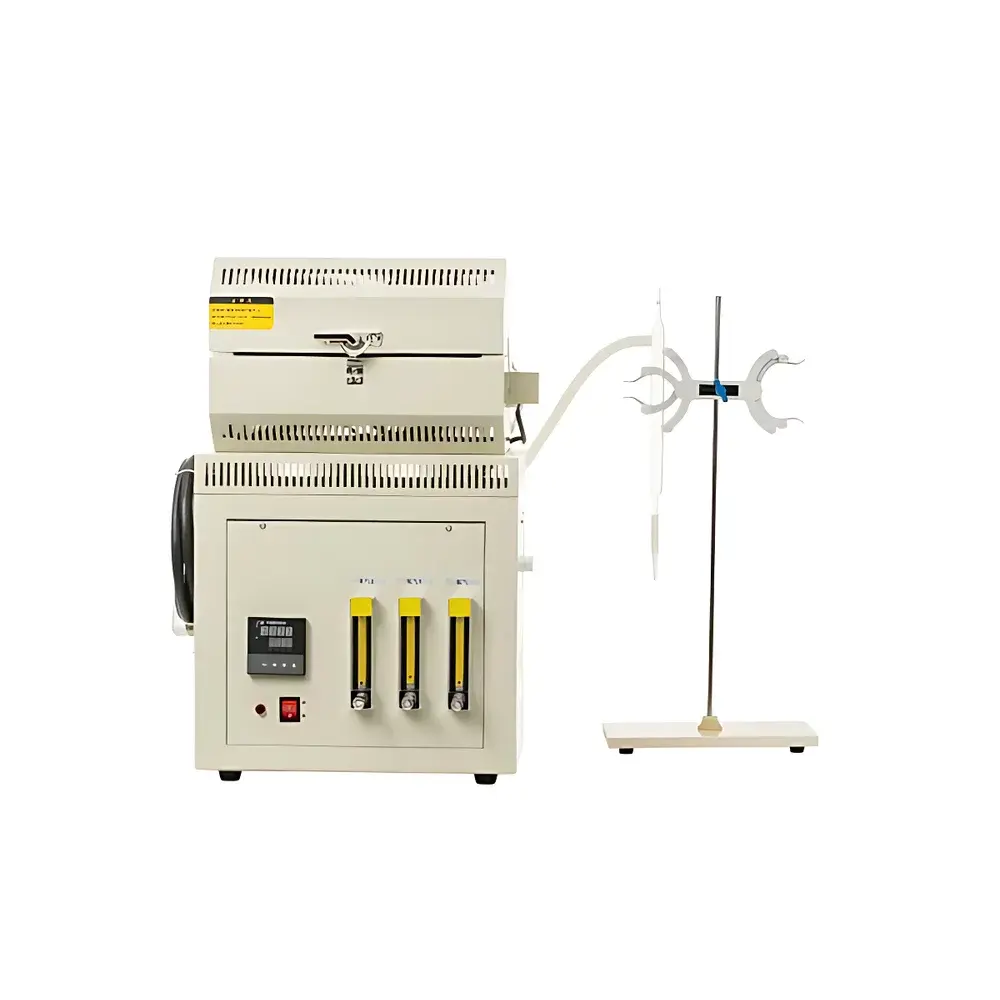
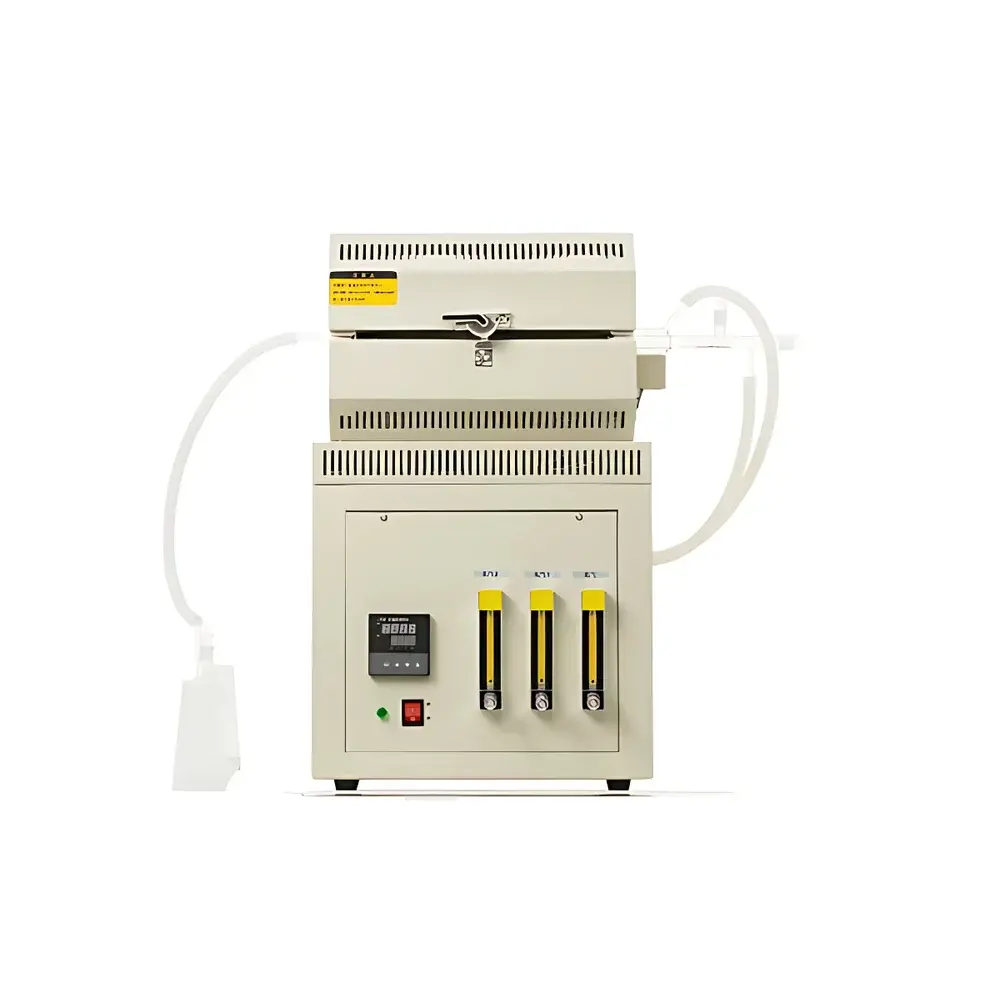
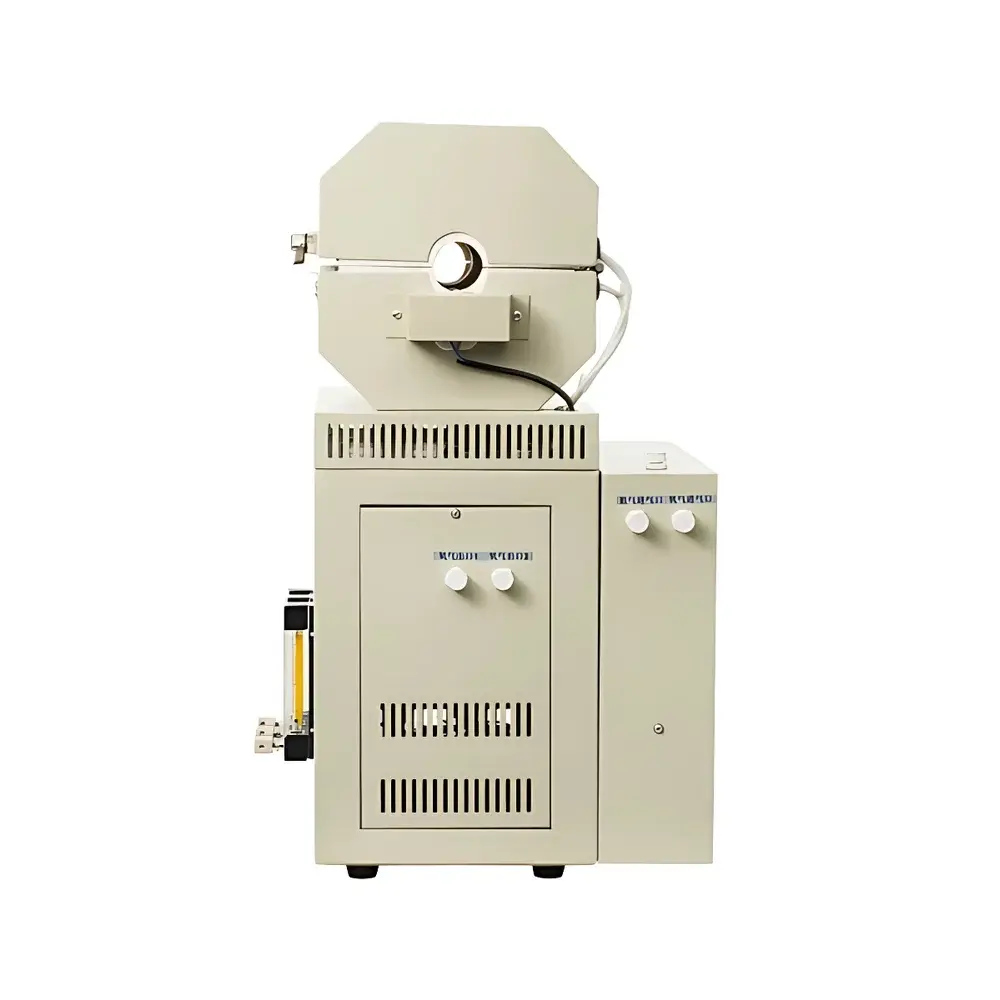
Zhochi AOX-3 Organic Halogen Combustion Furnace
| Brand | Zhochi |
|---|---|
| Origin | Zhejiang, China |
| Model | AOX-3 |
| Measurement Principle | High-Temperature Combustion Coupled with Coulometric Titration |
| Quantification Range | 5–1000 mg sample mass |
| Accuracy | ±1% |
| Repeatability | ≤1% RSD |
| Detection Limit | 0.8–1000 µg/L (as AOX) |
| Resolution | 0.01 µg |
| Max Operating Temperature | 1150 °C |
| Temperature Uniformity | ±1 °C |
| Heating Rate | Adjustable up to 50 °C/min |
| Furnace Chamber Dimensions | Ø40 × 300 mm |
| Power Supply | 220 V, 50 Hz, 1.5 kW |
| Net Weight | 26 kg |
| Compliance | HJ/T 83–2001, ISO 9562:1989, GB/T 15959–1995, GB 8978–1996, GB 3544–2008 |
Overview
The Zhochi AOX-3 Organic Halogen Combustion Furnace is a purpose-built high-temperature combustion system engineered for the quantitative determination of Adsorbable Organic Halogens (AOX) in environmental matrices. It operates on the principle of high-temperature oxidative pyrolysis (up to 1150 °C) followed by halogen quantification via coulometric titration or ion chromatography—fully aligned with internationally recognized standard methods including HJ/T 83–2001, ISO 9562:1989, and GB/T 15959–1995. The furnace integrates a dual-zone ceramic fiber insulation chamber with embedded resistance heating elements, enabling rapid thermal ramping (≤50 °C/min), precise PID-controlled temperature stability (±1 °C), and reproducible combustion conditions critical for regulatory-grade AOX analysis. Unlike generic muffle furnaces, the AOX-3 features a dedicated geometry optimized for AOX-specific sample introduction—including a removable front-access design for real-time visual monitoring of sample combustion and ash behavior—and is calibrated for direct coupling with downstream analytical instrumentation (e.g., microcoulometers or IC systems).
Key Features
- High-efficiency dual-segment ceramic fiber furnace chamber with air-cooled metallic housing and embedded high-stability resistance wire heating elements
- Programmable LTDE controller with PID + SSR regulation, supporting multi-step temperature ramps, hold times, and automatic shutdown
- Dual-stage over-temperature protection (mechanical and electronic) compliant with IEC 61000-4-5 surge immunity requirements
- Front-hinged, fully openable furnace body for immediate inspection, rapid cooling, and unobstructed access to the quartz combustion tube and sample boat
- Optimized gas flow architecture: independent oxygen inlet (99.6% min, 99.999% recommended) routed to inner/outer combustion zones; nitrogen pressurization port for adsorption column integration
- Integrated built-in scrubbing system with five standardized gas-washing bottles and two absorption traps (including dual absorption tubes) to remove SO₂, NOₓ, and CO₂ prior to halogen detection
- Compact footprint (345 × 360 × 660 mm) and low-voltage operation (220 V, 1.5 kW) ensure laboratory safety and energy efficiency without compromising thermal performance
Sample Compatibility & Compliance
The AOX-3 supports solid and liquid environmental samples per standardized adsorption protocols. Liquid matrices include drinking water, surface water, groundwater, wastewater, effluent, seawater, pulp mill discharges, and treated process water. Solid matrices encompass soils, sediments, sludges, and waste fats/oils—following EPA Method 1650 or equivalent pretreatment. Sample introduction utilizes activated carbon columns (user-supplied) under nitrogen pressure (0.1–0.3 MPa), followed by thermal desorption at ≥950 °C in an oxygen-rich environment. All operational parameters—including temperature profiles, gas flow rates, and residence time—are traceable and auditable, ensuring full alignment with GLP-compliant workflows. The system meets the instrumental requirements specified in HJ/T 83–2001 (adsorption–combustion–microcoulometry), ISO 9562:1989 (combustion–coulometric detection), and GB/T 15959–1995. It further satisfies ancillary regulatory frameworks such as GB 8978–1996 (Comprehensive Wastewater Discharge Standard) and GB 3544–2008 (Wastewater Standards for Papermaking Industry).
Software & Data Management
The AOX-3 operates as a hardware platform requiring external data acquisition via compatible coulometric or ion chromatographic detectors. Optional PC-based control software (sold separately) provides time-stamped temperature logging, programmable method storage (up to 16 user-defined profiles), real-time thermal curve visualization, and export-ready CSV reports compliant with 21 CFR Part 11 audit trail requirements when deployed in regulated environments. Instrument metadata—including firmware version, calibration date, operator ID, and run sequence numbers—is automatically embedded into output files. All control logic resides within the LTDE programmable module, eliminating dependency on third-party operating systems and minimizing cybersecurity exposure.
Applications
- Regulatory compliance testing for AOX in municipal and industrial wastewater discharge permits (e.g., EU Directive 2013/39/EU, US EPA Clean Water Act)
- Monitoring halogenated disinfection by-products (DBPs) in drinking water treatment plants
- Environmental impact assessments of chlorinated solvent contamination in soil and groundwater
- Process validation in pulp & paper manufacturing where elemental chlorine-free (ECF) or totally chlorine-free (TCF) bleaching is employed
- Research on formation and degradation kinetics of persistent organic pollutants (POPs), including PCBs, dioxins, and brominated flame retardants
- QA/QC verification of activated carbon regeneration efficiency in water reclamation facilities
FAQ
What sample preparation is required prior to AOX analysis using the AOX-3?
Samples must first undergo adsorption onto activated carbon (either packed columns or pre-packed tubes), followed by nitrogen-pressure-assisted elution. Solid samples require acid digestion or Soxhlet extraction prior to adsorption. Detailed SOPs are provided with purchase.
Is the AOX-3 compatible with both microcoulometric and ion chromatographic detection systems?
Yes—the furnace output gas stream is designed to interface directly with either detector type. Absorbed halides are collected in aqueous solution for IC analysis or converted to Ag⁺ titrant for coulometric quantification.
Does the system support unattended overnight operation?
Yes. With its robust thermal insulation, dual over-temperature safeguards, and programmable controller, the AOX-3 is rated for continuous 24-hour operation under supervised laboratory conditions.
What maintenance intervals are recommended for long-term reliability?
Quartz combustion tubes should be inspected after every 50 runs; ceramic fiber insulation requires no scheduled replacement but benefits from annual visual assessment for cracking or compression. Oxygen and nitrogen supply lines must be purged weekly to prevent moisture ingress.
Can the AOX-3 be integrated into a LIMS environment?
While the base unit lacks native LIMS connectivity, optional software enables CSV/Excel export with timestamped metadata—enabling manual or automated ingestion into validated LIMS platforms meeting ISO/IEC 17025 requirements.







