
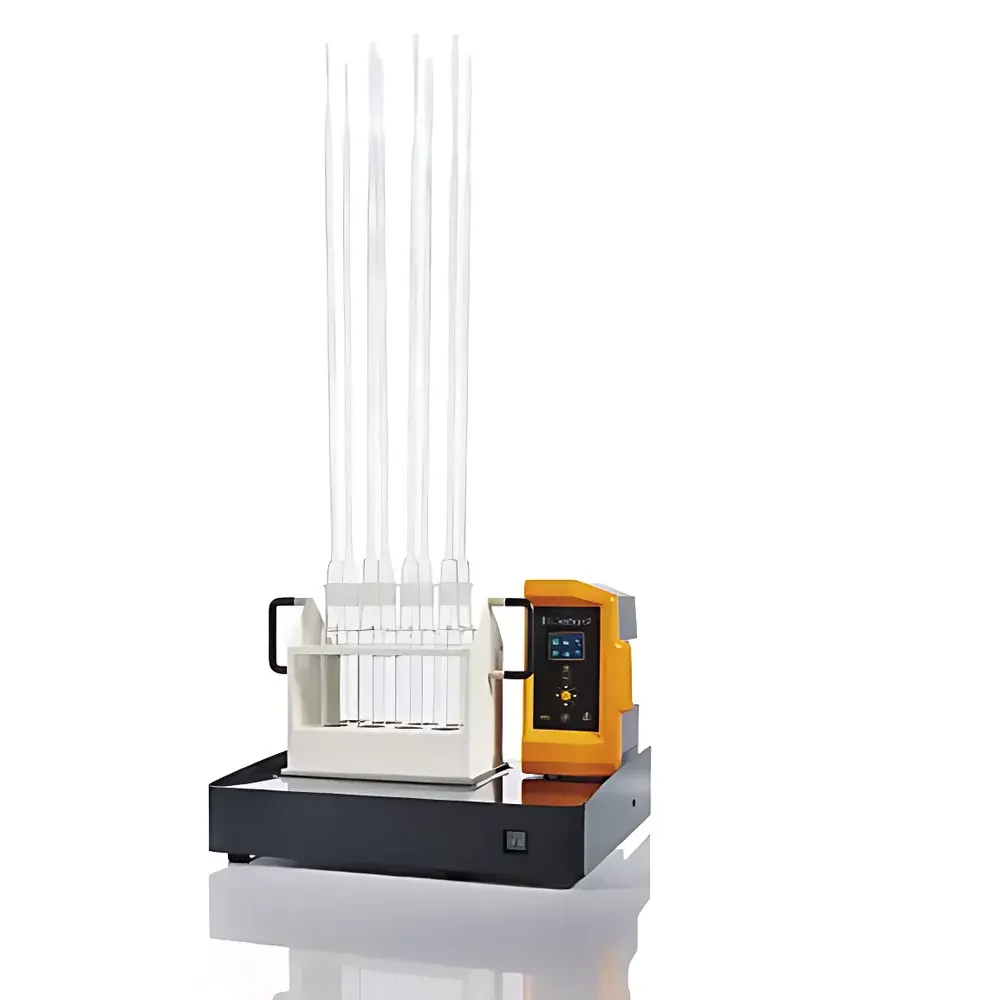
C. Gerhardt CSB 8s Air-Cooled Reflux COD Digestion System
| Brand | C. Gerhardt |
|---|---|
| Origin | Germany |
| Manufacturer Type | Original Equipment Manufacturer (OEM) |
| Origin Category | Imported |
| Model | CSB 8s |
| Digestion Method | Reflux Digestion |
| Heating Module | Single Aluminum Block |
| Batch Capacity | 8 samples |
| Temperature Range | 0–430 °C |
| Temperature Accuracy | ±0.5 °C |
| Digestion Vessel Volume | 300 mL |
| Timer Resolution | 0.0001 h (0.36 s) |
| Programmable Methods | 99 user-defined methods (up to 40 heating steps per method) |
| Preloaded Methods | 30 standard protocols |
| Power Control | Continuously adjustable heating power |
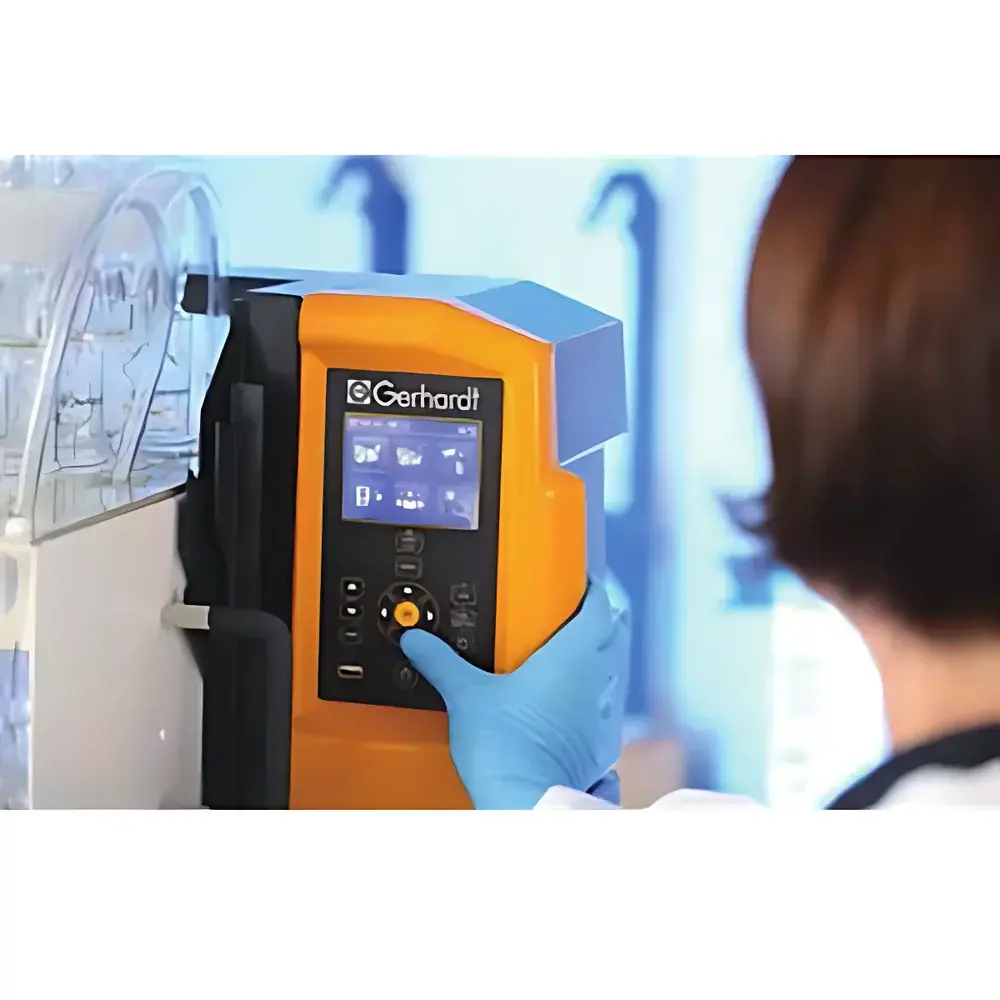
| Controller | Detachable, password-protected unit with audit trail and user access levels |
| Footprint | 51.5 × 48.3 cm |
| Safety Features | Motorized lift mechanism for sample rack, preheating function, thermal insulation, overtemperature protection |
Overview
The C. Gerhardt CSB 8s Air-Cooled Reflux COD Digestion System is a precision-engineered instrument designed for standardized chemical oxygen demand (COD) determination in aqueous matrices according to internationally recognized regulatory protocols—including DIN EN ISO 6060 (equivalent to EPA 410.4), HJ 828–2017 (China), GB/T 11914–1989 and GB/T 22597–2008. It implements the classical dichromate reflux method under controlled thermal conditions, where organic matter in water samples is oxidized by potassium dichromate in strongly acidic medium (H2SO4) at elevated temperature, followed by titrimetric or spectrophotometric quantification of residual oxidant. Unlike water-cooled systems, the CSB 8s utilizes forced-air convection cooling integrated into the reflux condenser assembly—eliminating dependency on external water supply while maintaining stable vapor return kinetics and minimizing reagent loss. Its single-zone aluminum heating block delivers uniform thermal distribution across all eight positions, enabling high inter-sample reproducibility essential for accredited environmental testing laboratories.
Key Features
- High-precision temperature control with ±0.5 °C accuracy across the full 0–430 °C operating range, critical for method compliance with ISO 6060 and US EPA 410.4.
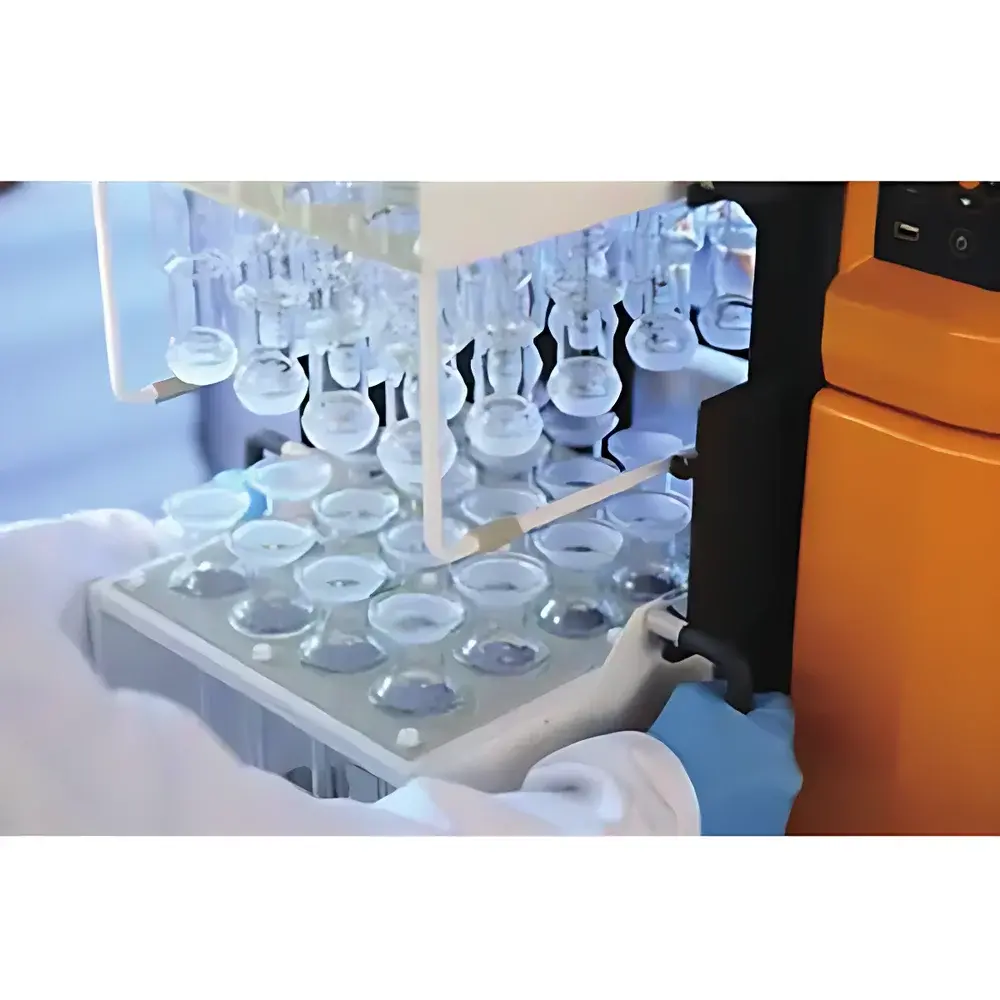
- Motorized vertical lift mechanism for the 300 mL digestion tube rack—reducing operator strain and preventing thermal exposure during loading/unloading.
- Detachable controller unit with password-protected user accounts, role-based access permissions, and electronic audit trail functionality aligned with ISO/IEC 17025:2017 Clause 7.11 and FDA 21 CFR Part 11 data integrity requirements.
- 99 programmable digestion protocols, each supporting up to 40 discrete heating steps (ramp-hold-cool sequences), allowing full customization for complex multi-stage oxidation procedures beyond standard COD.
- Continuously variable heating power output ensures optimal energy delivery for diverse sample matrices—from low-COD surface waters to high-strength industrial effluents—without overshoot or thermal shock.
- Compact footprint (51.5 × 48.3 cm) optimized for space-constrained analytical laboratories; includes integrated thermal shielding and overtemperature cutoff for Class II laboratory safety compliance.
Sample Compatibility & Compliance
The CSB 8s accommodates standard 300 mL borosilicate glass digestion tubes conforming to DIN 12785-1 specifications. Its thermal profile stability supports digestion of municipal wastewater, industrial discharges, leachates, and pretreated sludge filtrates. All operational parameters—including temperature setpoints, dwell times, ramp rates, and cooling profiles—are traceable and exportable in CSV format for GLP/GMP documentation. The system is validated for use in accordance with ISO/IEC 17025-accredited testing environments and meets mechanical safety requirements per EN 61010-1:2010 and electromagnetic compatibility per EN 61326-1:2013.
Software & Data Management
The embedded controller firmware supports method versioning, user login logging, and real-time parameter monitoring with timestamped event records (e.g., “Method Start”, “Ramp Initiated”, “Hold Reached”, “Cooling Complete”). Data export is compatible with LIMS integration via USB mass storage mode or optional RS-232 interface. Audit trails capture operator ID, method name, start/end timestamps, deviations from target temperature (>±1 °C), and any manual intervention—ensuring full traceability required under EU Water Framework Directive reporting frameworks and China’s HJ 828–2017 quality assurance provisions.
Applications
- Routine COD analysis in municipal and industrial wastewater treatment plants.
- Environmental monitoring programs for surface water, groundwater, and effluent discharge compliance.
- Research applications involving kinetic studies of organic oxidation under varying acid concentration and thermal regimes.
- Validation of alternative oxidation methods (e.g., closed-system microwave digestion) against reference reflux performance.
- Training and proficiency testing in certified environmental laboratories seeking ISO/IEC 17025 accreditation.
FAQ
Does the CSB 8s comply with Chinese national standards such as HJ 828–2017 and GB/T 11914?
Yes—the instrument’s temperature accuracy, timer resolution, and reflux stability meet the technical requirements specified in HJ 828–2017 for manual reflux digestion and are fully compatible with GB/T 11914–1989 test conditions.
Can the system be integrated into an existing LIMS environment?
Yes—via USB-host data export or optional RS-232 serial interface, with structured CSV output containing sample IDs, method names, timestamps, and final temperature/time logs.
Is calibration verification supported out-of-the-box?
The system includes built-in reference temperature validation routines and supports external NIST-traceable PT100 probe verification at multiple setpoints (e.g., 150 °C, 300 °C, 400 °C) per ISO/IEC 17025 internal calibration procedures.
What safety certifications does the CSB 8s hold?
It conforms to EN 61010-1:2010 (Safety Requirements for Electrical Equipment for Measurement, Control, and Laboratory Use) and EN 61326-1:2013 (EMC for Laboratory Equipment), with CE marking valid for EU markets.
How is method transfer handled between instruments in multi-lab networks?
Method files (.csm) are portable across CSB-series units; the controller supports encrypted backup/restore and version-controlled method deployment via USB stick, ensuring consistent digestion protocols across distributed QA/QC facilities.
Related Products







