
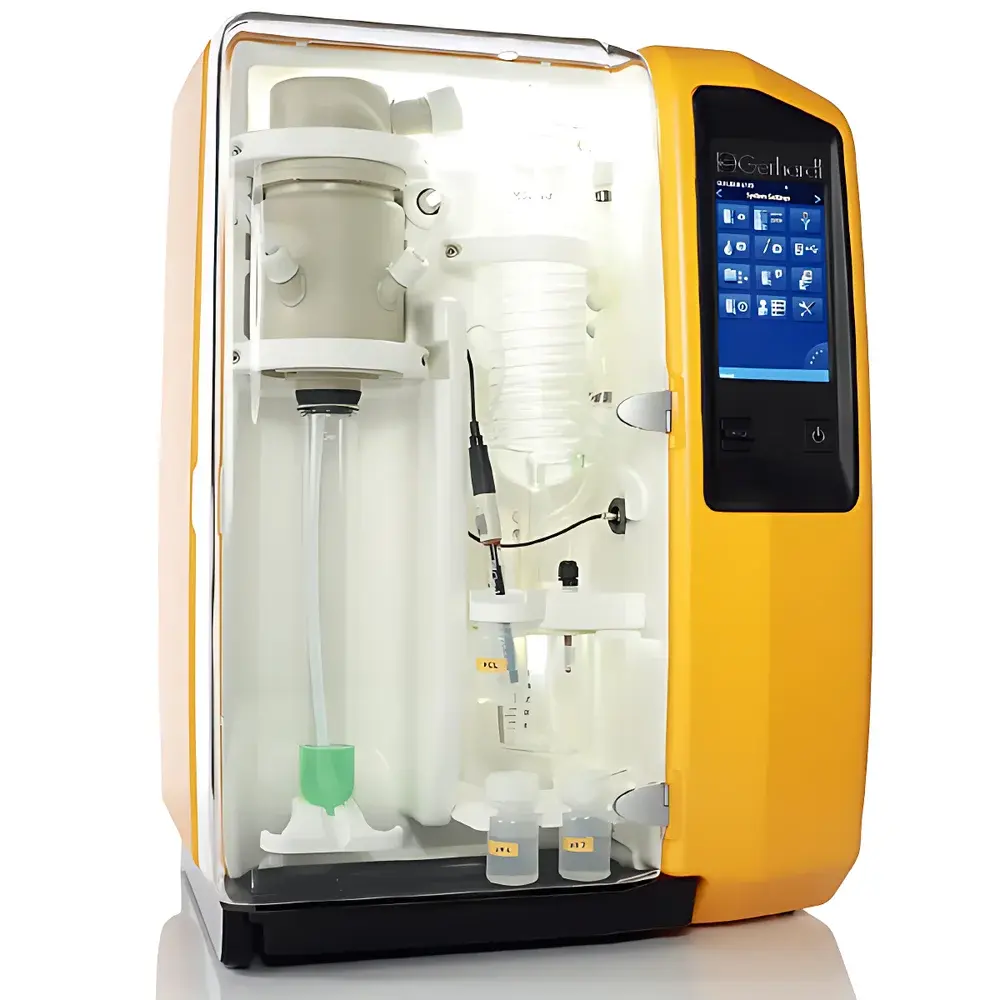
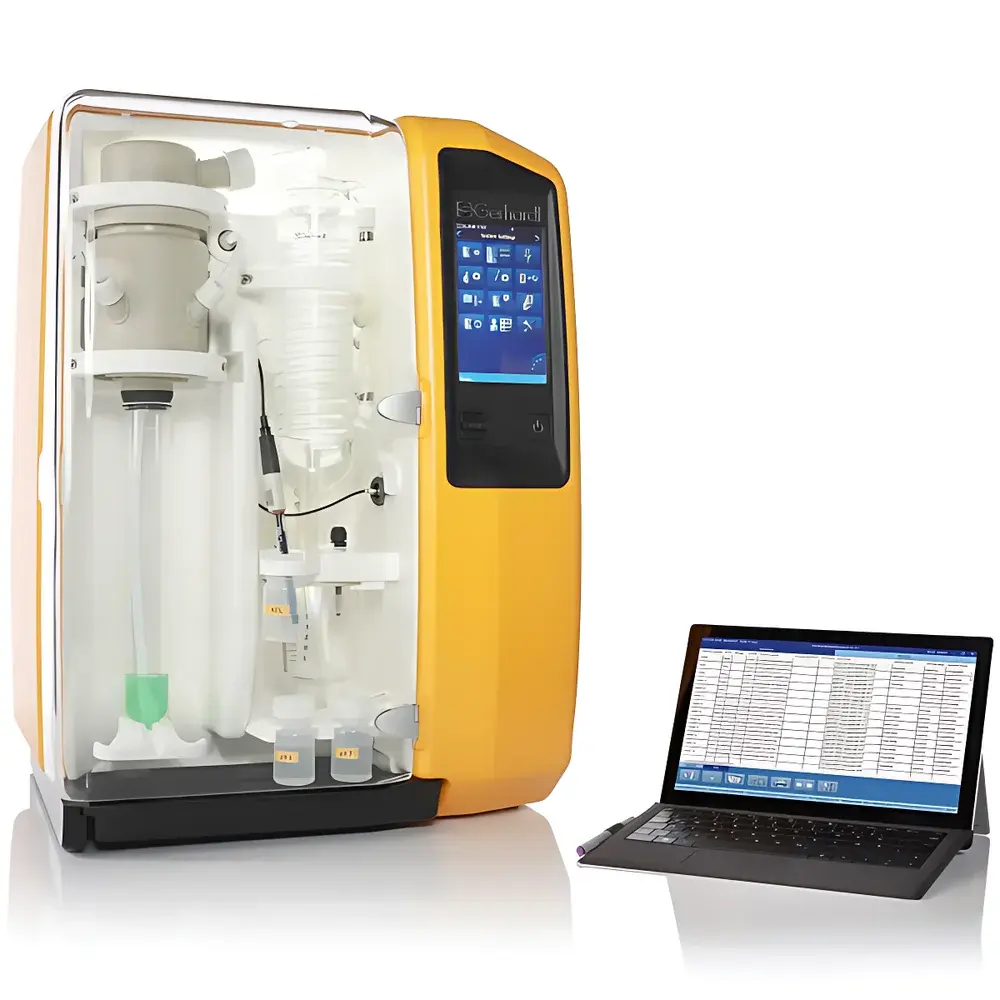
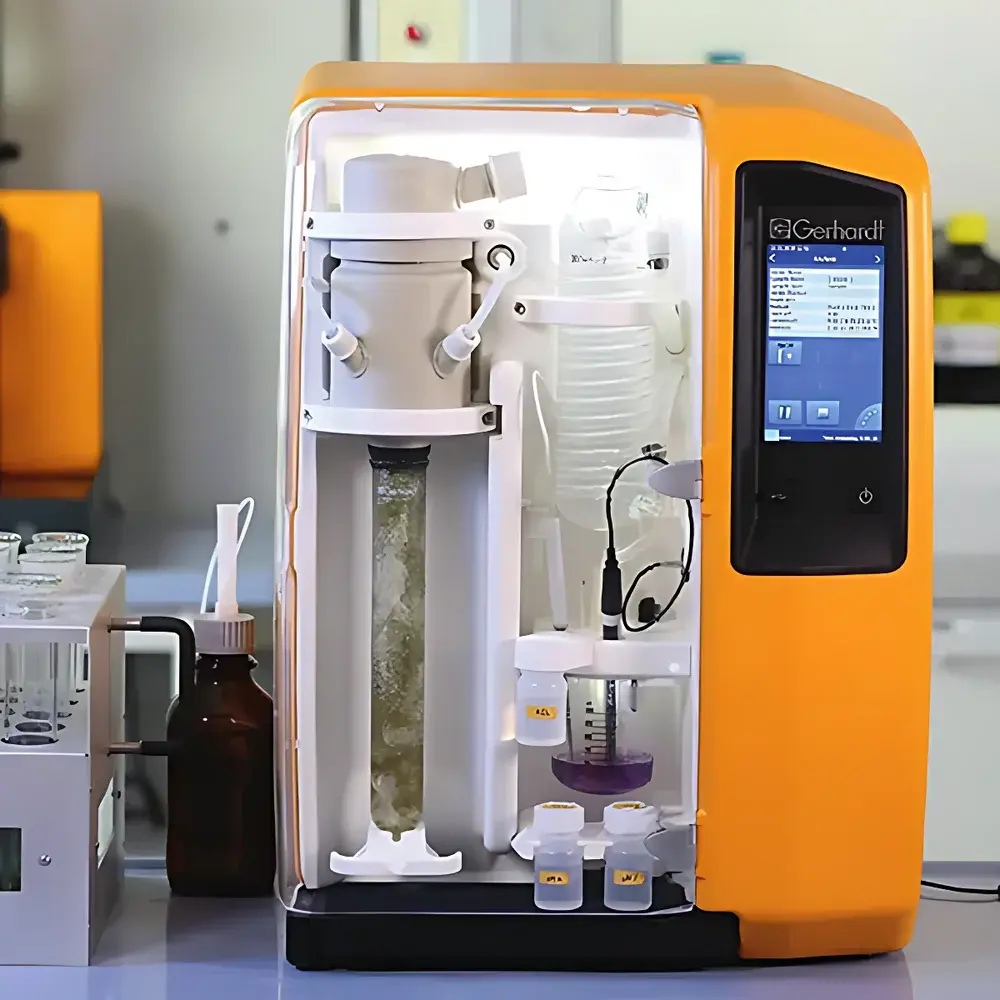
C. Gerhardt VAP500 Fully Automated Kjeldahl Nitrogen Determinator
| Brand | C. Gerhardt |
|---|---|
| Origin | Germany |
| Manufacturer | C. Gerhardt GmbH & Co. KG |
| Instrument Type | Kjeldahl Nitrogen Determinator |
| Automation Level | Fully Automated |
| Nitrogen Range | 0.1–200 mg N |
| Distillation Time | 2–4 min per sample |
| Repeatability | ±1% RSD |
| Sample Mass | 1 g |
| Recovery Rate | >99.5% |
| Power Consumption | 2200 W |
| Dimensions (L×W×H) | 527 × 390 × 697 mm |
| Linear Range | 0.1–200 mg N |
Overview
The C. Gerhardt VAP500 Fully Automated Kjeldahl Nitrogen Determinator is a high-precision, CE-compliant benchtop system engineered for trace-to-macro nitrogen quantification in accordance with ISO 8968, AOAC 981.10, 984.27, 991.20, and ASTM D1122–22. Based on classical Kjeldahl digestion followed by steam distillation and potentiometric titration, the VAP500 implements a closed-loop analytical workflow—from alkaline hydrolysis and ammonia liberation to condensation, trapping in boric acid, and real-time pH-based endpoint detection. Unlike semi-automated or indicator-based systems, the VAP500 eliminates operator-dependent variables by integrating programmable steam generation, dynamic reagent dosing, and direct pH-sensing titration—ensuring method robustness across diverse matrices without manual intervention.
Key Features
- Fully programmable distillation cycle: automated addition of NaOH, water dilution, boric acid dosing, steam initiation, timed distillation (2–4 min/sample), and waste disposal—all synchronized under single software control.
- Potentiometric titration with direct pH monitoring: eliminates reliance on mixed indicators; uses calibrated glass electrode for precise endpoint determination via ΔpH algorithm, delivering superior accuracy and long-term stability compared to colorimetric methods.
- Steam generator with SSS (Soft Steam Start) function: adjustable steam pressure (0–100% output), standby mode, and anti-crystallization protocol for challenging samples such as viscous digestates or high-salt residues.
- Corrosion-resistant modular distillation head: standard polymer construction (optionally available in borosilicate glass) with quick-release design for routine maintenance and method-specific validation.
- Active vacuum-assisted waste evacuation: pump-driven removal of both distillate receiver waste and titration effluent—preventing clogging, vapor leakage, and operator exposure to hot or caustic solutions.
- Integrated safety architecture: full-height transparent polycarbonate safety door with LED backlighting, real-time status monitoring, automatic steam cutoff on overpressure or temperature anomaly, and emergency stop circuit compliant with EN 61000-6-2/6-4.
- Flexible reagent handling: optional level-sensing reagent modules for 5 L, 10 L, and 20 L standardized containers—reducing manual transfer risks and enabling unattended overnight operation.
Sample Compatibility & Compliance
The VAP500 accommodates solid, liquid, and semi-solid samples across agricultural, food, environmental, pharmaceutical, and industrial sectors—including cereals, dairy products, meat, feed, soil, fertilizers, petrochemicals, polymers, and biological tissues. Its validated performance meets GLP and GMP requirements for regulated laboratories, supporting audit-ready data integrity through built-in electronic signatures, time-stamped event logs, and 21 CFR Part 11–compliant user access control when paired with Gerhardt’s optional LabControl software. Method equivalence has been verified against reference materials certified by NIST (e.g., SRM 2384, Bovine Liver) and CRM (e.g., ERM-BD191). All wet chemistry components comply with DIN EN ISO/IEC 17025:2017 calibration traceability protocols.
Software & Data Management
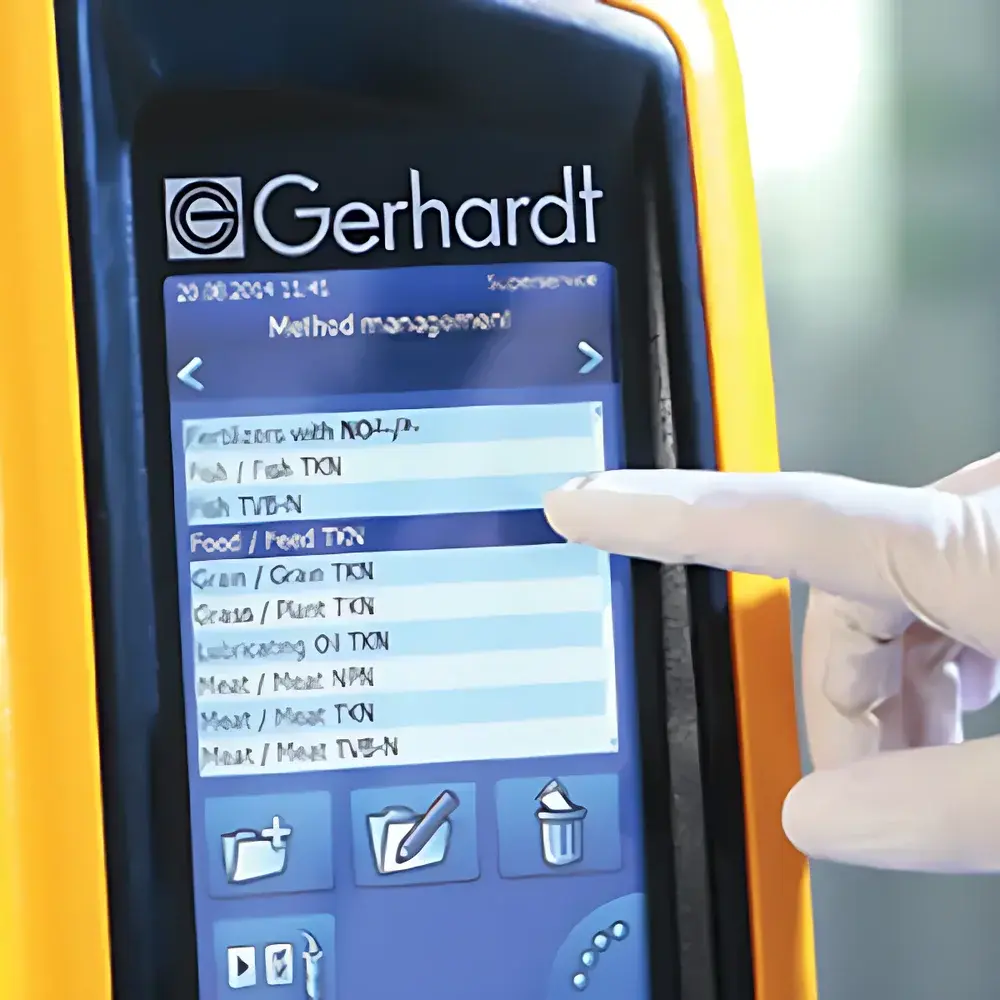
Gerhardt’s proprietary VAPControl software provides intuitive method editor functionality, allowing storage of up to 99 customizable workflows with parameter locking, sequence branching, and conditional logic (e.g., variable alkali volume based on sample type). Raw sensor data—including real-time pH curves, steam pressure profiles, titrant consumption, and temperature gradients—is archived in .csv and .pdf formats with embedded metadata (operator ID, timestamp, instrument serial, calibration certificate ID). Audit trails record all user actions, parameter modifications, and system alerts for retrospective review. Optional integration with LIMS via OPC UA or HL7 enables seamless result export without manual transcription.
Applications
Beyond total nitrogen and crude protein (×6.25) determination, the VAP500 supports specialized applications requiring controlled steam distillation: ammonium salt quantification (e.g., NH₄Cl), volatile basic nitrogen (VBN) in seafood spoilage assessment, non-protein nitrogen (NPN) in dairy powders, alkaline hydrolyzable nitrogen in soils (ISO 11261), nitrate/nitrite after cadmium reduction, formaldehyde content via Nash reaction, sulfur dioxide in wines (AOAC 990.28), cyanide in electroplating baths (ISO 6703-1), and volatile phenols in wastewater. Its optimized thermal inertia and condenser efficiency make it especially suitable for ethanol-containing matrices—enabling reliable alcohol distillation prior to nitrogen analysis per AOAC 982.30.
FAQ
Does the VAP500 require external cooling water?
No—integrated recirculating chiller option is available; otherwise, it operates with tap water flow up to 7 L/min, dynamically regulated to maintain condenser outlet temperature below 25 °C even at ambient temperatures up to 40 °C.
Can the system be validated for regulatory submissions?
Yes—full IQ/OQ/PQ documentation packages are provided, including factory calibration certificates traceable to PTB (Physikalisch-Technische Bundesanstalt), and verification reports for repeatability, recovery, linearity, and carryover per ICH Q2(R2).
Is manual NaOH supplementation possible during distillation?
Yes—the alkaline pump can be triggered manually via touchscreen during active distillation to address incomplete digestion or high-buffer-capacity samples.
What maintenance intervals are recommended?
Weekly cleaning of distillation head and condenser; quarterly verification of pH electrode slope and buffer calibration; annual steam generator descaling and pressure sensor recalibration—per Gerhardt’s Preventive Maintenance Schedule (PMS-500-EN).
Related Products






