
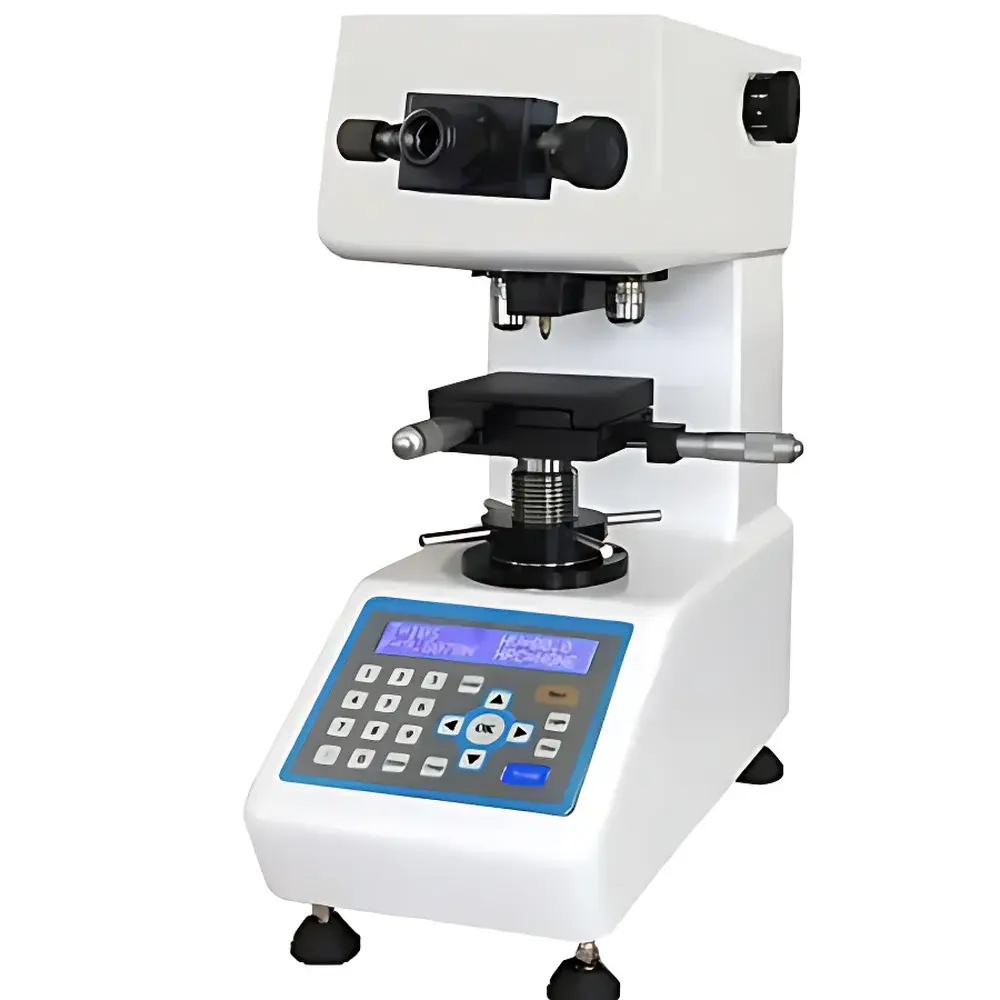
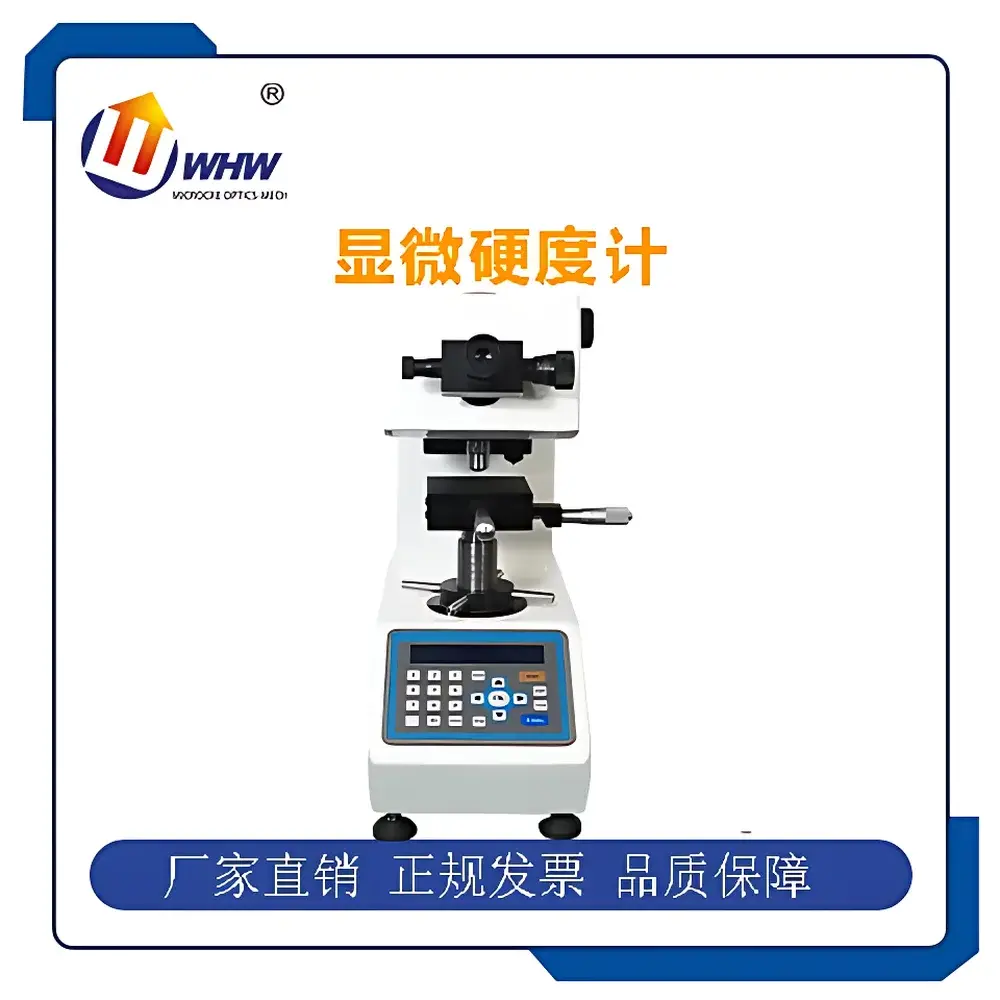
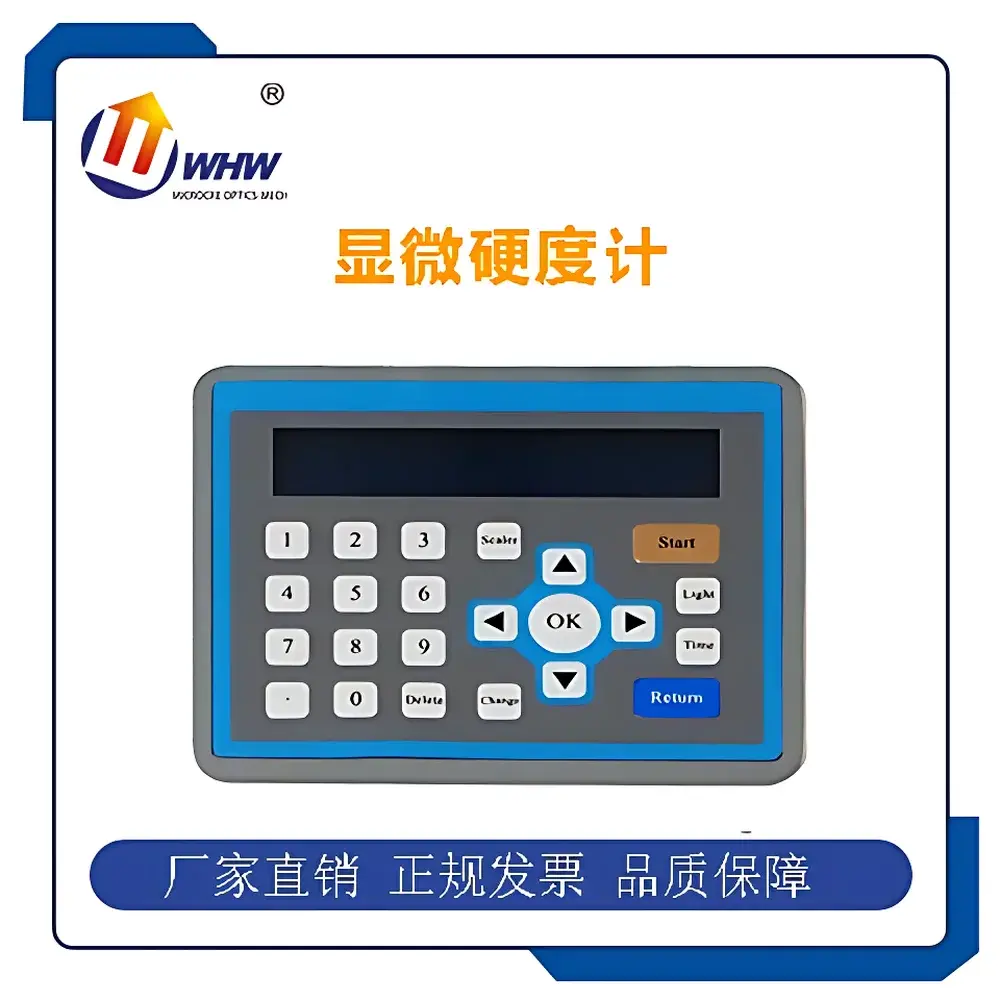
YANRUN HV-1000Z Automated Micro-Vickers Hardness Tester
| Brand | YANRUN |
|---|---|
| Origin | Shanghai, China |
| Manufacturer Type | Direct Manufacturer |
| Product Category | Domestic |
| Model | HV-1000 / HV-1000Z |
| Instrument Type | Micro-Vickers Hardness Tester |
| Hardness Range | 0.001–6000 HV |
| Test Forces (8-step) | 0.098 N, 0.245 N, 0.490 N, 0.981 N, 1.961 N, 2.942 N, 4.903 N, 9.807 N |
| Equivalent GF Values | 10 gf, 25 gf, 50 gf, 100 gf, 200 gf, 300 gf, 500 gf, 1000 gf |
| Test Force Standards | HV0.01, HV0.025, HV0.05, HV0.1, HV0.2, HV0.3, HV0.5, HV1 |
| Maximum Specimen Height | 55 mm |
| Depth from Indenter Center to Chamber Wall | 110 mm |
| X-Y Stage Travel | 25 mm × 25 mm |
| Minimum Detection Resolution | 0.5 µm |
| Total Magnification | 100× (observation), 400× (measurement) |
| Optical System | Dual-objective turret (10× observation, 40× measurement), 10× mechanical eyepiece |
| Load Application Mode | Fully automated (loading–dwell–unloading), loading speed: 0.05 mm/s |
| Dwell Time | 0–99 s (1 s increments) |
| Compliance Standard | GB/T 4340.1–2012 (equivalent to ISO 6507-1 and ASTM E384) |
| Power Supply | AC 220 V, 50 Hz |
| Dimensions (W×D×H) | 460 mm × 230 mm × 490 mm |
| Construction | Precision cast aluminum frame |
Overview
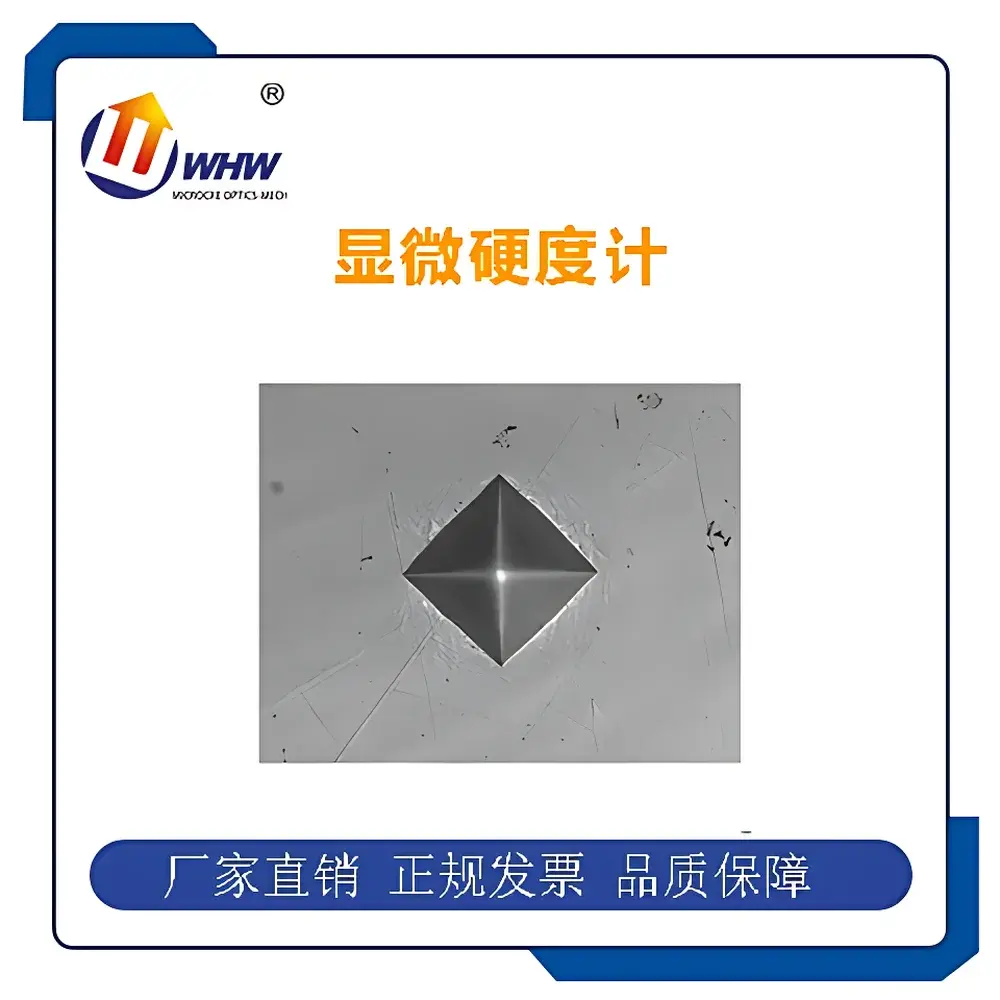
The YANRUN HV-1000Z is a fully automated micro-Vickers hardness tester engineered for high-precision indentation testing of metallic, ceramic, thin-film, and case-hardened materials at low to medium test forces. It operates on the principle of Vickers hardness measurement—applying a precisely controlled diamond pyramid indenter (136° apex angle) under calibrated static load, followed by optical measurement of the resulting diagonal impression in two orthogonal directions. The measured diagonals are used to compute the Vickers hardness number (HV) according to the standardized formula: HV = 0.1891·F/d², where F is the applied test force in newtons and d is the arithmetic mean of the two diagonal lengths in millimeters. Designed for metrological integrity and operational repeatability, the HV-1000Z integrates a rigid cast-aluminum frame, gear-driven force application mechanism, precision ground lead screw Z-axis, and dual-magnification optical path optimized for both rapid specimen survey (100×) and high-resolution indentation analysis (400×). Its architecture meets the mechanical and metrological requirements defined in ISO 6507-1, ASTM E384, and GB/T 4340.1–2012, making it suitable for accredited laboratories, R&D centers, and quality control environments requiring traceable, GLP-compliant hardness data.
Key Features
- Fully automated hardness testing cycle—including force application, dwell time control (0–99 s, adjustable in 1 s increments), and unloading—eliminates operator-induced variability and ensures consistent indentation geometry.
- Motorized dual-objective turret enables seamless switching between 10× (for field navigation) and 40× (for measurement) objectives without manual repositioning or optical realignment.
- Integrated digital measurement system with 0.5 µm resolution allows direct input of diagonal lengths via on-screen cursor; automatic HV calculation and multi-scale hardness conversion (HRA, HRB, HRC, HBW, HK, HR15N/30N/45N, HR15T/30T/45T) are performed in real time.
- Eight-step test force selection (0.098–9.807 N) is executed via external rotary selector with automatic force recognition—no manual entry required—ensuring rapid method setup and minimizing configuration errors.
- Stable mechanical stage with 25 mm × 25 mm travel range and 0.01 mm vernier scale facilitates precise positioning of microstructures, carburized layers, weld zones, or thin coatings within the field of view.
- Adjustable LED illumination with continuous brightness control enhances contrast for optimal edge detection of indentations in reflective, matte, or anodized surfaces.
Sample Compatibility & Compliance
The HV-1000Z accommodates specimens up to 55 mm in height and 110 mm in depth from the indenter centerline, supporting standard metallurgical mounts, cross-sectioned components, and small-format test coupons. Its 0.5 µm measurement resolution and 400× magnification enable reliable assessment of shallow hardened cases (e.g., nitrided or carburized layers), thin PVD/CVD coatings (<5 µm), grain-boundary hardness differentials, and intermetallic phase hardness. All hardness values are traceable to national standards per GB/T 4340.1–2012, which aligns with ISO 6507-1:2018 and ASTM E384–22 for microindentation methodology, uncertainty estimation, and verification protocols. While not inherently 21 CFR Part 11 compliant, the system supports audit-ready documentation when paired with optional HMAS software (see Software & Data Management).
Software & Data Management
The HV-1000Z operates as a standalone instrument with embedded firmware controlling motion, imaging, and calculation logic. Optional integration with the HMAS (Hardness Measurement Analysis System) software provides extended functionality: image capture and annotation, multi-point hardness mapping, depth-profiling of case-hardened layers, statistical reporting (mean, SD, min/max, histogram), and export to CSV/PDF formats. HMAS supports configurable user roles, electronic signatures, and audit trail logging—features essential for laboratories operating under GLP or GMP frameworks. Data files include timestamp, operator ID, test parameters, raw image metadata, and full traceability of calibration events and verification checks.
Applications
- Depth profiling of carburized, nitrided, or induction-hardened surface layers in automotive and aerospace components.
- Quality assurance of brazed joints, solder interfaces, and thermal spray coatings in power generation equipment.
- Microstructural hardness mapping across weld heat-affected zones (HAZ), including ferrite/martensite/bainite phase differentiation.
- Thin-film hardness evaluation for MEMS devices, optical coatings, and semiconductor packaging substrates.
- Research-grade hardness correlation studies linking processing parameters (e.g., tempering temperature, cooling rate) to local mechanical response.
- Calibration and verification of reference hardness blocks per ISO 6507-3 and national metrology institute protocols.
FAQ
What standards does the HV-1000Z comply with?
It conforms to GB/T 4340.1–2012, which is technically equivalent to ISO 6507-1:2018 and ASTM E384–22 for micro-Vickers hardness testing procedures, equipment validation, and uncertainty reporting.
Can the HV-1000Z measure coatings thinner than 1 µm?
While the instrument’s optical resolution supports measurement of impressions from ultra-low loads (e.g., 10 gf), reliable coating hardness determination requires the coating thickness to be ≥2.5× the indentation depth. For sub-micron layers, nanoindentation is recommended.
Is the system compatible with LIMS or ERP integration?
Native LIMS connectivity is not built-in; however, HMAS software supports CSV/XML export and can be configured for scheduled data transfer via secure FTP or database ODBC drivers upon custom development.
Does the HV-1000Z require annual recalibration?
Yes—per ISO/IEC 17025 and internal QA policies, annual verification of force accuracy (via calibrated load cell or reference weights), optical magnification, and stage linearity is strongly recommended. Certificate of conformance and calibration records must be retained for audit purposes.
What maintenance is required for long-term stability?
Routine cleaning of optical surfaces, periodic lubrication of the Z-axis lead screw, verification of indenter alignment using certified reference blocks, and annual inspection of gear train backlash and motor encoder performance ensure sustained metrological reliability over 10+ years of service life.



