
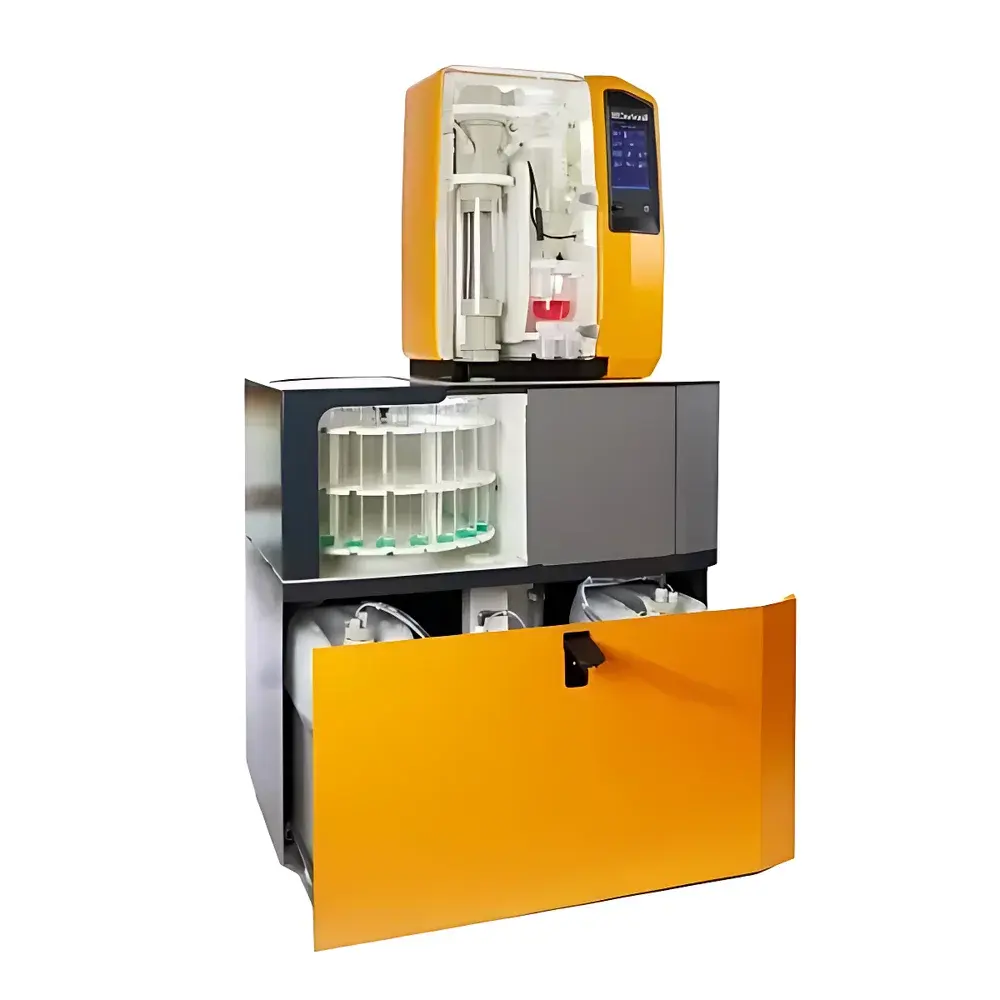

C. Gerhardt VAPODEST 550C Automated Formaldehyde Analyzer for Food Testing
| Brand | C. Gerhardt |
|---|---|
| Origin | Germany |
| Manufacturer Type | Manufacturer |
| Origin Category | Imported |
| Model | VAPODEST 550C |
| Price | USD 92,000 (approx.) |
| Distillation Time | 12 min per sample |
Overview
The C. Gerhardt VAPODEST 550C is a fully automated, integrated distillation–titration system engineered for the precise and compliant quantification of formaldehyde in food matrices. It operates on the principle of acid-catalyzed steam distillation, wherein formaldehyde—liberated from its bound forms (e.g., as methylene glycol or Schiff bases) under controlled thermal and acidic conditions—is volatilized, condensed, and collected in an alkaline acceptor solution. Subsequent potentiometric titration with standardized sulfuric acid (or hydrochloric acid), monitored in real time via a high-stability pH composite electrode, enables stoichiometric determination based on the sharp inflection point of the titration curve. This method aligns with internationally recognized reference procedures—including AOAC Official Method 2005.02, ISO 20483:2013 (for formaldehyde in food and feed), and national standards such as GB 5009.49–2023 (China)—and fulfills the metrological rigor required for regulatory submission and accredited testing laboratories.
Key Features
- Fully automated sample handling: Robust pneumatic carousel accommodates up to 20 sample digestion/distillation tubes (standard sizes: 100 mL, 250 mL, 500 mL), enabling unattended batch analysis.
- Integrated steam distillation & potentiometric titration: Simultaneous distillation and titration eliminates manual tube transfer, reducing cycle time to 12 minutes per sample and minimizing operator intervention.
- Self-monitoring architecture: Real-time diagnostics track cooling water flow, steam generator status, reagent reservoir levels (5 L / 10 L / 20 L compatible), distillation tube positioning, and electrode functionality.
- Maintenance-optimized design: Corrosion-resistant PTFE, borosilicate glass, and ceramic components ensure long-term chemical compatibility with strong acids, alkalis, and oxidizing reagents.
- Energy-efficient operation: Standby mode reduces power consumption; intelligent cooling water management minimizes flow without compromising condensation efficiency.
- Soft-start function: Gradual thermal ramping prevents violent boiling or crystallization-related splashing—critical for viscous, particulate-laden, or highly reactive food homogenates.
Sample Compatibility & Compliance
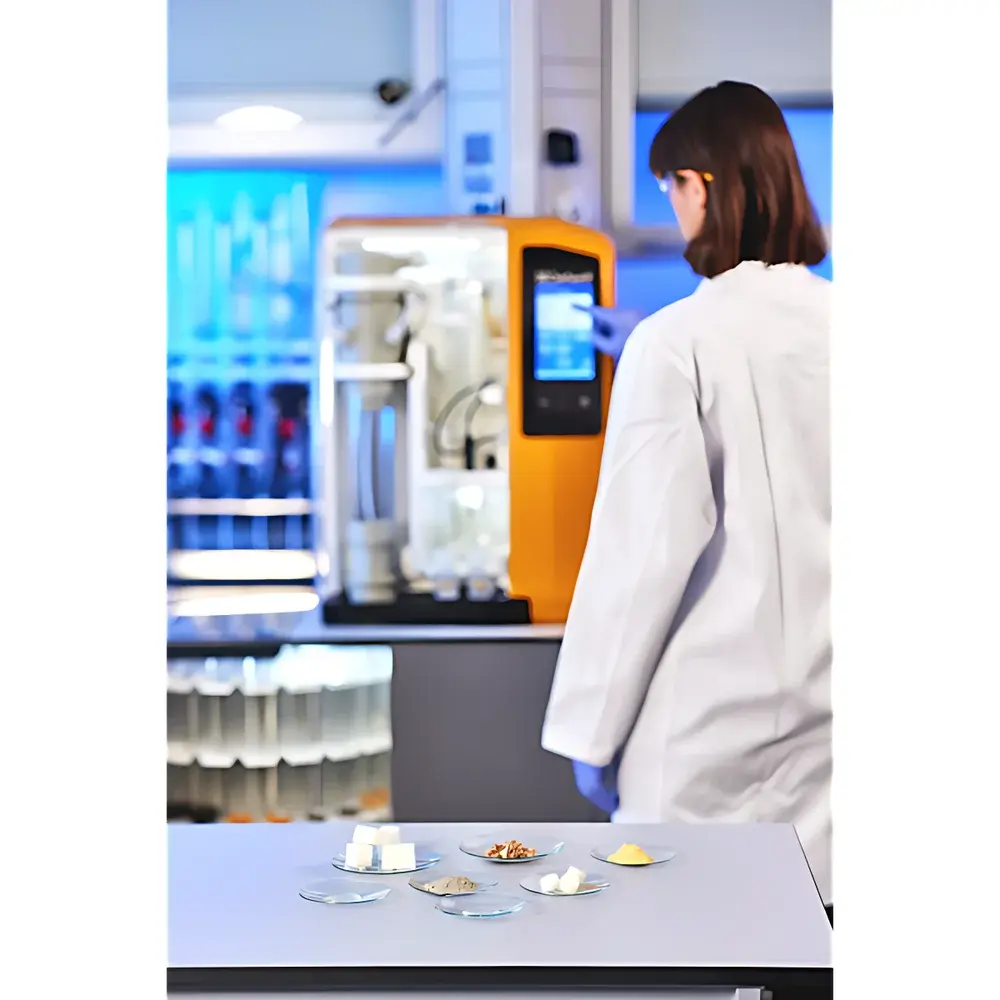
The VAPODEST 550C supports diverse food samples—including seafood, tofu, wheat gluten, dried mushrooms, and processed meat products—without requiring prior derivatization or extraction. Its modular distillation tube configuration accommodates solid, semi-solid, and liquid matrices. All analytical data—including raw sensor signals, titration curves, intermediate calculations, and final results—are timestamped, user-attributed, and stored with full audit trail capability. System compliance extends to ISO/IEC 17025:2017 (clause 7.7 on result reporting), ISO 9001:2015 (process control), and Good Laboratory Practice (GLP) requirements for traceability, instrument calibration history, and electronic signature enforcement. Optional 21 CFR Part 11 readiness is achievable through validated MasterLab software configuration.
Software & Data Management
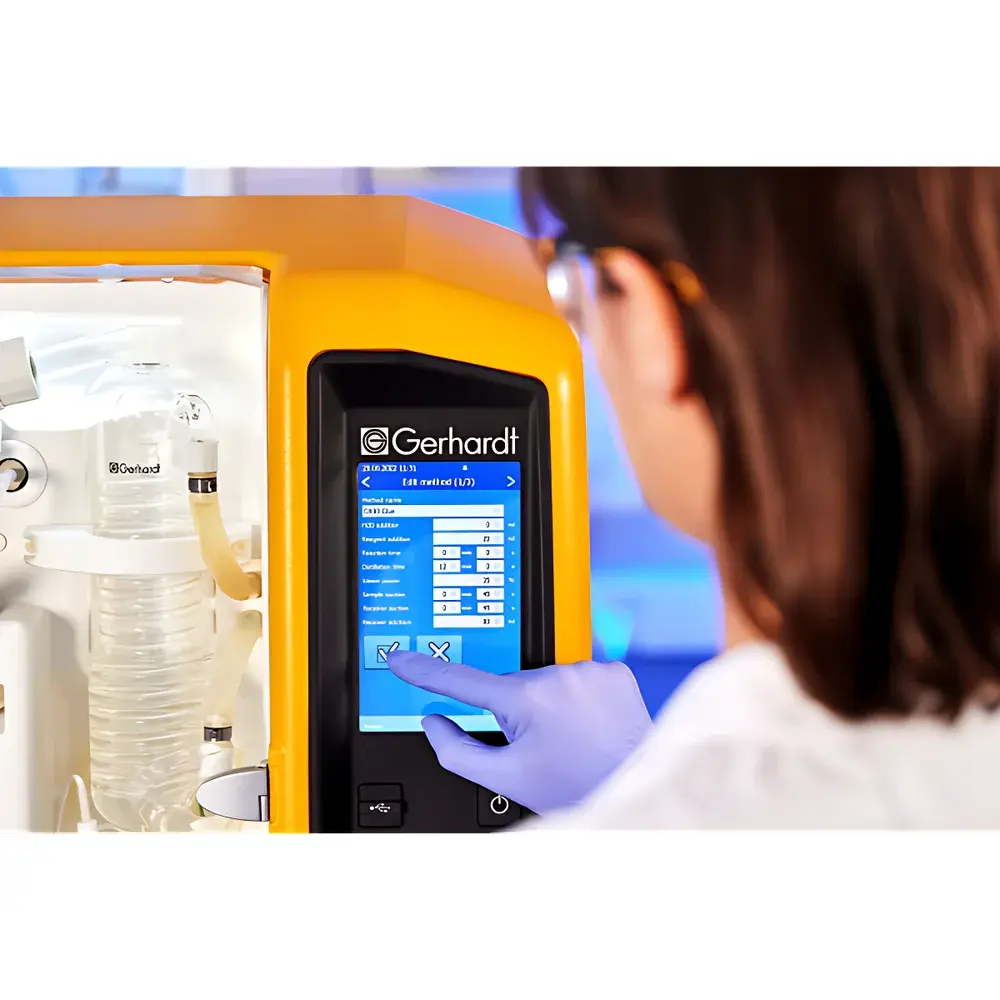
MasterLab software serves as the central control and data integrity platform. It provides intuitive method editor tools for defining distillation parameters (temperature ramp, steam duration, acceptor volume), titration settings (electrode type, endpoint algorithm, drift compensation), and sample metadata templates. The software supports role-based access control (administrator, analyst, reviewer), integrates seamlessly with laboratory balances, barcode scanners, printers, and LIMS via TCP/IP or OPC UA protocols, and enables bidirectional data exchange using ASTM E1384 or HL7-compliant formats. All data entries are immutable post-acquisition, with electronic signatures meeting ALCOA+ principles (Attributable, Legible, Contemporaneous, Original, Accurate, Complete, Consistent, Enduring, Available).
Applications
- Regulatory testing of formaldehyde adulteration in aquatic products (e.g., illegal preservation of fish and shrimp).
- Quality control of starch-based foods and plant proteins where formaldehyde may form during thermal processing or storage.
- Verification of formaldehyde residues in food contact materials and packaging leachates.
- Method validation studies supporting accreditation under CNAS, UKAS, or DAkkS scopes.
- Research applications involving reaction kinetics of formaldehyde release from Maillard intermediates or protein crosslinks.
FAQ
Does the VAPODEST 550C require daily pH electrode calibration?
No. The system uses a factory-calibrated, temperature-compensated pH composite electrode with automatic slope verification at each analysis start; routine calibration is not required for routine formaldehyde determination.
Can the instrument handle samples with high fat or protein content?
Yes. The soft-start heating profile and optimized steam flow dynamics prevent foaming and bumping; optional anti-foam reagent addition can be programmed via MasterLab.
Is the titration reagent delivery system traceable and verifiable?
Yes. The ceramic-microbore dosing pump undergoes volumetric verification per ISO 8655-3; flow rate accuracy is documented in the instrument’s calibration certificate and logged with each analysis.
How does the system ensure data integrity during network transmission to LIMS?
All data packets are transmitted with SHA-256 checksums and acknowledged receipt; failed transfers trigger automatic retry with error logging, satisfying ISO/IEC 17025 clause 7.5.2 on data protection.
What maintenance intervals are recommended for routine operation?
Daily visual inspection of tubing and electrodes; quarterly verification of steam generator pressure response and titrant delivery precision; annual full performance qualification including recovery tests with certified reference materials (e.g., NIST SRM 3220).




