
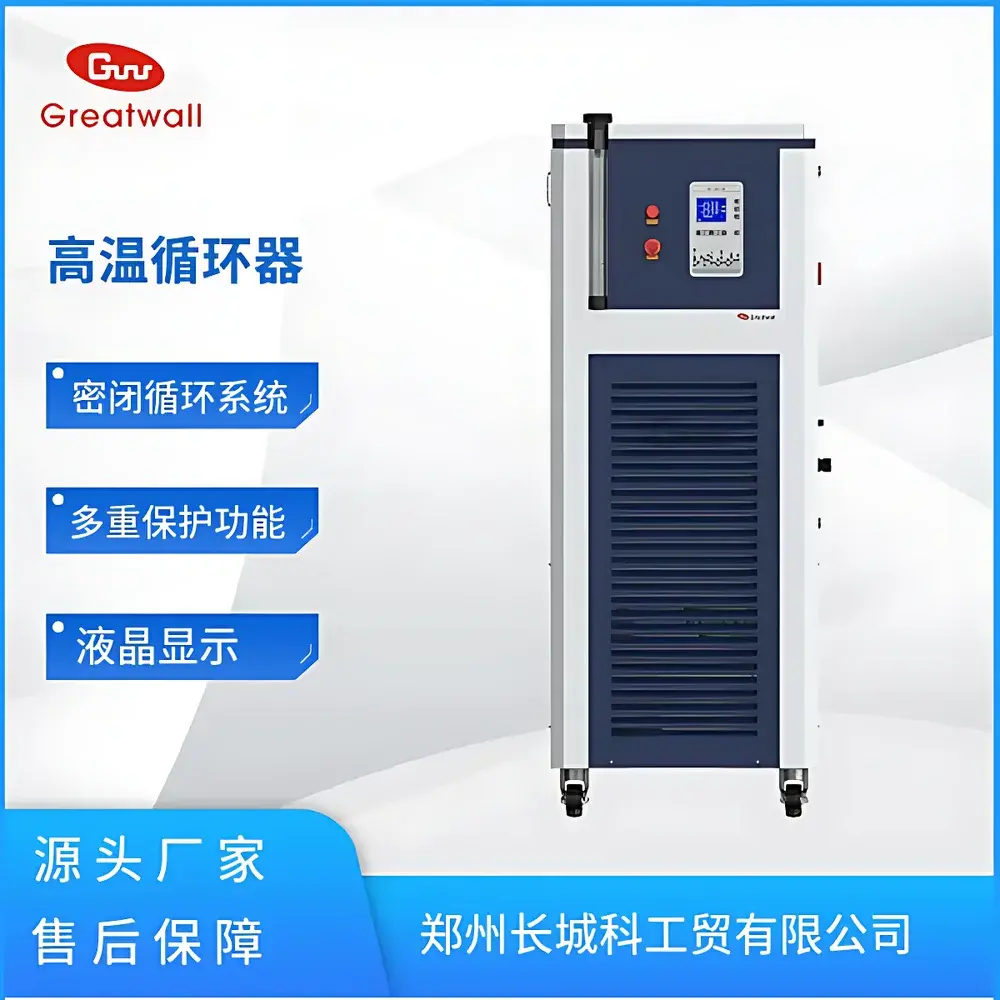
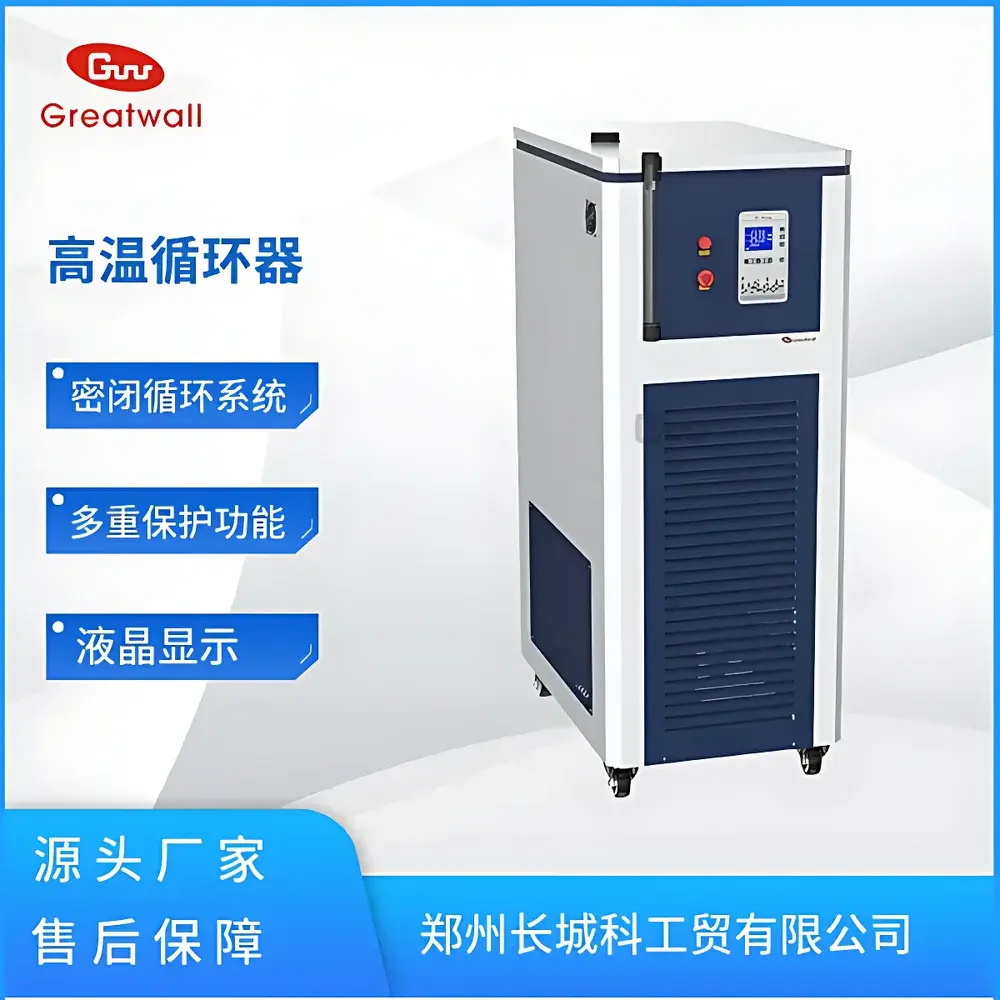
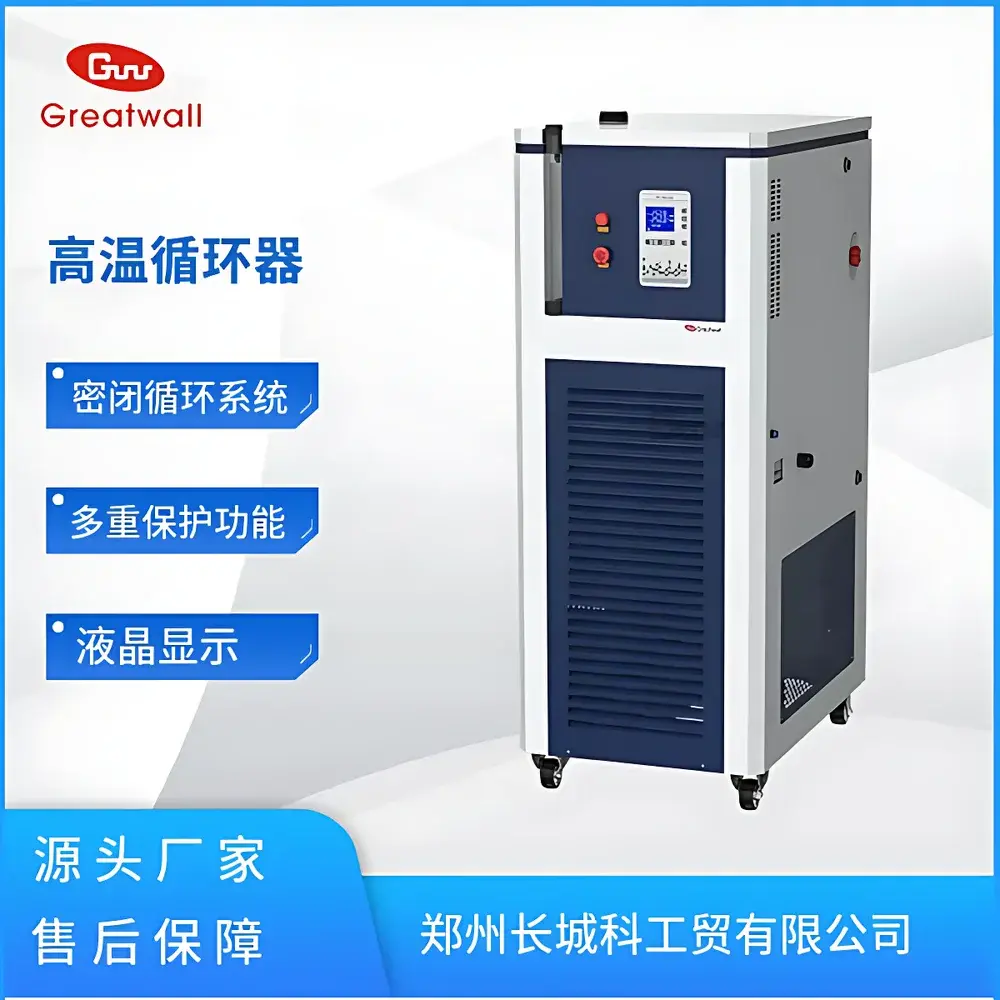
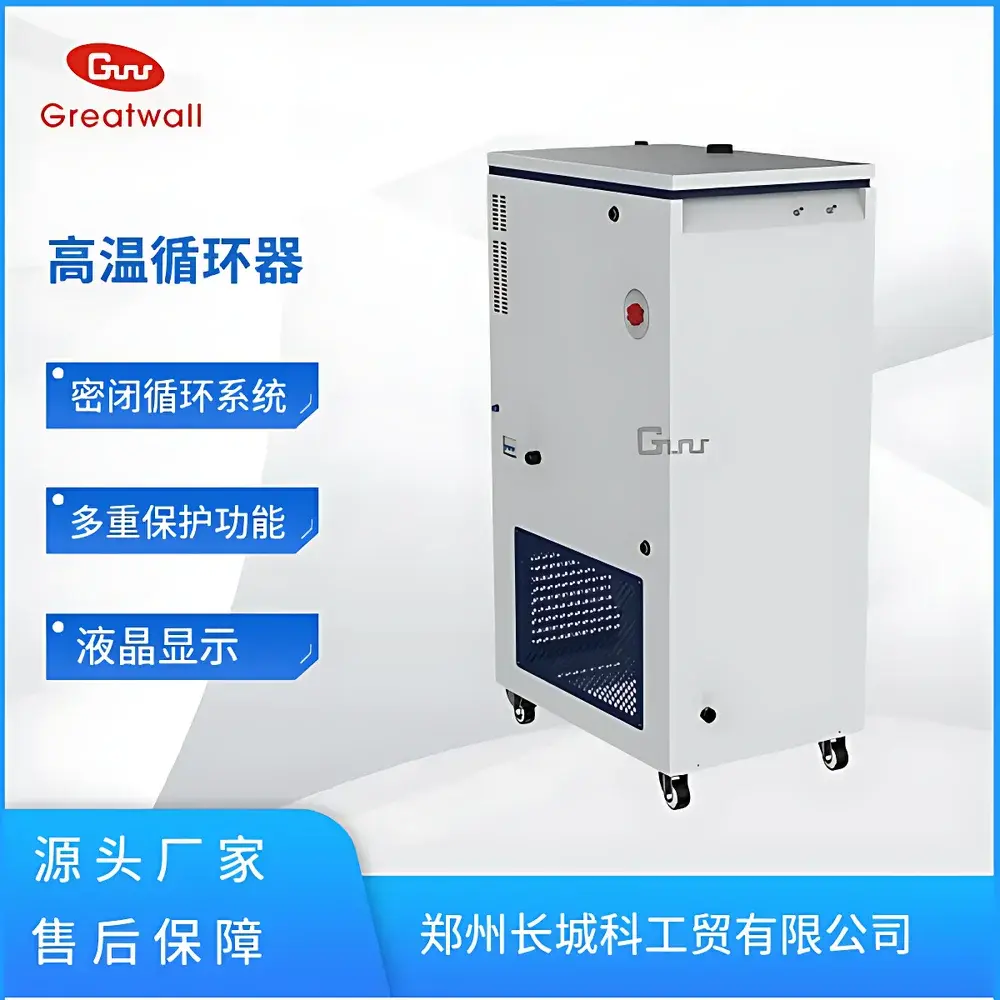
The Great Wall SY-200-200 High-Temperature Circulating Bath
| Brand | The Great Wall |
|---|---|
| Origin | Henan, China |
| Manufacturer Type | Direct Manufacturer |
| Country of Origin | China |
| Model | SY-200-200 |
| Temperature Range | +5 °C above ambient to 200 °C |
| Temperature Stability | ±0.5 °C |
| Circulation Flow Rate | 150 L/min |
| Maximum Pressure | 2.5 bar |
| Heating Power | 24 kW |
| Total Power Consumption | 24.75 kW |
| Pump Power | 750 W |
| Heat Transfer Fluid Capacity | 25 L |
| External Cooling Interface | R21 (cooling coil supplied) |
| Power Supply | 3-phase, 380 V, 50 Hz |
| IP Rating | IP20 |
| Pollution Degree | 2 |
| Dimensions (W×D×H) | 610 × 940 × 1590 mm |
| Weight | 240 kg |
| Safety Protections | Independent overtemperature cutoff, earth leakage protection, thermal overload protection, phase sequence monitoring, overcurrent protection |
Overview
The Great Wall SY-200-200 High-Temperature Circulating Bath is an engineered thermal management system designed for precise, stable, and reliable external temperature control in demanding laboratory and pilot-scale industrial processes. Operating on the principle of forced convection using a closed-loop circulation of high-temperature heat transfer oil, the unit delivers consistent thermal energy to external process equipment—including jacketed reactors, calorimeters, material testing chambers, and polymerization vessels—within a calibrated range from +5 °C above ambient up to 200 °C. Its fully sealed fluid circuit minimizes oxidation, volatilization, and moisture ingress, thereby preserving fluid integrity and extending service life under continuous operation. The integrated cooling coil enables active heat rejection via externally supplied chilled water, allowing dynamic temperature regulation even during exothermic process phases or rapid setpoint transitions.
Key Features
- Robust closed-loop architecture with stainless steel fluid path components and reinforced insulation to ensure long-term stability of thermal oil performance at elevated temperatures
- Real-time liquid level monitoring via transparent sight gauge and electronic level sensor with low-level alarm output
- Dual-stage safety architecture: primary thermal cutoff at 210 °C (independent of controller), secondary electronic overtemperature limit configurable within the PID interface
- Comprehensive electrical protection suite including residual current device (RCD), phase sequence detector, thermal relay, and electronic overcurrent tripping
- High-capacity centrifugal circulation pump (750 W) delivering up to 150 L/min at 2.5 bar pressure—optimized for low-pressure-drop external loops up to 50 m equivalent length
- R21-threaded external cooling port enabling integration with facility chilled water systems (recommended supply: 10–15 °C, 2–4 bar)
- Industrial-grade 3-phase 380 V/50 Hz power input with IP20-rated enclosure suitable for controlled indoor environments per IEC 60529 and IEC 60664-1
Sample Compatibility & Compliance
The SY-200-200 is compatible with standard synthetic heat transfer oils meeting ASTM D6722 or DIN 51522 specifications (e.g., Dowtherm J, Marlotherm SH, or comparable HTM fluids). It is not intended for use with water, glycol mixtures, or low-boiling-point solvents above 100 °C. The system supports GxP-aligned workflows through configurable event logging and password-protected parameter access. While not pre-certified to FDA 21 CFR Part 11, its operational logs (temperature setpoints, actuals, alarms, run duration) are exportable via RS485 Modbus RTU for integration into validated data acquisition platforms compliant with ISO/IEC 17025, GLP, and GMP Annex 11 requirements.
Software & Data Management
The unit features a microprocessor-based digital controller with dual-line LCD display and tactile membrane keypad. It supports programmable ramp-soak profiles (up to 10 segments), real-time deviation monitoring, and alarm history storage (last 100 events). Data logging is performed internally at 1-second intervals (buffered for 72 hours); historical records can be exported via USB flash drive or transmitted via Modbus RTU to SCADA or LIMS systems. Optional Ethernet module (SY-ETH-01) enables remote monitoring, firmware updates, and time-synchronized event stamping aligned with NTP servers.
Applications
- Temperature control of glass or stainless-steel jacketed reactors in pharmaceutical API synthesis and fine chemical manufacturing
- Thermal conditioning of tensile testers, DMA analyzers, and rheometers during high-temperature mechanical property evaluation of thermoplastics and composites
- Stabilized heating of distillation columns, extraction vessels, and crystallization units in pilot plant operations
- Calibration support for PT100 and thermocouple reference baths operating up to 200 °C
- Preconditioning of battery electrode slurries and solid-state electrolyte precursors in advanced materials R&D
FAQ
What heat transfer fluids are recommended for continuous operation at 200 °C?
Synthetic aromatic or alkylated aromatic heat transfer oils meeting ASTM D6722 Class III or DIN 51522 Type B specifications are required. Mineral oils are not suitable due to thermal degradation and coking risk above 180 °C.
Is external cooling water mandatory for operation below 60 °C?
Yes—when maintaining setpoints between ambient +5 °C and 60 °C, the internal water-cooled condenser must be activated with facility-supplied chilled water (10–15 °C) to prevent compressor-free overheating and ensure ±0.5 °C stability.
Can the unit be integrated into a central building management system (BMS)?
Yes—via optional RS485 Modbus RTU or Ethernet (Modbus TCP) interface, enabling read/write access to temperature setpoints, status flags, fault codes, and analog outputs for supervisory control.
What maintenance intervals are specified for long-term reliability?
Fluid analysis every 1,000 operating hours or annually (whichever occurs first); pump seal inspection every 2 years; calibration verification of temperature sensor and controller against NIST-traceable reference every 12 months.
Does the system support automatic restart after power failure?
No—per IEC 60204-1 safety requirements, the unit requires manual reset following power interruption to prevent unattended thermal runaway in external circuits.



