
Great Wall DHJF-4005 Low-Temperature Constant-Temperature Stirred Reaction Bath
| Brand | The Great Wall |
|---|---|
| Origin | Henan, China |
| Manufacturer Type | Direct Manufacturer |
| Instrument Type | Circulating Constant-Temperature Bath |
| Circulation Mode | External Recirculation |
| Temperature Control | Dual-mode (Refrigeration & Heating) |
| Bath Volume | 5 L |
| Temperature Range | −40 °C to +99 °C |
| Temperature Stability | ±0.2 °C |
| Heating Power | 1500 W |
| Pump Flow Rate | 20 L/min |
| Maximum Pressure | 0.4 bar |
| Power Supply | 220 V / 50 Hz |
| Total Power Consumption | 2450 W |
| External Dimensions (L×W×H) | 415 × 365 × 740 mm |
| Net Weight | 56 kg |
| Housing Material | Cold-Rolled Steel with Electrostatic Powder Coating |
| Ambient Operating Temperature | 5–25 °C |
| Opening Diameter × Depth | Ø250 × 130 mm |
| Drain Valve | Integrated |
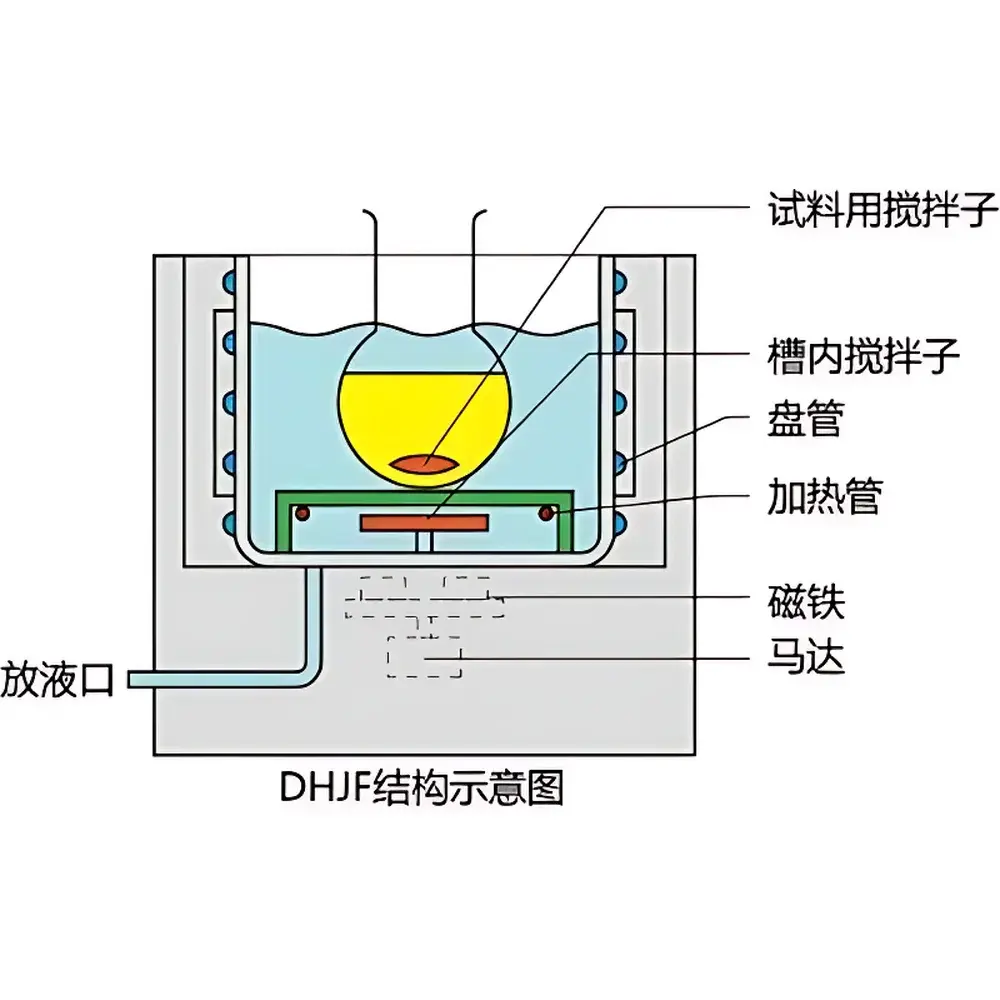
| Stirring System | Sealed Magnetic Stirrer with Optional Internal Secondary Stirring |
Overview
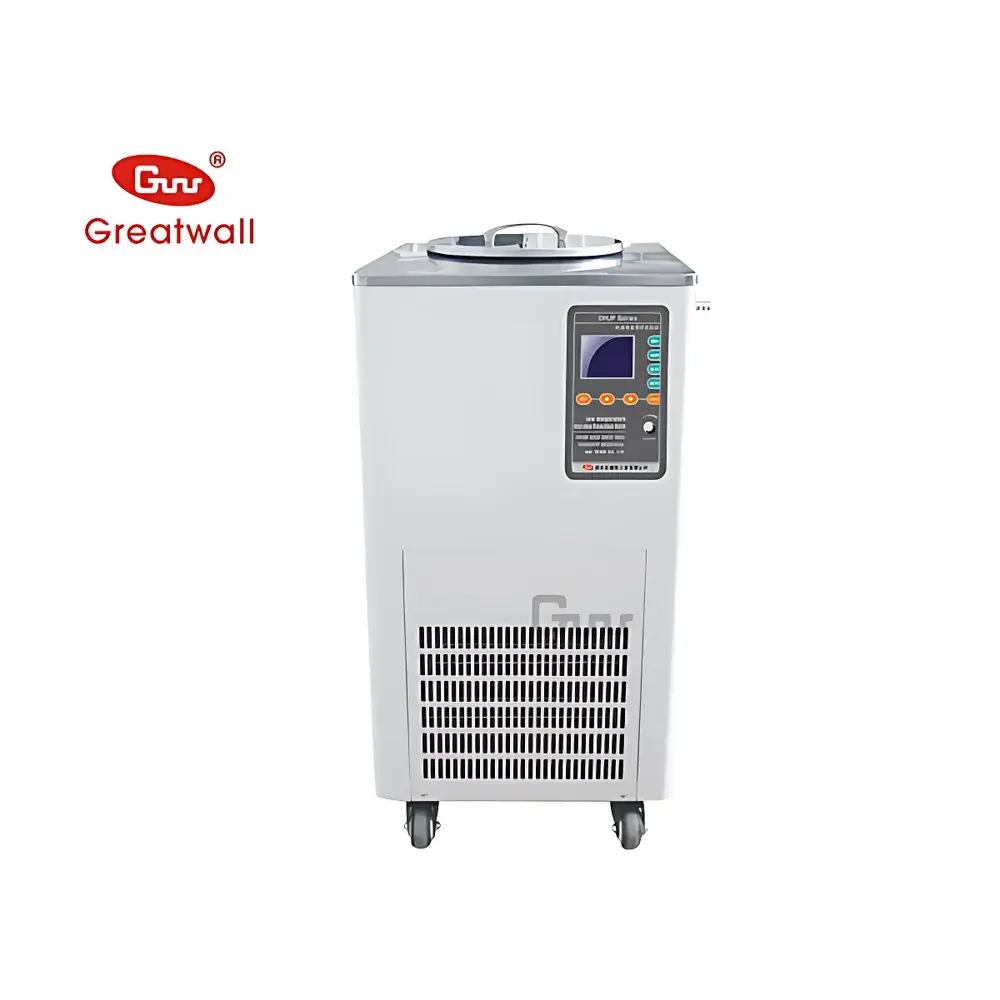
The Great Wall DHJF-4005 Low-Temperature Constant-Temperature Stirred Reaction Bath is an engineered thermal management platform designed for precise, stable, and dynamically controlled temperature environments in laboratory-scale chemical synthesis, enzymatic assays, and material characterization workflows. Unlike passive cooling methods—such as dry ice or liquid nitrogen baths—the DHJF-4005 employs a closed-loop refrigeration system combined with electric heating and high-efficiency magnetic stirring to deliver active, bidirectional thermal regulation across a wide operational range (−40 °C to +99 °C). Its core architecture integrates a hermetically sealed compressor from a globally recognized manufacturer, ensuring long-term reliability under continuous operation. The bath functions as both a direct immersion medium and a recirculating heat-transfer source: it maintains uniform thermal distribution within the 5-liter stainless-steel reservoir while simultaneously delivering conditioned fluid at up to 20 L/min and 0.4 bar pressure to external reactors, jacketed vessels, or analytical instrumentation via its external circulation port.
Key Features
- High-precision digital PID temperature control with ±0.2 °C stability over the full operating range, verified under steady-state conditions per ISO 17025-compliant calibration practices.
- Hermetically sealed magnetic stirrer housed within the bath chamber, eliminating mechanical seal wear and enabling contamination-free agitation of reaction mixtures placed directly in the reservoir.
- Optional secondary internal stirring capability—compatible with standard PTFE-coated magnetic stir bars—to enhance thermal homogeneity when used with tall or narrow reaction vessels.
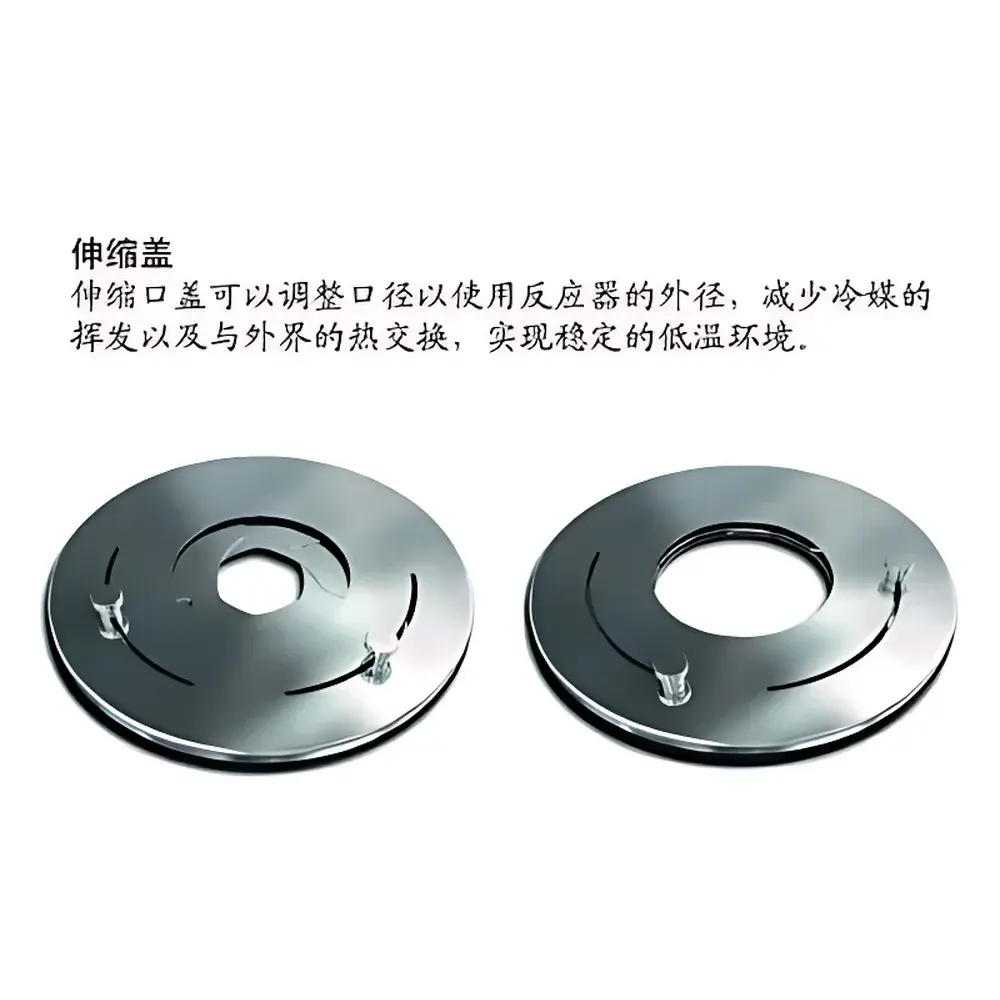
- Adjustable insulated lid with Ø250 mm opening, optimized to minimize cryogen or heat loss during extended low-temperature operations without restricting access to reaction vessels.
- Integrated drain valve positioned at the lowest point of the reservoir for complete, tool-free bath fluid replacement—critical for maintaining thermal performance and avoiding cross-contamination between experiments.
- Rigid cold-rolled steel housing with electrostatic powder coating provides structural integrity, corrosion resistance, and compatibility with standard laboratory fume hood integration.
- Dual-mode thermal actuation: independent refrigeration and resistive heating circuits allow seamless transition between sub-zero and near-boiling conditions without manual reconfiguration.
Sample Compatibility & Compliance
The DHJF-4005 accommodates standard laboratory glassware—including round-bottom flasks (up to 2 L), beakers, test tubes, and jacketed reactors—via its 250 mm diameter opening and 130 mm depth. Its external circulation interface supports connection to third-party equipment requiring temperature-controlled coolant flow (e.g., condensers, spectrophotometer cells, or calorimetry modules). The unit complies with IEC 61010-1:2010 safety standards for electrical equipment used in laboratory environments. While not certified for GMP production environments, its temperature logging capability (via optional RS485/Modbus output) supports GLP-aligned data traceability when integrated into validated lab information management systems (LIMS). All materials in contact with thermal fluid meet USP Class VI biocompatibility requirements for non-invasive research applications.
Software & Data Management
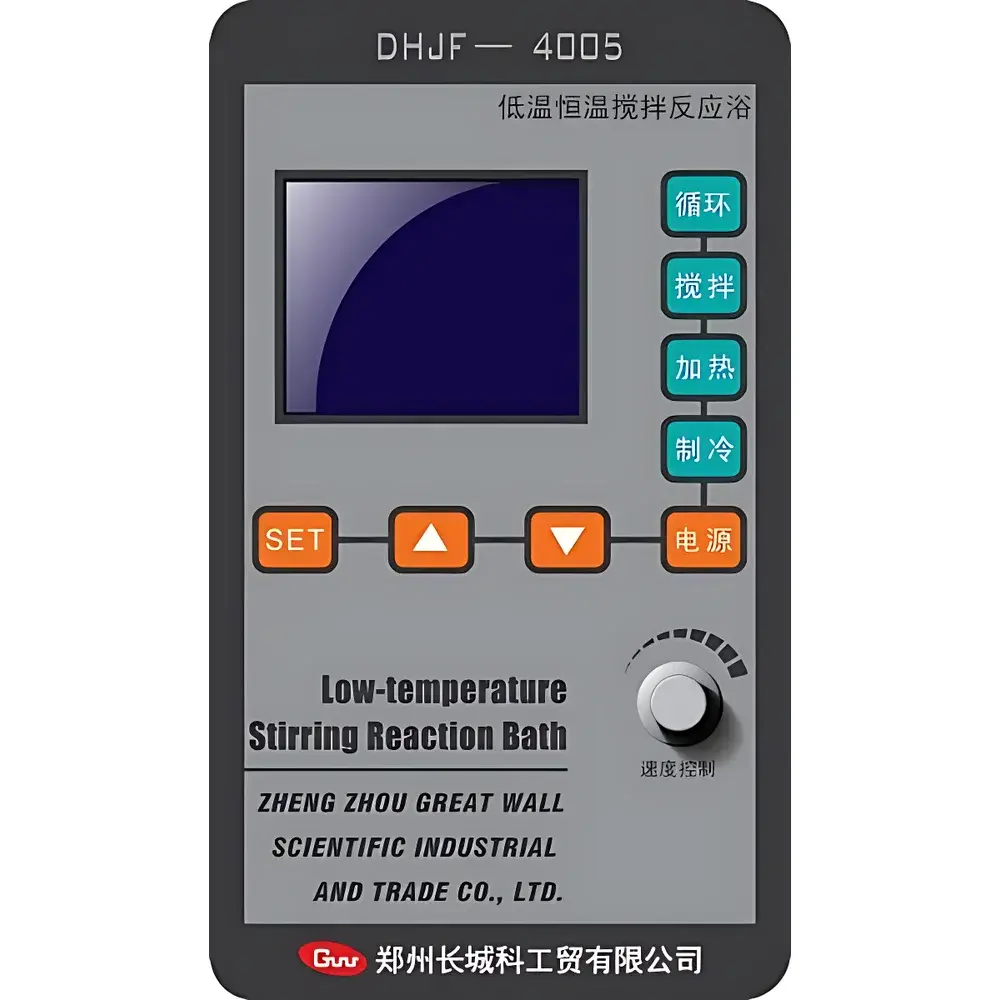
The DHJF-4005 features a front-panel LCD interface with real-time temperature display, setpoint entry, and status indicators for refrigeration, heating, and stirring activation. For enhanced process documentation, an optional RS485 serial interface enables integration with PC-based data acquisition software (e.g., LabVIEW or custom Python scripts) to log temperature profiles, power consumption events, and alarm timestamps. When deployed in regulated settings, the device supports audit-trail generation through external SCADA platforms compliant with FDA 21 CFR Part 11 requirements—provided user-defined electronic signatures and data encryption protocols are implemented at the host system level.
Applications
- Controlled-temperature enzymatic kinetics studies in biochemistry laboratories, where thermal stability directly affects Michaelis–Menten parameters and protein folding behavior.
- Catalytic hydrogenation, Grignard reactions, and lithiation processes requiring strict exotherm suppression below −20 °C.
- Calibration of thermocouples, RTDs, and infrared pyrometers against NIST-traceable reference points across extended sub-zero ranges.
- Stabilization of optical components (e.g., laser diodes, photomultiplier tubes) during spectral acquisition to reduce thermal drift-induced signal noise.
- Pre-conditioning of polymer solutions prior to rheological testing, ensuring reproducible viscoelastic baseline states before shear application.
- Support of ASTM D5296 (gel permeation chromatography) and ISO 1628-1 (viscosity number determination) protocols requiring solvent temperature control within ±0.1 °C tolerance bands.
FAQ
Can the DHJF-4005 maintain −40 °C continuously with a 5 L load?
Yes—when operated in a controlled ambient environment (5–25 °C), the unit achieves and sustains −40 °C in the reservoir using synthetic refrigerant R404A and a high-efficiency scroll compressor. Continuous operation at this extreme requires adequate ventilation and avoidance of ambient humidity ingress.
Is the external circulation loop compatible with ethylene glycol/water mixtures?
Yes—the pump and internal wetted parts are constructed from stainless steel, brass, and fluoropolymer seals, making them chemically resistant to common heat-transfer fluids including 30–60% ethylene glycol aqueous solutions.
Does the magnetic stirrer operate independently of the temperature control system?
Yes—stirring speed is adjustable via dedicated front-panel controls and remains functional across the entire temperature range, including during ramping phases.
What maintenance intervals are recommended for optimal performance?
Compressor oil inspection every 12 months; refrigerant charge verification every 24 months by authorized service personnel; routine cleaning of air intake grilles and condenser coils every 3 months in dusty environments.
Can the unit be integrated into a building management system (BMS)?
Via optional Modbus RTU communication, yes—the DHJF-4005 supports read-only register access for temperature, status flags, and fault codes, enabling centralized monitoring in multi-instrument laboratory infrastructures.



