
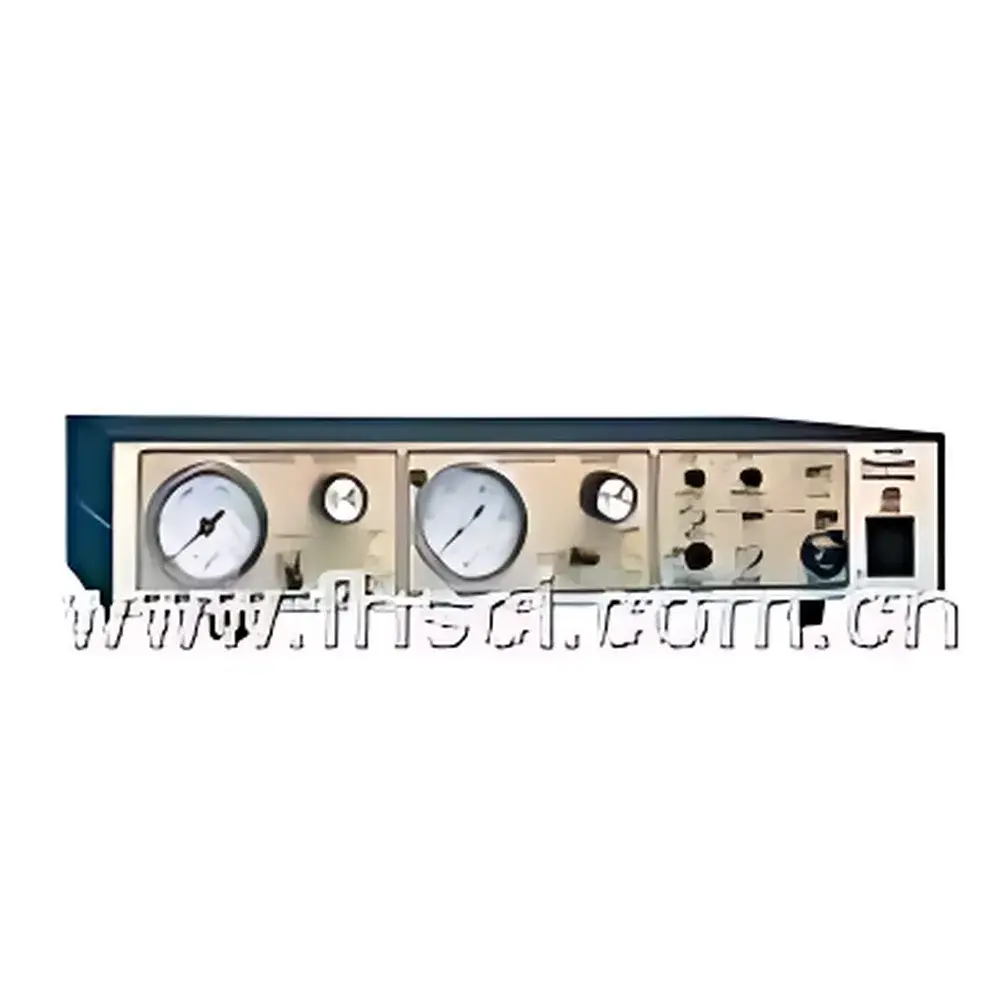
Pneumatic Picoliter Pump PV820
| Origin | USA |
|---|---|
| Manufacturer Type | Authorized Distributor |
| Origin Category | Imported |
| Model | PV820 |
| Pricing | Upon Request |
Overview
The Pneumatic Picoliter Pump PV820 is an engineered microinjection control system designed for high-precision, low-volume fluid delivery in live-cell manipulation, intracellular injection, and microscale assay preparation. Operating on a dual-pressure pneumatic principle—separately regulated positive (ejection) and negative (vacuum/suction) pressure pathways—the PV820 enables deterministic control over picoliter-scale liquid displacement with sub-millisecond temporal resolution. Its core architecture leverages fast-response solenoid valves and calibrated pressure transducers to generate reproducible ejection pulses (10 ms to 10 min adjustable), sustained holding pressure for capillary tip stabilization, and vacuum-assisted pipette loading or cell suspension maintenance. Unlike syringe-based or electrokinetic dispensers, the PV820 avoids thermal drift, mechanical hysteresis, and electrical interference—making it suitable for electrophysiology-integrated workflows, patch-clamp preparations, and time-sensitive developmental biology experiments where pressure fidelity directly impacts cellular viability and experimental repeatability.
Key Features
- Dual independent pressure channels: Ejection pressure (0.3–90 psi) and holding pressure (0–90 psi), each controllable via dedicated 20-step rotary dials on the front panel
- Vacuum regulation (0 to –15 psi typical range) for pipette tip priming, cell suspension stabilization, and backfilling of glass capillaries
- Three activation modes: Manual front-panel trigger, foot switch interface, or TTL-compatible 5 V logic pulse input (compatible with DAQ systems, Arduino, or microscope-triggered acquisition)
- Programmable ejection timing: Pulse duration adjustable from 10 milliseconds to 10 minutes; precise valve actuation ensures consistent volume delivery across repeated cycles
- Pressure input range: 0–150 psi compressed air or nitrogen supply (regulated external source required)
- Integrated pressure relief and atmospheric venting via front-panel elbow fitting for rapid pressure equalization and safe tip ejection
- Robust aluminum chassis with ESD-safe surface finish, optimized for benchtop integration within laminar flow hoods and electrophysiology rigs
Sample Compatibility & Compliance
The PV820 is compatible with standard borosilicate or quartz micropipettes (1–5 µm tip diameter), pulled capillaries used in single-cell injection, and custom-fabricated microfluidic probes. It supports aqueous buffers, dye solutions, plasmid DNA, siRNA, CRISPR ribonucleoprotein complexes, and viscous cytoplasmic extracts—provided viscosity remains below 20 cP at operating temperatures (15–30 °C). The device complies with IEC 61000-6-2 (electromagnetic immunity) and IEC 61000-6-4 (emission) standards. While not FDA-cleared as a medical device, its pressure control architecture aligns with GLP documentation requirements for preclinical research, and its TTL interface supports 21 CFR Part 11–compliant audit trails when integrated with validated laboratory data management systems.
Software & Data Management
The PV820 operates as a stand-alone hardware controller with no proprietary software dependency. All operational parameters—including ejection pressure, holding pressure, vacuum level, pulse width, and trigger source—are set physically via front-panel dials and switches, ensuring deterministic, latency-free response without firmware or driver layers. For automated workflows, the 5 V TTL output provides synchronized logic-level signals to external recording systems (e.g., Axon pCLAMP, PatchMaster, or custom Python/Matlab acquisition scripts), enabling precise alignment of injection events with electrophysiological recordings or fluorescence imaging timestamps. Pressure calibration certificates (NIST-traceable) are provided upon request for ISO/IEC 17025-aligned lab audits.
Applications
- Intracytoplasmic sperm injection (ICSI) and oocyte microinjection in reproductive biology
- CRISPR-Cas9 RNP delivery into primary neurons, stem cells, and organoids
- Localized neurotransmitter uncaging or pharmacological perturbation in brain slice electrophysiology
- High-throughput microinjection in C. elegans, Drosophila embryos, and zebrafish blastomeres
- Calibration and validation of microfluidic droplet generators and nanoliter dispensers
- Cellular mechanobiology studies requiring controlled hydrostatic stress application
FAQ
What is the minimum controllable ejection volume?
The PV820 does not specify absolute volume output, as dispensed volume depends on capillary geometry, fluid viscosity, pressure setting, and pulse duration. With a 1.5 µm tip and 50 psi ejection pressure over 20 ms, typical delivery ranges from 0.5 to 5 pL—verified via fluorescent dye calibration and confocal volumetric imaging.
Can the PV820 be integrated with inverted microscopes equipped with motorized stages?
Yes. The TTL input/output interface allows synchronization with microscope trigger outputs (e.g., Hamamatsu ORCA cameras, Prior ProScan stages), enabling position-triggered injections during automated multi-field acquisition.
Is nitrogen gas required, or can shop air be used?
Filtered, oil-free compressed air (dew point ≤ –40 °C, particle ≤ 0.01 µm) is acceptable. Nitrogen is recommended for long-term valve longevity and when working with oxygen-sensitive reagents.
Does the unit include pressure calibration documentation?
Each PV820 ships with a factory pressure verification report traceable to NIST standards. Optional annual recalibration services are available through authorized service centers.
How is vacuum level adjusted during live-cell injection?
Vacuum is independently tuned using the 20-step front-panel dial and monitored via analog gauge. It is typically set between –2 and –8 psi to gently suspend cells without membrane deformation while preventing capillary clogging.
Related Products



