
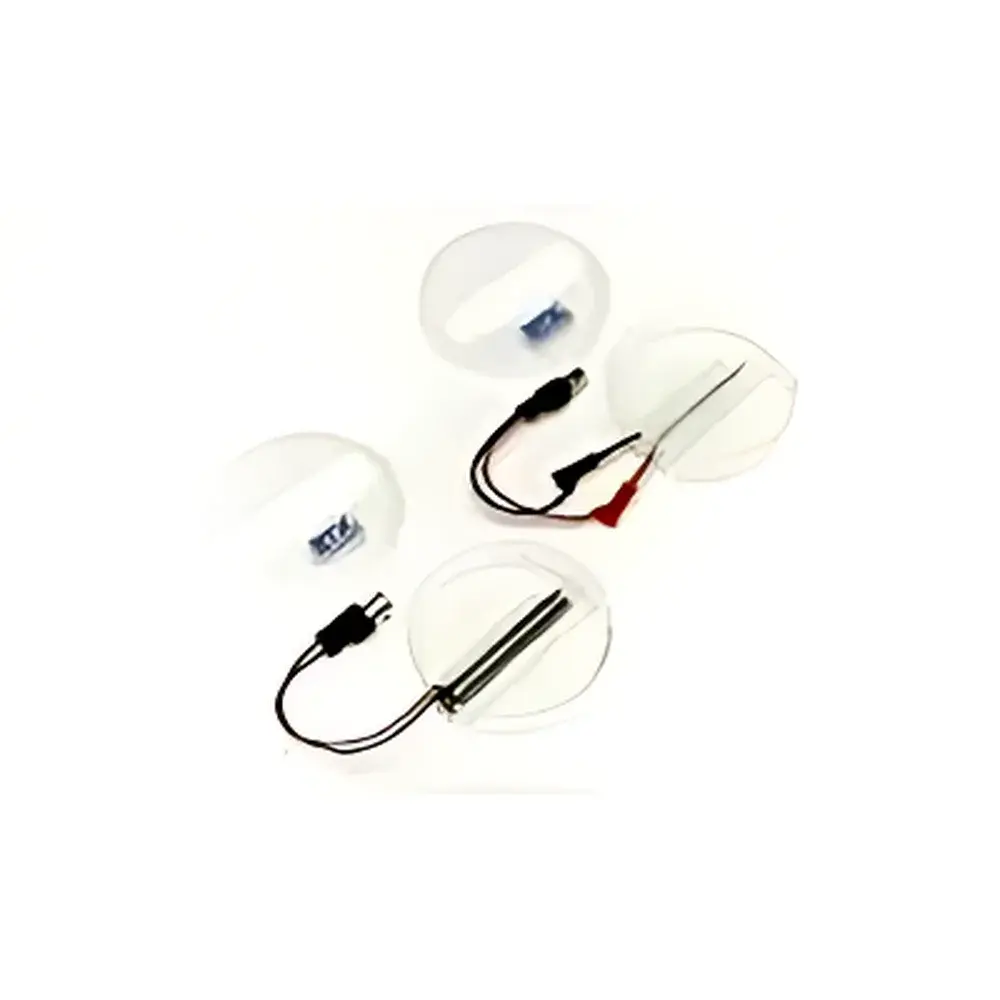
Harvard Apparatus BTX Model 450/453 Electrofusion Microslide System
| Brand | Harvard Apparatus |
|---|---|
| Origin | USA |
| Model Variants | 450, 450-1, 453, 453-10 |
| Voltage Range | 0–500 VDC |
| Pulse Duration | 1 µs – 99 ms |
| Pulse Count | 1–99 |
| Electrode Gap Options | 0.5 mm, 1.0 mm, 3.2 mm, 10 mm |
| Sample Volume Capacity | 20 µL – 2.2 mL |
| Operating Temperature | 5–40 °C |
| Relative Humidity | 20–80% |
| Altitude Limit | ≤2000 m |
| Insulation Category | CAT I |
| Pollution Degree | II |
| Autoclavable | No |
| Compatible Generators | ECM® 2001, ECM 630, 830, 395, 399, 600, T820 |
Overview
The Harvard Apparatus BTX Electrofusion Microslide System (Models 450, 450-1, 453, and 453-10) is a precision-engineered platform for controlled electroporation and electrofusion of mammalian cells, plant protoplasts, and preimplantation embryos. Designed for integration with standard inverted microscopes, the system enables real-time visualization of cell alignment, membrane destabilization, and dimer formation under high-magnification optics. Its operational principle relies on transient, high-voltage DC pulses applied across precisely spaced conductive electrodes embedded in a glass substrate—generating spatially divergent (Model 450 series) or homogeneous (Model 453 series) electric fields that induce reversible pore formation and subsequent membrane fusion. This architecture ensures reproducible field distribution within microliter-scale sample volumes while minimizing thermal artifacts and electrode polarization effects common in bulk cuvette-based systems.
Key Features
- Glass-based microslide platform with integrated stainless steel electrodes—0.5 mm diameter tubing (450/450-1) or square-section bars (453/453-10)—engineered for mechanical stability and consistent electrical contact.
- Adjustable inter-electrode gap geometry (0.5 mm to 10 mm) enabling systematic optimization of field strength (V/cm) and effective treatment volume (20 µL to 2.2 mL) for diverse cell types and fusion protocols.
- Microscope-compatible footprint allowing direct observation during pulse delivery; no optical obstruction from external electrodes or chamber walls.
- Chemically inert surface compatible with mild detergent cleaning and sterilization via 70% ethanol immersion or ethylene oxide gas exposure—validated for repeated use under GLP-aligned laboratory workflows.
- Modular connectivity: Micrograbber (Model 450) or Square Post Cable (Model 453) interfaces ensure secure, low-inductance coupling to Harvard Apparatus ECM-series electroporators—including ECM 2001, ECM 630, and T820—supporting full parameter control over voltage, pulse width, and train repetition.
Sample Compatibility & Compliance
The BTX Microslide System supports fusion of adherent and suspension cells (e.g., CHO, BHK, hybridoma), plant protoplasts (tobacco, Arabidopsis), and murine/human zygotes and blastomeres. It complies with IEC 61010-1:2010 for laboratory electrical equipment safety, meeting Pollution Degree II and CAT I insulation requirements. While not autoclavable, its materials meet USP Class VI biocompatibility standards for short-term biological contact. The system is intended for indoor use only, with environmental operating limits defined per ISO 13485 Annex C (temperature: 5–40 °C; humidity: 20–80% RH; altitude ≤2000 m). Documentation includes traceable part numbers and reference protocols aligned with ASTM F2974-14 (standard guide for electroporation of mammalian cells) and USDA-APHIS-regulated embryo manipulation guidelines.
Software & Data Management
The Microslide System operates as a hardware-peripheral component of Harvard Apparatus ECM generator platforms, which support audit-trail-capable parameter logging (voltage, pulse count, duration) compliant with FDA 21 CFR Part 11 when used with validated ECM firmware versions (v3.2+). Pulse sequences are programmable via front-panel interface or optional PC-based ECM Control Software (Windows 10/11, USB 2.0), enabling method storage, timestamped run records, and export of CSV-formatted session data for QC review. No proprietary cloud services or remote access functionality is included—ensuring full data sovereignty and alignment with institutional IT security policies.
Applications
- Production of somatic hybridomas via fusion of antibody-secreting B-cells with immortalized myeloma lines.
- Generation of interspecific plant hybrids through protoplast electrofusion—particularly for species recalcitrant to PEG-mediated fusion.
- Preimplantation genetic diagnosis (PGD)-associated embryo biopsy and blastomere fusion in assisted reproductive technology (ART) research settings.
- Stem cell reprogramming studies requiring controlled cytoplasmic transfer between donor and recipient cells.
- Development of fusogenic viral pseudotype systems using engineered envelope glycoproteins co-expressed in fused producer cells.
FAQ
Can the Microslides be sterilized using autoclaving?
No. Autoclaving is not recommended due to thermal stress on the glass–metal interface and potential delamination of electrode bonds. Sterilization must be performed using 70% ethanol immersion or ethylene oxide gas exposure.
Which ECM generators are validated for use with the 453-series slides?
ECM 2001, ECM 630, ECM 830, and T820 generators have been experimentally verified for stable output delivery to Model 453 slides. Generator firmware version ≥2.8 is required for precise pulse-width resolution below 10 µs.
Is real-time imaging possible during pulse application?
Yes. The transparent glass substrate and minimal electrode profile permit uninterrupted phase-contrast or fluorescence microscopy during electroporation—enabling frame-by-frame analysis of membrane blebbing, cell alignment, and fusion pore dynamics.
What buffer conductivity range is optimal for consistent fusion efficiency?
Buffers with conductivity between 0.5–2.5 mS/cm (e.g., mannitol-based fusion media, low-conductivity PBS variants) yield highest reproducibility. High-conductivity buffers (>5 mS/cm) may cause premature arcing or non-uniform field distribution.
Are replacement parts and cables supplied with traceable lot documentation?
Yes. All consumables—including Micrograbber (P/N 06-700043-01), Square Post Cables (P/N 06-700044-01), and Coaxial BNC cables (P/N 06-700042-01)—are supplied with certificate of conformance and batch-specific test reports per ISO 9001:2015 quality management system requirements.





