
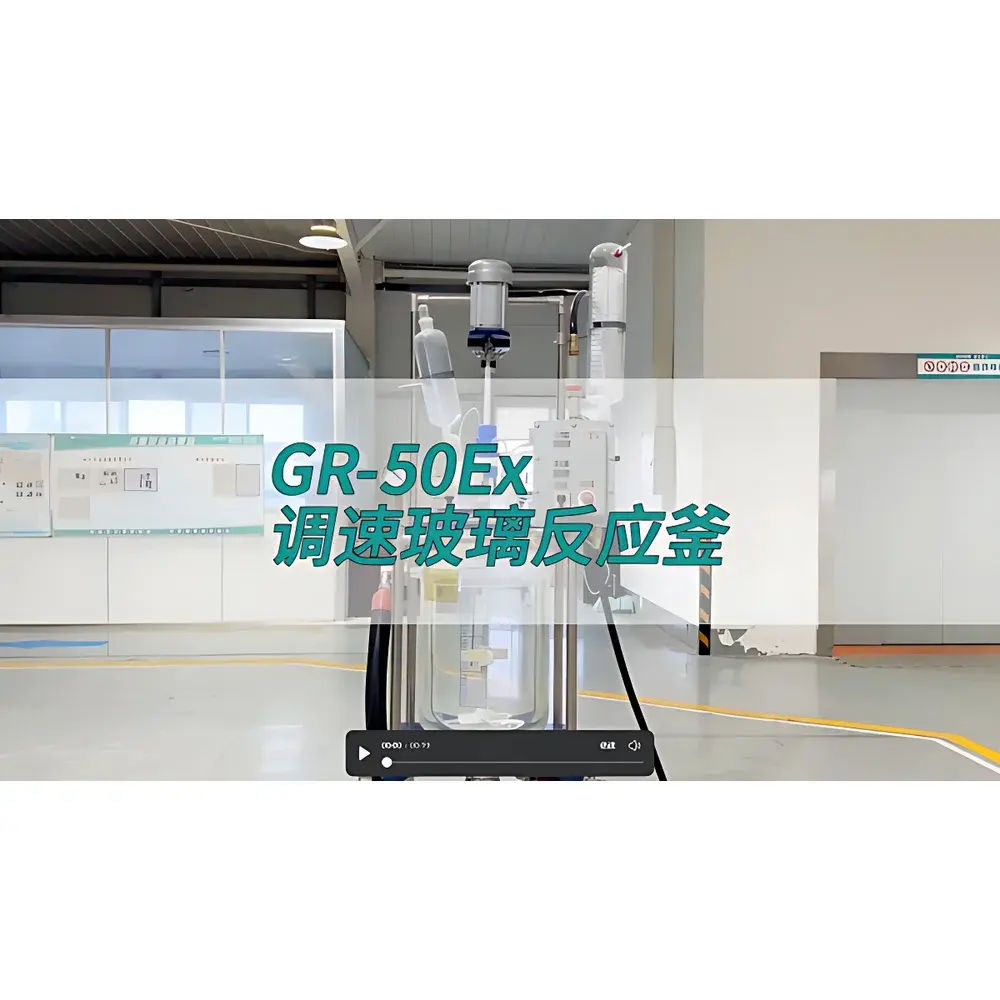
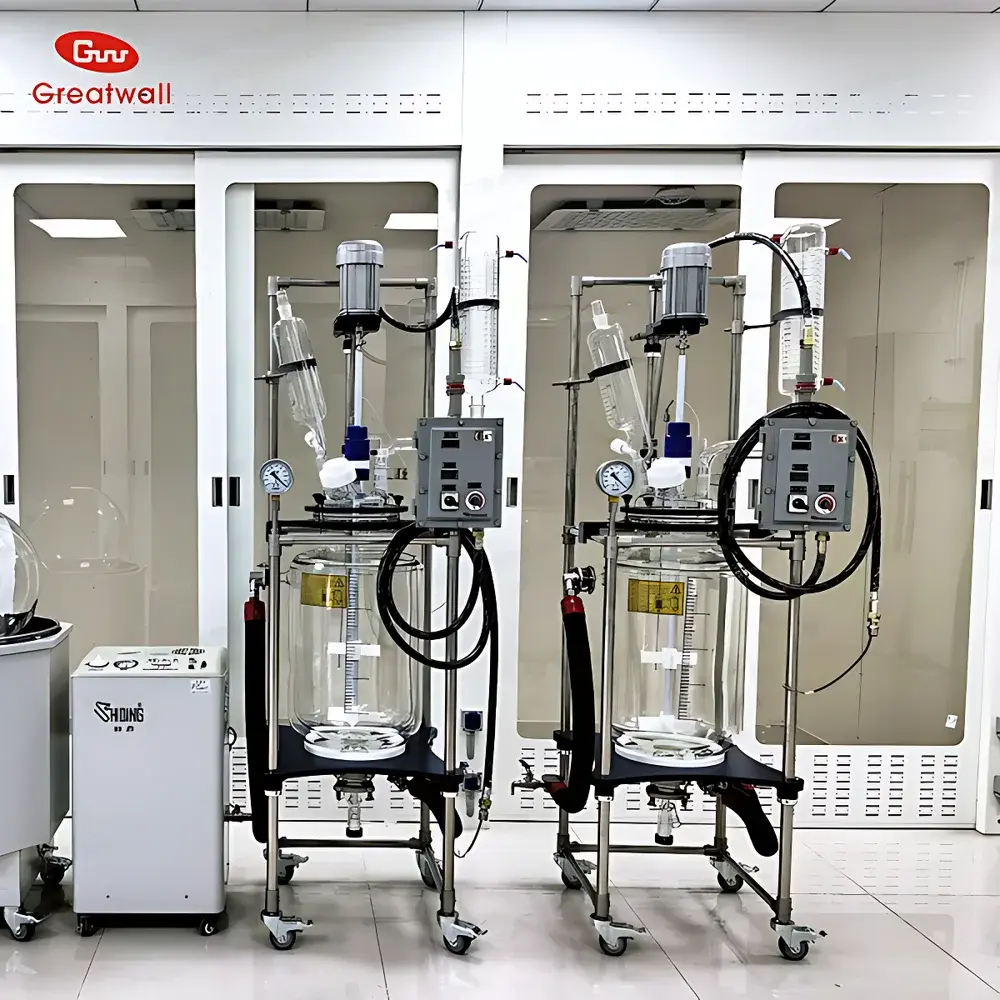
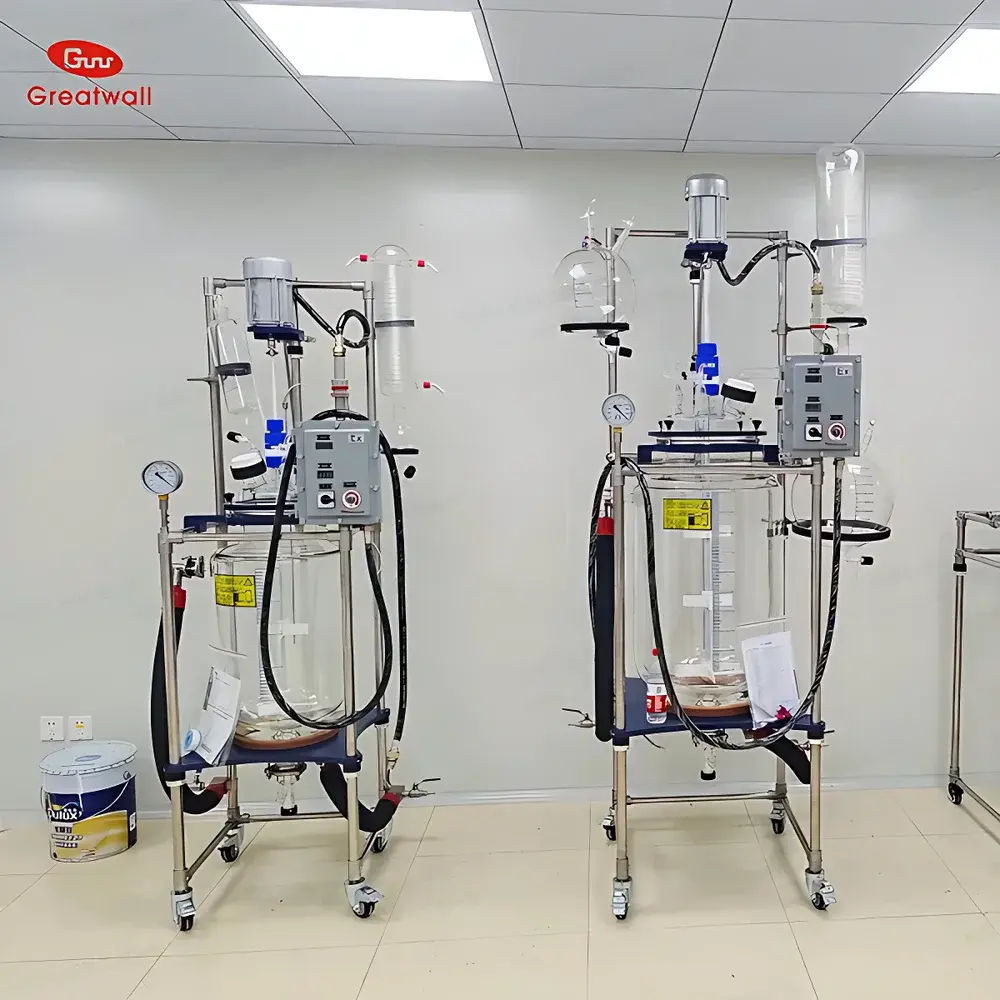
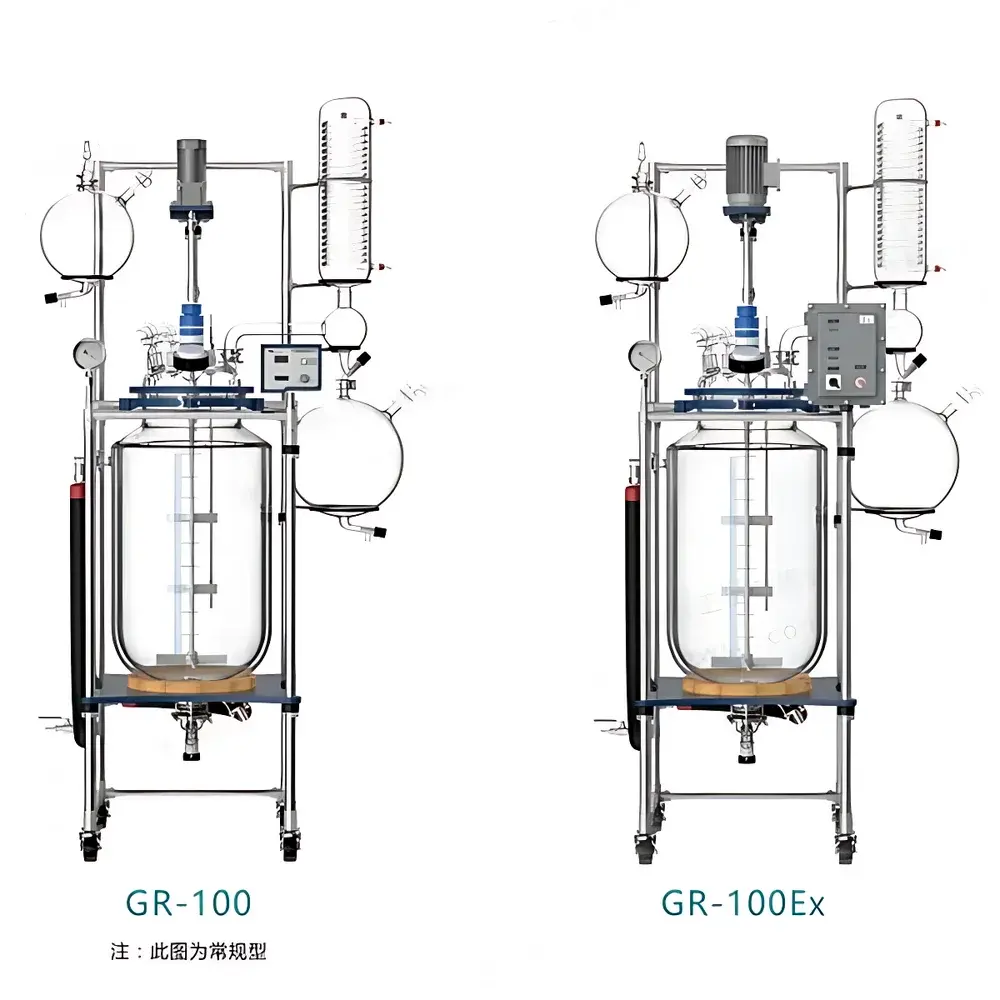
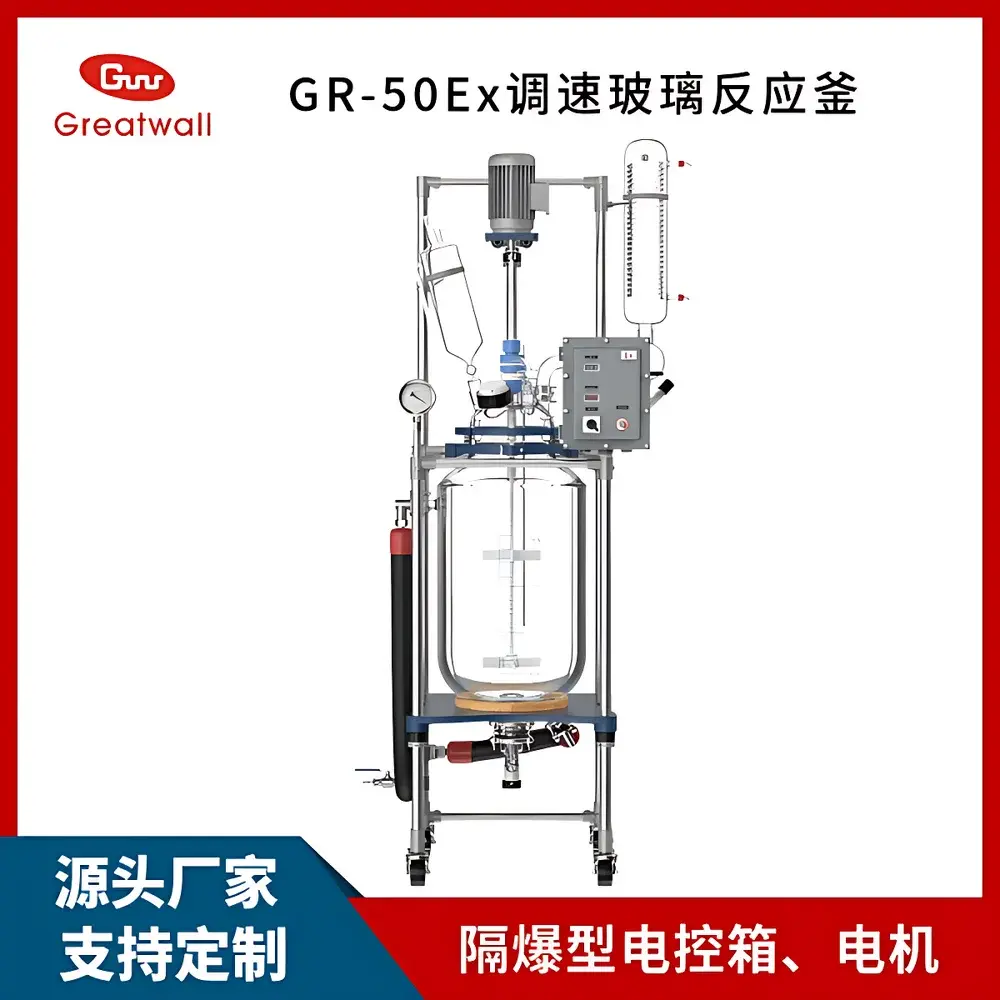
Great Wall GR-5~100 Explosion-Proof Double-Jacketed Glass Reactor
| Brand | The Great Wall |
|---|---|
| Origin | Henan, China |
| Manufacturer Type | Direct Manufacturer |
| Origin Category | Domestic |
| Model | GR-5~100 |
| Capacity | 5–100 L |
| Vessel Material | Borosilicate Glass 3.3 |
| Working Pressure Range | −0.1 MPa to 0 MPa (gauge) |
| Vacuum Level | 0.095 MPa (absolute) |
| Temperature Range | −80 °C to +200 °C |
| Jacket Configuration | Double-jacketed (vacuum-insulated outer jacket option available) |
| Drive Motor Options | Three-phase induction motor or brushless DC motor |
| Explosion Protection Rating | Ex db IIB T4 Gb |
| Stirring Shaft Material | 06Cr19Ni10 stainless steel with PTFE cladding |
| Impeller Material | PTFE |
| Sealing System | Proprietary mechanical seal assembly |
| Frame Material | 06Cr19Ni10 stainless steel + aluminum alloy with epoxy powder coating |
| Mobility | Casters with locking brakes |
| Drain Valve | Zero-holdup PTFE-lined discharge valve |
| Jacket Fluid Inlet/Outlet | Stainless steel insulated flexible hoses |
Overview
The Great Wall GR-5~100 Explosion-Proof Double-Jacketed Glass Reactor is an engineered platform for controlled chemical synthesis, process development, and laboratory-scale reaction optimization under inert, vacuum, or low-pressure conditions. Designed around the principles of thermal isolation, mechanical stability, and intrinsic safety, this reactor employs a dual-wall borosilicate glass 3.3 vessel—where the annular space between inner and outer walls supports either circulating thermal fluid or high-vacuum insulation (down to 0.095 MPa absolute). Its operational envelope spans −80 °C to +200 °C, enabling cryogenic condensation, reflux distillation, exothermic quenching, and high-temperature catalytic reactions—all while maintaining structural integrity and optical clarity for real-time visual monitoring. The system complies with fundamental design criteria outlined in ISO 14001 (environmental management) and aligns with general safety expectations for Class II hazardous location equipment per IEC 60079-0 and IEC 60079-1, as certified by its Ex db IIB T4 Gb marking.
Key Features
- Borosilicate glass 3.3 construction throughout all wetted components—including vessel, condenser, addition funnel, and collection adapter—ensuring exceptional thermal shock resistance, chemical inertness against acids, alkalis, and organic solvents, and long-term dimensional stability.
- Vacuum-compatible double-jacket design allows precise temperature control via external circulators or passive thermal insulation; optional third-layer configuration supports ultra-low-temperature operation with liquid nitrogen or dry ice cooling.
- Explosion-proof drive train: motor and control cabinet rated Ex db IIB T4 Gb for use in Zone 1/2 classified environments where flammable vapors (e.g., acetone, ethanol, ethyl ether) may be present during batch processing.
- Zero-holdup PTFE-lined discharge valve eliminates cross-contamination and residue carryover—critical for multi-step synthesis, pharmaceutical intermediate handling, and GLP-compliant sample recovery.
- Stirring assembly features a proprietary mechanical seal using fluorocarbon elastomers and ceramic faces, delivering >10,000 hours of maintenance-free operation under continuous agitation at up to 300 rpm (model-dependent).
- Modular frame integrates lockable casters, adjustable leveling feet, and corrosion-resistant powder-coated 06Cr19Ni10 stainless steel/aluminum hybrid structure—designed for repeated repositioning in shared lab spaces without compromising rigidity.
Sample Compatibility & Compliance
The GR series accommodates heterogeneous, homogeneous, and gas-liquid phase reactions involving corrosive reagents (e.g., HF, fuming HNO₃), moisture-sensitive organometallics (e.g., Grignard reagents), and air-sensitive catalysts (e.g., Pd/C, Ni-Raney). All glass joints conform to standard ISO 2768-mK tolerances; ground-glass interfaces utilize PTFE sleeves and spring-loaded tensioning for repeatable leak-tight sealing (<1×10⁻³ mbar·L/s He leak rate). The system meets general requirements for laboratory reactor safety per ASTM E2515–21 and supports documentation traceability for FDA 21 CFR Part 11–compliant workflows when integrated with validated data acquisition modules.
Software & Data Management
While the base GR-5~100 operates via analog/manual controls, optional digital integration kits enable RS485/Modbus RTU communication with third-party SCADA or LIMS platforms. Temperature, pressure, agitation speed, and jacket fluid flow can be logged at user-defined intervals (1–60 s resolution) and exported in CSV or .tdms formats. Audit trails—including operator ID, timestamp, parameter setpoints, and deviation alerts—are retained locally on embedded SD card storage for up to 12 months—supporting internal quality audits and regulatory inspections aligned with ISO/IEC 17025 and GLP Annex 11 expectations.
Applications
- Synthesis of fine chemicals and active pharmaceutical ingredients (APIs) requiring strict stoichiometric control and exclusion of atmospheric oxygen or moisture.
- Catalytic hydrogenation, ozonolysis, and photochemical reactions conducted under nitrogen or argon blanket with simultaneous cooling/heating capability.
- Polymerization studies—including step-growth and chain-growth mechanisms—where viscosity evolution and heat release profiles must be monitored in situ.
- Extraction and concentration processes utilizing rotary evaporation-compatible configurations with integrated condensers and cold traps.
- Teaching laboratories for undergraduate organic chemistry courses emphasizing reaction safety, vacuum technique, and multi-point parameter correlation.
FAQ
What is the maximum allowable operating temperature for the glass vessel?
The borosilicate glass 3.3 body is rated for continuous service from −80 °C to +200 °C; short-term excursions up to +220 °C are permissible under non-pressurized, static conditions.
Can the reactor be used under positive pressure?
No—the GR series is engineered exclusively for atmospheric, reduced-pressure (vacuum), or inert-gas-purged operation; it is not designed or certified for internal pressures above ambient.
Is custom engineering support available for specialized reaction configurations?
Yes—Great Wall offers application-specific modifications including custom port layouts, integrated pH/DO probes, UV-transparent quartz sections, and explosion-proof PLC-controlled automation packages.
How is calibration traceability maintained for temperature and pressure sensors?
All optional digital sensors ship with factory calibration certificates traceable to NIST standards; field recalibration procedures follow ISO/IEC 17025 guidelines and may be performed using certified reference instruments.
What maintenance intervals are recommended for the stirring seal and bearings?
Under normal usage (≤8 h/day, non-abrasive media), the mechanical seal requires inspection every 12 months; bearing lubrication is lifetime-sealed and does not require replenishment.



