
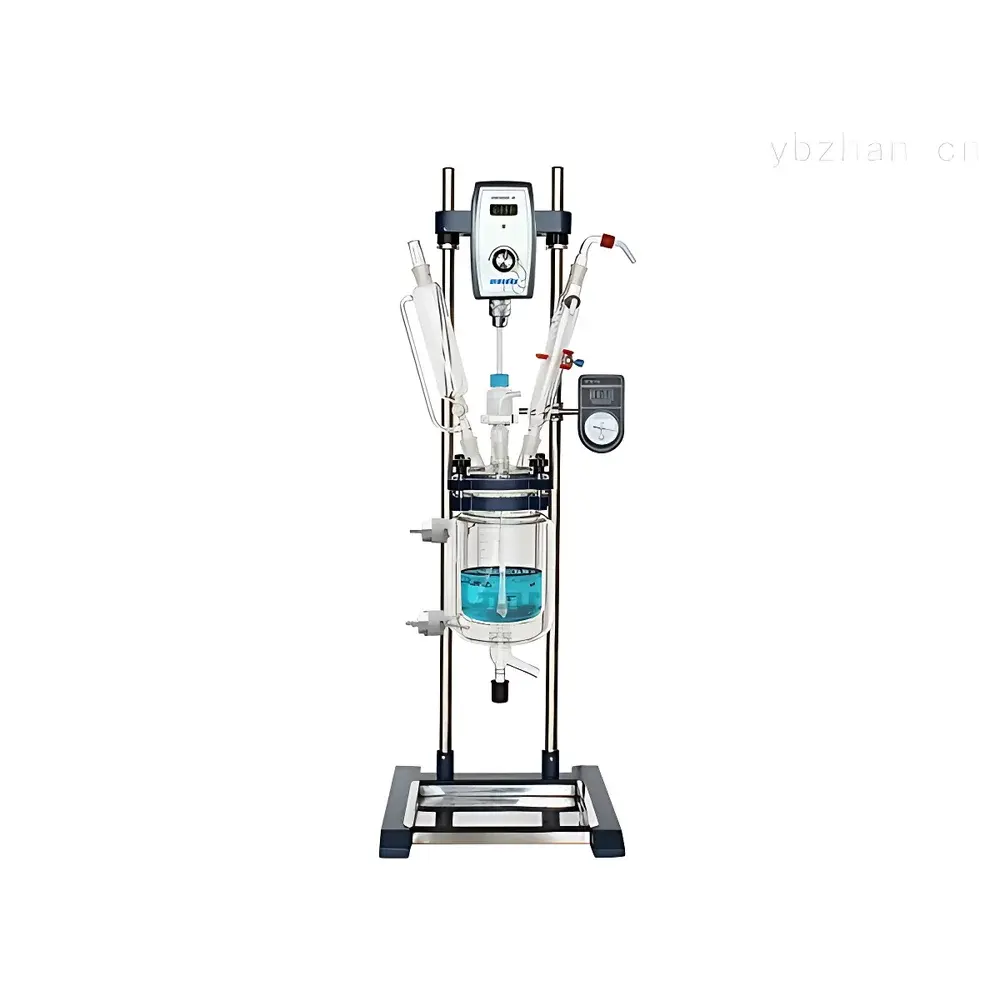
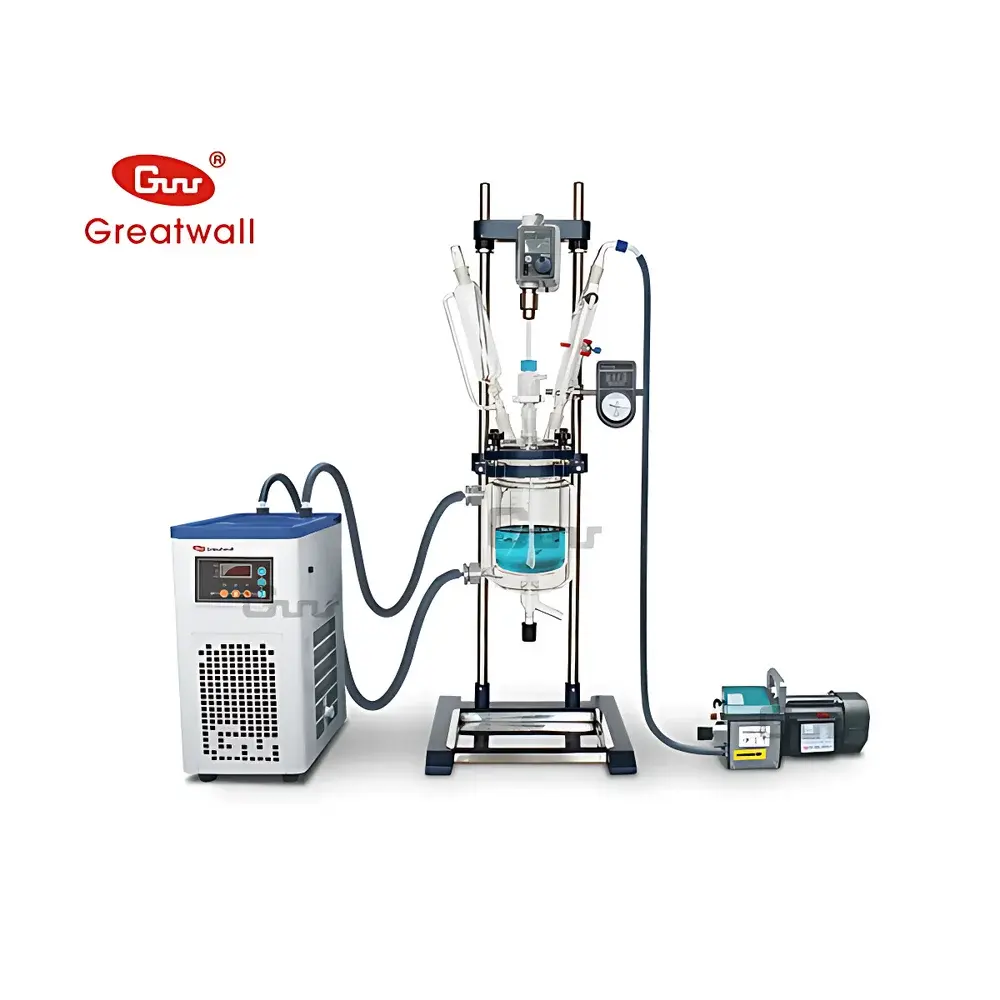
Great Wall GR-2L Borosilicate Glass Reactor System
| Brand | The Great Wall |
|---|---|
| Origin | Henan, China |
| Manufacturer Type | Direct Manufacturer |
| Country of Origin | China |
| Model | GR-2L |
| Capacity | 2 L |
| Material | Borosilicate Glass 3.3 |
| Operating Pressure Range | −0.1 to 0 MPa |
| Vacuum Level | ≤ −0.098 MPa (≤ 2 kPa absolute) |
| Temperature Range | −80 °C to +200 °C |
| Stirring Speed | 50–500 rpm |
| Stirring Power | 70 W |
| Torque | 70 N·cm |
| Temperature Sensor | Pt100 (±0.1 °C accuracy) |
| Condenser Area | ~0.025 m² |
| Constant-Pressure Funnel Volume | 200 mL |
| Jacket Volume | ~0.6 L |
| Sealing Material | PTFE + FKM O-rings with PTFE coating |
| Electrical Supply | 220–240 V~, 50/60 Hz or 110 V~, 60 Hz |
Overview
The Great Wall GR-2L Borosilicate Glass Reactor System is a fully integrated, benchtop-scale laboratory reactor engineered for controlled synthesis, distillation, reflux, and multi-step reaction processes under variable thermal and pressure conditions. Designed around the principles of chemical process safety and reproducibility, it employs a double-jacketed borosilicate glass 3.3 vessel to enable precise temperature regulation via external circulating fluid (e.g., silicone oil, glycol-water mixtures, or dry ice/acetone baths). Its operational envelope spans from cryogenic conditions (−80 °C) to elevated temperatures (200 °C), with compatibility for both atmospheric and sub-atmospheric environments—vacuum capability down to 2 kPa absolute (−0.098 MPa gauge). The reactor operates within a defined mechanical stress window: the maximum allowable differential temperature between jacket and vessel wall is 80 °C, and the jacket is rated for ≤ +0.03 MPa internal pressure—ensuring structural integrity during exothermic or cooling-intensive protocols.
Key Features
- High-purity borosilicate glass 3.3 construction (DIN ISO 3585 compliant), offering exceptional thermal shock resistance, low coefficient of thermal expansion (3.3 × 10⁻⁶/K), and broad chemical inertness against acids, alkalis, and organic solvents.
- Modular standard-taper ground-glass joints (24/29 and 19/22) enabling secure, leak-tight assembly with condensers, thermometers, dropping funnels, and gas inlets—fully compatible with international labware interchange standards.
- PTFE-coated FKM (fluoroelastomer) O-rings and PTFE/FV rubber stopcocks provide long-term sealing performance across wide temperature and vacuum ranges without swelling or degradation.
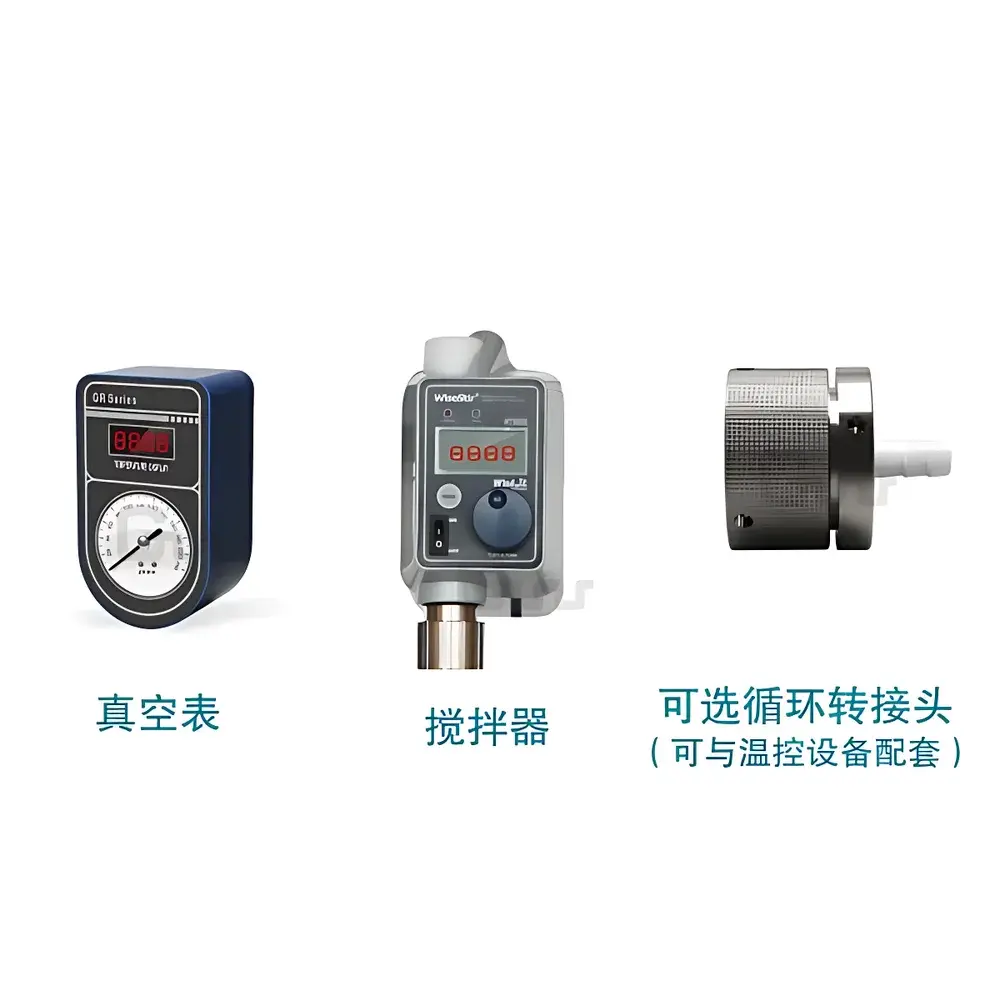
- DC motor-driven magnetic stirring system with stepless speed control (50–500 rpm), delivering consistent torque (70 N·cm) even at high-viscosity conditions; stirrer shaft sealed via dual-lip PTFE mechanical seal.
- Digital temperature display with Pt100 sensor input (±0.1 °C resolution) and dedicated vacuum gauge—both mounted directly on the reactor head for real-time monitoring without external instrumentation dependency.
- Adjustable discharge valve height (100–210 mm) facilitates alignment with collection flasks or downstream inline modules such as cold traps or scrubbers.
Sample Compatibility & Compliance
The GR-2L is routinely deployed in academic, pharmaceutical, and fine chemical R&D laboratories for batch synthesis involving moisture-sensitive, air-sensitive, or thermally labile compounds. Its all-glass wetted path eliminates metal ion leaching—critical for catalyst studies, organometallic chemistry, and GMP-aligned pilot-scale route validation. The system meets general requirements for ISO 17025-compliant method development environments and supports GLP documentation workflows when paired with external data loggers. While not intrinsically certified for hazardous area use (e.g., ATEX or IECEx), its design adheres to fundamental mechanical safety principles outlined in EN 61000-6-2 (EMC immunity) and EN 61000-6-4 (EMC emission) for laboratory equipment. All glass components conform to ASTM E438 Type I, Class A specifications for laboratory apparatus.
Software & Data Management
The GR-2L operates as a stand-alone analog-digital hybrid platform: temperature and vacuum readings are displayed locally but lack native digital output ports (e.g., RS-232, USB, or Ethernet). For regulated environments requiring audit trails—such as those governed by FDA 21 CFR Part 11 or EU Annex 11—integration with third-party validated data acquisition systems (e.g., LabVIEW-based DAQ or Delta-T loggers) is recommended. Users may connect external Pt100 probes and pressure transducers to capture time-stamped, calibrated process data synchronized with reaction events. Calibration certificates for included sensors can be supplied upon request, supporting traceability to NIST-traceable references.
Applications
- Controlled Grignard, lithiation, and hydride reduction reactions under inert atmosphere or dynamic vacuum.
- Solvent removal and concentration via rotary evaporation-assisted distillation using integrated condenser and constant-pressure funnel.
- Polymerization initiation studies (e.g., ring-opening, free-radical) with real-time temperature profiling across exotherm onset.
- Crystallization screening under programmed cooling ramps combined with vacuum-assisted solvent stripping.
- Photochemical synthesis using optional quartz jacket modifications (not included) for UV-transparent operation.
- Extraction and hydrolysis protocols requiring phase separation under reduced pressure and controlled heating.
FAQ
Is the GR-2L suitable for pressurized reactions?
No. The reactor is designed exclusively for ambient and vacuum operations. Its pressure rating is limited to −0.1 MPa to 0 MPa (gauge); positive pressure application is prohibited and voids warranty.
Can the system be used with aggressive fluorinated solvents like anhydrous HF or ClF₃?
No. Although borosilicate glass 3.3 resists most common reagents, it is incompatible with hydrofluoric acid, hot concentrated phosphoric acid, and interhalogen compounds. Consult the material compatibility chart prior to solvent selection.
What maintenance is required for long-term vacuum integrity?
Inspect O-rings quarterly for compression set or cracking; replace annually or after 500 operating hours. Clean ground joints with acetone before reassembly and apply minimal high-vacuum grease only to non-sealing surfaces.
Does the unit include a chiller or heating circulator?
No. External temperature control units must be sourced separately and connected via Rc 1/2 or Rc 3/4 threaded ports on the jacket inlet/outlet.
Is technical support available for international customers?
Yes. Great Wall provides English-language engineering documentation, remote troubleshooting, and OEM-compatible spare parts distribution through authorized regional partners. On-site service is available under extended support agreements.



