
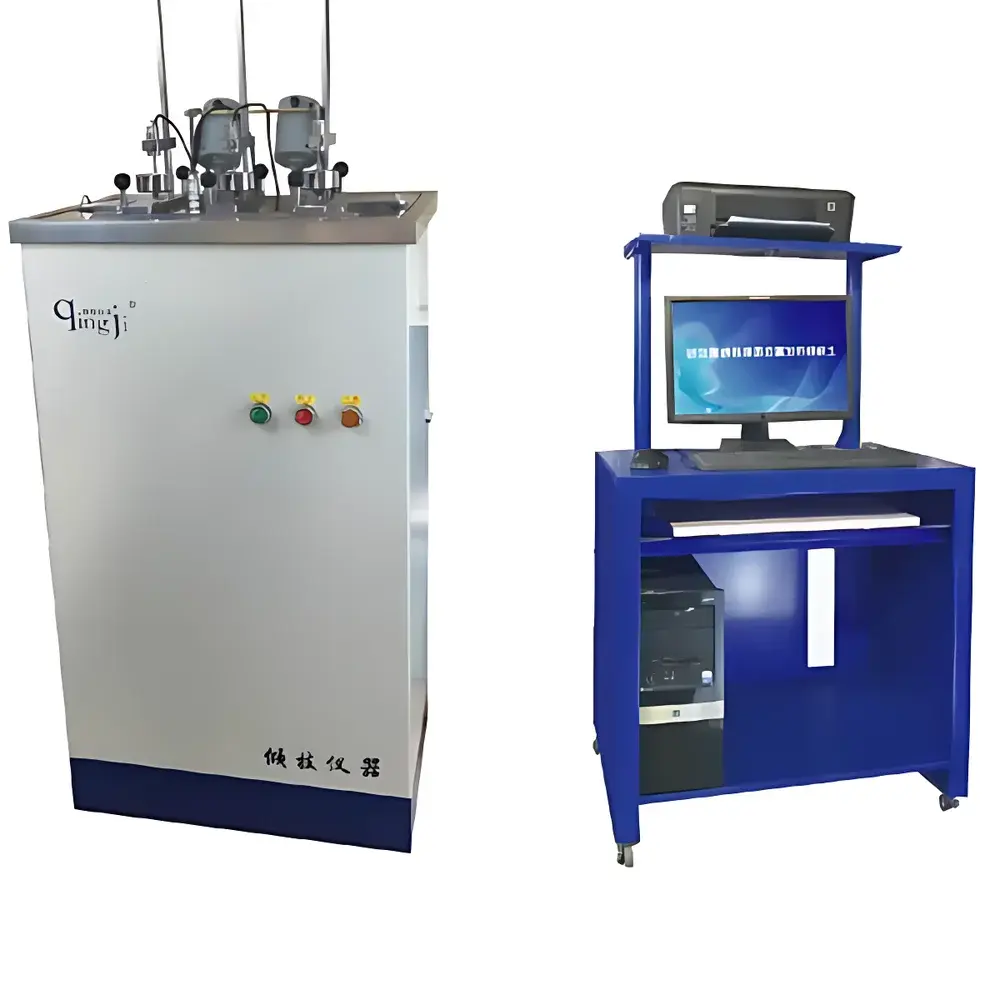
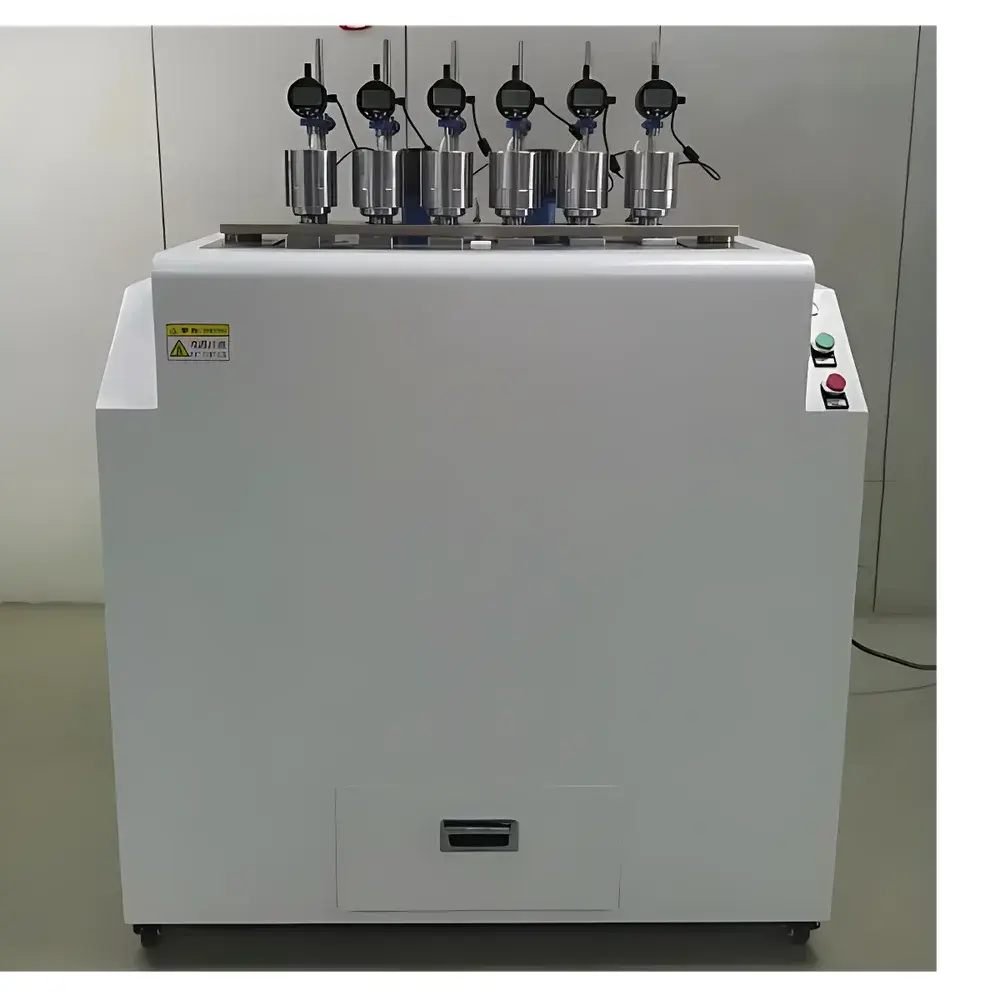
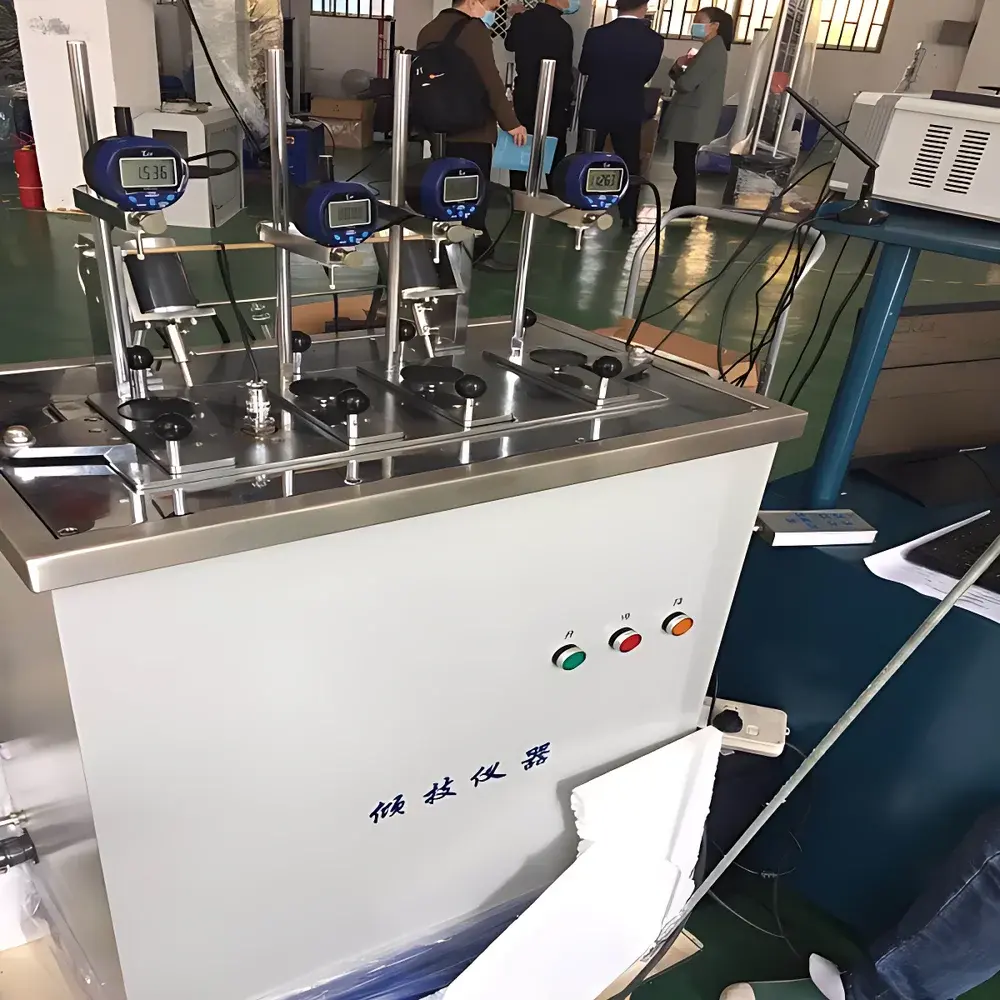
Qinji QJWK-507 Heat Deflection Temperature (HDT) and Vicat Softening Temperature (VST) Tester
| Brand | Qinji |
|---|---|
| Origin | Shanghai, China |
| Model | QJWK-507 |
| Temperature Range | Ambient to 300 °C |
| Heating Rate Options | (12 ± 1) °C/6 min or (5 ± 0.5) °C/6 min |
| Temperature Accuracy | ±1 °C |
| Deformation Measurement Range | 0–1 mm |
| Deformation Resolution | 0.01 mm |
| Heat Transfer Medium | Methyl Silicone Oil |
| Heating Power | 4 kW |
| Cooling Method | Natural cooling above 150 °C |
| Power Supply | AC 220 V, 20 A, 50 Hz |
| Dimensions (L×W×H) | 540 × 520 × 1360 mm |
| Compliance | GB/T 1633, GB/T 1634, GB 8802, ISO 75, ISO 306, ISO 2507 |
Overview
The Qinji QJWK-507 Heat Deflection Temperature (HDT) and Vicat Softening Temperature (VST) Tester is a precision thermal-mechanical testing instrument engineered for standardized evaluation of thermoplastic and thermosetting polymer materials under controlled load and heating conditions. It operates on two distinct ASTM- and ISO-aligned test principles: the Vicat Softening Test (ISO 306 / GB/T 1633), which measures the temperature at which a flat-ended needle penetrates 1 mm into a specimen under specified load; and the Heat Deflection Test (ISO 75 / GB/T 1634), which determines the temperature at which a rectangular bar deforms by 0.25 mm under three-point bending load. Both methods provide critical comparative data for material selection, quality control, formulation validation, and regulatory documentation in polymer R&D, manufacturing QA/QC, and third-party certification laboratories.
Key Features
- Dual-test capability: Simultaneous or independent execution of Vicat Softening Temperature (VST) and Heat Deflection Temperature (HDT) tests per ISO 306, ISO 75, and corresponding Chinese national standards (GB/T 1633, GB/T 1634, GB 8802).
- Precise temperature control: PID-regulated heating system with dual selectable ramp rates — (12 ± 1) °C/6 min (120 ± 10) °C/h for VST and (5 ± 0.5) °C/6 min (50 ± 5) °C/h for HDT — ensuring strict adherence to standard-specified thermal profiles.
- High-resolution deformation sensing: Integrated digital displacement transducer (or optional analog dial indicator) with 0.01 mm resolution and full-scale range of 0–1 mm, calibrated traceably to NIST-traceable reference standards.
- Stable thermal bath design: Methyl silicone oil as heat transfer medium provides uniform temperature distribution across test stations, low volatility up to 300 °C, and long-term chemical stability with minimal oxidation.
- Adaptive thermal management: Automated cooling logic switches between natural convection (above 150 °C) and optional water-assisted cooling (below 150 °C), minimizing cooldown time without compromising thermal gradient integrity.
- Rugged mechanical architecture: Stainless steel frame, corrosion-resistant bath housing, and reinforced load application mechanism ensure long-term repeatability and resistance to laboratory environmental stressors.
Sample Compatibility & Compliance
The QJWK-507 accommodates standard-compliant specimens per ISO 75-1 and ISO 306: rectangular bars (80 × 10 × 4 mm or 10 × 10 × 3–4 mm) for HDT, and cylindrical or molded discs (≥10 mm diameter, ≥3 mm thickness) for VST. Specimen clamping fixtures are designed to prevent lateral slippage and ensure consistent load transmission. The instrument is fully compliant with ISO 75-1:2013, ISO 306:2020, ISO 2507-2:2019, ASTM D648, ASTM D1525, GB/T 1633–2000, GB/T 1634.1–2019, and GB 8802–2001. Its measurement uncertainty budget aligns with ISO/IEC 17025 requirements for accredited testing laboratories conducting polymer thermal property assessments.
Software & Data Management
When configured with the optional PC interface module, the QJWK-507 supports real-time acquisition of temperature, load, and deformation data via RS-232 or USB. Data logging software enables automated test sequence definition, live curve plotting (temperature vs. deformation), pass/fail threshold marking per standard criteria, and export to CSV or PDF report formats. Audit trails record operator ID, calibration timestamps, parameter changes, and test start/stop events — supporting GLP and GMP environments where FDA 21 CFR Part 11 compliance is required. Raw data files retain metadata including ambient lab conditions, oil batch number, and sensor calibration certificate IDs.
Applications
- Quality assurance of injection-molded polypropylene (PP), acrylonitrile-butadiene-styrene (ABS), polycarbonate (PC), and polyethylene terephthalate (PET) components.
- Thermal performance benchmarking during polymer alloy development and filler-reinforced composite formulation.
- Regulatory submission support for medical device housings (ISO 10993-12), pipe systems (ASTM F412), and automotive interior trim (SAE J2223).
- Failure analysis of thermally degraded parts in root cause investigations.
- Educational use in polymer science laboratories for teaching standardized thermal transition behavior.
FAQ
What standards does the QJWK-507 fully support?
It meets all technical and procedural requirements of ISO 75-1/2/3, ISO 306, ISO 2507-2, GB/T 1633, GB/T 1634.1–3, and GB 8802.
Can the instrument perform both HDT and VST tests without hardware reconfiguration?
Yes — dedicated test fixtures, load weights, and probe geometries are swappable within minutes; software-guided setup prevents misconfiguration.
Is methyl silicone oil included with the system?
No — users must procure ISO-grade methyl silicone oil (e.g., Dow Corning PM-200, viscosity 20 cSt at 25 °C) separately to ensure thermal stability and measurement fidelity.
Does the system provide traceable calibration documentation?
Upon request, factory calibration certificates (including temperature sensor and displacement transducer verification against NIST-traceable references) are supplied with each unit.
What maintenance intervals are recommended for routine operation?
Oil level and clarity should be inspected weekly; oil replacement every 12 months or after 500 test cycles; annual verification of thermal uniformity and deformation sensor linearity is advised.



