
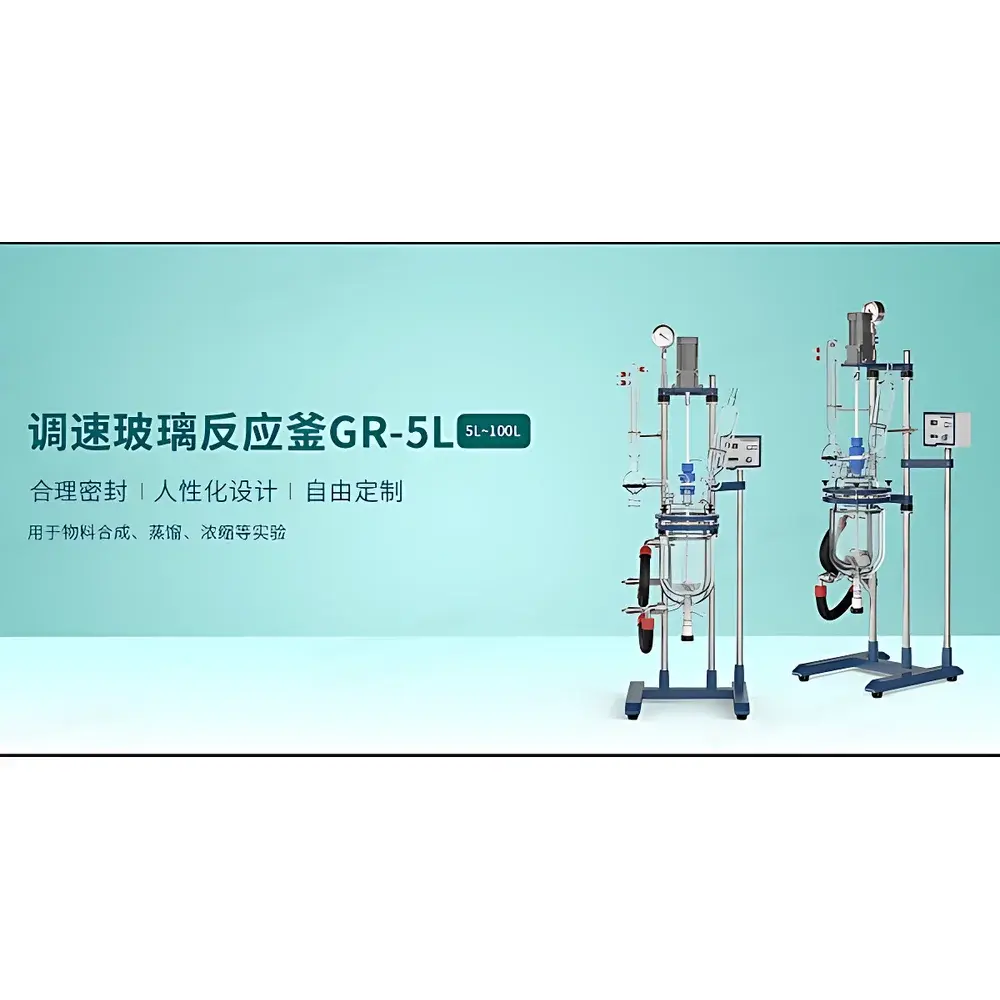
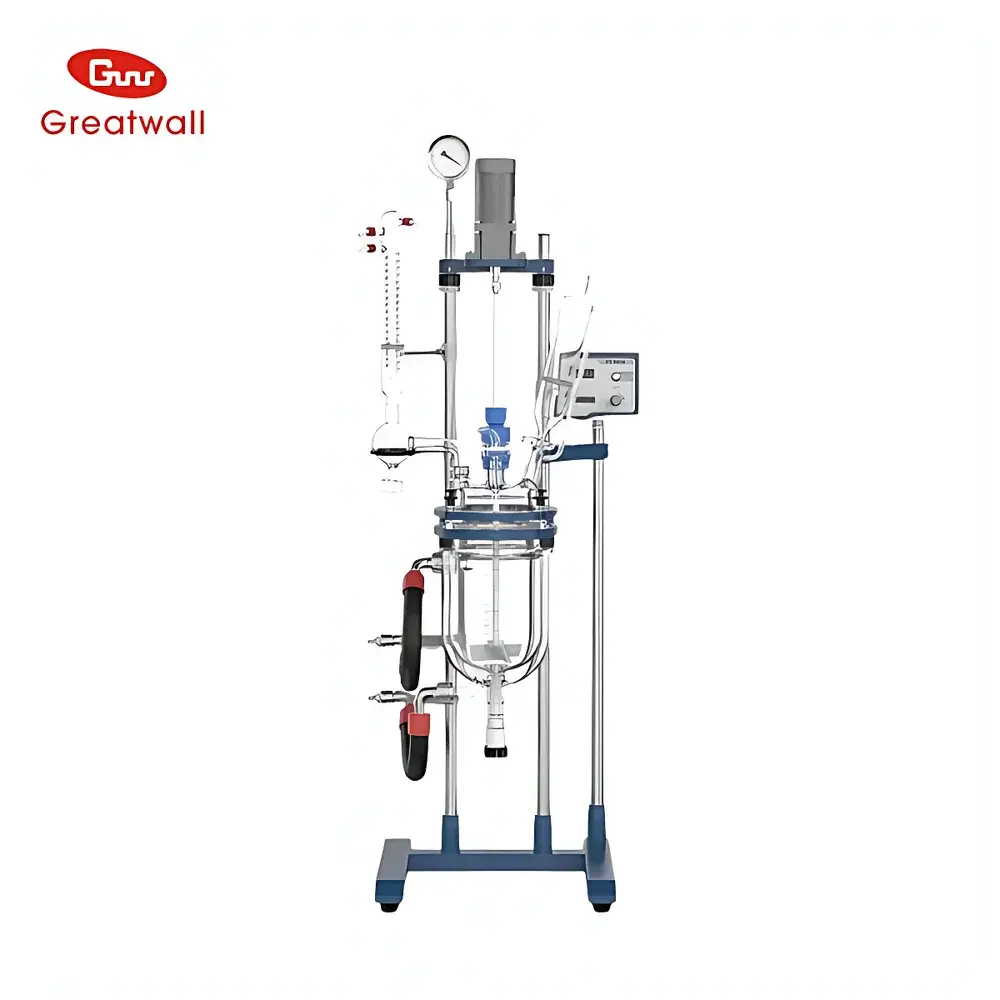
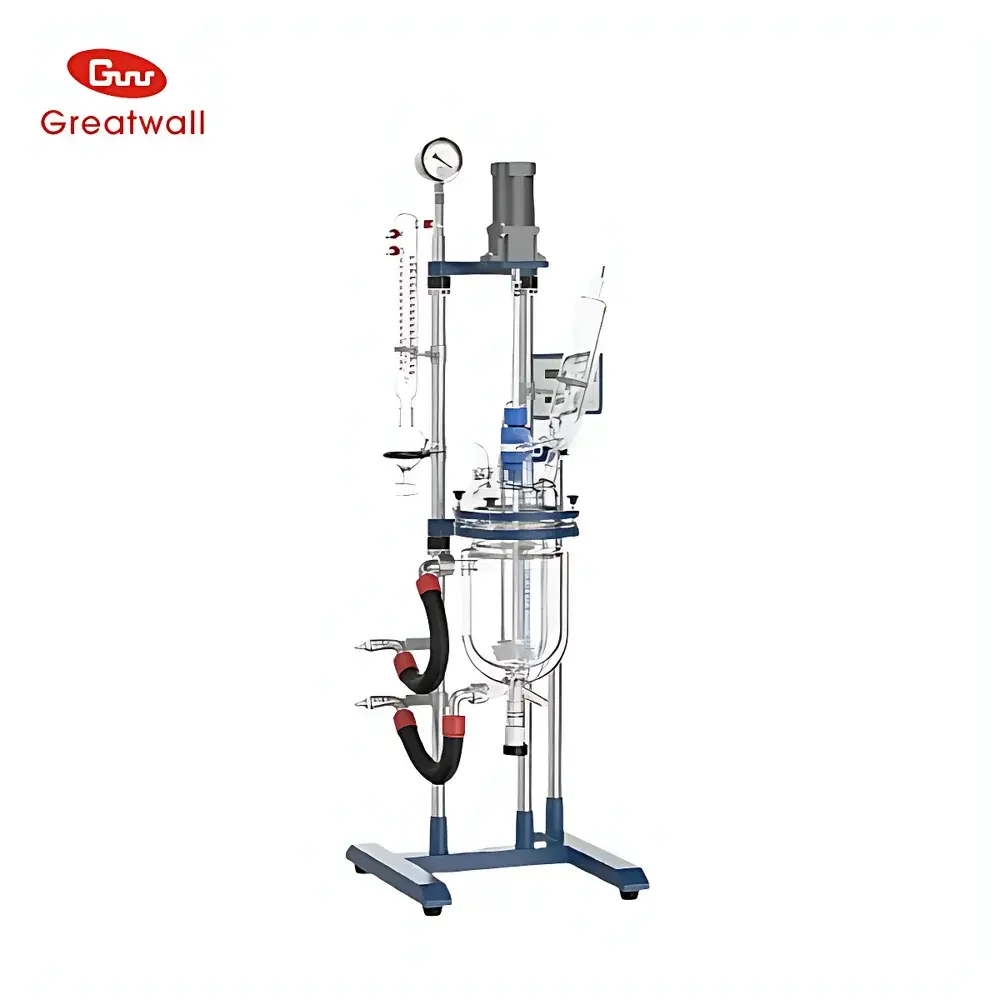
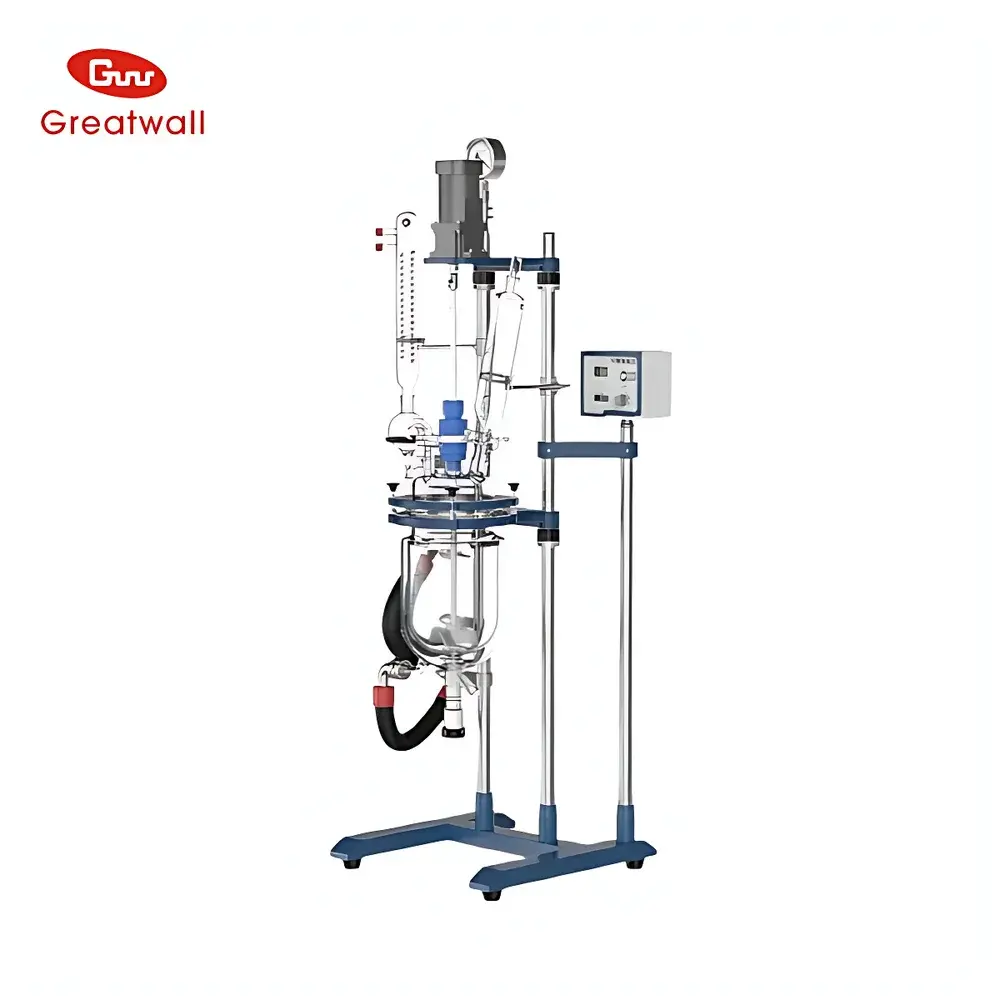
Great Wall GR-5 Dual-Jacketed Glass Reactor
| Brand | Great Wall |
|---|---|
| Origin | Henan, China |
| Manufacturer Type | Direct Manufacturer |
| Country of Origin | China |
| Model | GR-5 |
| Capacity | 5 L |
| Working Pressure Range | –0.1 MPa to atmospheric pressure |
| Vacuum Level | 0.095 MPa (absolute) |
| Jacket Volume | 3 L |
| Temperature Range | –80 °C to +200 °C |
| Glass Material | ASTM E438 Type I, Class A borosilicate 3.3 glass |
| Stirring Speed Range | 50–500 rpm |
| Stirring Motor Power | 90 W |
| Sealing Material | PTFE |
| Temperature Sensor | PT100 (±0.1 °C accuracy) |
| Stirring Seal Type | Vacuum-rated mechanical seal |
| Condenser Surface Area | ~0.045 m² |
| Electrical Supply | 220–240 V~, 50/60 Hz |
Overview
The Great Wall GR-5 Dual-Jacketed Glass Reactor is an engineered laboratory-scale synthesis platform designed for controlled chemical reactions, solvent reflux, distillation, concentration, and crystallization under variable thermal and vacuum conditions. Its core architecture employs a double-walled borosilicate 3.3 glass vessel—compliant with ASTM E438 Type I, Class A specifications—where the annular jacket enables precise temperature regulation via external circulation of heating or cooling media (e.g., silicone oil, ethylene glycol/water mixtures, or cryogenic fluids). The reactor operates safely within a pressure range from full vacuum (–0.1 MPa gauge) up to ambient pressure, supporting both exothermic and endothermic processes requiring thermal stability across –80 °C to +200 °C. Unlike single-jacket systems, the dual-jacket configuration allows independent control of inner-jacket temperature and outer-jacket vacuum insulation—enhancing thermal efficiency and minimizing condensation during low-temperature operations. All wetted surfaces are chemically inert, non-porous, and optically transparent, enabling real-time visual monitoring of phase changes, precipitate formation, and mixing homogeneity without compromising containment integrity.
Key Features
- High-purity borosilicate 3.3 glass construction (DIN ISO 3585 compliant), resistant to thermal shock (ΔT ≤ 80 °C), hydrolytic attack, and aggressive reagents including strong acids, alkalis, and organic solvents.
- Vacuum-rated mechanical stirring system with PTFE-coated shaft and four-blade inclined turbine impeller (material: 06Cr19Ni10 stainless steel + PTFE), ensuring leak-tight operation at ≤0.095 MPa absolute vacuum.
- Integrated digital speed controller with ±1 rpm resolution and LED display; motor: 90 W three-phase asynchronous type with frequency-inverter regulation (50–500 rpm).
- Five standardized ground-glass ports (29/32 and 24/29 joints) on the lid—including central opening (50#), two side ports (S35), and dual 29/32 interfaces for condenser and dropping funnel—enabling modular integration with distillation columns, gas inlets, pH probes, or sampling valves.
- PTFE旋塞 valves (stopcocks) and bottom discharge valve (φ25 mm outlet) with reinforced sealing geometry for reliable, corrosion-resistant fluid handling and quantitative transfer.
- Pre-installed insulated silicone hoses (Rc 3/4 fittings) minimize mechanical stress on glass joints during external chiller or heater connections.
- Stainless steel (06Cr19Ni10) and powder-coated carbon steel frame with aluminum alloy components ensures structural rigidity, long-term corrosion resistance, and compatibility with GLP-compliant lab environments.
Sample Compatibility & Compliance
The GR-5 reactor accommodates heterogeneous, homogeneous, and catalytic reaction systems—including Grignard syntheses, hydrogenations (with optional H₂ inlet), polymerizations, and photochemical transformations—without risk of metal contamination. Its all-glass fluid path eliminates leaching concerns associated with metallic reactors, making it suitable for pharmaceutical intermediate synthesis under ICH Q5A/Q5D guidelines. The system meets basic requirements for ISO 17025-accredited laboratories when used with calibrated PT100 sensors and traceable vacuum gauges. While not intrinsically rated for ATEX or IECEx zones, it may be operated in Class I, Division 2 areas when paired with explosion-proof external peripherals (e.g., certified chillers or vacuum pumps). All glass components conform to DIN 12331 and ISO 1042 volumetric tolerances for nominal capacity (5 L ±2.5%).
Software & Data Management
The GR-5 operates as a stand-alone analog-digital hybrid instrument. Temperature and stirring speed are monitored locally via dual digital displays (PT100 sensor: ±0.1 °C; tachometer: ±1 rpm), with analog output signals (0–10 V or 4–20 mA) available upon request for integration into centralized SCADA or LIMS platforms. Optional data-logging modules support CSV export of time-stamped temperature/stirring profiles, enabling audit trails compliant with FDA 21 CFR Part 11 when deployed with electronic signature-capable host software. No proprietary firmware or cloud dependency is required—ensuring full user control over calibration, validation, and raw data sovereignty.
Applications
- Batch synthesis of fine chemicals and APIs under inert or reduced-pressure conditions.
- Solvent recovery via rotary-compatible distillation setups using the integrated 435 mm condenser (0.045 m² surface area).
- Low-temperature lithiation or organolithium chemistry requiring sustained –40 °C to –78 °C operation with cryogenic coolant circulation.
- Controlled crystallization studies with in-situ observation through transparent walls and adjustable agitation intensity.
- Multi-step reaction sequences integrating dropwise reagent addition (via 500 mL constant-pressure funnel) and simultaneous reflux/evaporation.
- Custom configurations available: filtration-bottom reactors (with sintered glass frits), jacketed receiving trays for drip containment, and modular vacuum manifolds for parallel reaction screening.
FAQ
What is the maximum allowable jacket pressure for thermal fluid circulation?
The夹套 is rated for continuous operation at ≤0.03 MPa (gauge); exceeding this may compromise glass integrity or seal longevity.
Can the GR-5 be used for hydrogenation reactions?
Yes—when equipped with a dedicated H₂ inlet port, pressure-rated septum cap, and compatible catalyst suspension impeller; maximum safe internal pressure remains atmospheric unless upgraded with reinforced sealing hardware.
Is the borosilicate glass compliant with USP or Ph. Eur. 3.2.1?
Borosilicate 3.3 glass meets the dimensional, thermal, and hydrolytic resistance criteria referenced in both standards; full compliance documentation (including extractables testing reports) is provided upon request for regulated applications.
Does the system support GLP-compliant calibration records?
Yes—the PT100 sensor and tachometer can be individually calibrated using NIST-traceable references; calibration certificates and deviation logs are generated per user-defined SOPs.
What maintenance intervals are recommended for the mechanical seal?
Under standard use (≤8 hrs/day, non-abrasive media), inspect the PTFE stator and rotating face every 6 months; replace annually or after 2000 operational hours—whichever occurs first.



