
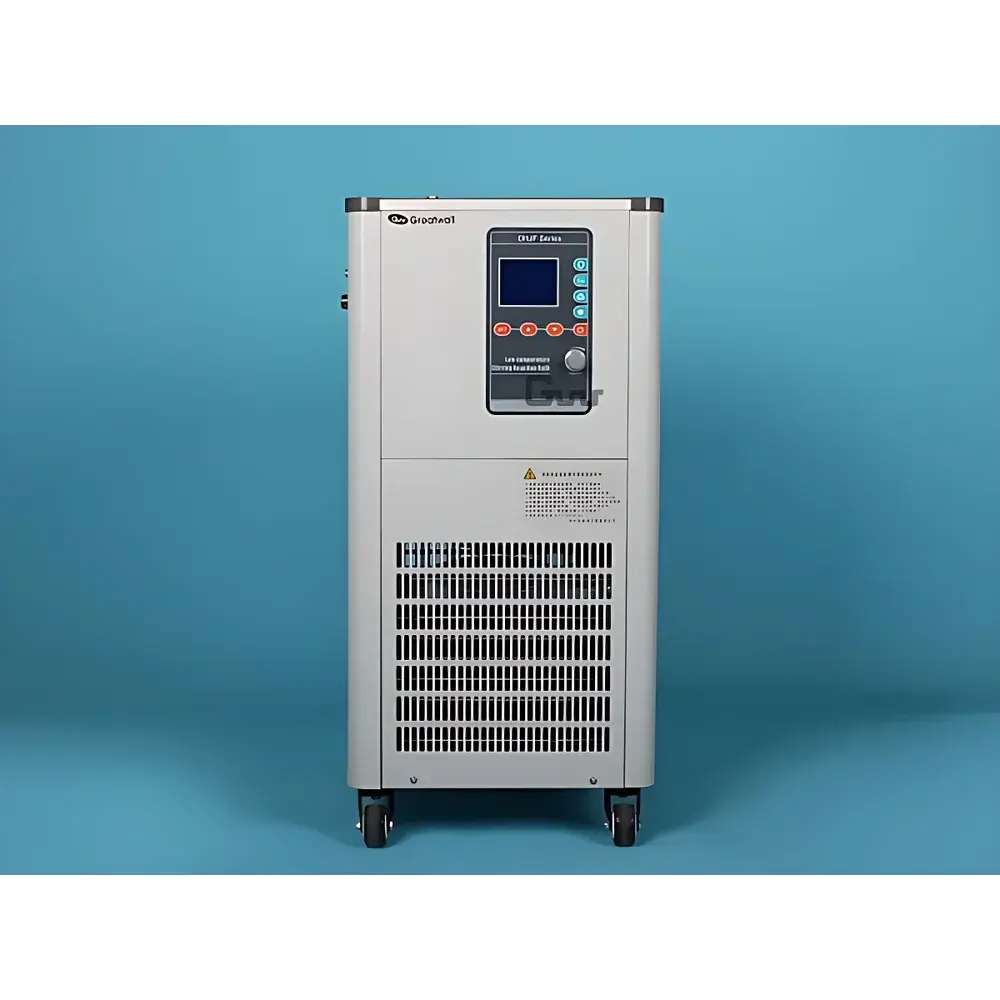
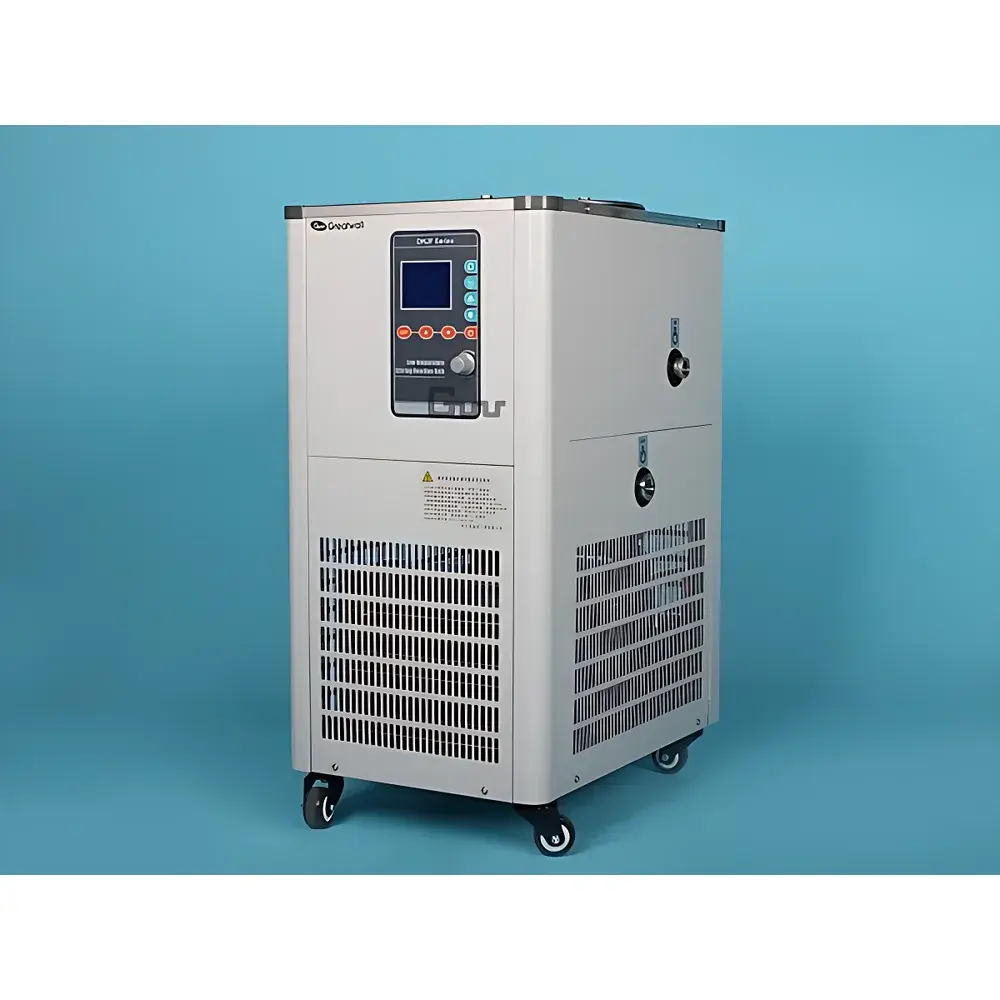
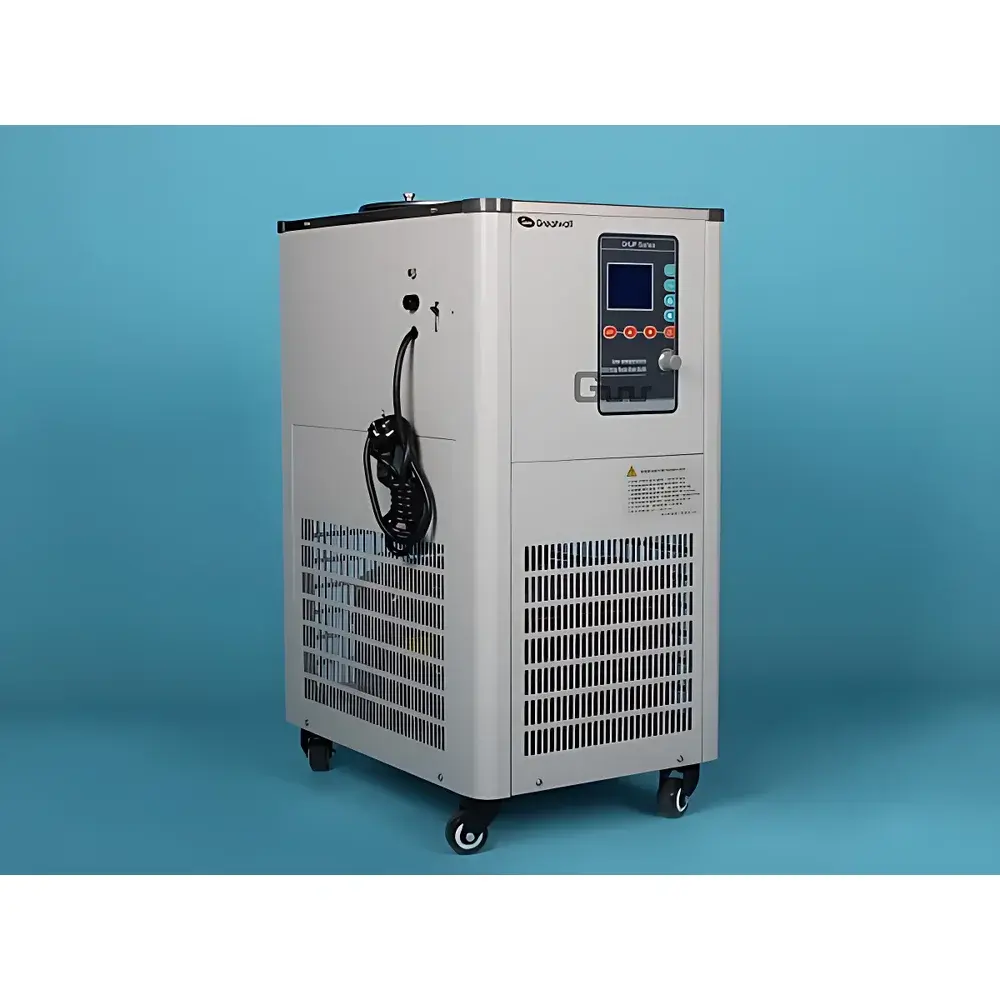
The Great Wall DHJF-4005 Low-Temperature Circulating Stirring Bath
| Brand | The Great Wall |
|---|---|
| Origin | Henan, China |
| Manufacturer Type | Direct Manufacturer |
| Country of Origin | China |
| Model | DHJF-4005 |
| Temperature Range | −40 °C to 99 °C |
| Temperature Stability | ±0.2 °C |
| Reservoir Volume | 5 L |
| Reservoir Dimensions | Φ250 mm × 130 mm (D × H) |
| Opening Diameter | Φ210 mm |
| Max Flask Capacity | 2000 mL |
| Heating Power | 1500 W |
| Rated Flow Rate | 20 L/min |
| Maximum Pressure | 0.4 bar |
| Ambient Operating Temperature | 5–25 °C |
| Power Supply | 220–240 V~, 50 Hz |
| Cooling Capacity | 1000 W at 10 °C / 450 W at −20 °C / 40 W at −40 °C |
| Refrigerant | R404A |
| Total Power Consumption | 2450 W |
| Housing Material | Cold-Rolled Steel with Electrostatic Powder Coating |
| Overall Dimensions (W×D×H) | 400 mm × 535 mm × 790 mm |
| Net Weight | 56 kg |
Overview
The Great Wall DHJF-4005 Low-Temperature Circulating Stirring Bath is a precision-engineered thermal management system designed for laboratory-scale reaction control, temperature-sensitive synthesis, and material characterization under dynamically stabilized conditions. It operates on a dual-mode thermoregulation principle—integrating vapor-compression refrigeration (using R404A refrigerant) with resistive heating—to deliver continuous, bidirectional temperature control across an extended operational range of −40 °C to +99 °C. Unlike passive cooling baths or single-function chillers, the DHJF-4005 incorporates an integrated high-flow circulation pump (20 L/min, 0.4 bar max pressure) and a digitally regulated stirring mechanism, enabling simultaneous temperature control, fluid homogenization, and heat transfer optimization within external reaction vessels. Its engineered stability of ±0.2 °C ensures reproducible thermal profiles critical for kinetic studies, polymerization initiation, crystallization screening, and low-temperature catalysis.
Key Features
- Digital PID temperature controller with real-time display and intuitive keypad interface for precise setpoint adjustment and monitoring
- Adjustable insulated bath cover with Φ210 mm opening—minimizes cold loss and accommodates standard lab glassware up to 2000 mL capacity
- High-efficiency dual-stage refrigeration circuit optimized for low-temperature performance, delivering 40 W cooling capacity at −40 °C
- Integrated circulation pump with corrosion-resistant wetted parts and adjustable flow output for consistent thermal transfer to external jackets or coils
- Robust cold-rolled steel housing with electrostatic powder coating for chemical resistance, mechanical durability, and long-term stability in shared lab environments
- Thermal safety interlocks including over-temperature cutoff, low-level reservoir detection, and compressor overpressure protection
Sample Compatibility & Compliance
The DHJF-4005 is compatible with standard borosilicate glass reactors (e.g., round-bottom flasks, jacketed vessels), stainless-steel reaction blocks, and externally mounted condensers. Its 5 L reservoir volume and Φ250 mm × 130 mm internal geometry support immersion of multi-neck flasks, overhead stirrers, and temperature probes without spatial interference. The system meets CE marking requirements for electrical safety (EN 61010-1) and electromagnetic compatibility (EN 61326-1). While not certified for use in regulated GMP manufacturing, its stable thermal performance supports GLP-aligned experimental protocols—including method development for ASTM D789 (viscosity of polymers), ISO 17225 (biofuel thermal stability), and USP <797> compounding environment validation where controlled low-temperature storage or reaction quenching is required.
Software & Data Management
The DHJF-4005 operates as a standalone instrument with no embedded data logging or PC connectivity. However, its analog voltage output (0–5 V or 4–20 mA, configurable per OEM specification) enables integration into third-party SCADA or LIMS platforms for time-stamped temperature recording. For audit-ready workflows, users may connect external calibrated data loggers (e.g., Omega OM-DAQPRO-5300 series) to monitor and archive thermal profiles in compliance with FDA 21 CFR Part 11 when paired with appropriate electronic signature and audit-trail software. All parameter settings are retained after power cycling, and the digital display provides continuous verification of actual vs. setpoint temperature—a prerequisite for SOP-driven lab documentation.
Applications
- Controlled-temperature organic synthesis requiring cryogenic initiation (e.g., Grignard reactions, lithiation, Diels–Alder cycloadditions)
- Stability testing of pharmaceutical intermediates and biologics under accelerated low-temperature stress conditions
- Calibration of thermocouples, RTDs, and infrared sensors across sub-zero to near-boiling ranges
- Viscometry and rheological measurements using external rotational viscometers with jacketed sample cells
- Cooling of exothermic enzymatic assays or microbial fermentation systems where heat dissipation must be actively managed
- Pre-conditioning of materials prior to mechanical testing (e.g., tensile strength at −30 °C per ASTM D638)
FAQ
What is the minimum ambient temperature required for reliable operation at −40 °C?
The unit requires an ambient environment between 5 °C and 25 °C; operation below 5 °C may impair compressor oil viscosity and reduce refrigerant efficiency.
Can the DHJF-4005 be used with water-glycol mixtures or other secondary coolants?
Yes—it is compatible with aqueous ethylene glycol solutions (up to 30% v/v) and silicone oils; avoid chlorinated or highly acidic fluids that may corrode the stainless-steel pump head.
Is external stirring synchronization supported?
No native RS-485 or analog speed control interface is provided; stirring speed must be managed independently via external motor controllers.
How often should the R404A refrigerant be serviced?
Under normal use and proper sealing, the sealed refrigeration circuit requires no scheduled refrigerant replenishment; annual inspection of hose integrity and compressor vibration is recommended.
Does the unit include a drain valve for reservoir emptying?
Yes—a front-mounted quick-release drain valve facilitates complete fluid evacuation for maintenance or coolant replacement.



