
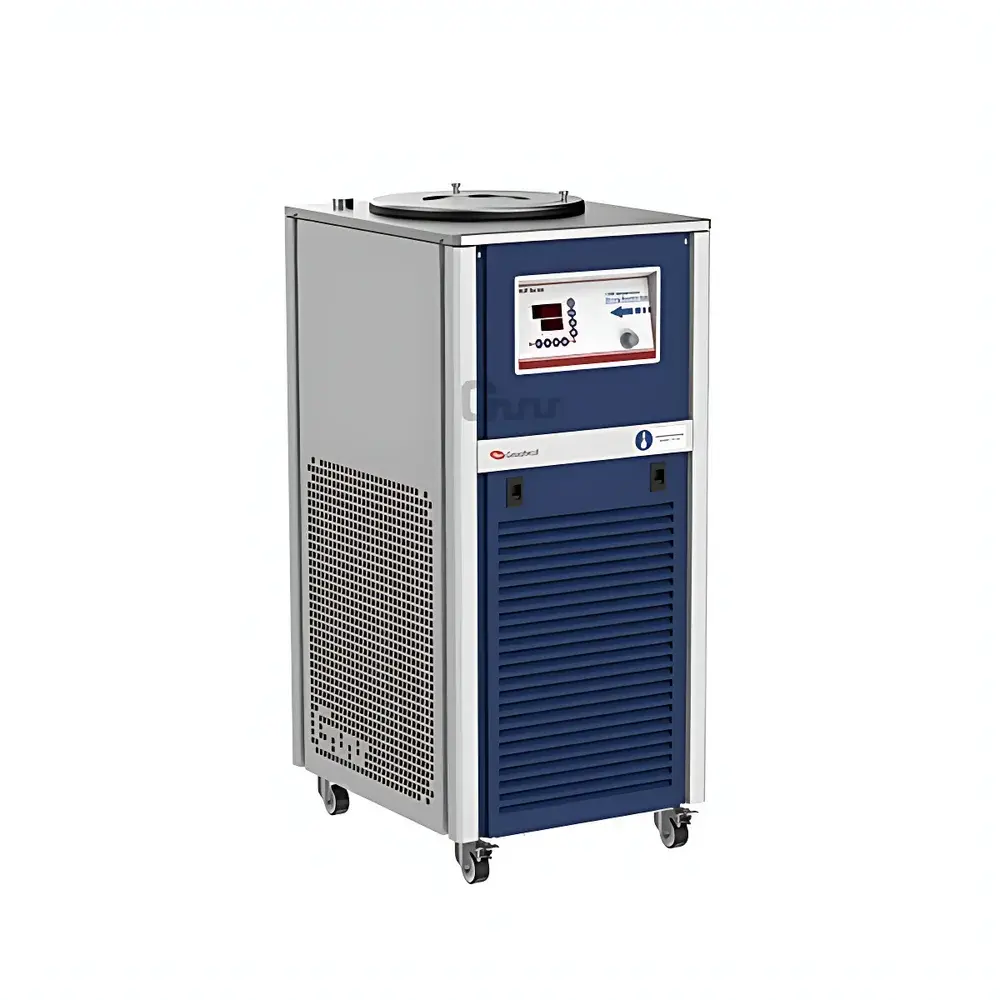
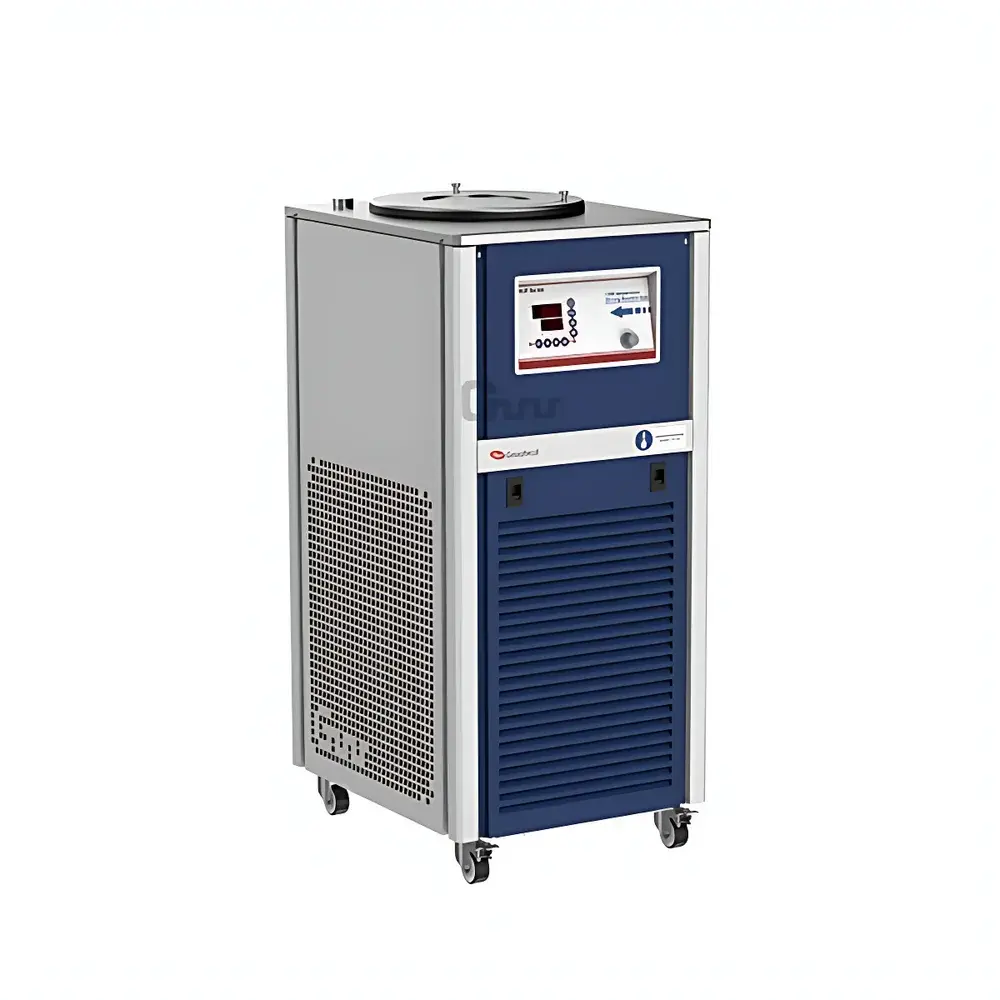
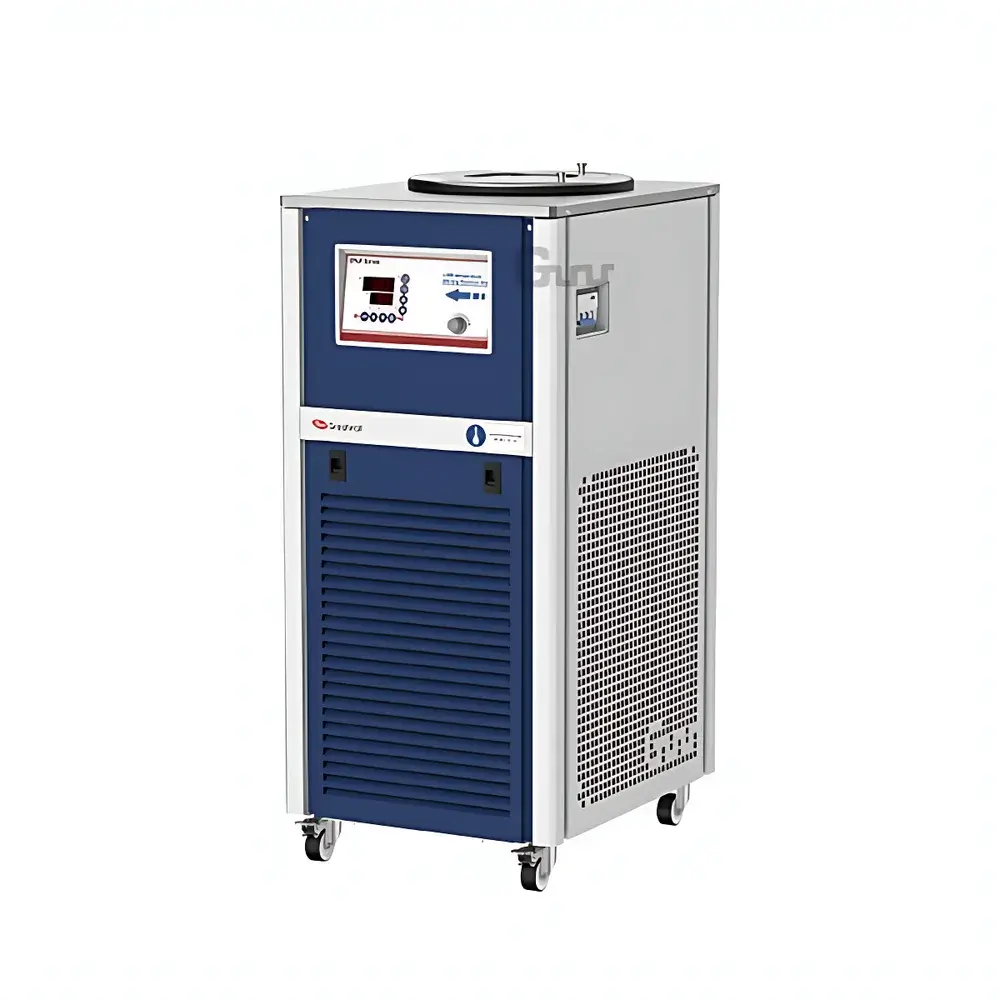
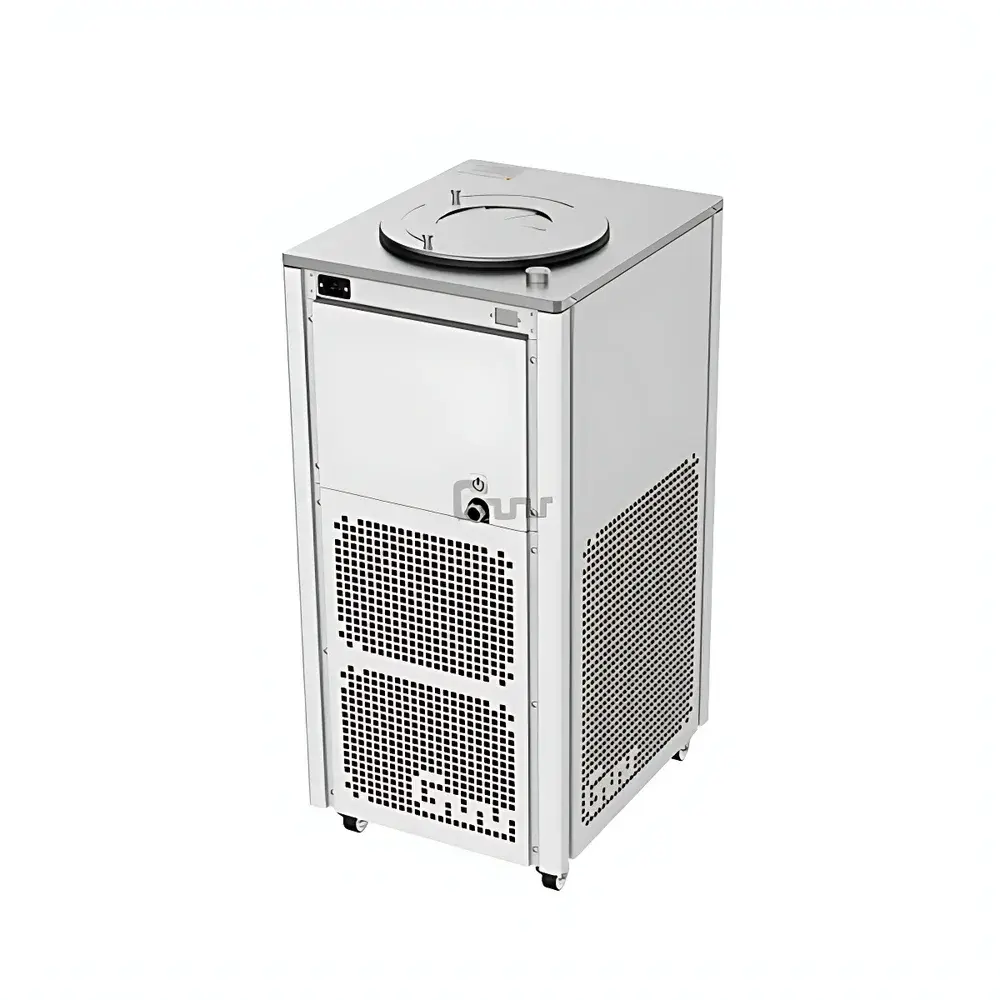
Great Wall DHJF-8005C Low-Temperature Constant-Temperature Stirring Bath
| Brand | Great Wall |
|---|---|
| Origin | Henan, China |
| Manufacturer Type | Direct Manufacturer |
| Instrument Type | Circulating Constant-Temperature Bath |
| Circulation Mode | External Circulation |
| Temperature Control | Refrigeration & Heating Dual-Mode |
| Bath Volume | 5 L |
| Temperature Range | –80 °C to +99 °C |
| Temperature Stability | ±0.2 °C |
| Total Power Input | 3260 W |
| Power Supply | 220 V~, 50 Hz |
Overview
The Great Wall DHJF-8005C Low-Temperature Constant-Temperature Stirring Bath is an integrated laboratory thermal management system engineered for precise temperature control and active mixing in reaction vessels. It operates on a dual-mode thermoelectric refrigeration and resistive heating principle, utilizing a closed-loop circulation of heat-transfer fluid (e.g., ethanol/water or silicone oil) to maintain stable thermal conditions across external glassware—including round-bottom flasks, jacketed reactors, and immersion-type probes. Unlike cryogenic alternatives such as dry ice or liquid nitrogen, the DHJF-8005C delivers repeatable subzero operation down to –80 °C without consumables, gas handling, or pressure hazards. Its design targets applications requiring both thermal stability and dynamic homogenization—particularly in enzymatic kinetics, low-temperature catalysis, and controlled crystallization protocols where spatial temperature gradients must be minimized.
Key Features
- PID-based digital temperature controller with real-time feedback loop, enabling ±0.2 °C stability over the full –80 °C to +99 °C range;
- Integrated magnetic stirrer with adjustable speed (0–1200 rpm), capable of simultaneously rotating internal stir bars and driving circulation via external pump head;
- Telescoping insulated lid with variable aperture—mechanically adjustable to accommodate vessel neck diameters from 24 mm to 100 mm, reducing solvent evaporation and ambient thermal loading;
- Dual-purpose support frame with standardized 12 mm rod clamping points, compatible with burettes, PT100 sensors, condensers, and pH electrodes;
- Overheat protection and dry-run prevention circuitry for heating elements; compressor overpressure and low-refrigerant cut-off for refrigeration module;
- Front-panel interface with LED display, setpoint memory, and manual/auto mode selection for uninterrupted long-duration runs.
Sample Compatibility & Compliance
The DHJF-8005C accommodates standard borosilicate glassware (e.g., Pyrex® or Duran®) up to 5 L total volume, including single- and double-jacketed reactors. It supports direct immersion of temperature probes meeting IEC 60584-2 Class A tolerance, and is routinely deployed in GLP-compliant laboratories conducting ASTM E2877-22 (Standard Guide for Thermal Stability Testing of Enzymes) and ISO 17025-accredited validation studies. While not certified to UL/CSA or CE for medical device use, its electrical architecture complies with IEC 61010-1:2010 safety requirements for laboratory equipment. The unit meets RoHS Directive 2011/65/EU material restrictions and includes traceable calibration documentation upon request.
Software & Data Management
The DHJF-8005C operates as a standalone instrument with no embedded software stack or network interface. All operational parameters are configured locally via tactile buttons and displayed on a high-contrast 4-digit LED screen. For integration into automated workflows, optional analog 0–5 V or 4–20 mA output signals (available via accessory port) allow connection to external data loggers or SCADA systems compliant with IEEE 1344-1995 time-synchronization standards. Audit trails are maintained manually per institutional SOPs; no electronic record-keeping or 21 CFR Part 11 functionality is provided.
Applications
- Low-temperature enzymatic assays in biochemistry labs, including restriction digest optimization and polymerase chain reaction (PCR) reagent pre-chilling;
- Controlled exothermic reaction quenching during organic synthesis, especially Grignard and lithiation steps requiring rapid thermal arrest;
- Calibration of cryogenic thermocouples and resistance temperature detectors (RTDs) against NIST-traceable references;
- Stability testing of pharmaceutical intermediates under ICH Q1A(R2) long-term storage conditions (–20 °C and –40 °C);
- Thermal conditioning of optical components prior to interferometric measurement in metrology labs.
FAQ
What types of heat-transfer fluids are compatible with the DHJF-8005C?
Ethanol/water mixtures (e.g., 30/70 v/v) are recommended for operation below –20 °C; silicone oils (e.g., DC200 series) are preferred above 60 °C. Avoid glycerol-based fluids due to viscosity-induced pump strain.
Can the unit maintain temperature while actively circulating fluid through an external jacketed reactor?
Yes—the external circulation pump delivers up to 15 L/min at 0.3 bar differential pressure, supporting jacket volumes up to 8 L with ≤2 °C axial gradient under steady-state conditions.
Is the magnetic stirring function isolated from the bath fluid path?
Yes—stirring torque is transmitted via hermetically sealed coupling; no fluid contact occurs between the motor housing and bath chamber.
Does the system include factory calibration documentation?
Each unit ships with a Certificate of Conformance listing as-shipped temperature deviation at three points (–40 °C, 25 °C, +80 °C) verified against Fluke 1523 reference thermometers.
What maintenance intervals are recommended for sustained performance?
Compressor oil and refrigerant charge should be inspected annually; circulation filter mesh requires cleaning every 200 operating hours; stir bar alignment should be verified quarterly.
Related Products



