
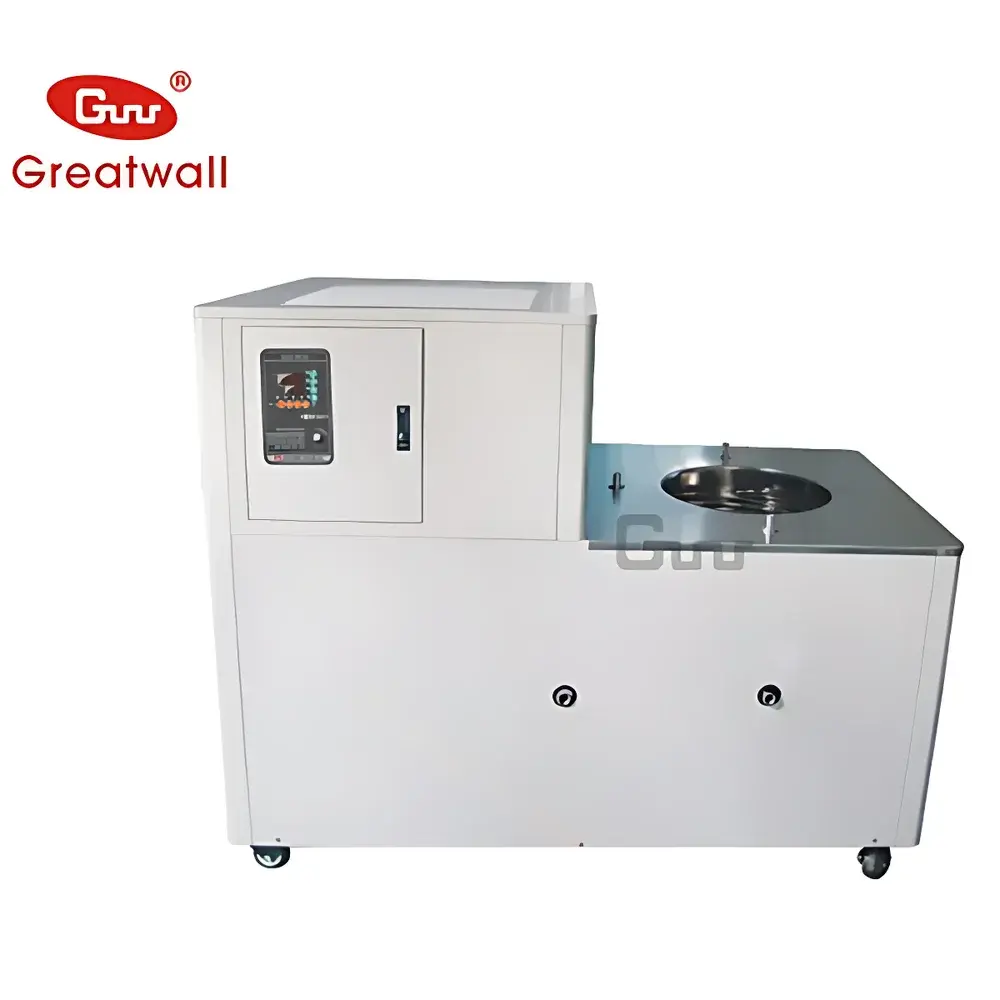
The Great Wall DHJF-1050 Ultra-Low Temperature Stirred Reaction Bath
| Brand | The Great Wall |
|---|---|
| Origin | Henan, China |
| Manufacturer Type | Direct Manufacturer |
| Product Category | Domestic |
| Model | DHJF-1050 |
| Instrument Type | Constant-Temperature Bath |
| Circulation Mode | Internal Circulation |
| Temperature Control | Refrigeration & Heating |
| Bath Volume | 50 L |
| Temperature Range | −100 °C to −60 °C |
| Temperature Stability | ±2 °C |
| Power Supply | 3-phase, 380 V, 50 Hz |
| Cooling Capacity | 700 W at −60 °C / 580 W at −80 °C / 420 W at −100 °C |
| Max Flask Capacity | 20 L |
| External Dimensions (L×W×H) | 1340 × 820 × 1310 mm |
| Net Weight | 265 kg |
| Construction | Cold-Rolled Steel with Electrostatic Powder Coating |
| Bath Vessel | 304 Stainless Steel + High-Molecular Corrosion-Resistant Liner |
| Display | Digital LED with Keypad Input |
Overview
The Great Wall DHJF-1050 Ultra-Low Temperature Stirred Reaction Bath is an engineered thermal management system designed for precise, stable, and reproducible low-temperature reaction control in synthetic chemistry, cryogenic material testing, and low-temperature catalysis research. Unlike conventional refrigerated circulators, the DHJF-1050 employs a proprietary single-stage compression condensation refrigeration architecture—optimized for extended operation within the −100 °C to −60 °C range—enabling sustained thermal stability without cascade or cryogen dependency. Its core function integrates active temperature regulation, internal fluid circulation, and mechanical stirring capability (via optional external stirrer coupling) to maintain homogeneous thermal distribution across large-volume reaction vessels (up to 20 L). The bath operates under ambient conditions of 5–25 °C and complies with IEC 61000-6-3 (EMC) and IEC 61010-1 (safety for laboratory equipment), making it suitable for ISO/IEC 17025-accredited laboratories requiring documented thermal traceability.
Key Features
- Single-stage compression condensation refrigeration system optimized for deep-cold operation (−100 °C minimum), eliminating reliance on liquid nitrogen or dual-compressor cascades.
- Critical refrigeration components—including hermetic compressors and expansion valves—sourced from Tier-1 European and North American suppliers for long-term reliability and mean time between failures (MTBF) exceeding 15,000 hours.
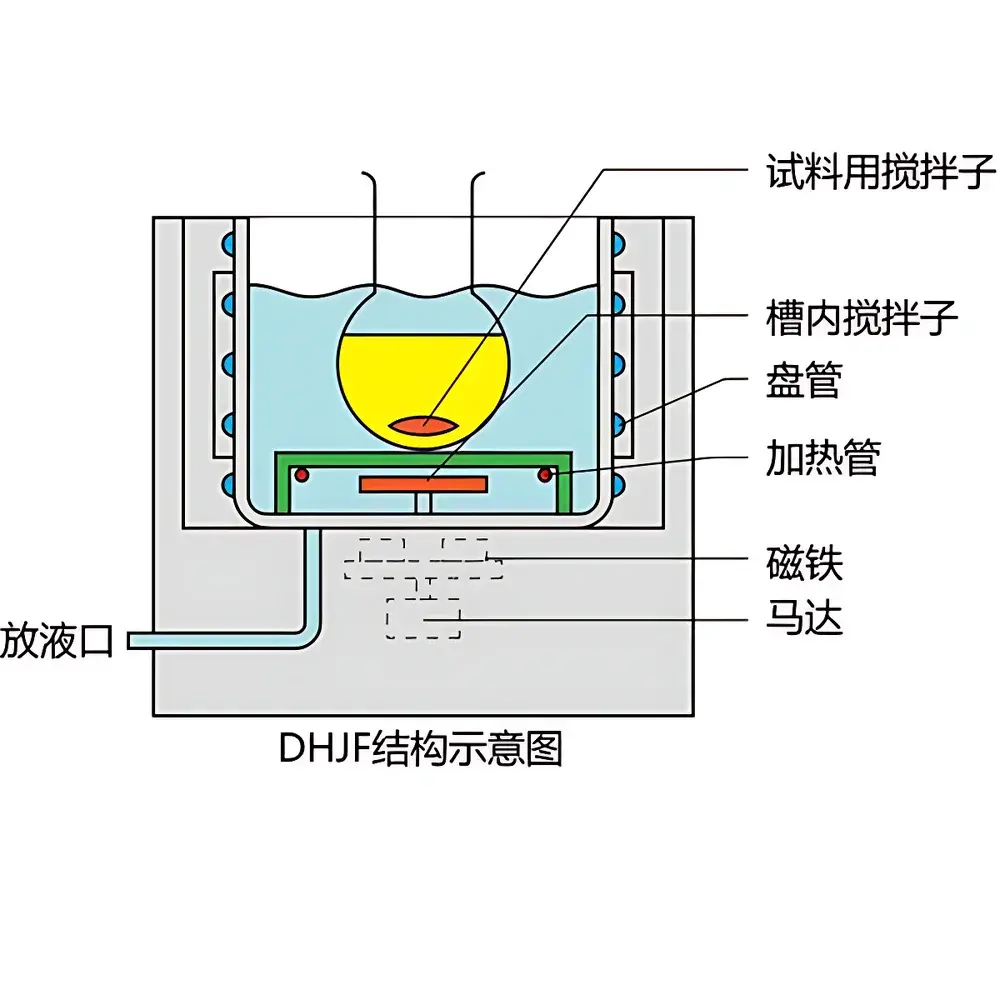
- 50 L stainless steel (AISI 304) bath vessel with high-molecular polymer lining resistant to embrittlement, corrosion, and solvent permeation at sub-zero temperatures.
- Digital LED interface with membrane keypad enables intuitive setpoint entry, real-time temperature monitoring, and alarm configuration (over-temp, low-level, compressor fault).
- Internal recirculation loop rated for continuous duty at −100 °C; flow path constructed entirely from low-thermal-conductivity polymers and passivated stainless steel to minimize heat ingress and frost formation.
- Robust structural frame with electrostatic powder-coated cold-rolled steel enclosure (IP20 rating), designed for floor-standing deployment in fume hoods or dedicated cold rooms.
Sample Compatibility & Compliance
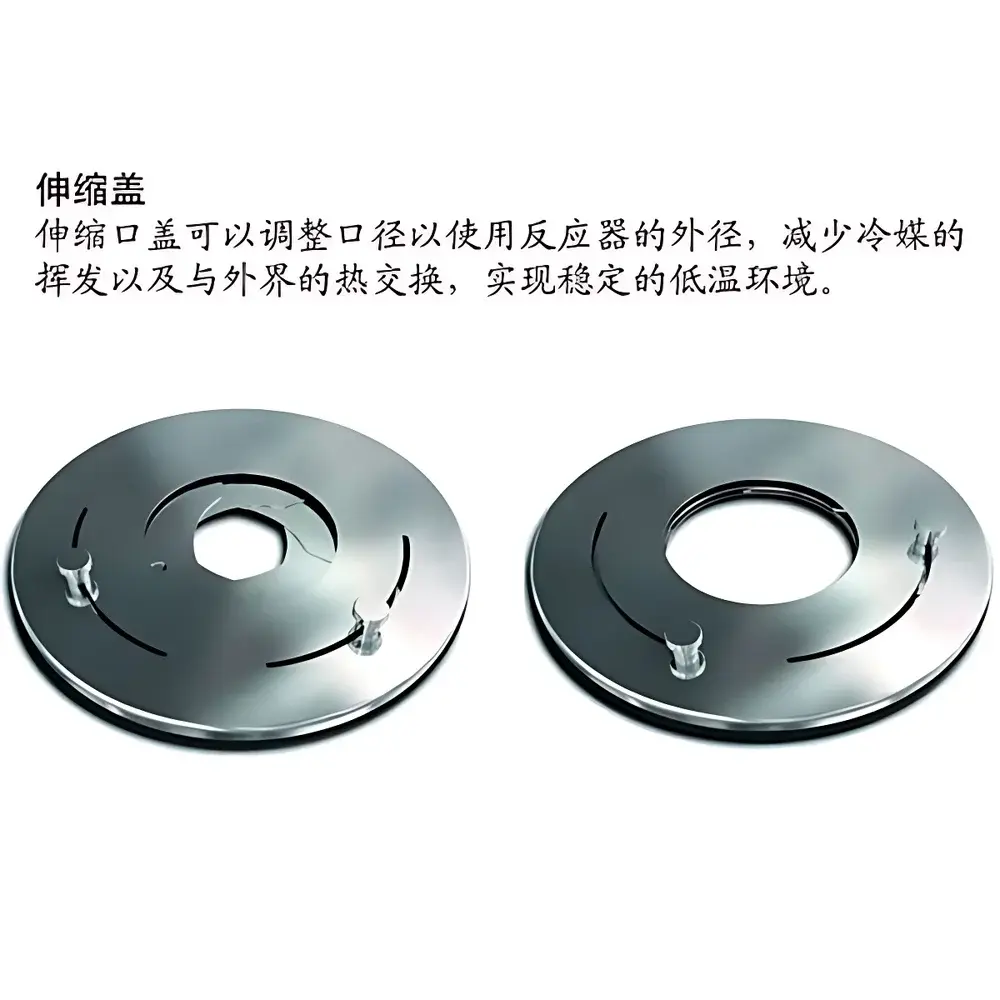
The DHJF-1050 accommodates standard laboratory glassware—including jacketed reactors, three-neck flasks (up to 20 L), and immersion condensers—via its Φ400 mm open bath aperture and Φ450 × 320 mm cylindrical reservoir geometry. Bath fluid compatibility includes ethanol, methanol, ethylene glycol/water mixtures, and specialized low-temperature heat transfer fluids (e.g., Dowtherm J, Shell Therminol VP-1), all verified for chemical inertness with the 304 SS and polymer liner. The unit meets EN 61000-6-2 (immunity) and EN 61000-6-4 (emission) standards, and its temperature control algorithm supports GLP-compliant audit trails when integrated with validated external data loggers (e.g., Omega OM-DAQPRO-5300). While not intrinsically rated for hazardous area use, it may be installed in Class 1, Division 2 environments when paired with appropriate ventilation and purge protocols.
Software & Data Management
The DHJF-1050 operates as a standalone instrument with no embedded microprocessor-based software stack. All control logic resides in hardened analog-digital hybrid circuitry, ensuring deterministic response and immunity to firmware corruption or cybersecurity vulnerabilities. Temperature setpoints, real-time readings, and status alarms are accessible via front-panel display only—intentionally omitting USB/Ethernet connectivity to preserve electromagnetic isolation in sensitive NMR or SQUID measurement environments. For regulatory-compliant data capture, users integrate third-party validated data acquisition systems compliant with FDA 21 CFR Part 11 (e.g., LabVIEW DAQmx with electronic signature modules) connected to the analog 0–10 V output (±0.5 % FS accuracy) and digital relay outputs for external logging and alarm escalation.
Applications
- Synthesis of organolithium and Grignard reagents requiring strict thermal control below −80 °C.
- Cryogenic crystallization studies for pharmaceutical polymorph screening per USP <1059>.
- Low-temperature kinetic profiling of exothermic polymerizations (e.g., anionic ring-opening of ε-caprolactam).
- Calibration of infrared detectors and bolometers using blackbody reference sources stabilized at −100 °C.
- Material science testing: thermal contraction analysis of composites, superconducting precursor annealing, and low-T dielectric spectroscopy sample staging.
FAQ
Does the DHJF-1050 support external temperature probes for sample-vessel feedback control?
No—the unit regulates bath fluid temperature only. External PID control requires integration via its analog voltage output and a third-party controller.
Is the internal circulation pump operational at −100 °C?
Yes, the magnetic-drive centrifugal pump is rated for continuous operation down to −100 °C with compatible heat transfer fluids (viscosity ≤ 25 cSt at operating temperature).
Can this bath be used with flammable solvents such as diethyl ether?
Only with engineering controls: vapor containment hoods, explosion-proof auxiliary equipment, and strict adherence to NFPA 45 and local fire codes. The bath itself lacks ATEX/IECEx certification.
What maintenance intervals are recommended for compressor oil and refrigerant?
Compressor oil inspection every 2,000 operating hours; full refrigerant charge verification and filter-drier replacement every 5 years or after any refrigerant leak repair.
Is remote monitoring possible via RS-485 or Modbus?
No—no serial or industrial protocol interface is provided. All communication is limited to analog output and discrete relay signals.



