
JiPu Portable 350 Handheld Energy Dispersive X-Ray Fluorescence (ED-XRF) Spectrometer for Alloy Analysis
| Origin | Beijing, China |
|---|---|
| Manufacturer Type | Authorized Distributor |
| Origin Category | Domestic (China) |
| Model | Portable 350 |
| Application | Field-Portable |
| Industry-Specific Use | Electronics, Petrochemical, Power, Aerospace, Scrap Recycling |
| Elemental Range | Mg (Z=12) to U (Z=92) |
| Quantitative Range | 1 ppm to 99.99 wt% |
| Energy Resolution | 149 ± 5 eV (at Mn Kα) |
| Repeatability | RSD ≤ 0.05% |
Overview
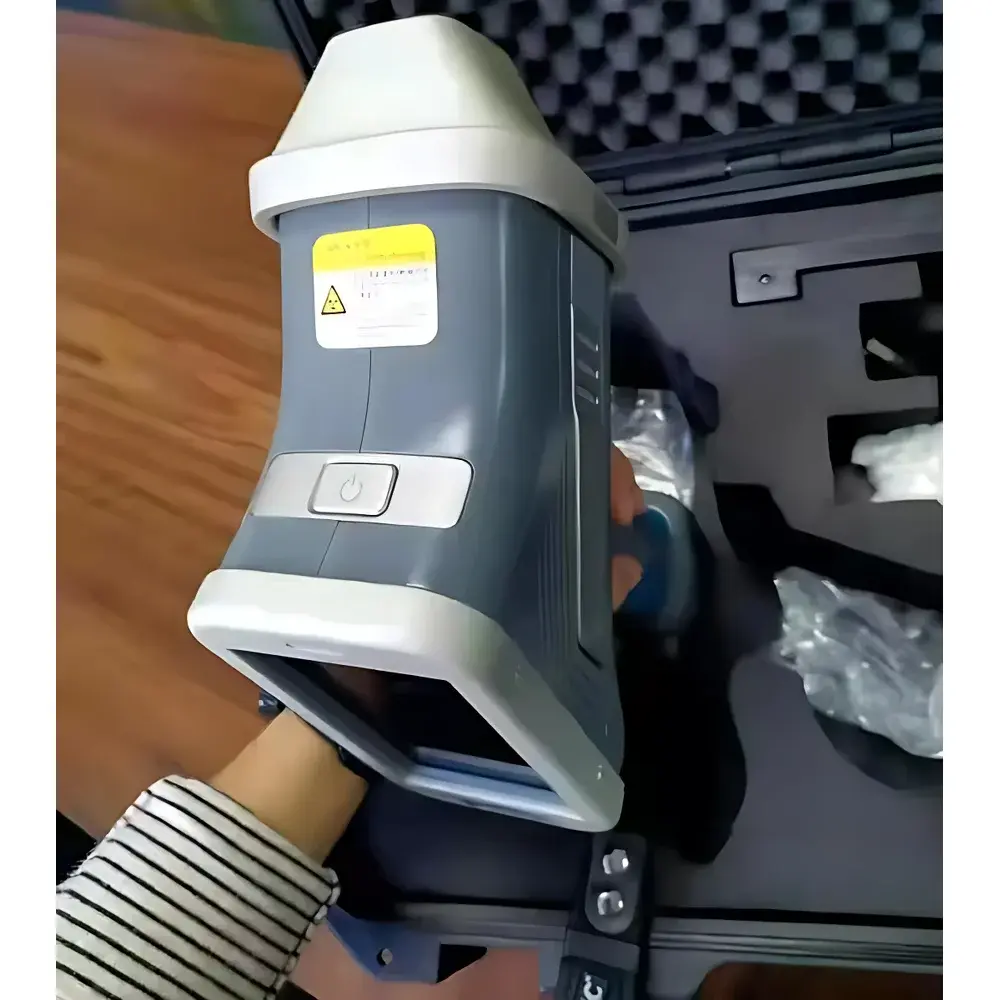
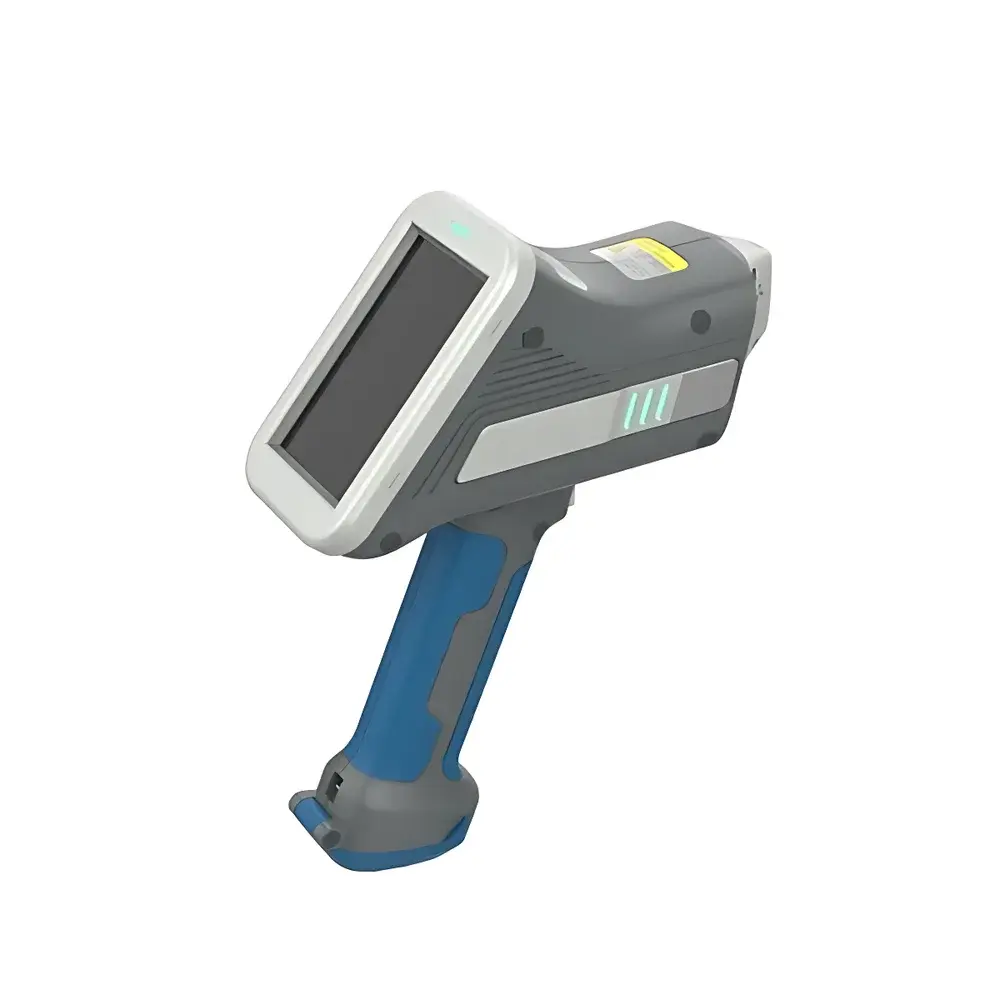
The JiPu Portable 350 is a field-deployable energy dispersive X-ray fluorescence (ED-XRF) spectrometer engineered for rapid, non-destructive elemental analysis of metallic alloys in situ. Based on fundamental physics principles—where primary X-rays from a micro-focus end-window X-ray tube (45 kV, 200 µA; Ag or W anode) excite characteristic secondary (fluorescent) X-rays from sample atoms—the instrument quantifies elemental composition via detection of emitted photon energies and intensities using a high-performance Si-Pin semiconductor detector. Its design prioritizes metrological integrity in demanding industrial environments: real-time spectral acquisition, FP (Fundamental Parameters) and empirical calibration algorithms, and rigorous radiation safety compliance ensure laboratory-grade accuracy (±0.02–0.15 wt% typical for major alloying elements) with sub-second identification of standardized alloy grades (e.g., UNS S30400, ASTM B111 C70600). The system meets the functional requirements of Positive Material Identification (PMI) per ASTM E2882–22, ISO 21088:2021, and ASME B31.3 Annex F, serving as a critical verification tool where material misidentification poses catastrophic risk—in pressure vessels, refinery piping, nuclear components, and aerospace structural assemblies.
Key Features
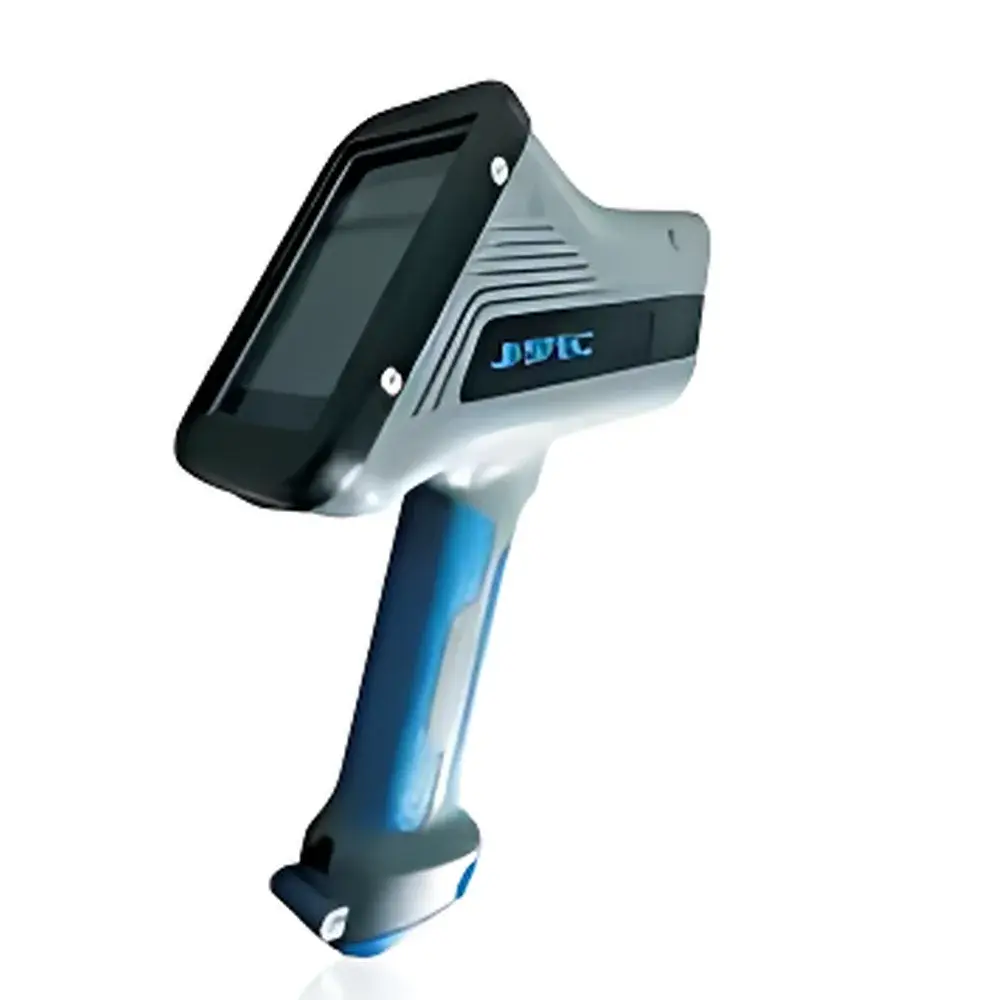
- Ultra-lightweight architecture: Total mass ≤ 1.75 kg (including integrated 6800 mAh Li-ion battery), enabling extended handheld operation without operator fatigue.
- Industrial-grade human-machine interface: 5-inch sunlight-readable transflective touchscreen (1080 × 720 resolution) with glove-compatible touch response and intuitive icon-driven workflow.
- Intelligent hardware safeguards: Proximity-sensing test window activation, auto-shutdown during idle/no-sample conditions, and real-time radiation status LED (red flash = active measurement; green solid = sample present; green flash = standby).
- Multi-layer radiation containment: Side leakage ≤ 0.2 µSv/h (background-subtracted), compliant with IEC 62495:2010 and national regulatory limits for handheld XRF devices; includes optional lead-lined protective cover for enhanced operator shielding.
- Dual-mode excitation: Selectable Ag or W anode X-ray tube enables optimized sensitivity across light (Mg–Al) and heavy (Pb–U) element ranges without mechanical filter changes—background subtraction handled algorithmically in firmware.
Sample Compatibility & Compliance
The Portable 350 analyzes solid metallic samples—including castings, forgings, welds, pipes, valves, and scrap fragments—without surface preparation beyond basic cleaning. It supports full quantitative analysis of all major engineering alloy families: Fe-based (stainless steels, Cr-Mo steels), Ni-based (Inconel®, Hastelloy®), Co-based (Stellite®), Ti-based (Ti-6Al-4V), Cu-based (brasses, bronzes), Al-based (6061, 7075), and refractory alloys (Mo-W blends). Method validation aligns with ASTM E1621 (ED-XRF for metals), ISO 17025:2017 (testing laboratory competence), and FDA 21 CFR Part 11 requirements for electronic records and signatures when used in GMP-regulated environments (e.g., pharmaceutical plant construction, bioreactor fabrication). Certificates of conformance include third-party radiation safety testing reports issued by CNAS-accredited metrology institutes.
Software & Data Management
Embedded firmware and cross-platform software (Windows PC, Android mobile, cloud portal) provide unified data governance. Core capabilities include real-time spectrum visualization, multi-point averaging, grade-matching against customizable libraries (UNS, ASTM, GB, JIS, DIN), automated report generation (PDF/CSV), and email-based report dispatch directly from the device. All analytical sessions are timestamped, user-logged, and stored with full audit trail metadata—supporting GLP/GMP traceability. Data synchronization occurs via Wi-Fi, Bluetooth 5.0, or USB-C; encrypted cloud backup ensures redundancy. Remote diagnostics and over-the-air firmware updates eliminate downtime during field deployments.
Applications
Primary use cases span quality assurance, regulatory compliance, and operational efficiency: incoming raw material inspection (ASTM A955 for rebar, API RP 578 for PMI), inventory segregation in scrap yards (ferrous/non-ferrous sorting, Zn/Pb contamination screening), weld deposit verification in power plant retrofits, and forensic metallurgical failure analysis. Secondary applications include electronics RoHS screening (Pb, Cd, Hg, Cr⁶⁺, Br), catalyst composition checks in petrochemical units, and precious metal assay (Au, Pt, Pd) in jewelry recycling—all within the same hardware platform.
FAQ
Is the Portable 350 certified for use in intrinsically safe (IS) hazardous locations?
No—this model is not ATEX/IECEx-certified. It is rated for general industrial environments per IP54 (dust/water resistant) but requires exclusion from Zone 0/1 classified areas.
Can the instrument quantify light elements such as carbon or lithium?
No—Mg (Z=12) is the lightest detectable element due to atmospheric absorption of low-energy X-rays and detector window limitations. Carbon (Z=6) and lithium (Z=3) require vacuum/purge systems unavailable in handheld configurations.
What documentation accompanies each unit for regulatory audits?
Each shipment includes a Factory Calibration Certificate, Radiation Safety Test Report (CNAS-accredited), CE Declaration of Conformity, and ISO 9001-compliant manufacturing traceability records.
Does the warranty cover accidental damage from drops or moisture ingress?
Standard 12-month warranty excludes physical damage (e.g., cracked detector window, bent collimator, water intrusion). Extended service plans with accidental damage protection are available upon request.
How is measurement reproducibility validated across operators and sites?
Built-in drift correction uses internal reference standards; inter-laboratory reproducibility studies (per ISO 5725-2) demonstrate RSD ≤ 0.05% for repeated measurements of NIST SRM 661 stainless steel under identical conditions.




