
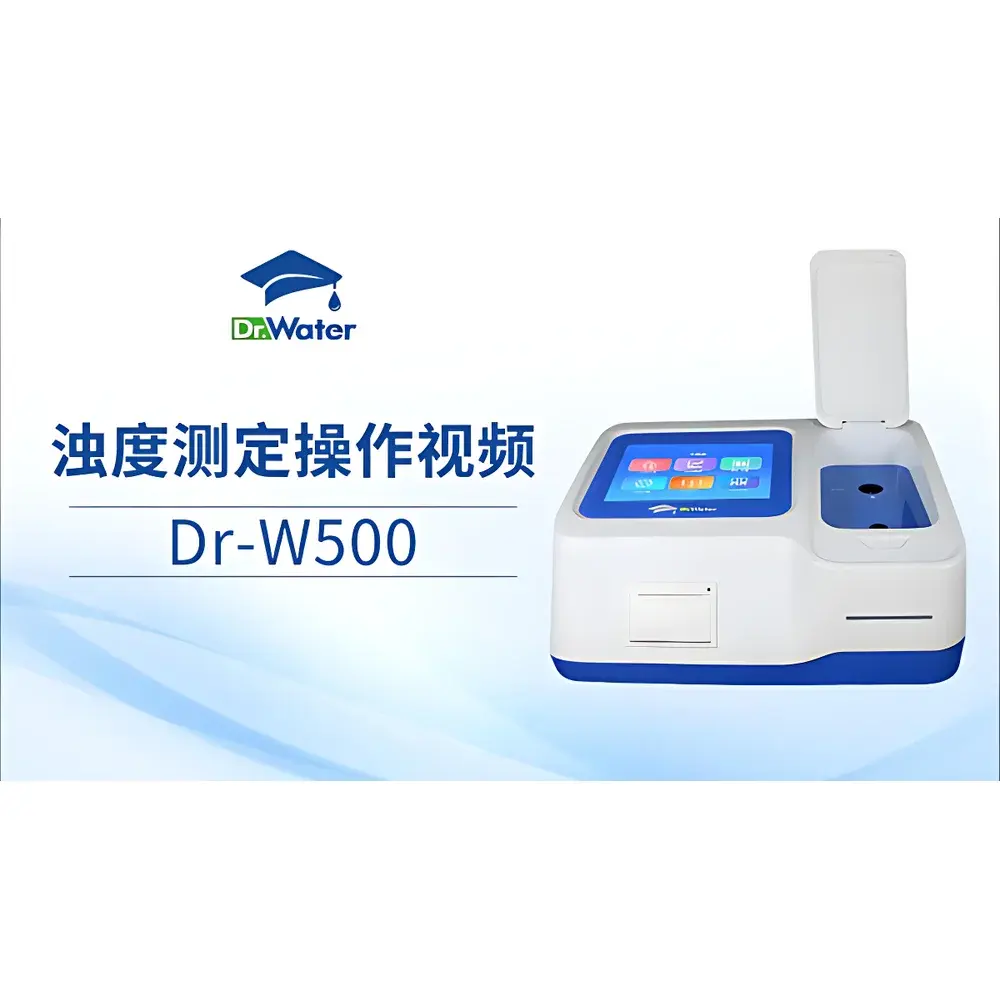
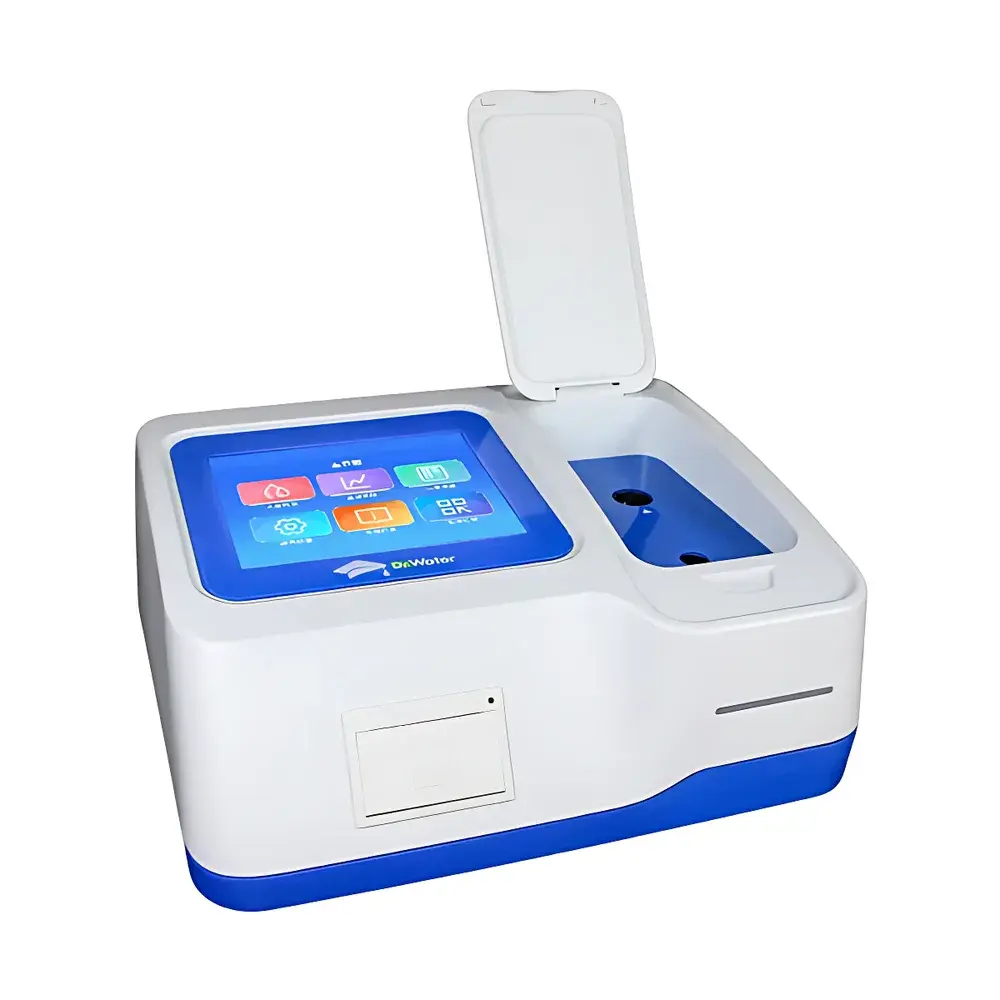
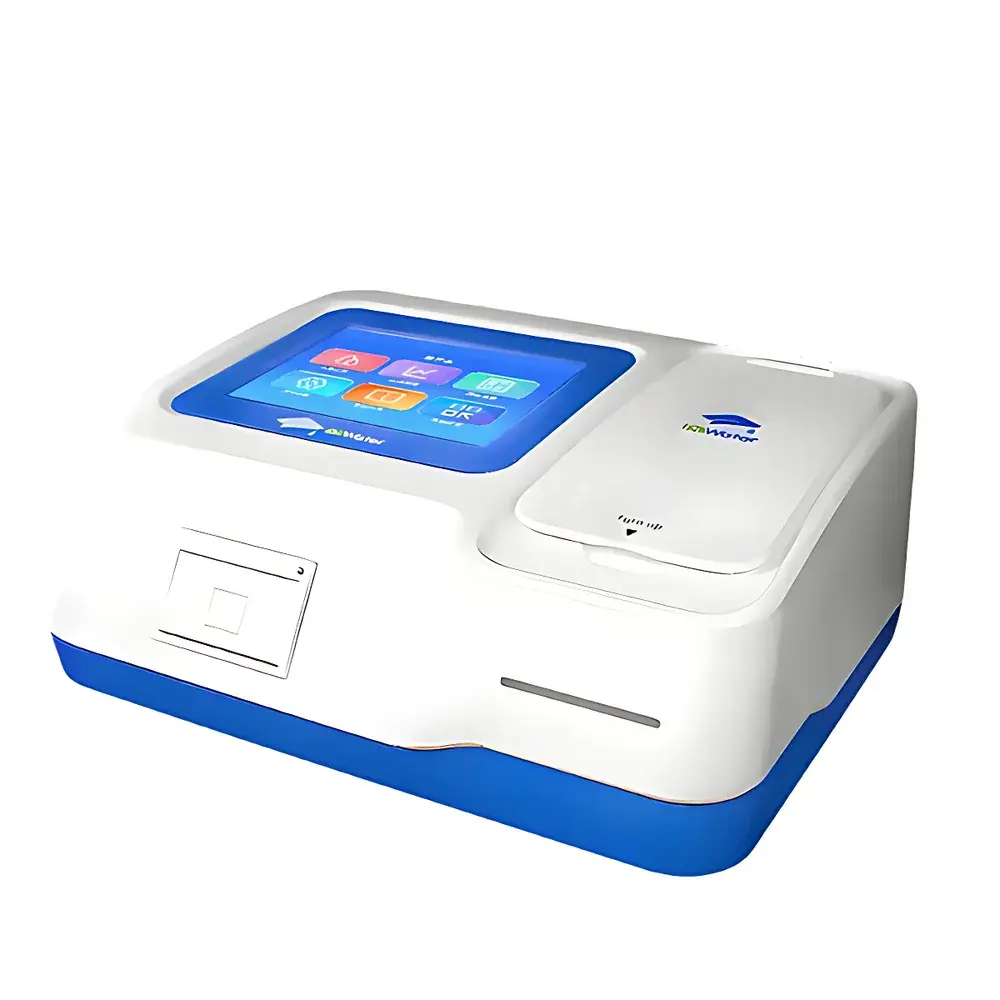
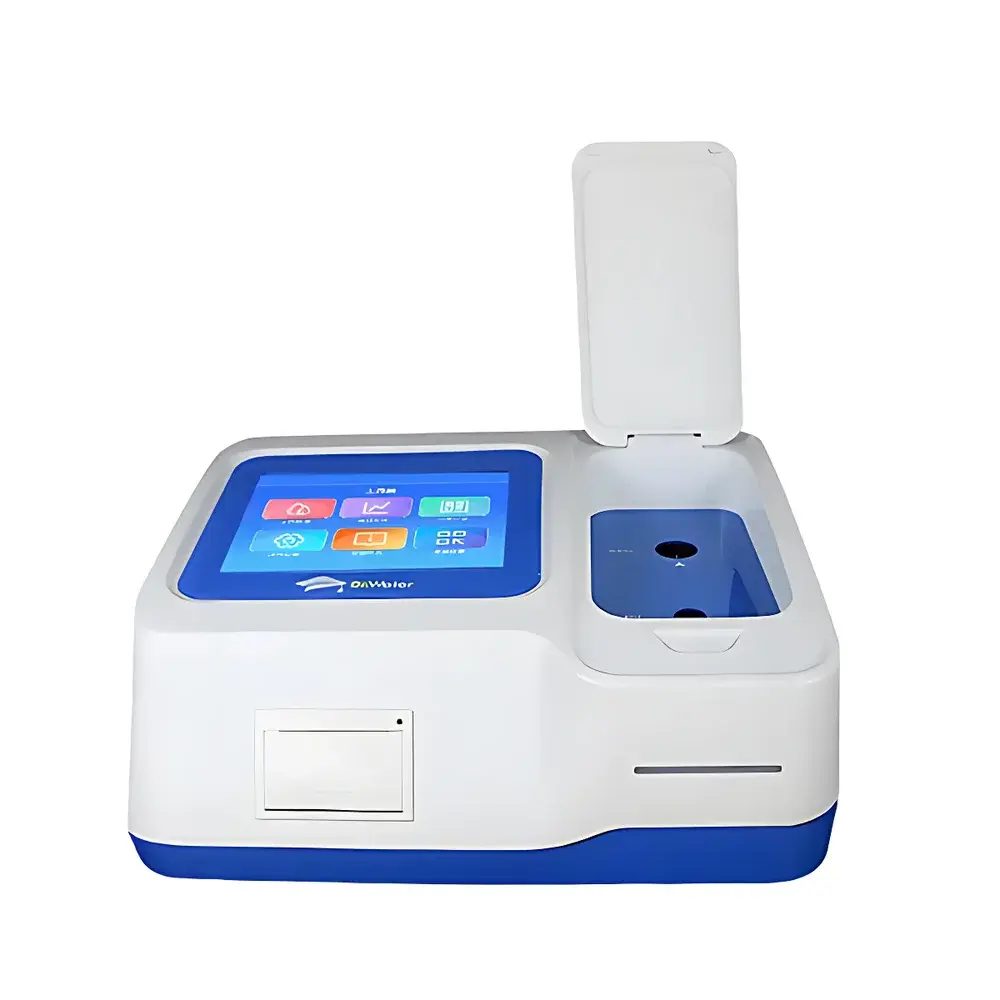
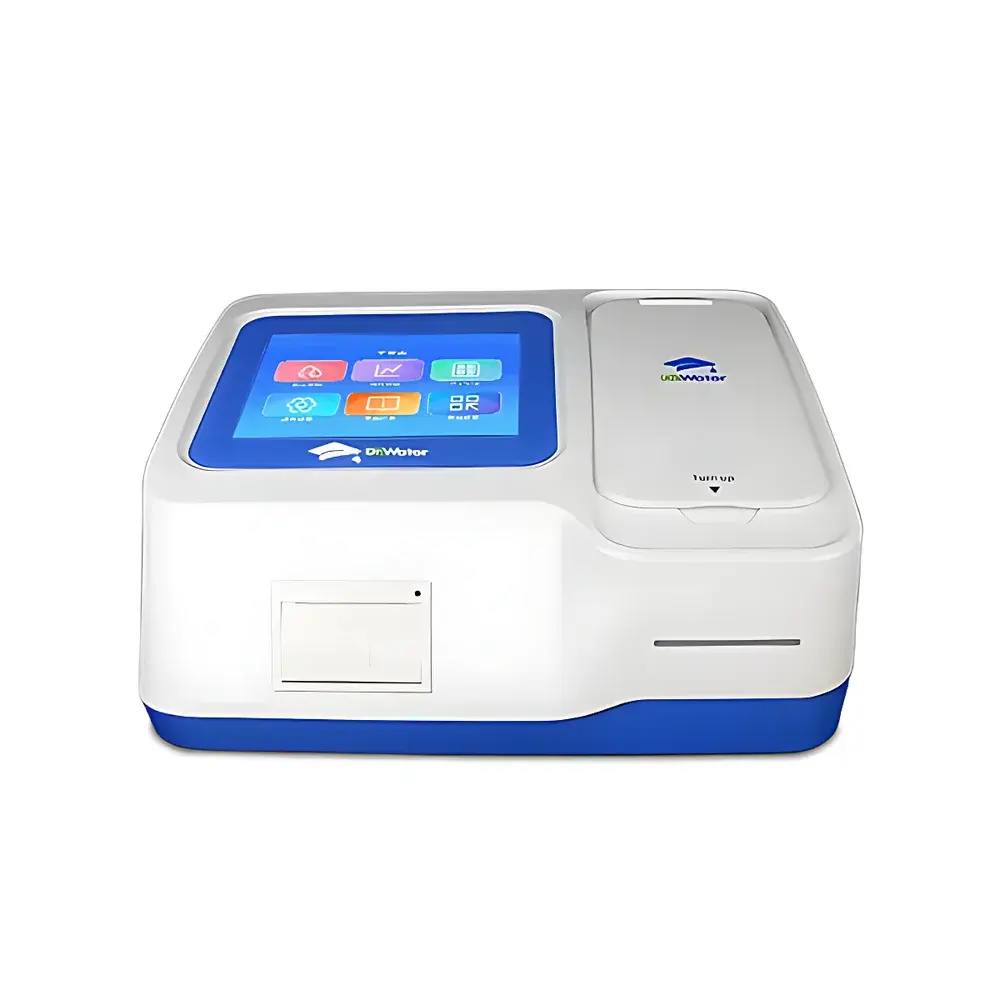
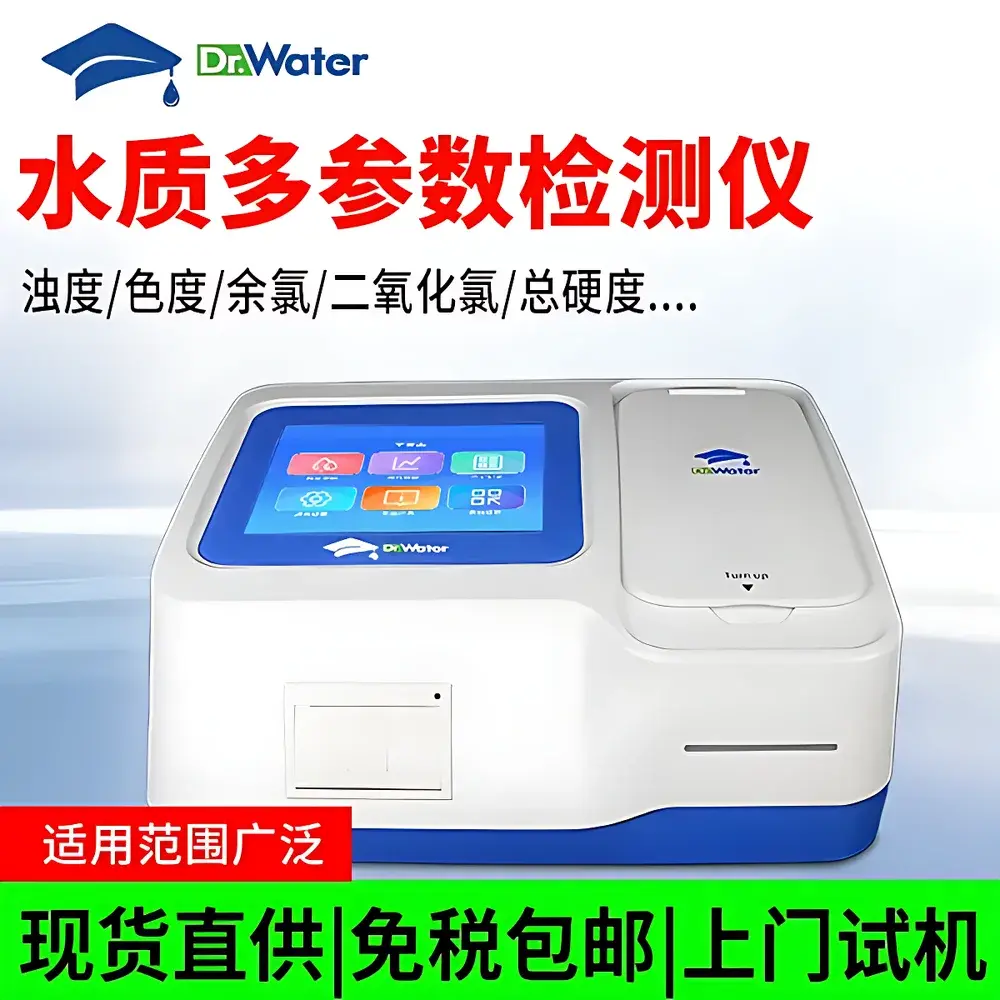
Dr-W500 Multi-Parameter Water Quality Analyzer by DoctorWater
| Brand | DoctorWater |
|---|---|
| Origin | Hunan, China |
| Model | Dr-W500 |
| Instrument Type | Laboratory Water Quality Analyzer |
| Detection Principle | Spectrophotometry |
| Measured Parameters | Turbidity, Color, Free Chlorine, Chlorine Dioxide, Total Hardness, Permanganate Index (COD<sub>Mn</sub>), Ammonia Nitrogen, Ozone, Urea, Iron, Manganese |
| Turbidity Range | 0–20 NTU / 0–200 NTU / 0–1000 NTU |
| Color Range | 0.0–50.0°Hazen / 0–500°Hazen |
| Repeatability | ≤ ±2% |
| Accuracy | ≤ ±5% |
| Wavelength Range | 330–900 nm |
| Wavelength Accuracy | ±5 nm |
| Absorbance Resolution | 0.001 Abs |
| Optical Stability | ≤ ±0.005 Abs/20 min |
| Display | 8-inch HD color capacitive touchscreen |
| Language Support | English & Chinese |
| Sample Holders | 360° rotatable cuvette port + standard 25 mm cuvette port |
| Light Source | Imported long-life cold LED (≥100,000 h) |
| Calibration Modes | Blank, Factor, and Calibration Curve |
| Data Storage | Up to 1,000,000 measurement records |
| Connectivity | USB interface |
| Output Modes | Concentration or Absorbance |
| Printer | Built-in thermal printer |
| Housing Material | Corrosion- and heat-resistant ABS |
| Dimensions | 392 × 315 × 170 mm |
Overview
The Dr-W500 Multi-Parameter Water Quality Analyzer by DoctorWater is a laboratory-grade spectrophotometric instrument engineered for precise, standardized analysis of critical physicochemical parameters in water samples. Based on nationally recognized analytical methods—including GB/T 5750, HJ series standards, and ISO 7027 for turbidity—the system employs fixed-wavelength and programmable multi-band detection across a broad optical spectrum (330–900 nm). Its core optical architecture integrates an auto-positioning wavelength selection mechanism, high-stability cold LED illumination (rated for >100,000 hours), and dual-path cuvette detection geometry—enabling robust performance under routine QC/QA conditions in regulated environments. Designed for compliance-driven workflows, the Dr-W500 supports method traceability, calibration audit trails, and data integrity protocols aligned with GLP principles.
Key Features
- High-resolution 8-inch capacitive touchscreen with intuitive GUI and seamless English/Chinese language switching.
- Dual optical detection configuration: 360° rotatable cuvette holder for uniform light-path alignment and standardized 25 mm path-length cuvette compatibility.
- Advanced optical stabilization protocol with startup drift compensation—automatically suppresses transient photometric fluctuations during warm-up.
- Dual-algorithm processing engine combining polynomial interpolation and least-squares regression curve fitting to enhance quantitative accuracy across wide dynamic ranges.
- Integrated dilution factor input function—automatically scales raw absorbance values to final concentration without manual calculation.
- Programmable timed measurement mode enabling unattended batch analysis, ideal for routine surveillance or shift-based monitoring.
- Triple-mode calibration support: blank correction, reagent-specific factor adjustment, and full multi-point calibration curve generation—ensuring inter-batch consistency across varying reagent lots.
- User-defined alarm thresholds with on-screen and audible alerts upon exceedance of preset limits for any measured parameter.
- Interference compensation algorithm specifically optimized to correct for spectral overlap from color interference and optical attenuation in turbid or highly colored matrices.
- Four operational turbidity modes: Standard, Low-Turbidity (enhanced sensitivity <5 NTU), Signal-Averaging (for noisy low-signal samples), and Rapid Sedimentation (time-resolved settling kinetics assessment).
Sample Compatibility & Compliance
The Dr-W500 accommodates standard glass or quartz cuvettes (10 mm, 25 mm, and custom 360° rotational formats) and is validated for use with EPA-compliant, ISO-standardized, and GB-certified reagent kits. It meets optical performance criteria outlined in ISO 8466-1 (calibration of spectrophotometric methods), ASTM D1208 (color measurement), and EN ISO 7027-1 (turbidity by nephelometry). While not FDA 21 CFR Part 11–certified out-of-the-box, its audit-ready data logging—complete with timestamped operator ID, calibration history, and version-tracked method files—supports GMP/GLP documentation requirements when deployed within validated laboratory information management systems (LIMS).
Software & Data Management
Embedded firmware provides full local control over measurement execution, parameter configuration, and result interpretation. All data—including raw absorbance, calculated concentrations, calibration coefficients, and QC flags—are stored with full metadata (date/time, operator ID, method ID, cuvette position, dilution factor). The system retains up to one million records with searchable indexing and export capability via USB mass storage. Thermal printing delivers immediate hard-copy reports compliant with internal QA documentation standards. No cloud dependency or external software installation is required; however, exported CSV files integrate natively with Excel, LabArchives, and industry-standard LIMS platforms.
Applications
The Dr-W500 serves as a primary analytical platform in municipal drinking water laboratories, environmental monitoring stations, public health institutes (CDCs), bottled water and beverage production facilities, pharmaceutical water system validation teams, and industrial effluent compliance units. Routine applications include chlorine residual verification in distribution networks, ammonia nitrogen screening in wastewater influent, permanganate index (CODMn) assessment per GB/T 5750.7, ozone dosing validation in disinfection processes, and hardness profiling in boiler feedwater conditioning. Its modular design also supports method development for emerging contaminants when paired with validated third-party assay chemistries.
FAQ
Does the Dr-W500 comply with US EPA or ISO method requirements?
Yes—its optical specifications and validated measurement protocols align with ISO 7027 (turbidity), ISO 6226 (free chlorine), ISO 15705 (ammonia nitrogen), and ASTM D1208 (color); method adaptation for EPA-approved assays requires reagent kit validation per 40 CFR Part 136.
Can the instrument be integrated into a networked LIMS environment?
Direct Ethernet or Wi-Fi connectivity is not supported; however, USB-exported CSV files contain all required fields for automated ingestion into LIMS via scheduled scripts or middleware adapters.
What maintenance is required for long-term optical stability?
Annual verification of wavelength accuracy and photometric linearity using NIST-traceable neutral density filters and holmium oxide reference standards is recommended; no user-serviceable optical alignment is required.
Is the thermal printer compatible with continuous label stock?
No—it accepts only standard 57 mm thermal paper rolls; label printing requires external label-generation software and a dedicated barcode printer.
How are calibration curves managed across multiple operators?
Each curve is saved with unique identifiers including creation date, operator login, and associated reagent lot number—enabling full traceability and version-controlled method recall.







