Holoeye PLUTO-2.1 High-Precision Pure-Phase Spatial Light Modulator System
| Brand | Holoeye |
|---|---|
| Origin | Germany |
| Model | PLUTO-2.1 |
| Pixel Resolution | 1920 × 1080 |
| Pixel Pitch | 8 µm |
| Interface | USB (for gamma/dynamic range calibration), HDMI/DisplayPort (video input, green channel used for 8-bit phase addressing) |
| Phase Modulation | Pure-phase, software-defined |
| Wavelength Range | Multiple standard options (e.g., 400–450 nm, 532 nm, 633 nm, 785 nm, 1064 nm) |
| Operating Mode | Hot-pluggable, extended desktop display mode |
Overview
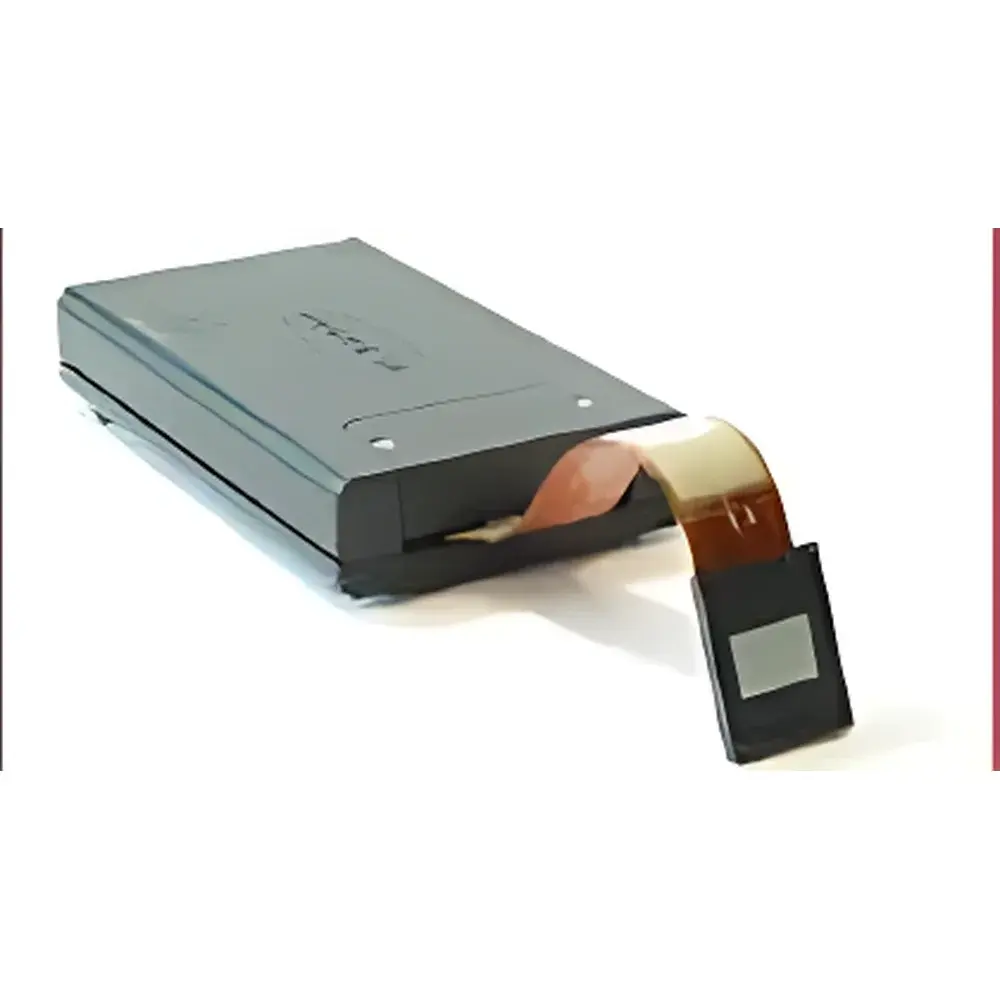
The Holoeye PLUTO-2.1 High-Precision Pure-Phase Spatial Light Modulator (SLM) is an optically addressed, liquid-crystal-on-silicon (LCoS) device engineered for precise wavefront control in coherent optical systems. Based on reflective microdisplay architecture, it operates exclusively in pure-phase modulation mode—introducing controlled spatial phase delays without significant amplitude modulation or polarization crosstalk. This enables high-fidelity holographic beam shaping, adaptive optics correction, optical trapping, structured illumination, and single-shot computational imaging. The device leverages standard graphics card output via extended desktop mode, using the green channel of an 8-bit RGB video signal to encode phase maps—a design choice that ensures compatibility with widely deployed scientific computing and real-time visualization platforms. Its LCoS pixel array (1920 × 1080) features a uniform 8 µm pitch, delivering high spatial sampling density essential for diffraction-limited applications in visible and near-infrared spectral bands.
Key Features
- Pure-phase operation with <0.5% amplitude modulation residual—optimized for interferometric stability and high-contrast holography
- Native 1920 × 1080 resolution with 8 µm pixel pitch, supporting sub-wavelength phase quantization across multiple laser wavelengths
- Hot-pluggable architecture: no system reboot required for insertion/removal; seamless integration into multi-device optical benches
- USB-controlled calibration interface: dynamic adjustment of gamma curve and voltage range to match specific wavelength-dependent liquid crystal response
- Standard video input compatibility (HDMI/DisplayPort): eliminates need for proprietary frame grabbers or FPGA-based drivers
- Modular design with interchangeable front optics mounts—supports optional λ/4 waveplates, polarizers, and collimation adapters
Sample Compatibility & Compliance
The PLUTO-2.1 is compatible with continuous-wave (CW) and pulsed laser sources operating within discrete wavelength bands: 405 nm, 488 nm, 532 nm, 633 nm, 785 nm, and 1064 nm. Each variant undergoes factory calibration for optimal phase linearity and retardation uniformity at its designated wavelength. The device complies with IEC 61000-6-3 (EMC emission standards) and IEC 61000-6-2 (immunity requirements) for laboratory instrumentation. While not certified as medical or industrial safety-critical hardware, its optical enclosure meets EN 60825-1:2014 Class 1 laser product requirements when used with appropriate beam attenuation and housing. It supports traceable calibration protocols aligned with ISO/IEC 17025 principles when integrated into metrology-grade optical testbeds.
Software & Data Management
The PLUTO-2.1 operates without dedicated real-time operating system dependencies. Phase patterns are loaded as standard 8-bit grayscale TIFF or BMP files via any application capable of rendering to a secondary display—enabling use with MATLAB, Python (via OpenCV or PyGame), LabVIEW, or custom C++/CUDA frameworks. Holoeye provides open-source calibration utilities (Windows/Linux) for gamma curve measurement and phase-to-gray mapping. All USB configuration parameters—including drive voltage range, temperature compensation offsets, and frame synchronization latency—are stored in non-volatile memory and accessible via documented HID class commands. Audit trails for calibration events can be exported in CSV format, supporting GLP-aligned documentation workflows where phase map reproducibility must be verified per experiment.
Applications
- Holographic optical tweezers: simultaneous manipulation of multiple micron-scale particles via dynamically reconfigurable trap arrays
- Adaptive optics: closed-loop wavefront correction using Shack-Hartmann sensor feedback and iterative Gerchberg-Saxton algorithms
- Structured illumination microscopy (SIM): generation of high-frequency sinusoidal patterns for super-resolution imaging beyond the diffraction limit
- Diffractive optical element (DOE) emulation: rapid prototyping of custom beam splitters, vortex lenses, and Bessel generators
- Quantum optics experiments: spatial mode sorting (e.g., OAM decomposition), entanglement engineering, and multi-path interferometry
- Education and research labs: hands-on teaching of Fourier optics, diffraction theory, and digital holography fundamentals
FAQ
Is the PLUTO-2.1 suitable for pulsed laser applications?
Yes—provided pulse energy remains below the specified damage threshold for the selected wavelength variant (typically ≤ 10 mJ/cm² for nanosecond pulses at 1064 nm). Thermal management is passive; duty cycle must be limited for high-repetition-rate ultrafast sources.
Can phase maps be updated at video rate?
Full-frame updates are supported at up to 60 Hz using standard GPU output. Frame latency is typically 1–2 video frames, depending on graphics driver configuration and OS scheduling.
Does the system support phase-only Fourier holograms?
Yes—the native 8-bit addressing maps linearly to ~2π phase depth with calibrated nonlinearity correction applied in software. Raw phase wrapping is preserved for algorithmic unwrapping where needed.
Is remote configuration possible over Ethernet or TCP/IP?
No native network interface is provided; however, USB communication can be extended via USB-over-IP solutions compliant with USB 2.0 specifications.
What documentation is supplied with the system?
Includes CE declaration of conformity, optical performance datasheet (phase uniformity, RMS error, contrast ratio), mechanical drawings (CAD-compatible STEP files), and software API reference manual (HID command set, calibration file structure).