


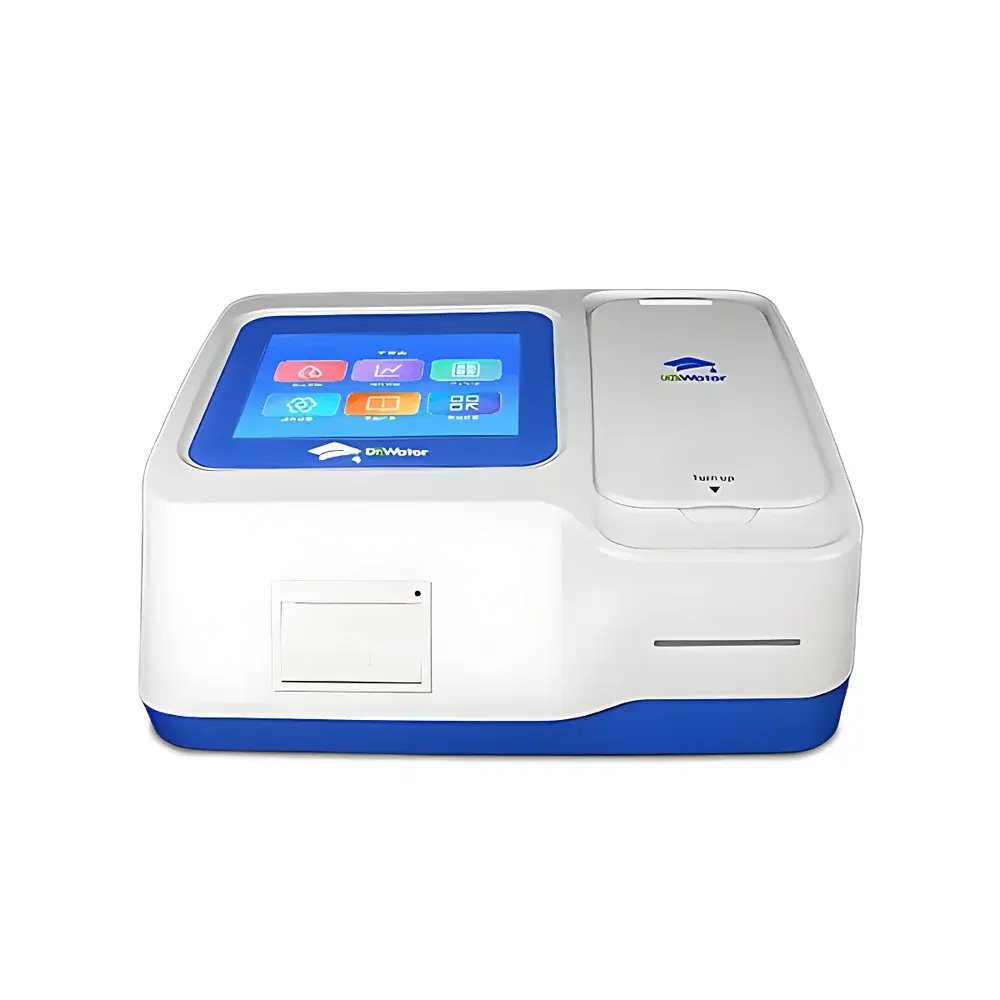
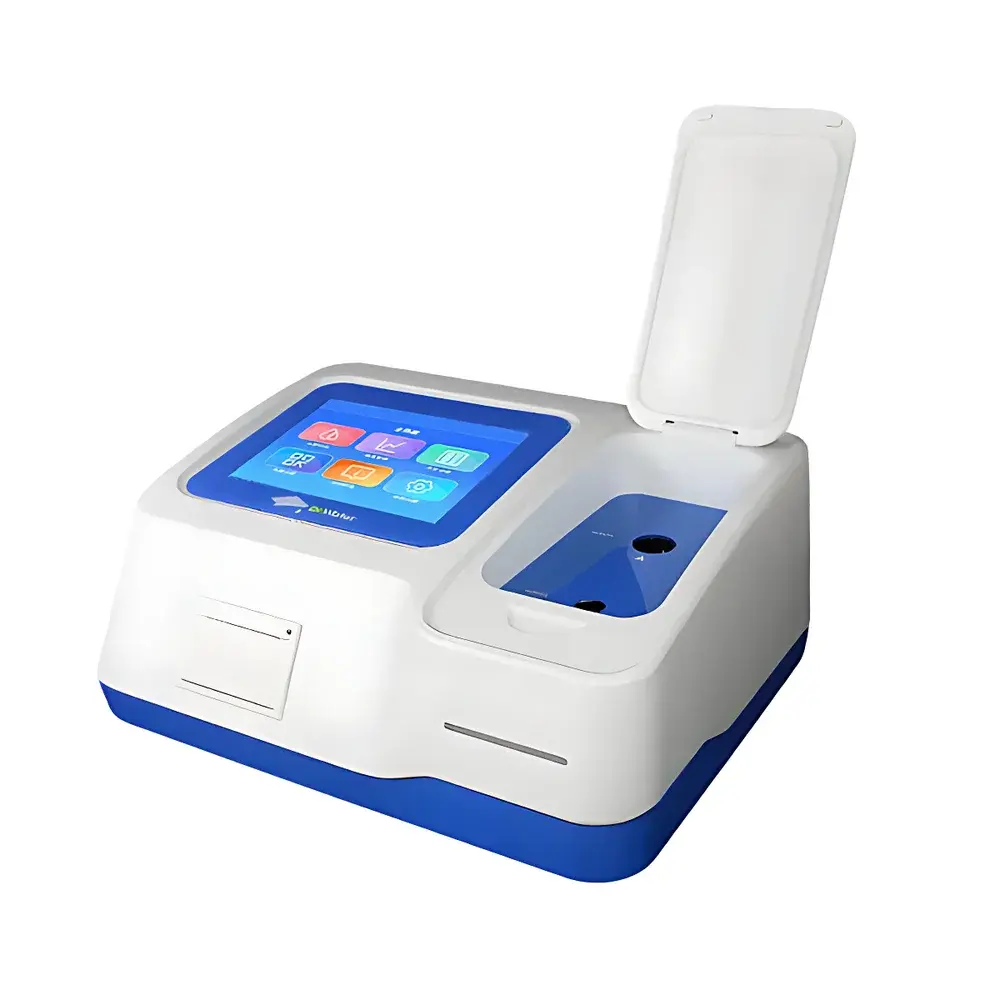
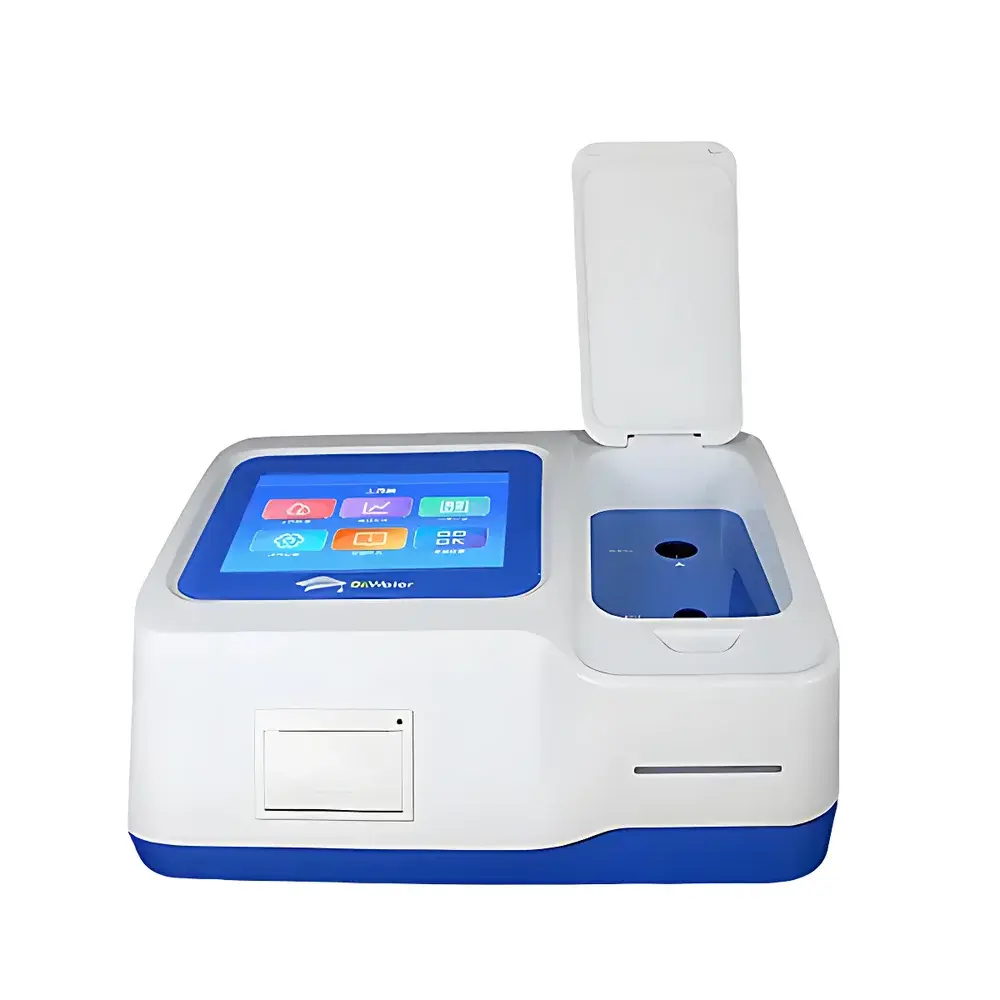
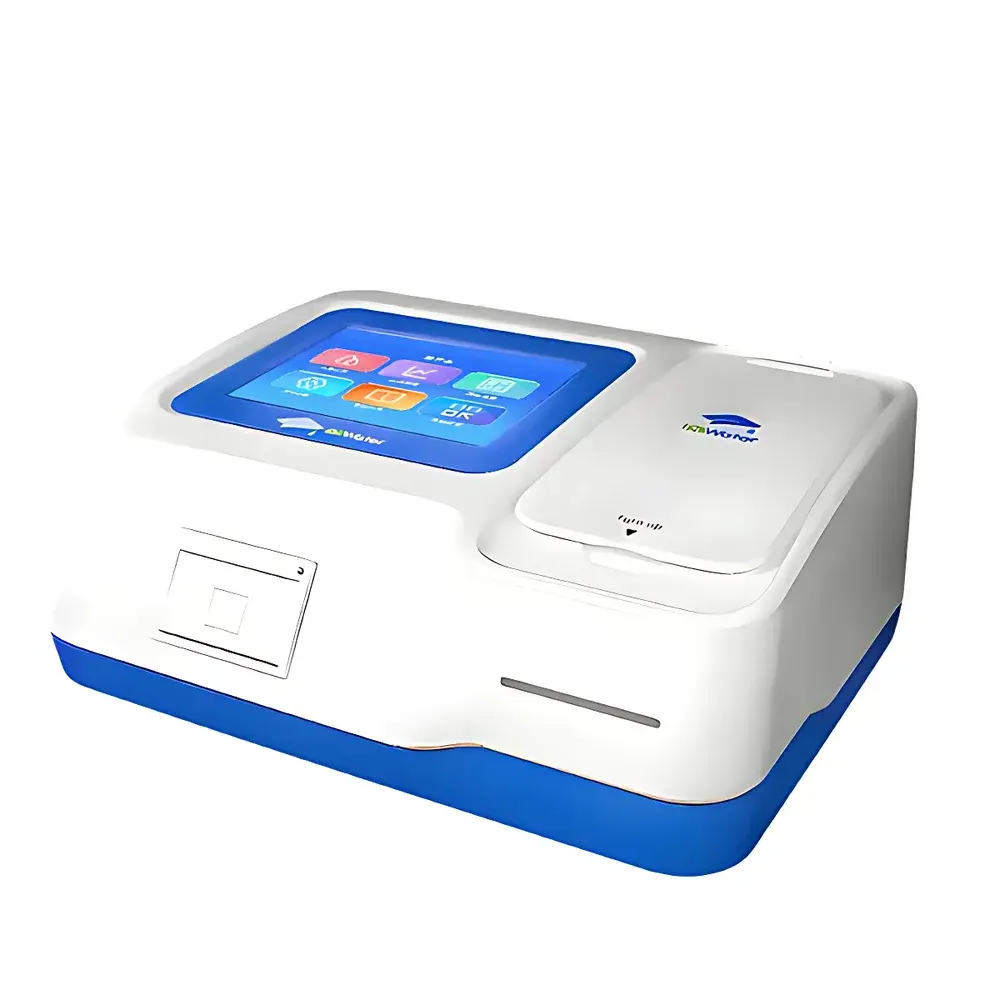
Dr-WTB Desktop Turbidimeter by DoctorWater
| Brand | DoctorWater |
|---|---|
| Origin | Hunan, China |
| Model | Dr-WTB |
| Type | Benchtop/Laboratory |
| Measurement Range | 0–20 NTU / 0–200 NTU / 0–1000 NTU |
| Resolution | 0.001 Abs |
| Accuracy | ≤ ±5% |
| Wavelength Range | 330–900 nm |
| Wavelength Accuracy | ±5 nm |
| Repeatability | ≤ ±2% |
| Optical Stability | ≤ ±0.005 Abs/20 min |
| Display | 8-inch HD color capacitive touchscreen |
| Sample Holders | 360° rotatable cuvette holder & 25 mm fixed-position cuvette holder |
| Light Source | Imported long-life cold LED (≥100,000 h) |
| Calibration Modes | Blank, Factor, and Calibration Curve |
| Data Storage | Up to 1,000,000 measurements |
| Connectivity | USB interface |
| Print Output | Built-in thermal printer |
| Readout Units | NTU, Absorbance (Abs) |
| Housing Material | Corrosion- and heat-resistant ABS |
| Dimensions | 392 × 315 × 170 mm |
Overview
The Dr-WTB Desktop Turbidimeter by DoctorWater is a precision optical instrument engineered for reliable, traceable turbidity measurement in regulated laboratory and quality control environments. It operates on the principle of nephelometric detection—measuring the intensity of light scattered at 90° from a collimated beam passing through a water sample—as defined in ISO 7027-1:2016 and EPA Method 180.1. Unlike simple transmittance-based systems, the Dr-WTB employs an auto-wavelength positioning optical detection system with selectable wavelengths across 330–900 nm, enabling optimized sensitivity for low-NTU applications (e.g., ultrapure water) and robust performance in high-turbidity matrices (up to 1000 NTU). Its dual-cuvette architecture—including both a motorized 360° rotatable holder and a fixed 25 mm position—ensures consistent path-length alignment and minimizes angular scattering artifacts. The instrument is calibrated per NIST-traceable standards and designed to meet routine compliance requirements for drinking water (GB/T 5750.4–2023), pharmaceutical water (USP <643>), and environmental monitoring (HJ 1077–2019).
Key Features
- High-stability optical platform featuring imported cold LED illumination (rated lifetime ≥100,000 h) and real-time optical drift compensation during warm-up
- Dual-mode turbidity analysis: standard mode (ISO 7027), low-turbidity mode (optimized signal-to-noise ratio below 1 NTU), signal averaging mode (reduces stochastic noise), and rapid sedimentation mode (time-resolved settling kinetics)
- Advanced interference compensation algorithm that corrects for chromatic interference (e.g., yellow humic substances) and photometric attenuation without requiring pre-filtration or dilution
- Three-tier calibration architecture: blank calibration (zero reference), factor calibration (slope adjustment for reagent lot variance), and multi-point curve calibration (up to 12 points, polynomial regression support)
- Integrated dilution factor input: direct NTU readout after user-defined dilution (e.g., 1:10, 1:50), eliminating manual calculation errors
- Automated timing protocol: programmable start delay, interval measurement, and unattended batch operation for overnight stability studies
- Comprehensive data integrity tools: timestamped records, operator ID tagging, and audit-ready storage of raw absorbance values alongside final NTU results
Sample Compatibility & Compliance
The Dr-WTB accepts standard glass or quartz cuvettes (10 mm, 25 mm, and custom diameters via rotatable holder), supporting both clear and mildly colored aqueous samples. It is validated for use with EPA-certified Formazin and StablCal standards, and its optical design conforms to ISO 7027-1’s geometric and spectral requirements for ratio-turbidimeters. Instrument validation documentation includes factory-verified linearity (R² ≥ 0.9998 across full range), repeatability (≤ ±2% CV at 10 NTU), and long-term photometric stability (≤ ±0.005 Abs over 20 min). For regulated environments, the system supports GLP/GMP-aligned workflows: all calibrations are logged with metadata (date, operator, standard lot), and the internal memory retains full traceability for ≥1,000,000 measurements. While not FDA 21 CFR Part 11–certified out-of-the-box, the firmware architecture allows integration with validated LIMS or ELN platforms via USB export (CSV/Excel-compatible format).
Software & Data Management
The embedded operating system provides full local control via an 8-inch capacitive touchscreen with responsive GUI and bilingual (English/Chinese) language switching—ideal for multinational lab teams. All measurement parameters, calibration history, and user-defined alarm thresholds (configurable per test method) are stored onboard. Data export is supported via USB mass-storage mode; no proprietary drivers required. The instrument logs raw absorbance (Abs) and calculated NTU simultaneously, preserving intermediate values for retrospective analysis. Thermal printing enables immediate hard-copy reporting with sample ID, date/time stamp, calibration status, and operator signature field. Firmware updates are delivered via USB stick, maintaining version control and change-log traceability.
Applications
- Drinking water and municipal supply QA/QC (compliance with GB 5749–2022 and WHO Guidelines)
- Pharmaceutical purified water and WFI monitoring per USP <643> and EU Ph. Eur. 2.2.2
- Environmental wastewater effluent screening (HJ 91.1–2019)
- Food & beverage process water verification (e.g., soft drink carbonation lines, brewing rinse cycles)
- Chemical manufacturing rinse-water clarity validation
- Research-grade colloidal stability studies (e.g., coagulation/flocculation kinetics using rapid sedimentation mode)
FAQ
What turbidity standards are compatible with the Dr-WTB?
Formazin, StablCal, AMCO AEPA, and custom user-prepared standards—all traceable to NIST SRM 2134 series.
Does the instrument support automatic wavelength selection for different NTU ranges?
Yes: the auto-wavelength positioning system selects optimal excitation wavelengths (e.g., 860 nm for high-range, 460 nm for low-range) based on selected measurement mode.
Can measurement data be exported in CSV format for LIMS integration?
Yes—via USB interface; files include timestamps, raw Abs, NTU, calibration ID, and operator code.
Is the thermal printer replaceable with external network printers?
No—the built-in thermal printer is fixed; however, USB-exported data can be routed to any networked or local printer via host PC.
How does the interference compensation algorithm handle highly colored samples?
It applies real-time dual-wavelength absorbance correction (e.g., 460 nm/700 nm ratio) to decouple turbidity scattering from dissolved organic color absorption.



