
Orbits Lightwave ETH Low-Noise Single-Frequency Fiber Laser
| Brand | Orbits Lightwave |
|---|---|
| Origin | USA |
| Model | ETH |
| Output Power | >350 mW (oscillator), up to 50 W (with amplifier) |
| Linewidth | <1 Hz (Lorentzian), <200 Hz (over 1 ms) |
| Frequency Stability | <0.25 MHz/°C |
| OSNR | >80 dB |
| SMSR | >75 dB |
| RIN | <-175 dBc/Hz (shot-noise-limited) |
Overview
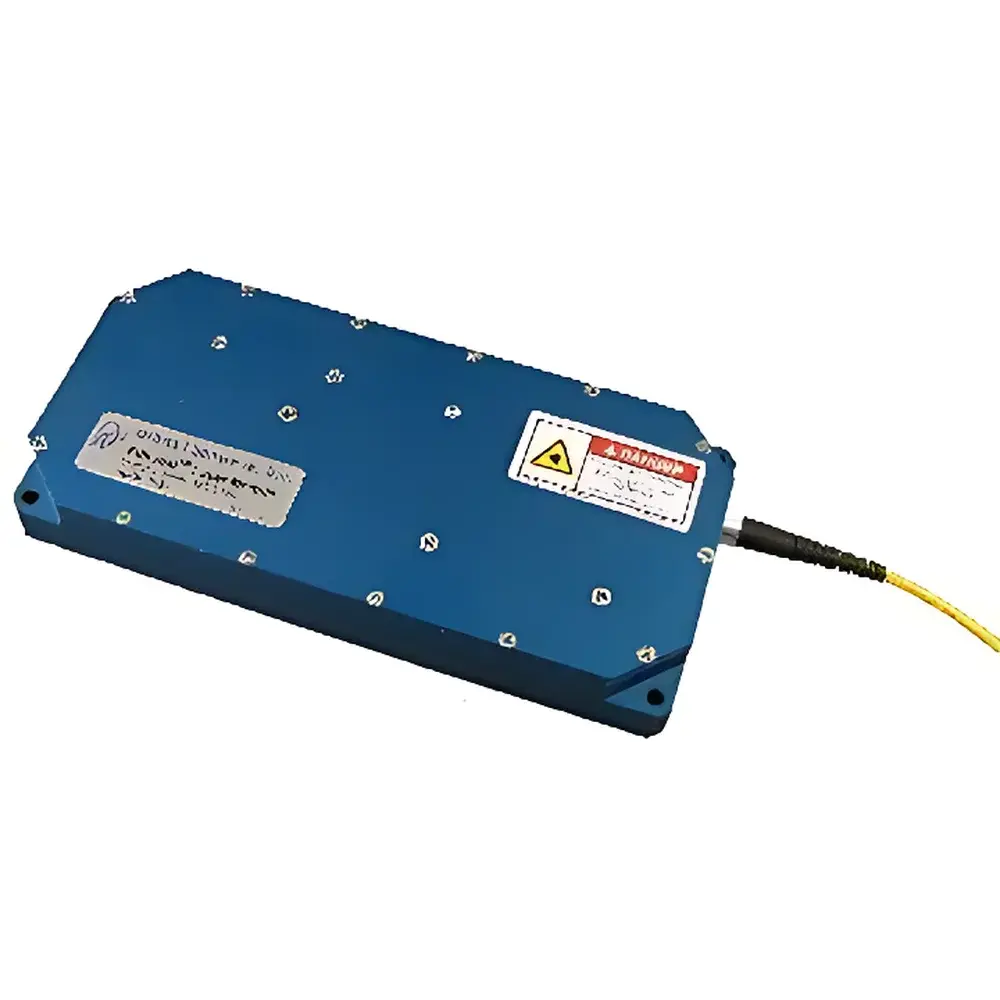
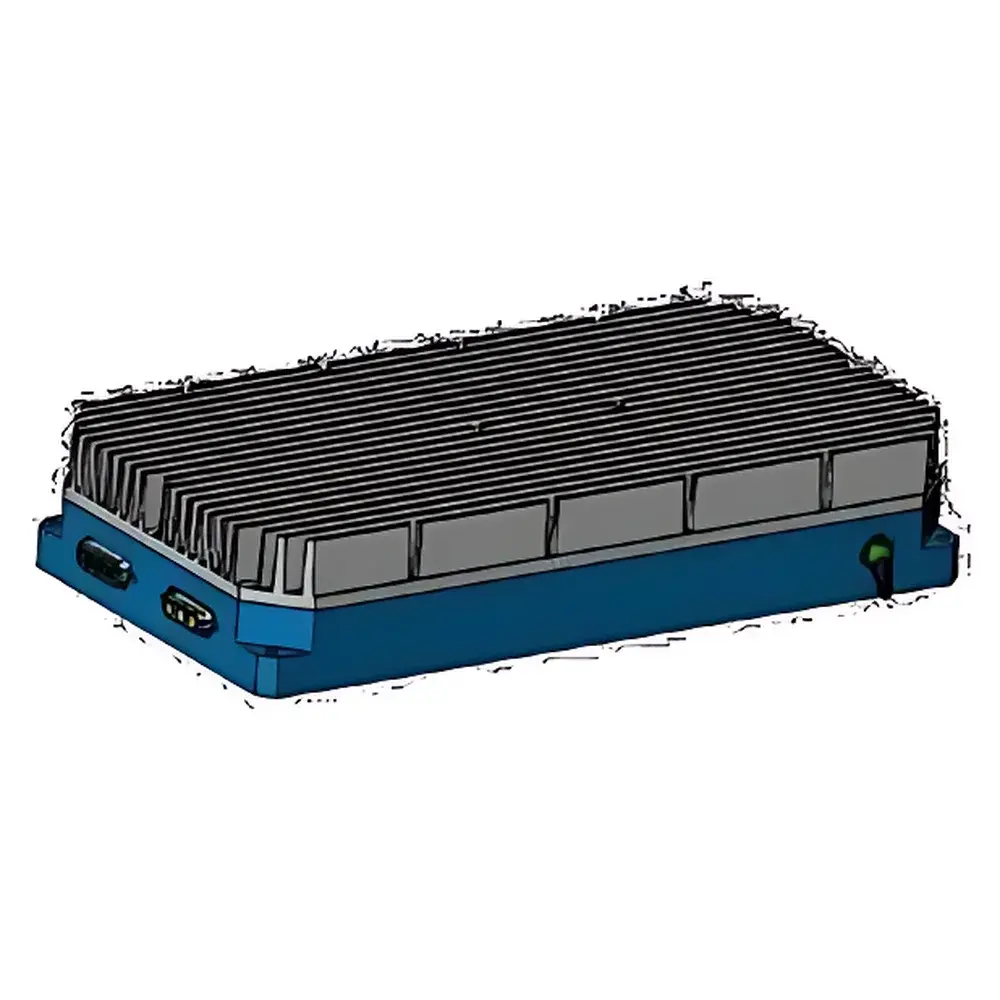
The Orbits Lightwave ETH Low-Noise Single-Frequency Fiber Laser is an engineered solution for applications demanding exceptional spectral purity, ultra-narrow linewidth, and long-term frequency stability in a compact all-fiber platform. Based on Orbits Lightwave’s proprietary virtual-Ring SlowLight™ architecture, the ETH eliminates spatial mode competition and mechanical resonances inherent in conventional ring or linear cavity designs—enabling true single-longitudinal-mode (SLM) oscillation with intrinsic suppression of mode-hopping and environmental sensitivity. Its robust StableLase™ packaging integrates thermally isolated fiber coil winding, low-stress mounting, and hermetic sealing to ensure performance continuity across temperature gradients and mechanical vibration environments typical of field-deployed sensing and metrology systems. Designed for continuous-wave (CW) operation at standard telecom wavelengths (e.g., 1550 nm), the ETH serves as a foundational source for coherent detection, optical heterodyning, and precision interferometry where phase noise floor and absolute frequency accuracy directly govern system resolution.
Key Features
- Virtual-Ring SlowLight™ architecture: All-fiber, monolithic design eliminating free-space alignment and reducing susceptibility to acoustic perturbations and thermal drift.
- StableLase™ packaging: Precision-engineered mechanical and thermal isolation ensures <0.25 MHz/°C frequency stability without active feedback loops—critical for unattended operation in outdoor or industrial settings.
- Ultra-narrow linewidth: <1 Hz Lorentzian full-width-at-half-maximum (FWHM) and <200 Hz over 1 ms measurement window, enabling kilometer-scale coherent integration times in fiber-optic sensing.
- High spectral purity: >80 dB optical signal-to-noise ratio (OSNR) and >75 dB side-mode suppression ratio (SMSR) ensure clean heterodyne beat notes and minimal crosstalk in multi-channel coherent systems.
- Low relative intensity noise (RIN): <-175 dBc/Hz, shot-noise-limited across the 10 Hz–10 MHz bandwidth—essential for high-dynamic-range photodetection in analog RF photonics and LIDAR receivers.
- Scalable output power: Base oscillator delivers >350 mW; integrated or external EDFA amplification supports up to 50 W while preserving narrow linewidth and low phase noise characteristics.
Sample Compatibility & Compliance
The ETH laser operates in the C-band (1530–1565 nm) and is compatible with standard single-mode fiber (SMF-28 or equivalent) interfacing via FC/APC or PM-fiber pigtails. It meets IEC 60825-1:2014 Class 1 laser safety requirements when fully enclosed in OEM subsystems. The device complies with RoHS 2011/65/EU and REACH (EC 1907/2006) directives. For regulated environments—including defense, aerospace, and oil & gas infrastructure monitoring—the ETH supports traceable calibration documentation and can be configured with optional NIST-traceable wavelength certification. Its passive thermal management and absence of moving parts align with MIL-STD-810G environmental stress screening protocols for shock, vibration, and thermal cycling.
Software & Data Management
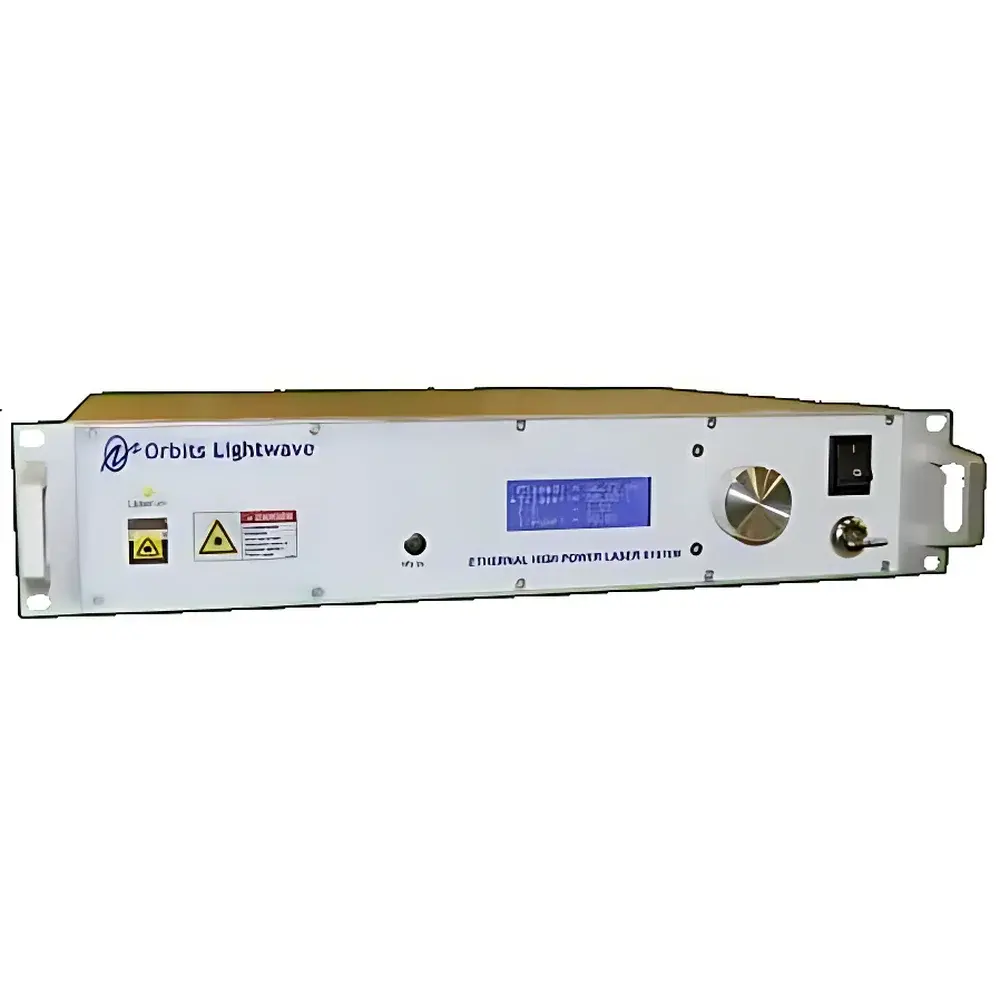
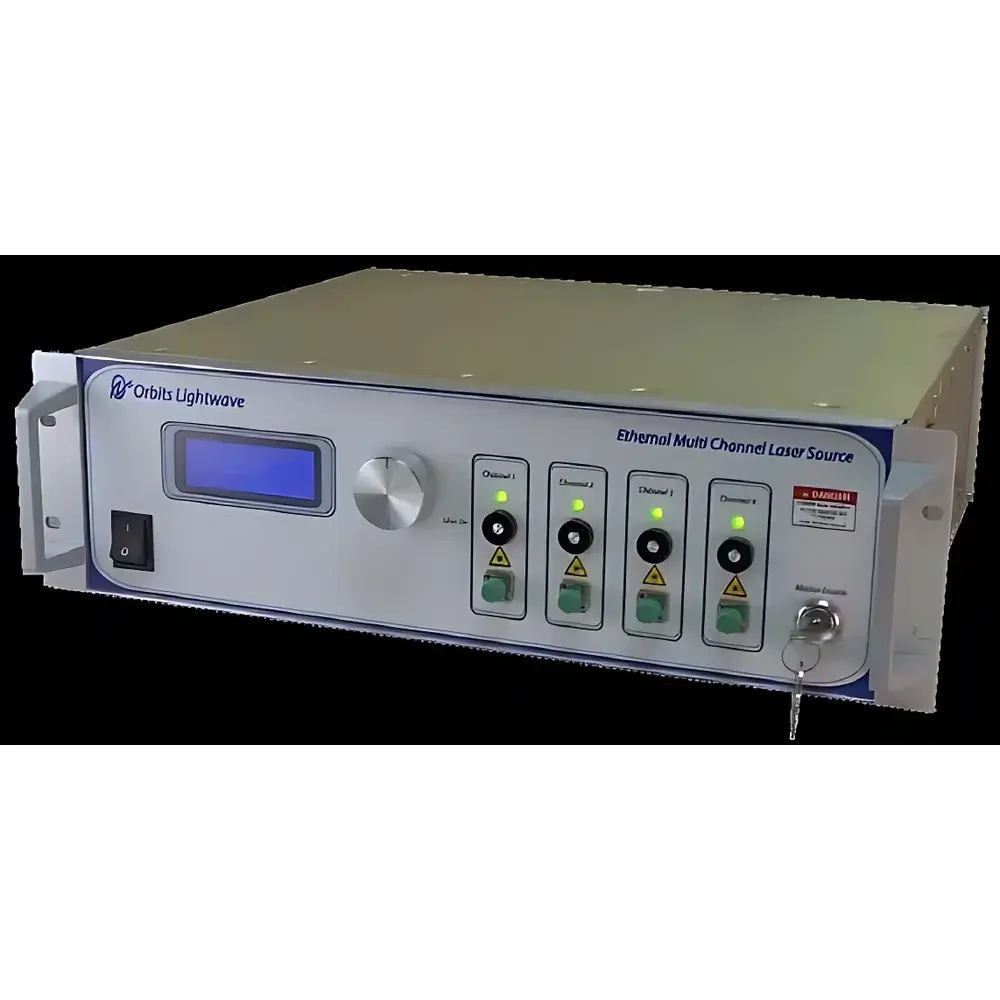
While the ETH is primarily a turnkey analog laser source requiring no embedded firmware or user interface, it is designed for seamless integration into larger control ecosystems. Analog monitor photodiode outputs (PD1/PD2) provide real-time power and bias telemetry. Optional digital interfaces—including RS-232 or USB-C with SCPI command set—are available for remote power modulation, temperature setpoint adjustment, and fault logging. When deployed in FDA-regulated or GLP/GMP-compliant installations (e.g., gas spectroscopy validation workflows), the ETH supports audit-trail-capable host software that records operational parameters (output power, diode current, TEC voltage) with timestamped metadata compliant with 21 CFR Part 11 requirements.
Applications
- Fiber-optic acoustic sensing (DAS): Enables distributed strain and vibration detection over 100+ km with sub-microradian phase resolution in marine surveillance, pipeline integrity monitoring, and perimeter security.
- Coherent LIDAR: Serves as master oscillator in heterodyne receivers for wind profiling, aerosol mapping, and autonomous vehicle ranging—leveraging its narrow linewidth for Doppler shift resolution down to cm/s.
- Injection seeding: Provides stable, low-noise seed sources for high-energy pulsed lasers (e.g., ns-pulsed OPOs or MOPA systems), improving temporal coherence and spectral control.
- RF photonics: Used in microwave photonics links, photonic-assisted ADCs, and optical beamforming networks where phase noise translates directly to spurious-free dynamic range (SFDR).
- High-resolution spectroscopy: Supports cavity-enhanced absorption spectroscopy (CEAS) and photoacoustic gas sensing with detection limits approaching parts-per-quadrillion (ppq) for methane, CO₂, and H₂S.
- Optical metrology: Functions as reference oscillator in optical frequency combs, gravitational wave detector auxiliary lasers, and satellite-based optical clocks requiring long-term Allan deviation <1×10⁻¹⁵ at 1 s.
FAQ
Is the ETH laser qualified for spaceflight environments?
Yes—Orbits Lightwave offers a radiation-hardened variant (ETH-Space) with enhanced TID tolerance (>50 krad) and outgassing compliance per ECSS-Q-ST-70-02C. Standard units are suitable for stratospheric balloon payloads and ground station uplinks.
Can the ETH be wavelength-tuned?
The ETH provides fixed-wavelength operation optimized for stability; however, discrete models are available at 1064 nm, 1550 nm, and 2050 nm. Fine tuning (<±5 GHz) is achievable via thermo-optic control with sub-MHz repeatability.
What is the typical warm-up time to achieve specified frequency stability?
Less than 15 minutes from cold start to <0.5 MHz/°C drift; full thermal equilibrium (<0.25 MHz/°C) is reached within 45 minutes under ambient conditions (20–25°C).
Does the ETH support polarization-maintaining (PM) output?
Yes—PM-fiber-pigtailed versions are standard, delivering >20 dB PER over operating temperature range without active polarization control.
How is long-term reliability validated?
Each unit undergoes 1000-hour accelerated life testing (ALT) per Telcordia GR-468-CORE, with failure-in-time (FIT) rate <100 FIT (1 failure per 10⁷ device-hours) at 40°C case temperature.






