
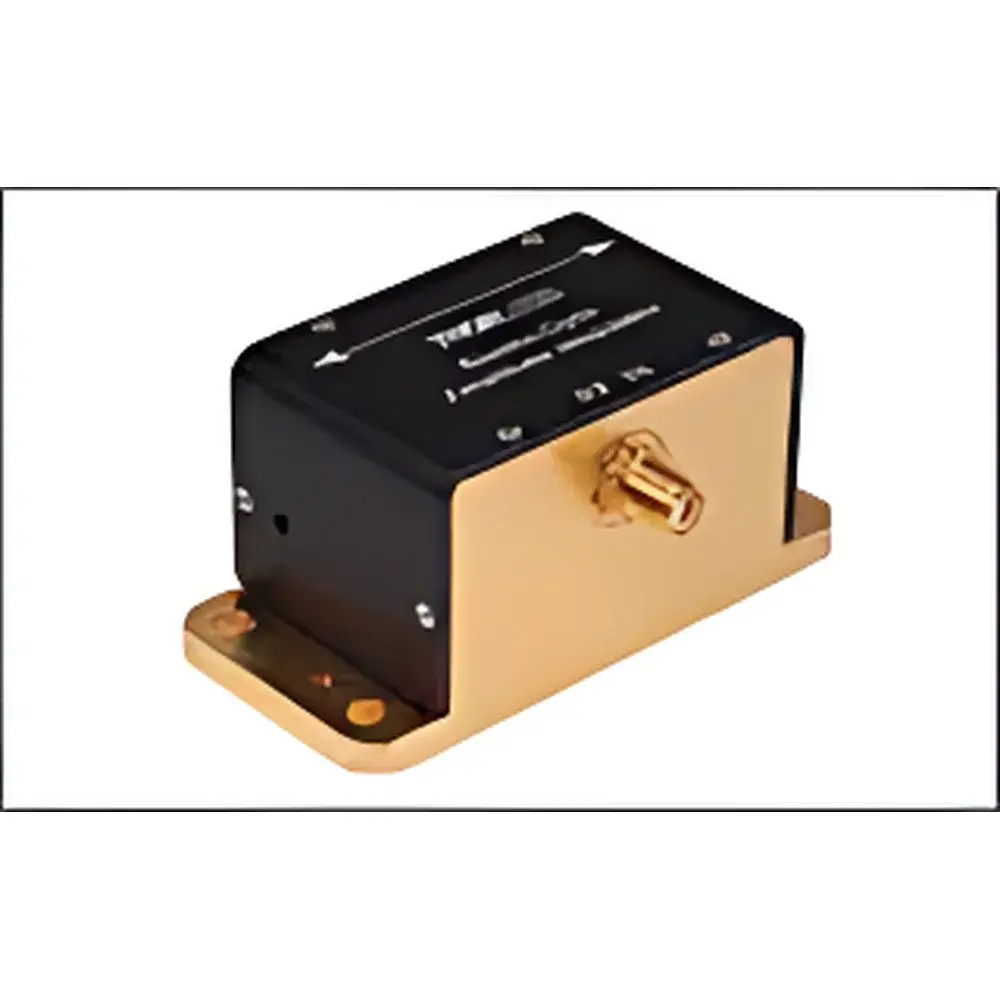
Linos 011 Electro-Optic Modulator
| Brand | Linos |
|---|---|
| Origin | USA |
| Manufacturer Type | Authorized Distributor |
| Import Status | Imported |
| Model | 011 |
| Pricing | Upon Request |
| Type | Amplitude Modulator (EO-AM-NR) / Phase Modulator (EO-PM-NR) |
| Crystal Material | Lithium Niobate (LiNbO₃) |
| Wavelength Ranges | C1: 600–900 nm |
| C2 | 900–1250 nm |
| C3 | 1250–1650 nm |
| C4 | 400–600 nm |
| Aperture | 2 mm |
| Input Connector | SMA Female |
| Half-Wave Voltage (Vπ) | 360 V @ 1064 nm (Typ.) for EO-AM-NR |
| Max. Optical Power Density | 2 W/mm² @ 532 nm, 4 W/mm² @ 1064 nm |
| Bandwidth | DC to 100 MHz |
| Coupling | DC-coupled |
Overview
The Linos 011 Electro-Optic Modulator is a high-stability, broadband modulator engineered for precision control of laser beam amplitude and phase in demanding optical research and industrial applications. Based on the linear electro-optic (Pockels) effect in single-crystal lithium niobate (LiNbO₃), this device enables voltage-controlled birefringence modulation with sub-microsecond response times and minimal insertion loss. Its monolithic design ensures mechanical rigidity and thermal stability—critical for long-term alignment retention in interferometric setups, quantum optics experiments, and ultrafast laser pulse shaping. Unlike acousto-optic or mechanical alternatives, the Linos 011 delivers true DC-coupled operation, supporting static bias point adjustment and low-frequency modulation down to 0 Hz—enabling precise polarization state calibration and slow-phase ramping essential in adaptive optics and cavity locking systems.
Key Features
- Dual-function architecture: Configurable as either an amplitude modulator (EO-AM-NR) or phase modulator (EO-PM-NR) via crystal orientation and electrode geometry.
- Wide spectral coverage across four calibrated bands (C1–C4), spanning 400–1650 nm, compatible with Ti:sapphire, Nd:YAG, fiber lasers, and supercontinuum sources.
- 2 mm clear aperture optimized for Gaussian beam propagation with <1.5% wavefront distortion (λ/20 RMS typical), minimizing higher-order mode coupling.
- SMA female RF input interface ensures repeatable 50 Ω impedance matching and low reflection across the full DC–100 MHz bandwidth.
- Low Vπ values—360 V (AM) and 240 V (PM) at 1064 nm—enable compatibility with standard high-voltage amplifiers while maintaining high extinction ratio (>30 dB for AM) and phase fidelity (±0.5° linearity error over ±Vπ range).
- Robust packaging with hermetically sealed LiNbO₃ crystal mount and thermally compensated electrode structure for stable performance under ambient temperature fluctuations (±0.05% Vπ drift per °C).
Sample Compatibility & Compliance
The Linos 011 is designed for free-space collimated beam integration and supports both continuous-wave (CW) and pulsed laser sources with pulse durations ≥10 ps. It complies with IEC 61228 (laser safety interfaces) and meets RoHS Directive 2011/65/EU for hazardous substance restrictions. While not a regulated medical or pharmaceutical device, its traceable calibration protocol—performed using NIST-traceable photodetectors and calibrated RF signal generators—supports GLP-aligned documentation requirements. The modulator’s passive optical path contains no adhesives or epoxies in the beam path, eliminating outgassing risks in vacuum-compatible optical benches (UHV-rated upon request with optional flange mounting).
Software & Data Management
The Linos 011 operates as a hardware-level analog component and does not embed firmware or onboard software. Integration into automated test environments is achieved via external control of the drive voltage using programmable function generators (e.g., Keysight 33600A series) or digital-to-analog converters (DACs) with ≥16-bit resolution. When deployed within FDA-regulated analytical workflows (e.g., laser-based particle sizing or optical coherence tomography subsystems), the modulator’s static and dynamic performance parameters—including Vπ stability, bandwidth flatness (±0.5 dB from 10 kHz to 100 MHz), and polarization extinction ratio—are documented in accordance with 21 CFR Part 11-compliant electronic lab notebooks (ELNs) such as LabArchives or Benchling. Audit trails for calibration records and operational logs are maintained externally by the system integrator.
Applications
- Laser intensity stabilization in metrology-grade interferometers and gravitational wave detector prototypes.
- Phase encoding in coherent optical communications testbeds operating at 10–100 Gbaud symbol rates.
- Q-switching and cavity dumping in solid-state and fiber laser systems requiring nanosecond-scale switching fidelity.
- Quantum state preparation in trapped-ion and neutral-atom platforms where phase coherence time exceeds 100 µs.
- Real-time optical path length correction in adaptive optics loops for astronomical telescopes and retinal imaging systems.
- Calibration reference in optical spectrum analyzers (OSAs) and vector network analyzers (VNAs) for photonic integrated circuit (PIC) characterization.
FAQ
Is the Linos 011 suitable for ultrafast laser pulses?
Yes—its sub-nanosecond rise time (<1 ns) and dispersion-minimized crystal cut support pulse widths down to ~10 ps without measurable temporal broadening.
Can it be used in vacuum environments?
Standard units are air-cooled and rated for ambient operation; UHV-compatible variants with metal-sealed housings and CF flange options are available under custom order.
What is the recommended drive amplifier configuration?
A wideband, low-noise, high-slew-rate amplifier (e.g., Tabor Electronics WW5061 or AR Inc. 150A250) with DC offset capability and <0.1% gain drift over 8 hours is advised for optimal linearity and long-term stability.
Does Linos provide traceable calibration certificates?
Yes—each unit ships with a factory calibration report listing measured Vπ, insertion loss, extinction ratio (AM), and phase deviation (PM) at specified wavelengths, traceable to NIST standards via ISO/IEC 17025-accredited labs.
How is thermal drift mitigated during extended operation?
The modulator incorporates a thermally symmetric electrode layout and low-thermal-expansion mounting substrate, limiting Vπ drift to ≤0.08% per °C over the 15–35 °C operating range. Active temperature stabilization is not required for most laboratory applications.



