
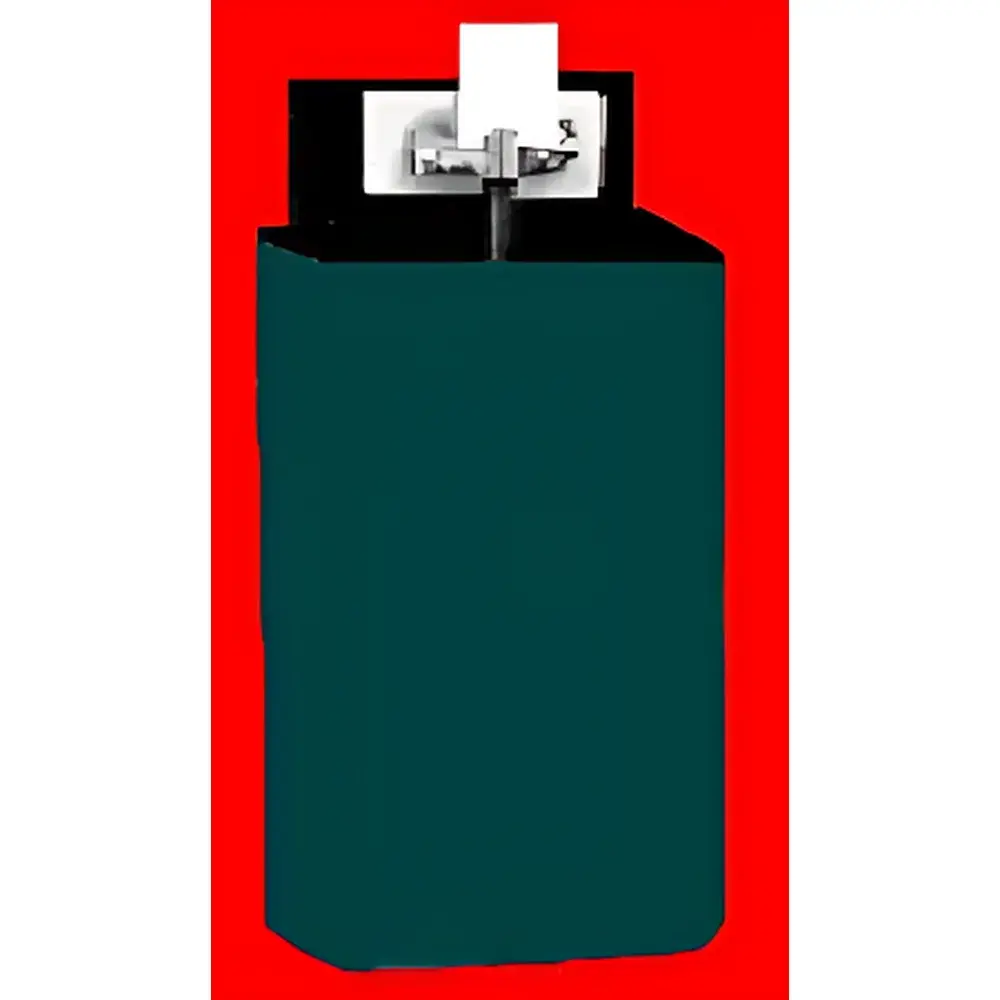
EOPC SC-30 Resonant Optical Scanning Mirror
| Origin | USA |
|---|---|
| Manufacturer Type | Distributor |
| Origin Category | Imported |
| Model | SC-30 |
| Quotation | Upon Request |
| Component Category | Optical Element |
Overview
The EOPC SC-30 Resonant Optical Scanning Mirror is a high-performance, electromagnetically actuated galvanometric scanning device engineered for precision optical beam steering in demanding laboratory and industrial applications. Operating on the principle of mechanical resonance, the SC-30 leverages its high-Q torsional resonant mode to achieve stable, low-phase-noise angular deflection at a fixed natural frequency—ranging from 200 Hz to 16 kHz depending on mirror geometry and mounting configuration. Unlike conventional galvanometers, this resonant architecture eliminates the need for closed-loop position feedback while delivering exceptional repeatability (sub-microradian stability over millions of cycles), minimal thermal drift, and near-zero hysteresis. Its monolithic flexure design—free of bearings, lubricants, or wear-prone components—ensures indefinite operational lifetime under continuous duty, with documented field deployments exceeding 5+ years without performance degradation. The device is optimized for integration into systems requiring high-speed, low-distortion raster or vector scanning, including confocal microscopy, OCT, retinal imaging, and laser-based metrology.
Key Features
- Resonant operation with fixed-frequency tuning (200 Hz – 16 kHz) and amplitude modulation capability
- Optical peak-to-peak scan angles up to ±15° (30° total), configurable via mirror size and suspension stiffness
- High mechanical Q-factor (>1000 typical), ensuring frequency stability and low drive power consumption (<1 W RMS)
- Bearingless, lubrication-free monolithic flexure architecture—zero maintenance, no scheduled servicing
- Low thermal dissipation and negligible self-heating during sustained operation
- Vacuum-compatible design (optional vacuum-rated variants available upon request)
- Position-sensing output (analog voltage proportional to mirror angle) for open-loop synchronization
- Standard fused silica mirror substrate; optional coatings (AR, HR, broadband) and alternative substrates (beryllium, aluminum, silicon) available
- No electromagnetic interference (EMI) emission beyond Class B limits; suitable for sensitive electronic environments
- Robust shock and vibration resistance (tested to MIL-STD-810G, Method 514.6, Category 24)
Sample Compatibility & Compliance
The SC-30 is compatible with standard optical breadboards, kinematic mounts, and OEM integration platforms. Mirror apertures range from 3 × 4 mm to 25 × 25 mm, supporting beam diameters up to 80% of clear aperture without vignetting. All standard configurations comply with RoHS 2011/65/EU and REACH (EC 1907/2006) directives. For regulated environments—including clinical imaging systems and GMP-aligned manufacturing inspection tools—the SC-30 supports traceable calibration documentation and can be supplied with ISO/IEC 17025-compliant test reports. While not inherently FDA-cleared, the component meets functional safety requirements for Class 1 laser product integration per IEC 60825-1:2014 and is routinely deployed in USP –compliant optical metrology subsystems.
Software & Data Management
The SC-30 operates as a hardware-level analog actuator and does not embed firmware or onboard processing. Drive signals are delivered via standard ±10 V analog input (BNC or LEMO interface), fully compatible with arbitrary waveform generators (AWGs), function generators, and DAQ systems from National Instruments, Keysight, and Zurich Instruments. Position feedback (±5 V full-scale) enables real-time synchronization with camera triggers, laser pulse modulators, or stage controllers. For system-level validation, users may implement timestamped data logging using LabVIEW, Python (with PyVISA or NIDAQmx), or MATLAB Simulink. Audit trails and parameter versioning are supported when integrated into GLP/GMP-compliant software frameworks adhering to FDA 21 CFR Part 11 requirements—provided the host system implements electronic signatures, access controls, and change history logging.
Applications
- Laser scanning microscopy: Confocal, multiphoton, and light-sheet imaging systems
- Medical diagnostics: Retinal scanning ophthalmoscopes, OCT endoscopic probes, digital radiography beam deflectors
- Industrial metrology: Wafer inspection, PCB defect detection, high-resolution laser printing and direct-write lithography
- Biotechnology: DNA sequencing instrumentation, flow cytometry beam routing, fluorescence lifetime imaging (FLIM)
- Autonomous systems: LiDAR beam steering modules, adaptive optics for UAV vision, real-time machine vision sorting
- Materials science: Time-resolved pump-probe spectroscopy, ultrafast laser ablation monitoring, thin-film thickness mapping
- Transportation: Smart traffic monitoring systems with dynamic line-scan capture, vehicle-mounted 3D profiling sensors
FAQ
What is the typical lifetime specification under continuous operation?
The SC-30 has no rated end-of-life; accelerated life testing shows no measurable degradation after 2 × 10⁹ cycles at rated amplitude and frequency.
Can the resonant frequency be adjusted post-manufacture?
No—resonant frequency is determined by mirror mass, flexure geometry, and material modulus; it is factory-set and non-tunable. Frequency selection occurs during ordering.
Is vacuum operation supported?
Yes—standard units operate at ≤10⁻³ Torr; vacuum-rated versions with outgassing-controlled materials and ceramic feedthroughs are available.
What mirror coatings are offered as standard options?
Fused silica substrate with MgF₂ broadband AR coating (250–2000 nm); custom dielectric HR, V-coat, or metallic coatings available.
Does the SC-30 meet electromagnetic compatibility (EMC) standards for lab use?
Yes—it complies with FCC Part 15 Subpart B and CISPR 11 Group 1, Class A limits, with measured emissions >20 dB below threshold across 30 MHz–1 GHz.





