
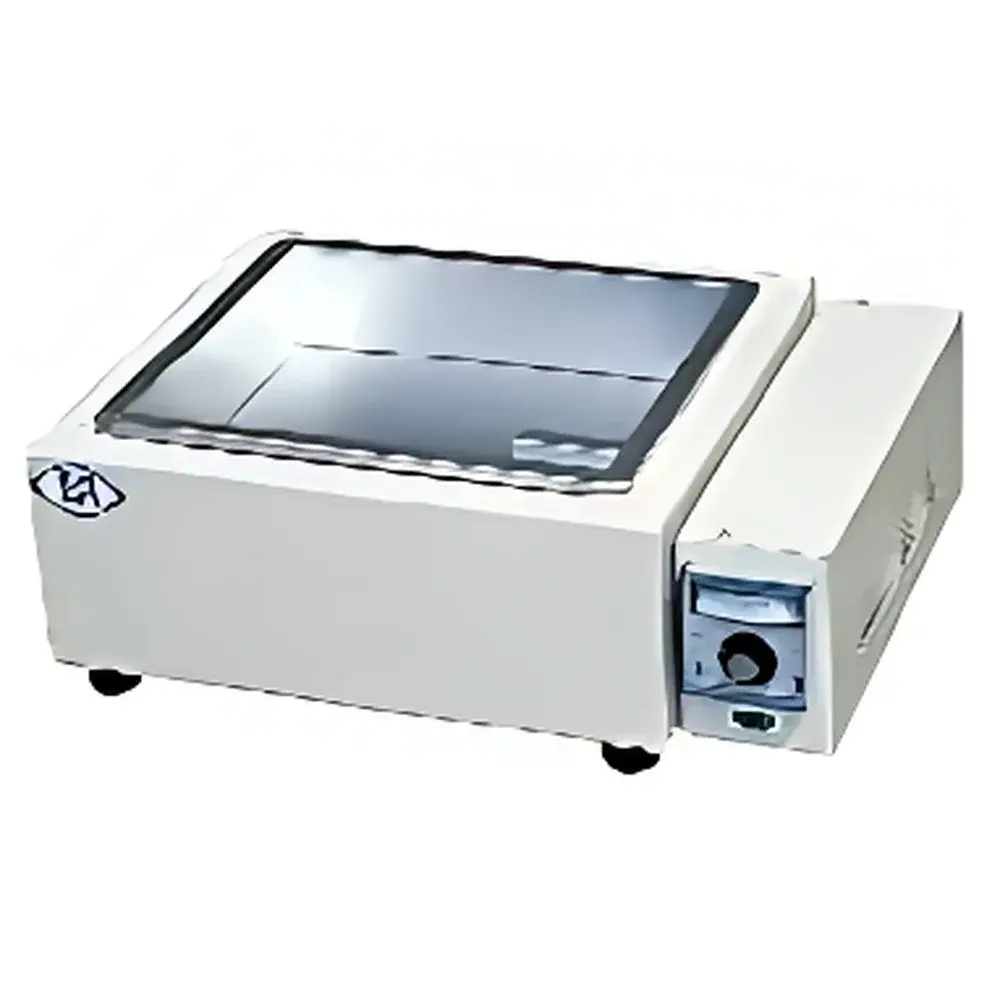
Shanghai LabTech DK-2 & DK-1.5 Electric Sand Baths
| Origin | Shanghai, China |
|---|---|
| Manufacturer Type | Authorized Distributor |
| Origin Category | Domestic (PRC) |
| Model | DK-2 / DK-1.5 |
| Power Rating | 1500 W (DK-1.5), 2000 W (DK-2) |
| Chamber Dimensions | 350 × 250 × 70 mm (DK-1.5), 450 × 350 × 70 mm (DK-2) |
| Unit Price | USD 105 (FOB Shanghai, ex. VAT) |
Overview
The Shanghai LabTech DK-2 and DK-1.5 Electric Sand Baths are precision-engineered dry-heating platforms designed for uniform thermal transfer to containers that cannot be immersed in liquid media—such as glassware with volatile solvents, sealed ampoules, or samples requiring inert, non-oxidizing environments. Unlike water or oil baths, sand baths utilize granular silica sand as a thermally stable, low-conductivity heat-transfer medium, enabling gradual, homogeneous temperature distribution across the entire chamber floor. This principle eliminates localized hot spots and minimizes thermal shock to delicate vessels. Operating within an ambient-to-300 °C continuous range (dependent on sand depth and ventilation), these units are constructed with heavy-duty stainless steel chambers, insulated aluminum housing, and embedded nickel-chromium resistance heating elements. Their robust architecture supports long-duration stability testing, evaporation control, and sample conditioning under reproducible thermal profiles—critical for method development in analytical chemistry, pharmaceutical stability studies, and materials pre-treatment.
Key Features
- Two standardized configurations: DK-1.5 (1500 W, 350 × 250 × 70 mm chamber) and DK-2 (2000 W, 450 × 350 × 70 mm chamber), optimized for benchtop and mid-scale lab workflows.
- Stainless steel inner chamber with corrosion-resistant finish and reinforced structural seams for thermal cycling durability.
- Adjustable analog temperature controller with calibrated bimetallic thermostat and ±5 °C accuracy across 0–300 °C range; no digital interface required for basic operational integrity.
- Integrated overheat protection cutoff (resettable thermal fuse at 320 °C) compliant with IEC 61000-4-2 ESD immunity standards for laboratory equipment.
- Low-profile design (≤120 mm total height) ensures compatibility with fume hoods and laminar flow workstations without compromising airflow dynamics.
- Removable sand tray with ergonomic side handles facilitates safe media replacement and cleaning—essential for cross-contamination prevention between organic and inorganic applications.
Sample Compatibility & Compliance
These sand baths accommodate standard laboratory glassware including round-bottom flasks (up to 2 L), boiling tubes, crucibles, and Petri dishes placed directly on the sand surface. The absence of liquid immersion eliminates hydrolysis risk and enables use with moisture-sensitive reagents (e.g., anhydrous LiAlH₄ reactions) or high-boiling-point solvents (e.g., diphenyl ether, silicone oils). Units conform to GB/T 28947–2012 (Chinese national standard for electric heating equipment safety) and meet CE marking requirements for electromagnetic compatibility (EN 61326-1) and low-voltage directive (2014/35/EU). While not certified for GLP/GMP production environments, their repeatable thermal output supports ISO/IEC 17025-accredited calibration procedures when paired with traceable NIST-certified thermocouples.
Software & Data Management
The DK-2 and DK-1.5 operate as standalone analog instruments with no embedded firmware or data logging capability—intentionally designed for simplicity, reliability, and minimal maintenance in teaching labs and QC screening environments. Temperature verification is performed externally using Class A platinum RTD probes or calibrated mercury-in-glass thermometers inserted into sand at multiple spatial points (center, corners, edge). For laboratories requiring audit trails, optional third-party USB data loggers (e.g., Omega OM-DAQPRO-5300 series) may be deployed alongside the unit to record ambient and surface temperatures at user-defined intervals, satisfying basic FDA 21 CFR Part 11 documentation prerequisites when validated per SOP.
Applications
- Controlled evaporation of solvent extracts in phytochemical isolation protocols.
- Thermal conditioning of polymer pellets prior to melt-flow index (MFI) testing per ASTM D1238.
- Drying of filter papers and gravimetric crucibles in environmental soil analysis (EPA Method 3050B).
- Pre-heating of reaction vessels before vacuum distillation setups to prevent condensation-induced pressure fluctuations.
- Standardization of viscosity reference oils at fixed temperatures for rotational viscometer calibration (ASTM D445).
- Accelerated aging studies of adhesives and coatings under non-oxidative thermal stress (ISO 11344).
FAQ
What is the maximum recommended operating temperature for sustained use?
Continuous operation is rated up to 280 °C with standard silica sand fill; exceeding 300 °C risks sand sintering and reduced thermal diffusivity.
Can I use ceramic or metal sand substitutes?
Only ASTM C704-grade silica sand is validated for thermal stability and particle size distribution; alternative media may cause uneven heating or chamber abrasion.
Is the unit suitable for use in explosion-proof environments?
No—these models lack intrinsically safe circuitry or pressurized enclosures and must not be operated in classified hazardous locations (NEC Class I, Division 1).
How often should the sand be replaced?
Replace every 6–12 months depending on usage frequency and thermal cycling severity; visible discoloration, clumping, or reduced heating response indicates degradation.
Does the device include a timer function?
No—timing must be managed externally via laboratory timers or process controllers; this design prioritizes thermal stability over programmability.
Related Products



