
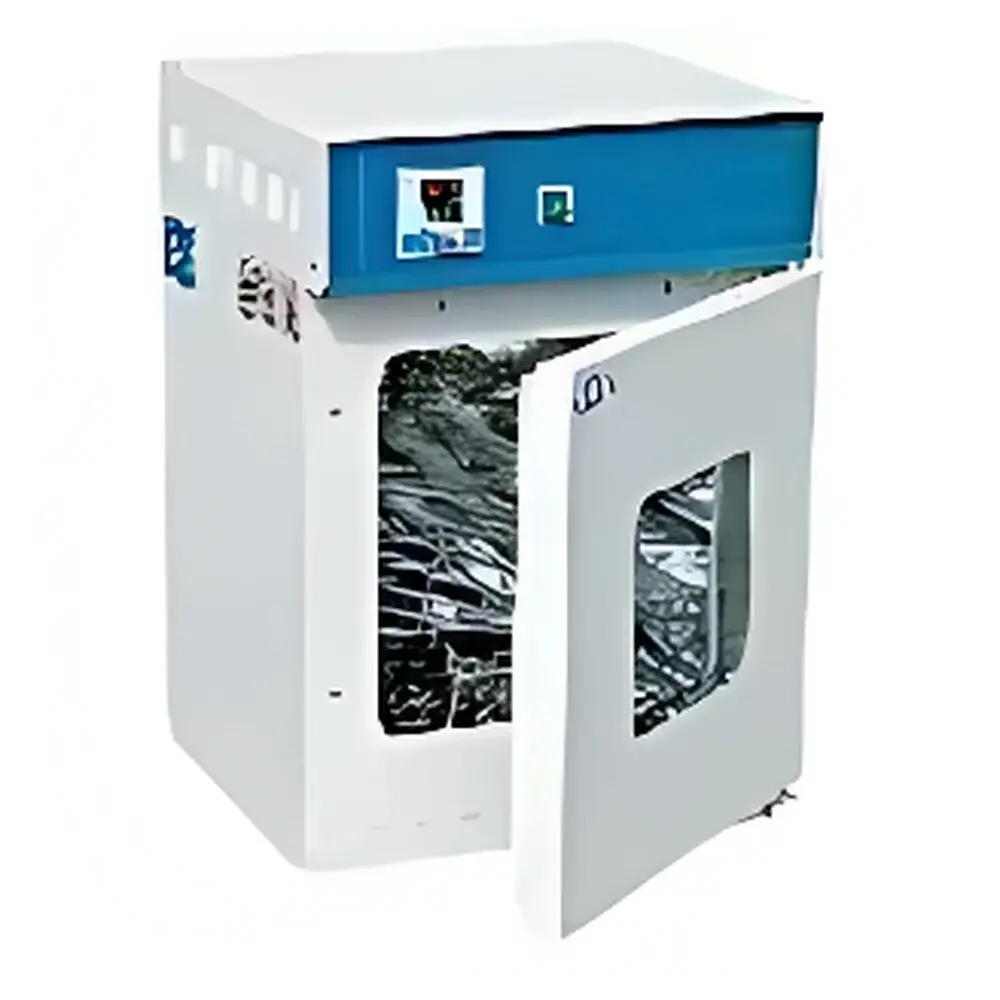
Shanghai LabTech GH360/GH400/GH500/GH600 Water-Jacketed Constant Temperature Incubator
| Origin | Shanghai, China |
|---|---|
| Power Supply | 220 V AC |
| Heating Power | 450 W (GH360) / 650 W (GH400) / 850 W (GH500) / 1350 W (GH600) |
| Temperature Range | Ambient +5 °C to 65 °C |
| Internal Chamber Dimensions (W×D×H) | 350×350×410 mm (GH360) / 400×400×500 mm (GH400) / 500×500×650 mm (GH500) / 600×600×750 mm (GH600) |
| External Dimensions (W×D×H) | 480×500×700 mm (GH360) / 530×550×800 mm (GH400) / 630×650×950 mm (GH500) / 730×750×1050 mm (GH600) |
| Construction | Stainless steel inner chamber with double-walled water jacket |
| Control System | Microprocessor-based digital temperature controller with timer and dry-run protection |
| Compliance | Designed for GLP-compliant laboratory environments |
Overview
The Shanghai LabTech GH360/GH400/GH500/GH600 series represents a family of precision-engineered water-jacketed constant temperature incubators designed for stable, uniform thermal environments in life science laboratories. Unlike forced-air incubators, these models employ a passive, thermally buffered water jacket surrounding the stainless steel inner chamber—providing exceptional temperature stability (±0.3 °C typical), minimal spatial gradients (<0.5 °C across chamber volume), and high resistance to ambient fluctuations. This architecture is particularly suited for long-term microbial culture, cell line maintenance, enzyme activity assays, and seed germination studies where thermal consistency directly impacts reproducibility. The system operates within a calibrated range of ambient +5 °C to 65 °C—covering standard mesophilic bacterial growth (30–37 °C), fungal incubation (25–30 °C), and accelerated stability testing protocols. All units are engineered for continuous operation under controlled laboratory conditions and comply with foundational thermal performance criteria outlined in ASTM E145-22 and general design expectations for Class II laboratory incubation equipment per ISO/IEC 17025 supporting infrastructure.
Key Features
- Double-walled water-jacket construction with integrated water level sensor and automatic dry-run cutoff—prevents heater damage during low-water conditions.
- Microprocessor-based PID temperature controller with ±0.1 °C setpoint resolution, real-time digital display, and programmable timer (1 min to 99 h 59 min).
- Electropolished 304 stainless steel inner chamber—corrosion-resistant, non-porous, and compatible with common laboratory disinfectants including 70% ethanol and diluted sodium hypochlorite.
- Dual-pane tempered glass observation window with anti-fog coating—enables non-invasive visual monitoring without compromising thermal integrity.
- Low-velocity internal air circulation system (non-turbulent, <0.2 m/s average velocity)—minimizes desiccation of agar plates and liquid cultures while ensuring horizontal and vertical temperature homogeneity.
- Front-accessible water fill port and drain valve—facilitates routine maintenance and rapid jacket refilling without disassembly.
Sample Compatibility & Compliance
These incubators accommodate standard microbiological and cell culture formats including Petri dishes (up to 150 mm), multiwell plates (6–96-well), test tubes (13–25 mm OD), flasks (up to 2 L), and custom-sized culture vessels. The uniform thermal field supports ISO 8573-1 Class 4 air quality requirements when operated in clean bench-adjacent spaces. While not certified as medical devices, the GH-series meets functional safety expectations for ancillary lab equipment under IEC 61010-1:2010 (Edition 3.1). Units are suitable for use in GLP-regulated environments when paired with documented calibration procedures (e.g., traceable NIST-certified thermistors) and maintained according to manufacturer-recommended service intervals. Optional data logging modules support 21 CFR Part 11-compliant audit trails when integrated with validated third-party software platforms.
Software & Data Management
The embedded controller does not include native Ethernet or USB connectivity; however, analog output (0–5 V DC) is provided for external temperature recording via chart recorders or SCADA systems. For digital integration, optional RS-485 Modbus RTU interface kits enable bidirectional communication with laboratory information management systems (LIMS) or building automation controllers. Calibration logs, run-time history, and alarm events (e.g., temperature deviation >±1.5 °C for >2 min, low-water alert) are stored in non-volatile memory for retrieval via front-panel navigation. Firmware updates are performed locally using proprietary configuration tools—no cloud dependency or remote access capability is implemented, aligning with institutional cybersecurity policies for legacy instrumentation.
Applications
- Bacterial and yeast cultivation (E. coli, S. cerevisiae, B. subtilis) under aerobic or static conditions.
- Plant tissue culture and seed germination studies requiring precise, vibration-free thermal control.
- Enzyme kinetics assays where reaction rates are highly temperature-sensitive (e.g., amylase, protease, lipase).
- Quality control of probiotic formulations and fermented food products (yogurt, kefir, kombucha).
- Stability testing of diagnostic reagents and reference standards per ICH Q1A(R3) guidelines.
- Supporting ISO 11133:2014-compliant microbiological media performance verification.
FAQ
What is the thermal recovery time after door opening?
Typical recovery to ±0.5 °C of setpoint takes ≤12 minutes for GH360 and ≤18 minutes for GH600 following a 10-second door opening at 37 °C ambient.
Is distilled water required for the water jacket?
Deionized or distilled water is strongly recommended to prevent mineral scaling and ensure long-term heater reliability; tap water may be used only if hardness <50 ppm and treated with approved antiscalant additives.
Can these units operate continuously for 72+ hours?
Yes—designed for unattended 24/7 operation with redundant thermal fuses and overtemperature cutout (set at 75 °C) independent of the main controller.
Does the incubator include a CO₂ or humidity control option?
No—this is a dedicated water-jacketed temperature-only incubator; CO₂ and humidity regulation require separate platform models (e.g., Shanghai LabTech GC-series or HC-series).
How often should the water jacket be refilled or serviced?
Under normal operation, evaporation loss is <150 mL/month; inspection and top-up are recommended biweekly, with full drain-and-refill every 6 months or per local facility SOP.





