
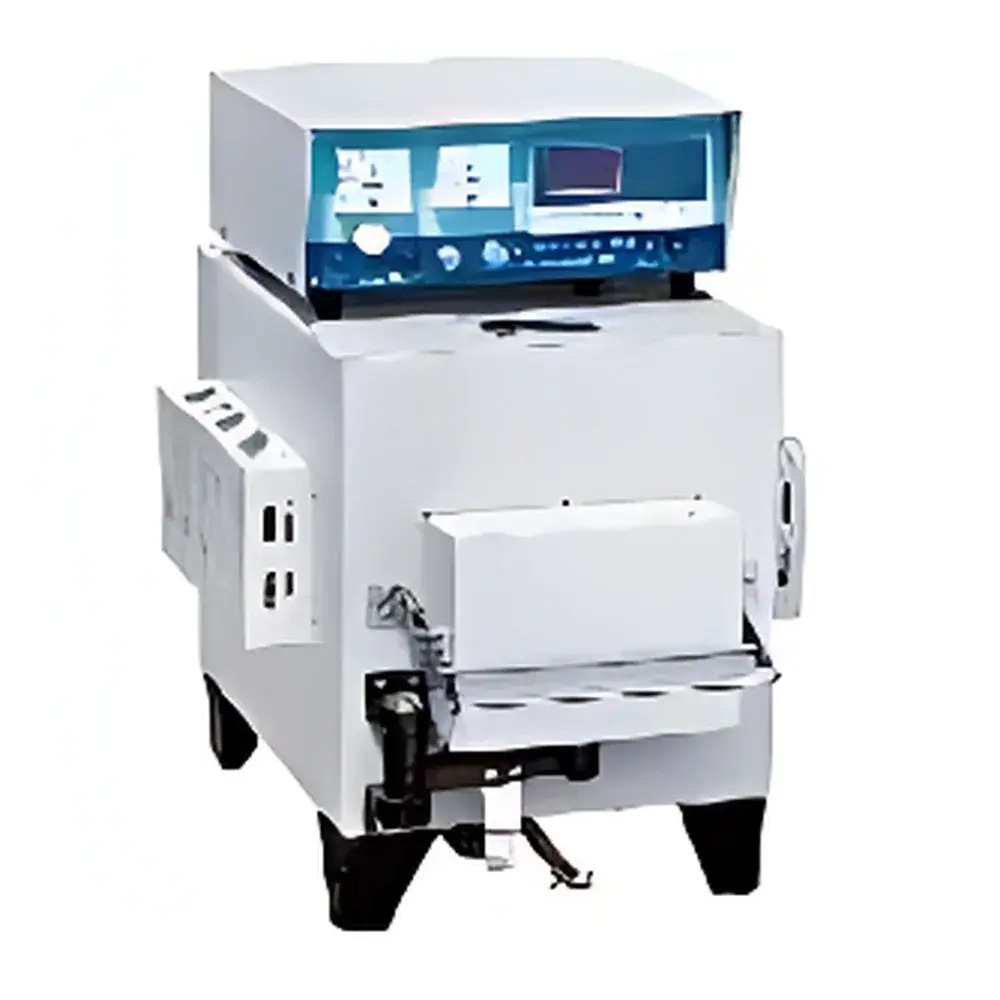
SRJX-8-13 High-Temperature Box-Type Muffle Furnace
| Voltage | 380 V |
|---|---|
| Power Rating | 8 kW |
| Max Operating Temperature | 1300 °C |
| Chamber Dimensions | 500 × 200 × 180 mm (L×W×H) |
| Heating Element | Silicon Carbide (SiC) Rods |
| Construction | Steel Enclosure with Electrostatic Powder Coating |
| Insulation | Multi-Layer Refractory Ceramic Fiber |
| Compliance | Designed for ISO/IEC 17025 Laboratory Environments |
| Control System | PID Temperature Controller with Digital Display and Over-Temperature Protection |
Overview
The SRJX-8-13 High-Temperature Box-Type Muffle Furnace is a robust, bench- or floor-standing resistive heating system engineered for precise thermal processing in research laboratories, quality control facilities, and industrial R&D settings. Operating on the principle of Joule heating via silicon carbide (SiC) rod elements embedded within a high-purity refractory chamber, this furnace delivers stable, uniform temperature distribution across its 500 × 200 × 180 mm working volume. Its rated maximum temperature of 1300 °C enables routine applications including annealing, sintering, ashing, calcination, and heat treatment of small metallic components, ceramic precursors, and inorganic powders. The furnace complies with fundamental thermal safety and electromagnetic compatibility requirements for laboratory-grade electrical equipment (IEC 61000-6-3, IEC 61000-6-4), and its structural design supports integration into GLP-compliant workflows where traceable temperature control and documented thermal profiles are required.
Key Features
- High-efficiency double-layer insulation comprising lightweight ceramic fiber modules and low-conductivity refractory brick lining—minimizing surface temperature rise and improving energy retention.
- Heavy-duty cold-rolled steel housing with electrostatic powder coating for corrosion resistance and mechanical durability under repeated thermal cycling.
- Precision PID temperature controller with ±1 °C accuracy (at setpoint), digital LED display, programmable ramp-hold profiles (up to 9 segments), and independent over-temperature cut-off protection at 1350 °C.
- Front-loading horizontal chamber with reinforced ceramic door seal and counterbalanced hinge mechanism for safe, repeatable access during operation.
- Internally lined with high-alumina refractory material (Al₂O₃ ≥ 92%), resistant to thermal shock and chemical degradation from common oxides and carbonates.
- Modular SiC heating element configuration ensures long service life, predictable resistance aging behavior, and field-replaceability without disassembly of the furnace core.
Sample Compatibility & Compliance
The SRJX-8-13 accommodates crucibles made of alumina, quartz, silicon carbide, and platinum–rhodium alloys (up to 1300 °C). It is routinely deployed in ASTM C114 (cement analysis), ASTM E1111 (ash content determination), and ISO 1171 (determination of ash in coal and coke) procedures. The furnace’s thermal uniformity profile—verified per ASTM E220—meets ±5 °C tolerance across the central 70% of the chamber volume at 1300 °C. Its construction and control architecture support documentation of calibration history, operator ID, and thermal cycle logs—enabling alignment with ISO/IEC 17025 clause 6.4.10 (equipment records) and FDA 21 CFR Part 11 requirements when paired with validated data logging software.
Software & Data Management
While the standard configuration includes an embedded PID controller with local interface only, optional RS485 Modbus RTU output allows connection to third-party SCADA systems or PC-based data acquisition platforms (e.g., LabVIEW, MATLAB, or custom Python scripts using PySerial). With appropriate firmware upgrades and external thermocouple input validation, users may generate time-stamped temperature logs compliant with ALCOA+ principles (Attributable, Legible, Contemporaneous, Original, Accurate, Complete, Consistent, Enduring, Available). Audit trails—including setpoint changes, power interruptions, and alarm events—are retained in non-volatile memory for ≥30 days.
Applications
- Thermal pre-treatment of metallographic specimens prior to microstructural analysis (per ASTM E3).
- Sintering of oxide ceramics (e.g., ZnO, TiO₂, YSZ) and ferrite compacts under controlled atmospheric conditions (when used with purge gas fittings).
- Gravimetric analysis involving loss-on-ignition (LOI) testing of geological samples, catalysts, and battery electrode materials.
- Calibration of thermocouples and reference materials against NIST-traceable standards in metrology labs.
- Preheating and drying of crucibles, boats, and quartzware prior to high-sensitivity elemental analysis (ICP-OES, XRF).
- Controlled oxidation studies of thin-film coatings and nanomaterials under static air atmosphere.
FAQ
What is the recommended maintenance schedule for the SiC heating elements?
Silicon carbide rods should be inspected visually every 100 operational hours for cracking or localized discoloration; replacement is advised after 2000 cumulative hours at 1300 °C or upon measurable resistance drift exceeding 15% from initial value.
Can this furnace operate under inert or reducing atmospheres?
Yes—when fitted with optional flanged inlet/outlet ports and compatible gas flow controllers, it supports nitrogen, argon, or forming gas (5% H₂/95% N₂) environments; however, prolonged use under reducing conditions requires upgraded thermocouple sheaths (e.g., Inconel 600) and avoidance of alumina crucibles.
Is the temperature controller compliant with FDA 21 CFR Part 11?
The base unit does not include electronic signature or audit trail functionality; compliance requires integration with validated external software and hardware authentication modules.
What is the typical warm-up time to reach 1300 °C?
From ambient, the furnace achieves 1300 °C in approximately 65–75 minutes under no-load conditions, depending on ambient humidity and line voltage stability.
Does the furnace include a calibration certificate?
No—certification must be performed onsite using a NIST-traceable reference thermometer and documented per ISO/IEC 17025 Section 6.5; factory calibration data sheet is provided upon request.



