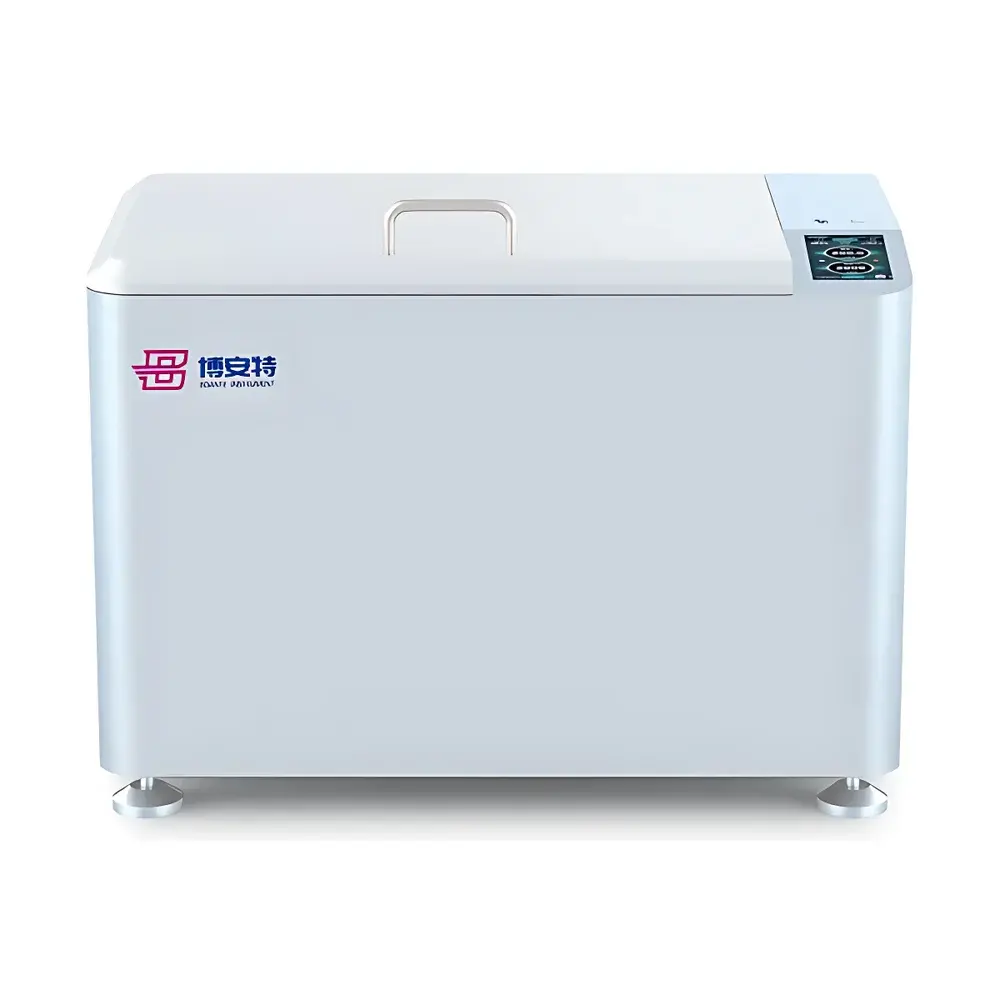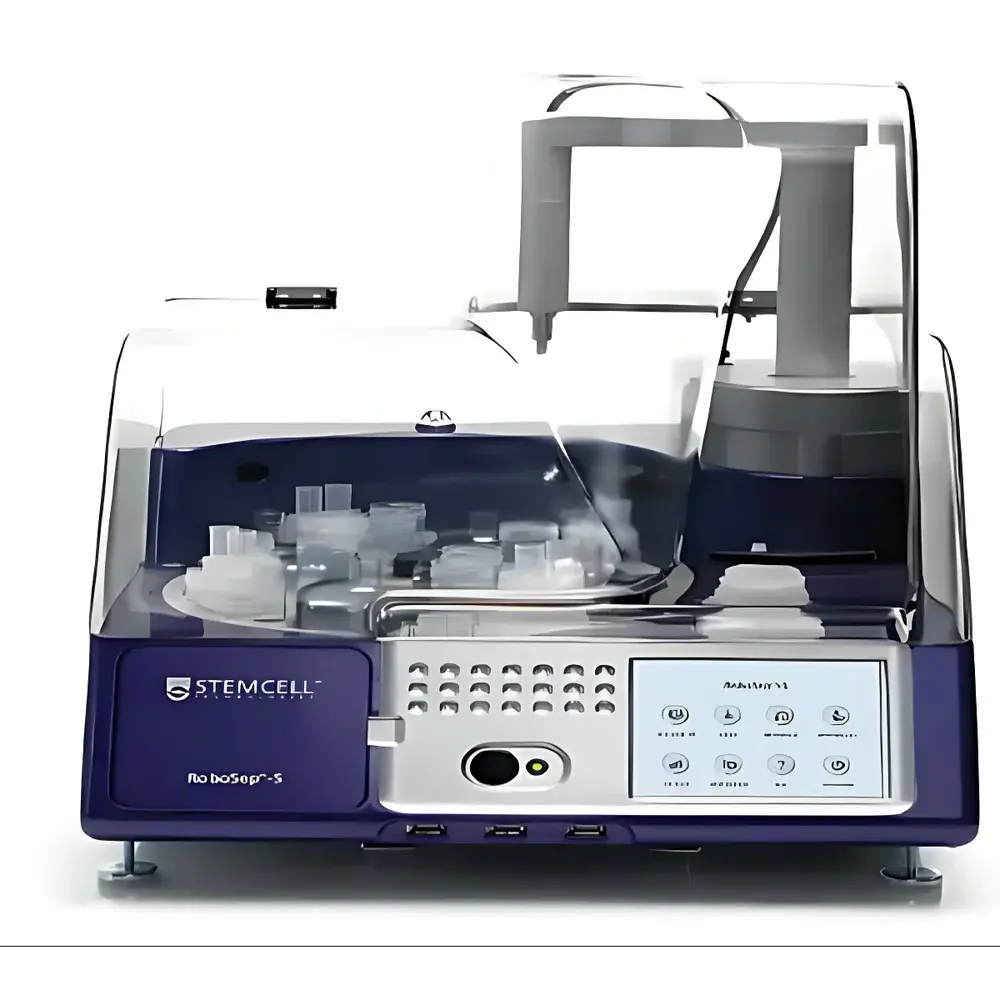
CYSEA RoboSep-16 Automated Magnetic Cell Separation System
| Brand | CYSEA |
|---|---|
| Origin | Beijing, China |
| Manufacturer Type | Original Equipment Manufacturer (OEM) |
| Product Category | Domestic |
| Model | RoboSep-16 |
| Sample Throughput | 16 samples per run |
| Compliance | ISO 13485-certified quality management system |
Overview
The CYSEA RoboSep-16 Automated Magnetic Cell Separation System is a benchtop, column-free immunomagnetic cell isolation platform engineered for high reproducibility, minimal cellular activation, and seamless integration into standardized life science workflows. Unlike traditional column-based magnetic separation systems—which rely on packed matrices that induce shear stress, require extensive pre-conditioning, and pose risks of clogging—the RoboSep-16 utilizes a proprietary liquid-handling architecture combined with STEMCELL Technologies’ EasySep™ magnetic nanoparticle technology. This enables rapid, gravity-assisted separation of target cells directly in standard polypropylene tubes without centrifugation, filtration, or column elution steps. The system operates on the principle of antibody-conjugated superparamagnetic nanoparticles binding specifically to surface epitopes on target or non-target cells; under controlled magnetic field exposure, labeled cells are retained while unlabeled cells remain in suspension and are aspirated or decanted. This label-and-separate paradigm preserves native cell surface receptor integrity, metabolic activity, and functional viability—critical for downstream applications including adoptive transfer, single-cell RNA sequencing, functional assays, and ex vivo expansion.
Key Features
- Column-free magnetic separation eliminates column clogging, flow resistance variability, and associated downtime—ensuring consistent run-to-run performance.
- Simultaneous processing of up to 16 independent samples per run using dedicated magnetic poles and disposable pipette tips per sample, preventing cross-contamination.
- Full automation of all protocol steps: reagent dispensing, mixing, incubation, magnetic retention, supernatant removal, and final cell resuspension—reducing hands-on time by >80% versus manual EasySep™ protocols.
- No routine tubing cleaning or maintenance required; fluidic path is entirely disposable and validated for sterility and low protein binding.
- Compatible with both positive and negative selection strategies using validated EasySep™ kits—enabling isolation of rare subsets (e.g., CD4+ Tregs, CD34+ hematopoietic stem cells) from diverse primary sources.
- Integrated software with audit-trail logging supports GLP-compliant documentation and aligns with FDA 21 CFR Part 11 requirements for electronic records and signatures when configured with appropriate IT infrastructure.
Sample Compatibility & Compliance
The RoboSep-16 accepts a broad range of input materials without preprocessing: whole blood, leukapheresis products, peripheral blood mononuclear cells (PBMCs), bone marrow aspirates, splenocyte suspensions, and enzymatically digested solid tissues (e.g., tumor digests, lymph nodes). All separations are performed at ambient temperature or 4 °C, preserving thermolabile markers and minimizing apoptosis. The system’s hardware and supporting reagents are manufactured under an ISO 13485-certified quality management system, ensuring traceability, lot-specific validation data, and conformance to IEC 61010-1 safety standards for laboratory equipment. While not classified as an IVD device, its design and documentation support regulatory submissions for preclinical and clinical-grade cell therapy manufacturing under current Good Manufacturing Practice (cGMP) frameworks.
Software & Data Management
The embedded control software provides intuitive protocol selection, real-time status monitoring (including tip presence detection, magnetic field engagement confirmation, and aspiration volume verification), and exportable CSV logs containing timestamped event sequences, operator ID, and instrument serial number. Audit trails are immutable and include user-initiated actions, parameter modifications, and error recovery events—fully compliant with ALCOA+ data integrity principles. Integration with LIMS via HL7 or RESTful API is supported through optional middleware modules, enabling automated sample tracking and batch release workflows.
Applications
- Isolation of untouched, functionally intact immune subsets (e.g., naïve B cells, memory T cells, dendritic cell subtypes) for immunophenotyping, cytokine profiling, and antigen presentation assays.
- Enrichment of rare progenitor populations—including CD34+ hematopoietic stem/progenitor cells (HSPCs) and mesenchymal stromal cells (MSCs)—for transplantation studies and regenerative medicine research.
- Preparation of high-purity cell inputs for single-cell multi-omics (scRNA-seq, scATAC-seq), where transcriptomic fidelity depends on minimal ex vivo perturbation.
- Scalable generation of clinical-grade cell products in academic GMP facilities, supporting IND-enabling toxicology and biodistribution studies.
- High-throughput screening of antibody panels or small-molecule modulators affecting cell surface marker expression or adhesion properties.
FAQ
Does the RoboSep-16 require column cartridges or consumables beyond EasySep™ kits and pipette tips?
No. The system uses only standard polypropylene tubes, EasySep™ magnetic particles and antibodies, and sterile, low-binding disposable tips—no columns, filters, or proprietary fluidics cartridges.
Can the RoboSep-16 perform sequential enrichments (e.g., two-step depletion followed by positive selection)?
Yes. Protocols can be programmed to execute multiple consecutive separation steps within a single run, with intermediate washes and resuspensions fully automated.
Is method validation support available for regulated environments?
CYSEA provides IQ/OQ documentation templates, installation qualification checklists, and performance verification protocols aligned with ISO/IEC 17025 and ASTM E2500 standards upon request.
What is the typical recovery and purity achieved for common isolations?
Recovery ranges from 70–95% and purity from 90–99%, depending on starting material complexity and target frequency—consistent with published EasySep™ performance benchmarks across PBMC, whole blood, and tissue-derived samples.
How is instrument calibration maintained over time?
Magnetic field strength is factory-calibrated and verified during annual preventive maintenance; no user-performed calibration is required. Fluidic accuracy is confirmed via gravimetric testing during service visits.