
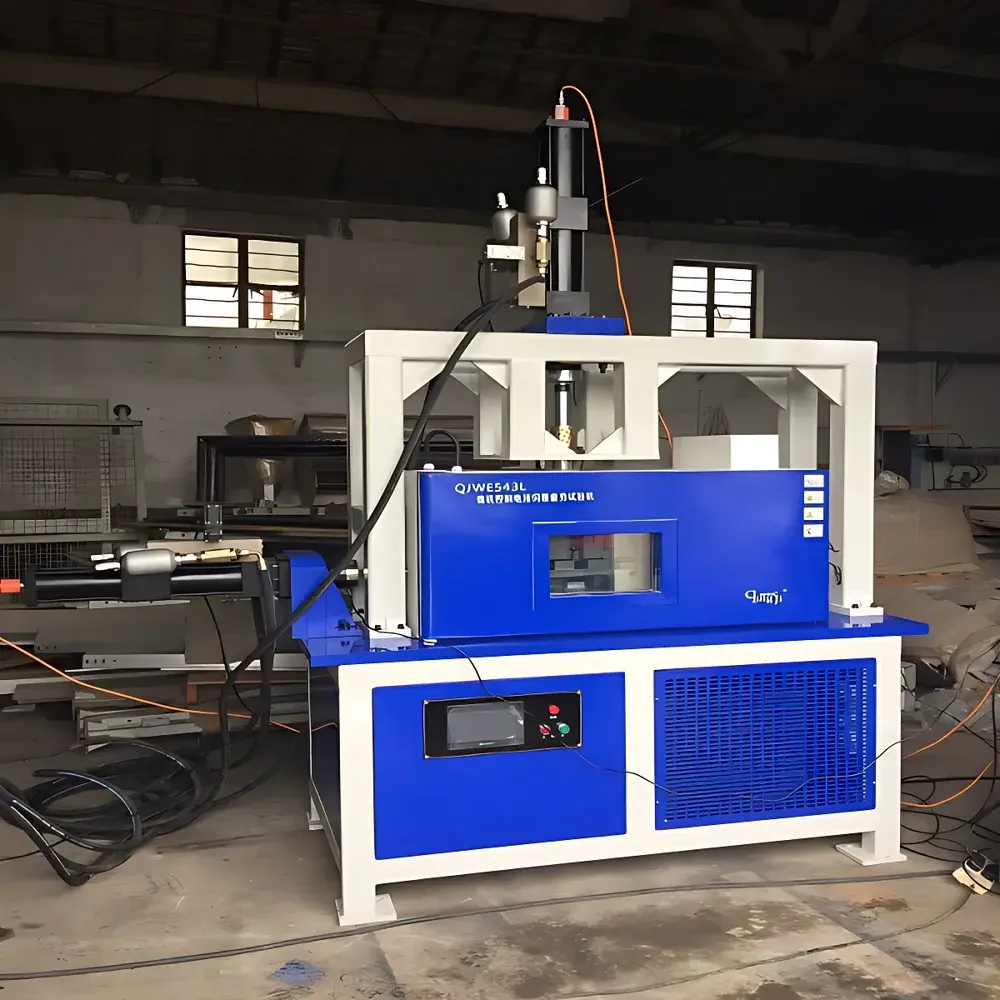
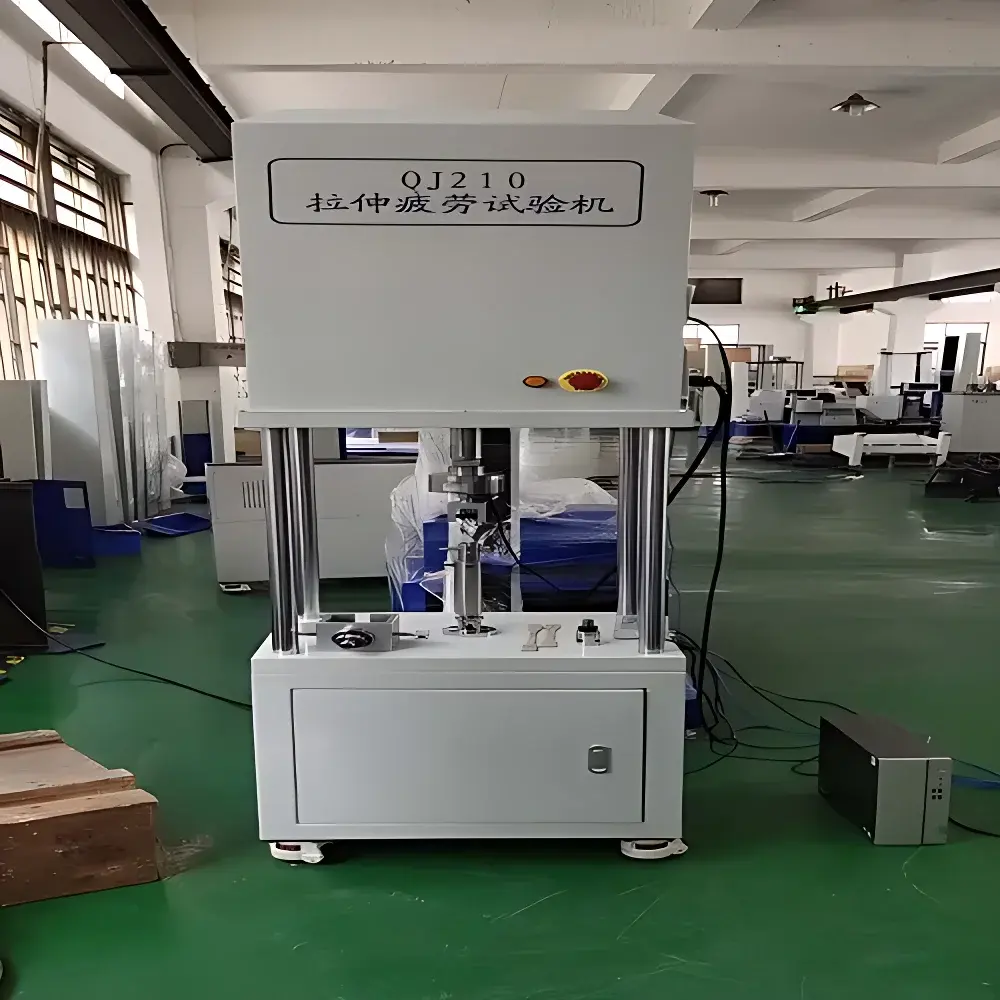
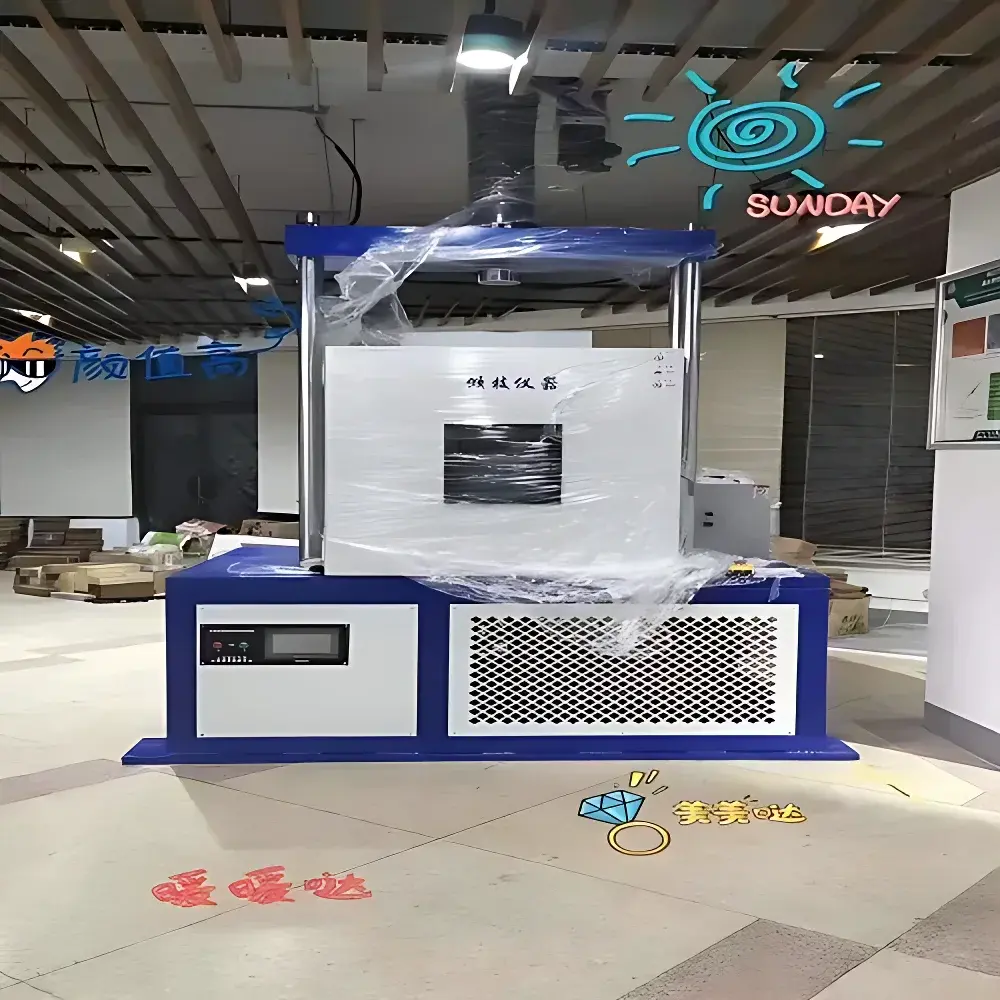
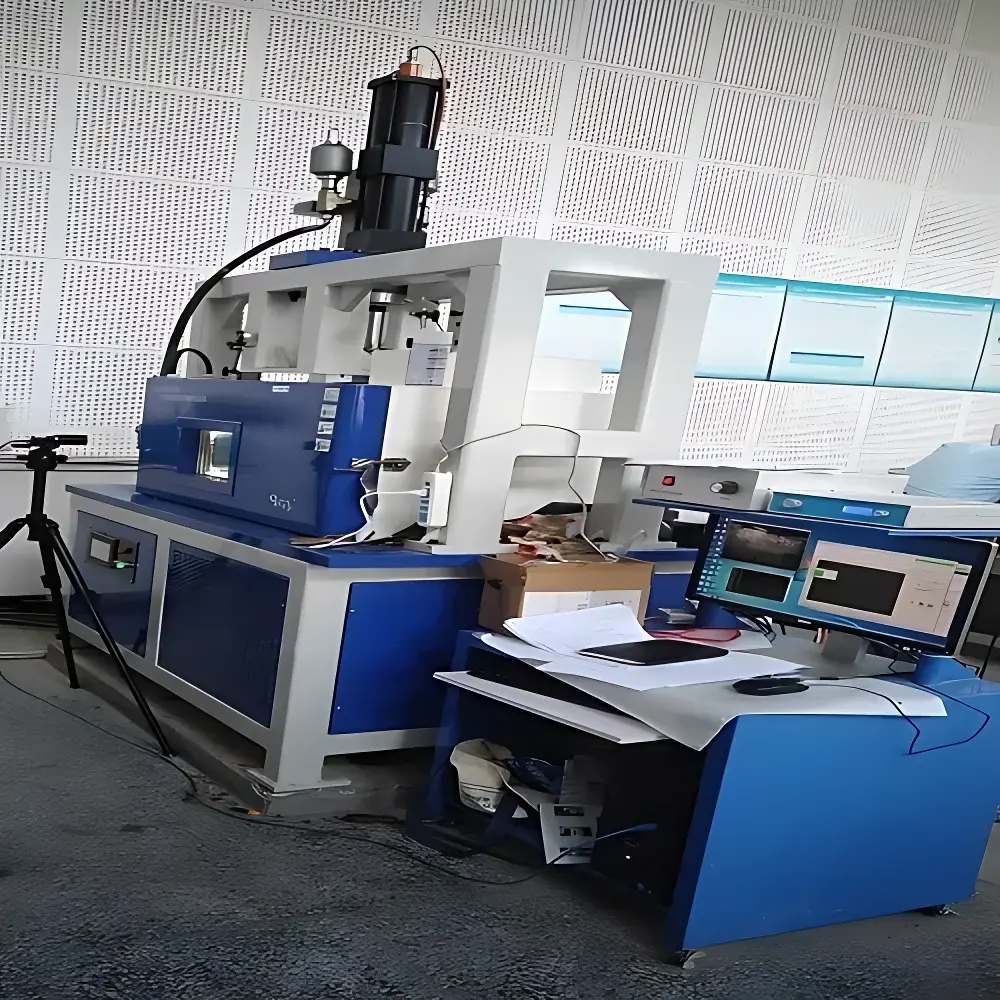
Qinsun QJWE543L Electro-Hydraulic Servo Fatigue Testing Machine
| Brand | Qinsun |
|---|---|
| Origin | Shanghai, China |
| Type | Electro-Hydraulic Servo Fatigue Testing Machine |
| Maximum Test Load | Customizable |
| Frequency Range | 0.01–80 Hz (configurable) |
| Actuator Stroke | ±50 mm (customizable) |
| Force Measurement Accuracy | ±1% of reading (2–100% FS) |
| Dynamic Force Ripple | ≤2% |
| Closed-Loop Control Bandwidth | 10 kHz |
| Control Modes | Force, Displacement, and Strain |
| Supported Waveforms | Sinusoidal, Triangular, Square, Trapezoidal, Sawtooth, Half-Sine, Half-Triangle, Random, and User-Defined or External Input Waveforms |
| Frequency Resolution | 0.001 Hz |
| Host Weight | Customizable |
Overview
The Qinsun QJWE543L Electro-Hydraulic Servo Fatigue Testing Machine is a high-fidelity, dual-purpose dynamic testing system engineered for precise cyclic loading under controlled force, displacement, or strain conditions. It operates on the principle of electro-hydraulic servo actuation—leveraging high-bandwidth hydraulic actuators driven by digitally regulated servo valves—to deliver repeatable, low-drift sinusoidal and non-sinusoidal waveforms across a broad frequency spectrum (0.01–80 Hz). Designed for fundamental fatigue life assessment, crack initiation and propagation analysis, and cyclic deformation behavior evaluation, the system supports both low-cycle fatigue (LCF) and high-cycle fatigue (HCF) regimes in accordance with ASTM E466, ASTM E606, ISO 1099, and EN 6072. Its modular architecture integrates seamlessly with extensometers, high-temperature furnaces (up to 1200 °C), environmental chambers, and digital image correlation (DIC) systems—enabling full-field strain mapping during in situ fatigue experiments.
Key Features
- Full-digital hydraulic servo controller with real-time closed-loop bandwidth up to 10 kHz, ensuring minimal phase lag and high fidelity waveform reproduction.
- Triple-control capability: simultaneous or switchable closed-loop control of axial force, actuator displacement, and specimen strain—facilitating accurate load-path management across varying stiffness regimes.
- Configurable actuator stroke (standard ±50 mm, extendable per application), optimized for both compact coupon testing and large-scale structural component evaluation.
- Comprehensive waveform library including sinusoidal, triangular, square, trapezoidal, sawtooth, half-cycle, and user-defined profiles—plus support for real-time external signal input (e.g., road-load data, seismic records).
- Force transducer accuracy certified to ±1% of reading over 2–100% full scale, with dynamic force ripple maintained at ≤2%, meeting ISO 7500-1 Class 1 requirements.
- Modular mechanical frame design accommodating custom load frames, multi-axis adapters, and auxiliary fixtures for tension-compression, bending, torsion, or combined-mode fatigue studies.
Sample Compatibility & Compliance
The QJWE543L accommodates metallic specimens (steel, titanium, aluminum alloys, superalloys), polymer composites, ceramics, and additively manufactured components in standard geometries (dog-bone, hourglass, notched, pre-cracked CT/SENB) per ASTM E8/E21, ISO 6892-1, and ASTM E399. When integrated with high-temperature furnace modules, it supports fatigue testing under sustained thermal loads compliant with ASTM E111 and ASTM E2368. All control firmware and data acquisition routines are structured to support audit-ready documentation per GLP and GMP environments; optional 21 CFR Part 11-compliant software packages provide electronic signatures, change logs, and secure user access tiers.
Software & Data Management
Qinsun’s proprietary FatigueTest Suite v4.x provides intuitive test sequencing, real-time parameter monitoring, and automated pass/fail evaluation based on user-defined criteria (e.g., stiffness degradation >15%, cycle count at 50% load drop, or crack length threshold from video extensometry). Raw data streams (force, displacement, strain, temperature) are recorded at ≥10 kHz with time-stamped metadata, exported in ASCII, HDF5, or universal MDF4 formats compatible with MATLAB, Python (NumPy/Pandas), and commercial FEA post-processors. The software includes built-in S–N curve generation, ΔK-based Paris law fitting, and Coffin–Manson analysis tools—fully traceable and scriptable via COM/ActiveX interfaces.
Applications
- Mechanical design validation of engine components, landing gear, turbine blades, and welded joints under representative service spectra.
- Fatigue property mapping of new alloy systems and heat-treated microstructures for aerospace and power generation OEMs.
- Fracture mechanics characterization—including da/dN vs. ΔK relationships, threshold stress intensity (ΔKth), and R-ratio effects—using compliance calibration or direct crack imaging.
- Qualification testing of medical implants (e.g., hip stems, spinal rods) per ISO 14801 and ASTM F2193.
- Research into fatigue–corrosion interactions using in situ electrochemical cell integration and potentiostatic control synchronization.
- Validation of digital twin models through high-fidelity experimental datasets for machine learning–driven life prediction frameworks.
FAQ
What standards does the QJWE543L comply with for fatigue testing?
It supports test execution and reporting aligned with ASTM E466 (constant-amplitude axial fatigue), ASTM E606 (strain-controlled LCF), ISO 1099 (metallic materials), and EN 6072 (aerospace structural testing), with optional calibration certificates traceable to NIM (China) or NIST (USA).
Can the system perform thermomechanical fatigue (TMF) testing?
Yes—when coupled with a programmable high-temperature furnace (up to 1200 °C) and liquid-cooled grips, the QJWE543L enables out-of-phase and in-phase TMF protocols per ASTM E2368.
Is remote operation and data monitoring supported?
The controller features Ethernet TCP/IP interface and OPC UA server capability, enabling secure remote supervision, alarm notifications, and integration into centralized lab infrastructure management platforms.
What is the typical lead time for customization (e.g., extended stroke or higher load capacity)?
Standard configurations ship within 12 weeks; fully customized systems—including bespoke load frames, environmental enclosures, or multi-axis add-ons—require 18–24 weeks following final mechanical and control architecture sign-off.
Does the system include validation documentation for regulated industries?
Factory-installed IQ/OQ documentation is provided; PQ support and 21 CFR Part 11-compliant electronic record packages are available as optional service modules with qualified validation engineers.
Related Products



