
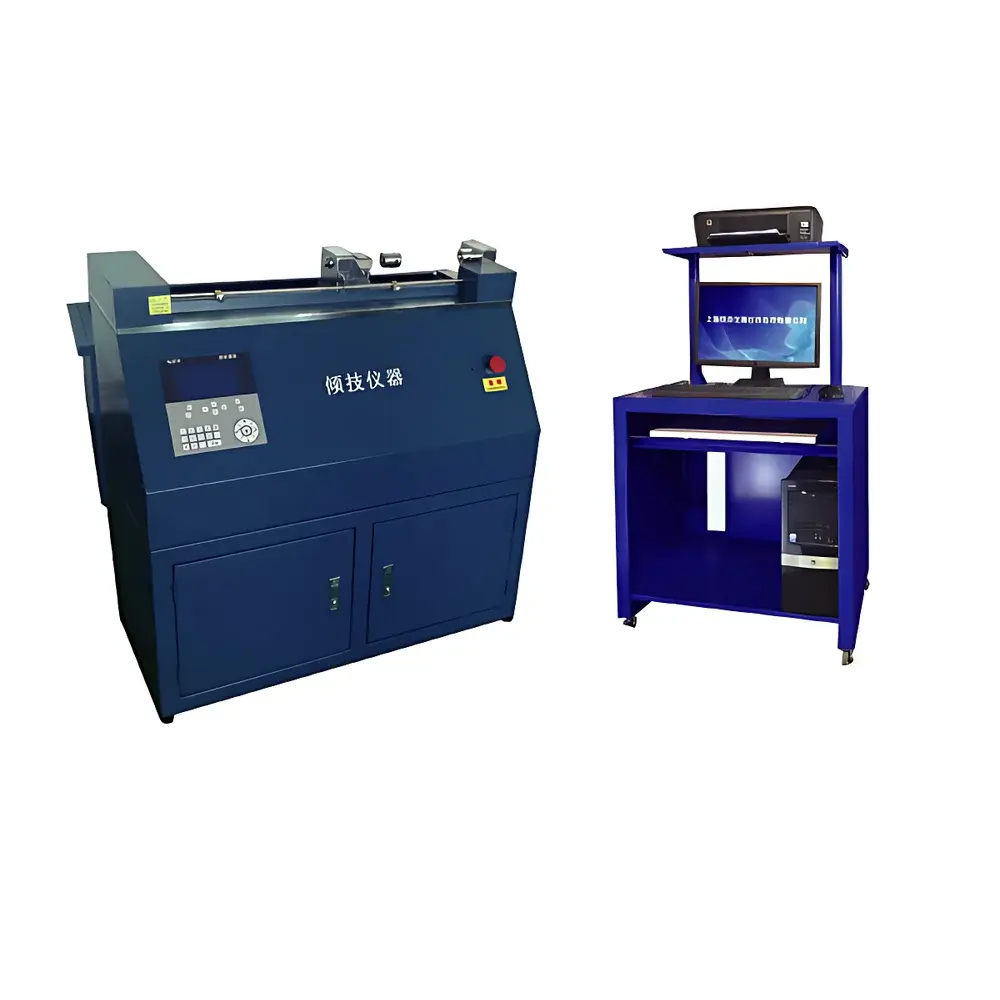
QJ310 Horizontal Electronic Tensile Testing Machine
| Origin | Shanghai, China |
|---|---|
| Manufacturer Type | Authorized Distributor |
| Origin Category | Domestic (PRC) |
| Model | QJ310 |
| Price | USD 5,000 (approx.) |
| Instrument Type | Electronic Tensile Tester |
| Maximum Test Load | 10,000 kN |
| Load Measurement Range | 10,000 kN full scale |
| Load Accuracy | < ±0.5% FS |
| Test Stroke | ≥200 mm |
| Displacement Resolution | 0.01 mm |
| Load Cell Accuracy | 0.01% FS |
| Test Speed Range | 0.001–300 mm/min |
| Power Supply | AC 220 V, 50/60 Hz |
| Dimensions (W×D×H) | 600 × 300 × 300 mm |
| Net Weight | ~40 kg |
Overview
The QJ310 Horizontal Electronic Tensile Testing Machine is an engineered solution for static and quasi-static mechanical characterization of low-to-medium force-range components in electronics manufacturing, wire harness assembly, and interconnect reliability testing. Unlike vertical tensile testers, its horizontal configuration provides optimized ergonomics and spatial efficiency for high-throughput inline or benchtop quality control environments—particularly where axial pull-off, peel, or shear-force evaluation of connectors, crimped terminals, solder joints, LED lamp bases, adhesive bonds, and molded plastic housings is required. The system operates on a servo-controlled electromechanical actuation principle, utilizing precision ground ball screws and rigid structural framing to deliver repeatable force application and displacement control. It conforms to fundamental mechanical testing principles defined in ASTM D638 (tensile properties of plastics), ISO 6892-1 (metallic materials — tensile testing), and IEC 60512-2 (electrical connectors — mechanical tests), supporting standardized pass/fail verification under regulated production workflows.
Key Features
- Horizontal load frame architecture with reinforced steel chassis and powder-coated enclosure for long-term dimensional stability and operator safety
- High-precision ball screw drive system coupled with a closed-loop servo motor, enabling smooth, noise-free motion across the full speed range (0.001–300 mm/min)
- Integrated 7-inch TFT LCD touchscreen controller with real-time graphical display of load vs. displacement curves, peak load capture, and automatic zeroing functions
- Calibrated load cell with 0.01% full-scale accuracy and < ±0.5% overall system force measurement uncertainty per ISO 7500-1 Class 1 compliance
- Displacement resolution of 0.01 mm achieved via high-resolution rotary encoder feedback, traceable to national metrology standards
- Modular fixture interface compatible with standardized wedge grips, pneumatic clamps, peel fixtures, and custom tooling for rapid reconfiguration
- USB and RS-232 communication ports for direct data export and optional integration into factory MES or LIMS platforms
Sample Compatibility & Compliance
The QJ310 accommodates specimens up to 200 mm stroke length and supports sample geometries typical in electronic interconnect validation—including AWG 28–10 wire terminations, USB/C-type connector retention testing, PCB-mounted component pull strength, double-sided tape peel assays (90° and 180°), and elastomeric gasket compression recovery. All mechanical test protocols are designed to align with IPC-TM-650 (Test Methods Manual), UL 486A-B (Wire Connectors), and GB/T 228.1–2021 (Chinese national standard equivalent to ISO 6892-1). The instrument’s mechanical design satisfies CE Machinery Directive 2006/42/EC requirements, and its electrical subsystem complies with IEC 61000-6-3 (EMC emission limits) and IEC 61000-6-2 (immunity).
Software & Data Management
The QJ310 supports both standalone operation and PC-based control via optional Windows-compatible software (v3.2+). The software package provides GLP-compliant audit trail logging, user-access-level management (administrator/operator/guest), and FDA 21 CFR Part 11–ready electronic signatures when deployed in regulated medical device or automotive electronics QA labs. Raw test data is stored in CSV and XML formats; stress-strain curves can be exported as SVG or PNG for inclusion in internal reports or customer-facing documentation. Calibration certificates include NIST-traceable reference values and uncertainty budgets compliant with ISO/IEC 17025 requirements.
Applications
- Terminal crimp pull-out force verification per SAE J2222 and USCAR-21 specifications
- Connector retention force testing for automotive ECUs and infotainment modules
- Adhesive bond strength quantification in LED lighting assemblies and flexible printed circuits
- Peel resistance assessment of pressure-sensitive tapes used in EMI shielding applications
- Breakaway torque simulation for snap-fit plastic enclosures and housing latches
- Routine QC screening of solder joint integrity in through-hole and SMT assemblies
FAQ
What is the maximum allowable specimen width for horizontal loading on the QJ310?
Standard grip opening accommodates specimens up to 80 mm wide; custom wide-span fixtures are available upon request.
Does the system support pre-programmed test sequences for multi-step protocols?
Yes—up to 10 independent test methods can be saved and recalled directly from the controller interface or via PC software.
Is third-party calibration certification included with delivery?
A factory-issued calibration report with traceability to CNAS-accredited laboratories is provided; ISO/IEC 17025 accredited calibration services are available as an add-on.
Can the QJ310 be integrated into an automated production line?
With optional PLC I/O interface module and Ethernet/IP support, the unit enables synchronized start/stop triggering and pass/fail signal output to SCADA systems.
What maintenance intervals are recommended for sustained accuracy?
Load cell verification every 6 months and mechanical alignment check annually—detailed procedures are documented in the maintenance manual supplied with each unit.



