
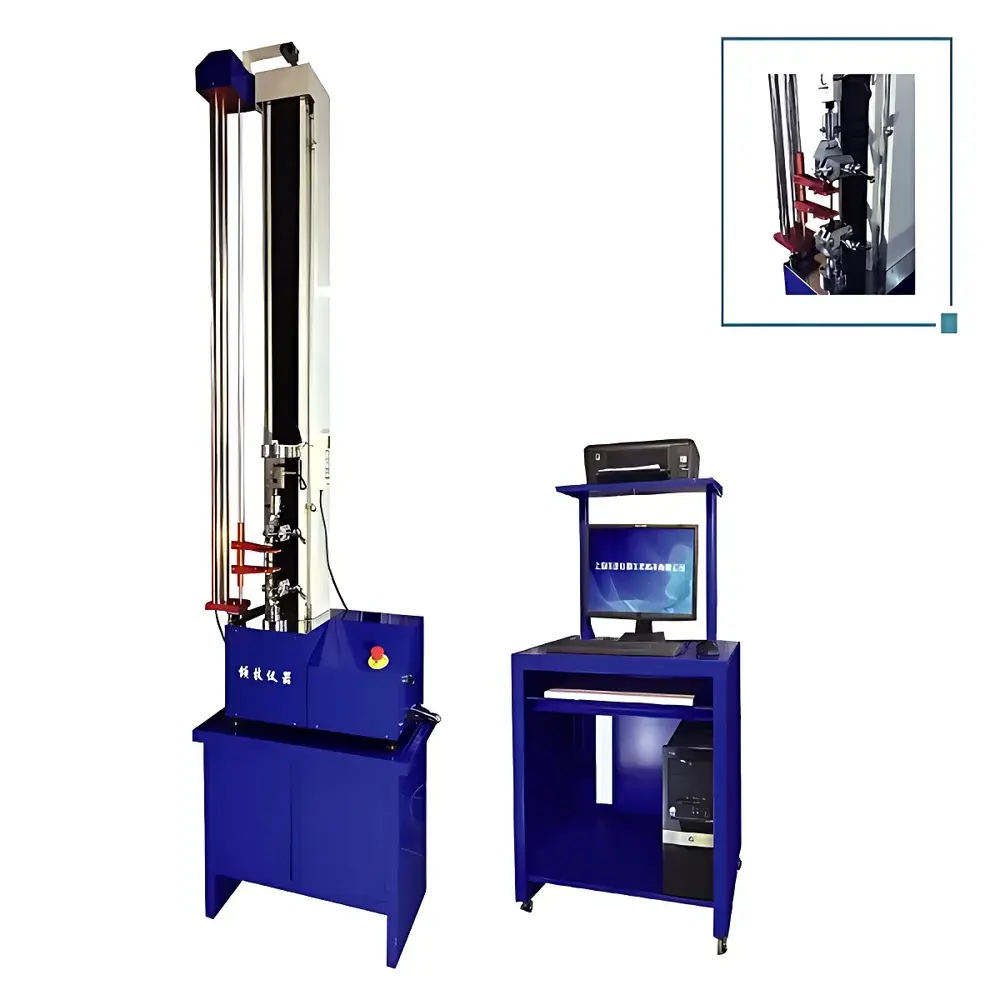
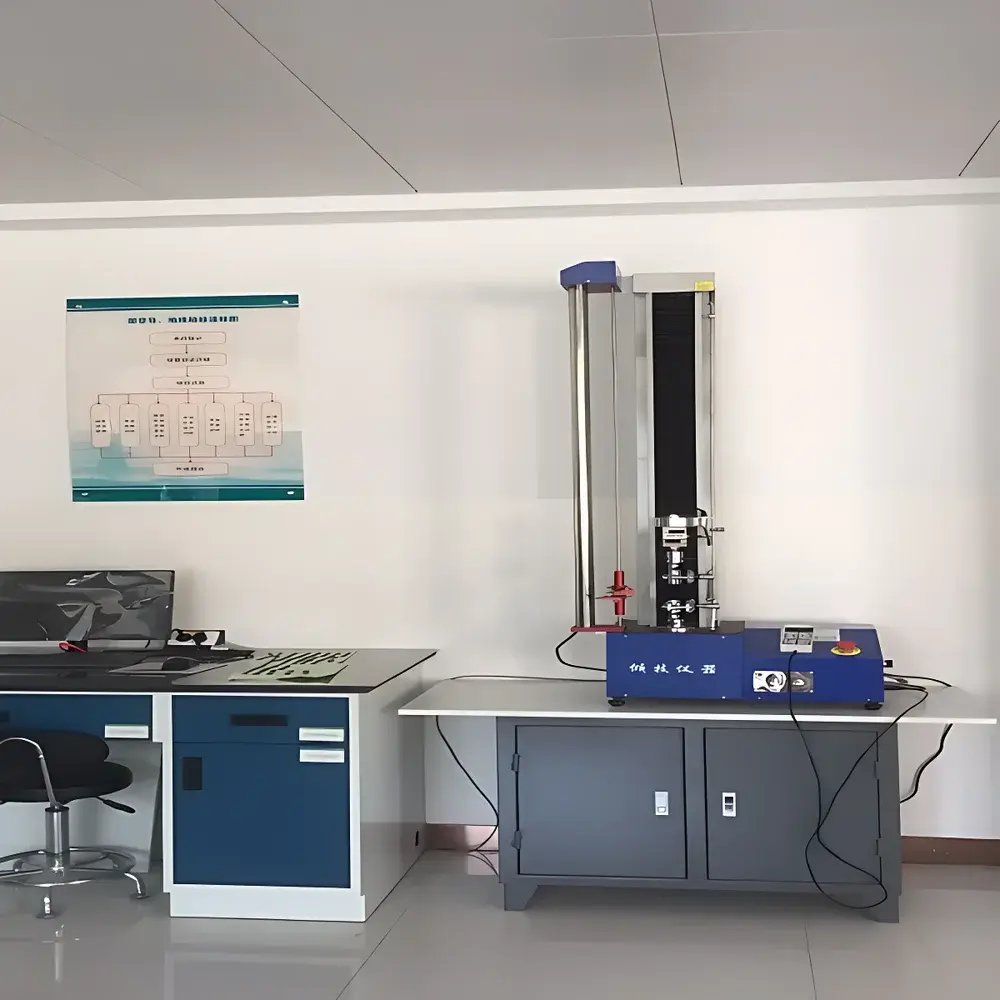
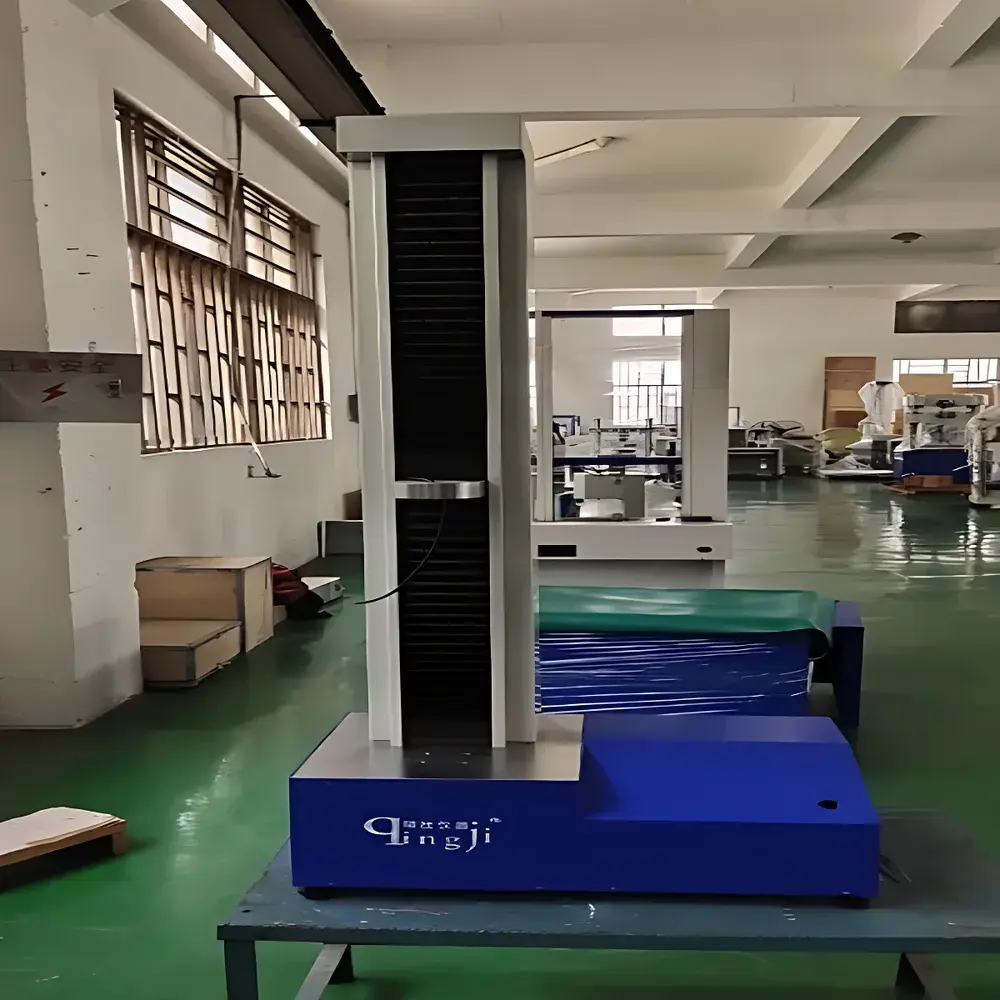
Qinsun QJ210A Advanced Electronic Tensile Testing Machine for Thin Films
| Brand | Qinsun |
|---|---|
| Model | QJ210A–5 kN |
| Origin | Shanghai, China |
| Type | Electromechanical Universal Tensile Tester |
| Max Test Load | 5 kN |
| Load Range | 0–5 kN (Full Scale) |
| Load Accuracy | ±0.5% of reading |
| Stroke | 800 mm (extendable) |
| Displacement Resolution | 0.001 mm |
| Speed Range | 0.001–500 mm/min |
| Speed Accuracy | ±0.5% |
| Displacement Accuracy | ±0.5% |
| Force Transducer Accuracy | 0.01% FS |
| Effective Width | 150 mm |
| Safety Features | Electronic stroke limit protection, emergency stop button |
| Unit Weight | ~85 kg |
Overview
The Qinsun QJ210A Advanced Electronic Tensile Testing Machine is a precision-engineered electromechanical system designed specifically for mechanical property evaluation of thin-film materials—including polymer films, laminates, foils, coated substrates, and biomedical membranes. Operating on the principle of controlled uniaxial force application with real-time load-displacement feedback, the instrument complies with fundamental test methodologies defined in ISO 527-3, ASTM D882, ASTM D3776, and GB/T 1040.4. Its modular architecture integrates a high-resolution servo-controlled drive system, calibrated load cell, and synchronized motion control to deliver repeatable tensile, compression, peel, puncture, and flexural data under standardized conditions. Unlike legacy mechanical testers, the QJ210A eliminates manual calibration drift and operator-dependent interpretation through fully digital closed-loop control—enabling traceable, audit-ready results suitable for QC labs, R&D facilities, and contract testing organizations operating under GLP or ISO/IEC 17025 frameworks.
Key Features
- High-fidelity 5 kN load capacity with ±0.5% full-scale accuracy and 0.01% FS transducer linearity—validated per ISO 7500-1 Class 0.5 requirements.
- Adjustable crosshead speed from 0.001 to 500 mm/min, programmable in 0.001 mm/min increments, supporting both quasi-static and dynamic loading profiles.
- 800 mm standard travel range (extendable upon request), accommodating extended elongation tests for highly ductile films and elastomeric substrates.
- 150 mm effective test width accommodates standard film specimens per ASTM D882 (e.g., 15 mm × 150 mm strips) and enables multi-specimen alignment verification.
- Integrated 0.001 mm displacement resolution encoder coupled with dual-axis optical alignment aids ensures sub-micron positional repeatability across repeated cycles.
- Dual-safety architecture: hardware-based electronic stroke limit switches plus software-enforced emergency stop logic compliant with IEC 61800-5-2 functional safety guidelines.
- Industrial-grade powder-coated aluminum extrusion frame with anti-vibration base mounting—designed for long-term stability in shared lab environments.
Sample Compatibility & Compliance
The QJ210A supports standardized specimen geometries for thin-film characterization per ISO 527-3 (plastics), ASTM D882 (thin plastic sheeting), ASTM F88 (seal strength), and ISO 11607-2 (sterile barrier packaging). Compatible grips include pneumatic film clamps, wedge-action serrated jaws, and custom vacuum chucks for low-modulus or adhesive-sensitive samples. All test protocols can be pre-configured to satisfy regulatory documentation requirements—including FDA 21 CFR Part 11-compliant electronic signatures, audit trails, and metadata logging when operated with certified PC software. Calibration certificates are issued traceable to NIM (National Institute of Metrology, China) standards, with optional UKAS or DAkkS accreditation available upon request.
Software & Data Management
The system operates via Qinsun’s proprietary TestMaster v4.2 software suite—compatible with Windows 10/11 (64-bit) and validated for GxP environments. Software features include: real-time multi-channel plotting (load vs. displacement, stress vs. strain, modulus calculation), automatic yield point detection per ISO 527-1 Annex B, batch report generation in PDF/XLSX formats with embedded raw data, and user-level permission controls (admin/operator/viewer). Raw ASCII data export enables third-party analysis in MATLAB, Python (NumPy/Pandas), or Minitab. All test sessions record timestamped metadata—including operator ID, environmental temperature/humidity (via optional sensor input), calibration status, and firmware revision—supporting full traceability for internal audits or external inspections.
Applications
- Quantification of tensile strength, elongation at break, Young’s modulus, and yield behavior in PET, BOPP, PE, and metallized films.
- Peel adhesion testing of laminated packaging structures (e.g., foil/polymer composites) per ASTM F904.
- Puncture resistance evaluation of medical pouches and sterile wrap materials under ISO 11607-2 Clause 6.3.
- Creep and stress-relaxation profiling using time-controlled hold segments within custom test sequences.
- Quality conformance screening for incoming raw materials and finished goods against internal specifications or customer-facing datasheets.
- Method development and validation for novel biodegradable films, nanocomposite coatings, and stretchable electronics substrates.
FAQ
What standards does the QJ210A support out-of-the-box?
Pre-loaded test templates cover ASTM D882, ISO 527-3, GB/T 1040.4, and ISO 11607-2; additional standards can be configured via parameter scripting.
Is the system compatible with LIMS or ERP integration?
Yes—TestMaster supports ODBC connectivity and CSV-based automated data ingestion into laboratory information management systems (LIMS) and enterprise resource planning (ERP) platforms.
Can the machine perform cyclic loading or fatigue testing?
While not a dedicated fatigue system, the QJ210A supports up to 999 programmed load-unload cycles per test sequence with user-defined dwell times and amplitude modulation.
What maintenance intervals are recommended?
Biannual verification of load cell linearity and displacement encoder calibration is advised; routine cleaning and lubrication of lead screws every 6 months ensures optimal mechanical longevity.
Does the warranty cover software updates and technical support?
Yes—the standard 12-month parts-and-labor warranty includes remote diagnostics, firmware upgrades, and unlimited access to Qinsun’s application engineering team for method troubleshooting.



