
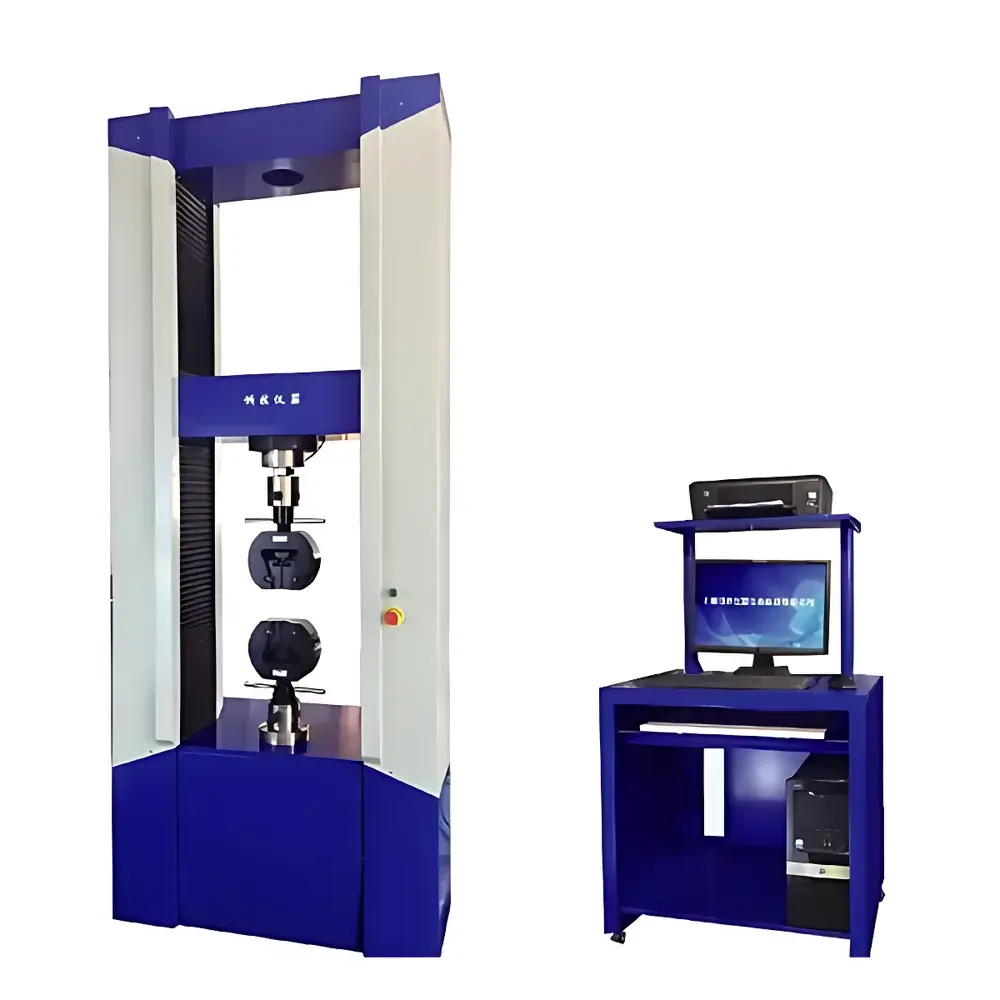
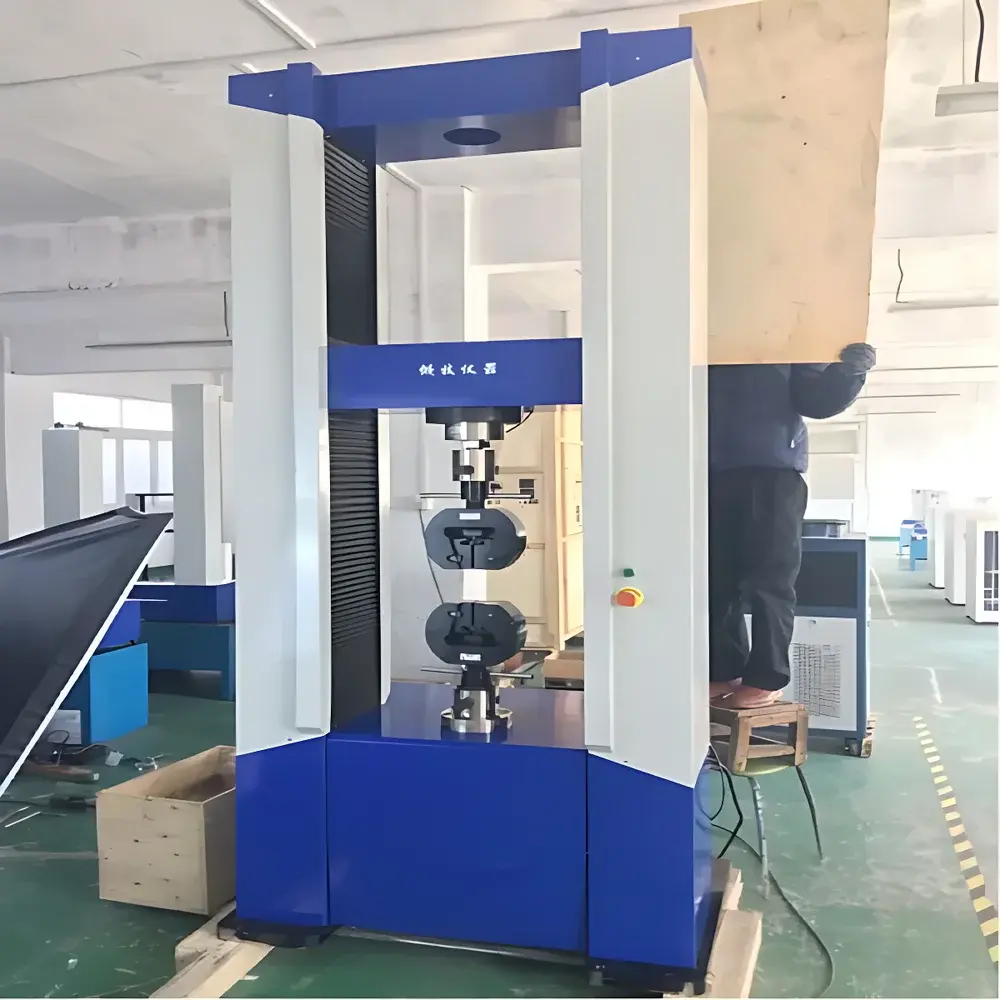
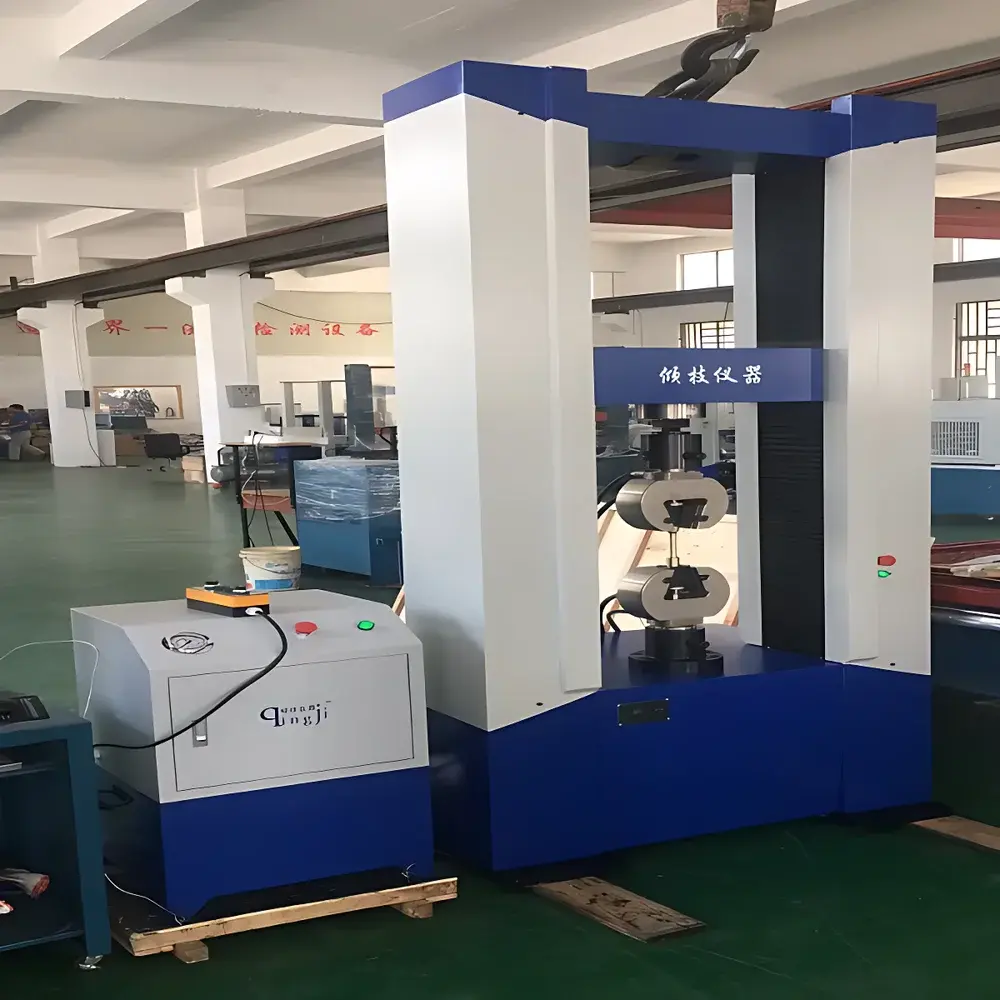
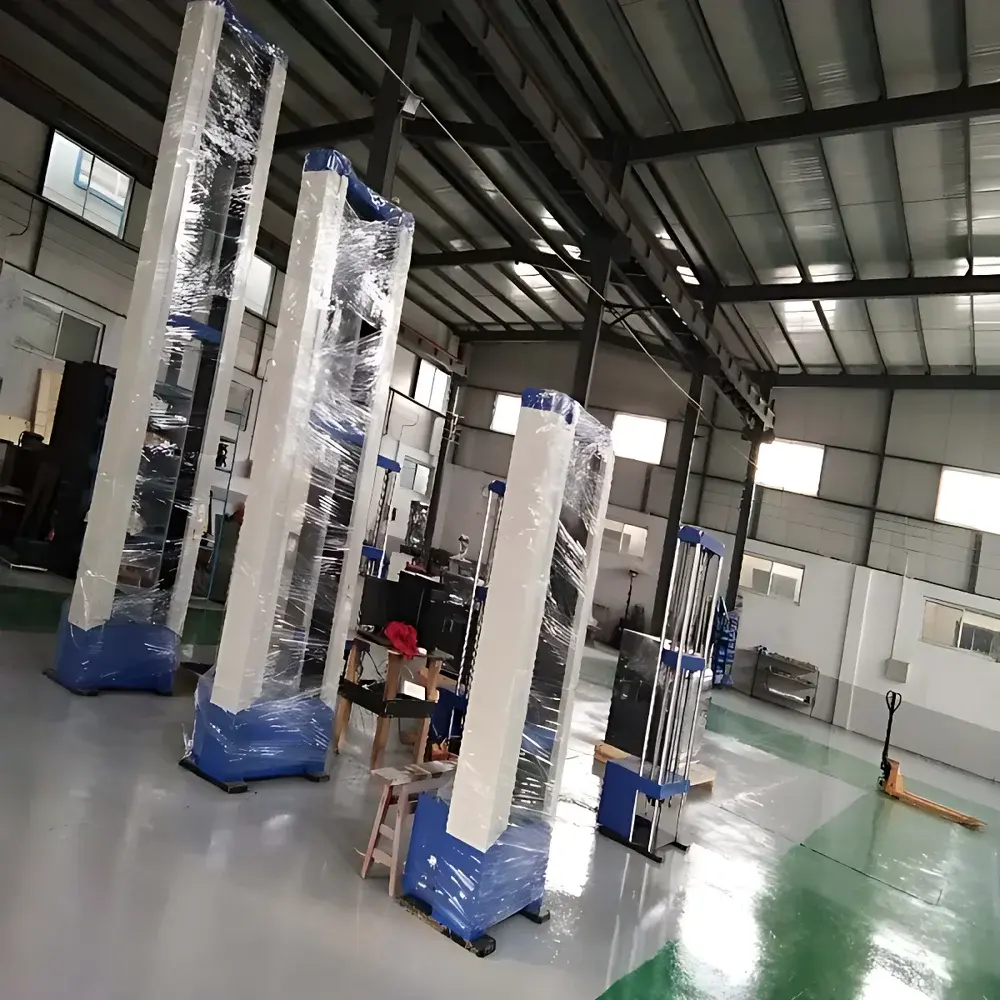
QJ212 Universal Testing Machine by Qinsun
| Brand | Qinsun |
|---|---|
| Model | QJ212 |
| Load Capacity | 0.02 N to 500 kN |
| Load Accuracy | ±0.5% of reading |
| Effective Test Width | 520 mm |
| Max. Tensile Travel | 800 mm |
| Crosshead Speed Range | 0.01–1000 mm/min (standard: 300 mm/min) |
| Speed Accuracy | ±0.5% of set value |
| Displacement Measurement Accuracy | ±0.5% of reading |
| Strain Measurement Accuracy | ±0.5% of reading |
| Force Resolution | 500,000 counts (full-scale, no range switching) |
| Control System | Panasonic full-digital AC servo controller |
| Sensor Origin | USA-made high-precision load cell |
| Software Architecture | Windows-based closed-loop digital control system supporting constant stress, constant strain, and constant displacement modes |
| Safety Protection | Automatic overload cutoff at 110% of full scale, electronic limit switches, real-time software diagnostics |
| Host Dimensions | 1000 × 680 × 2450 mm |
| Net Weight | ~1450 kg |
Overview
The QJ212 Universal Testing Machine by Qinsun is a high-performance electromechanical testing system engineered for precision mechanical property evaluation of metallic, polymeric, composite, ceramic, and elastomeric materials. Based on the fundamental principles of axial force application under controlled displacement or load rate, the system adheres to standardized test methodologies defined in ISO 6892-1 (tensile testing of metals), ASTM E8/E8M, ASTM D638 (plastics), ASTM D790 (flexural properties), ISO 178 (flexure), ISO 1133 (melt flow index support), and DIN 53455, among others. Its modular architecture supports static and quasi-static mechanical characterization—including tension, compression, bending, peel, tear, shear, puncture, and low-cycle fatigue—within a single platform. The machine integrates a rigid dual-column frame, high-stiffness crosshead assembly, and bidirectional actuation capability, ensuring minimal deflection and high reproducibility across repeated test cycles.
Key Features
- Full-range force measurement from 0.02 N to 500 kN with ±0.5% accuracy per ISO 7500-1 Class 0.5 certification
- High-resolution force transduction using traceable U.S.-sourced load cells with 500,000 internal data points—no auto-ranging required, maintaining consistent resolution across the entire capacity spectrum
- Panasonic full-digital AC servo drive system delivering precise speed control from 0.01 to 1000 mm/min (standard configuration rated at 300 mm/min), with speed accuracy maintained within ±0.5% of setpoint
- Integrated closed-loop digital control software running natively on Windows OS, enabling real-time dynamic curve visualization, multi-curve overlay, zoom/pan navigation, and export-ready data formatting (CSV, XLS, PDF)
- Dual-speed manual and automatic crosshead positioning with programmable return-to-start functionality post-test
- Comprehensive safety architecture: hardware-based electronic limits, software-driven overload detection (triggers at 110% of selected load range), and real-time diagnostic monitoring of system integrity
- Adjustable test width (520 mm) and extended tensile travel (800 mm) accommodating standard and custom specimen geometries per ASTM E8 or ISO 6892 gauge lengths
Sample Compatibility & Compliance
The QJ212 accommodates a broad spectrum of specimen types—including dog-bone tensile bars, cylindrical compression samples, three- and four-point bend fixtures, peel adhesion strips, and puncture discs—via user-configurable fixture sets. All mechanical measurements comply with international metrological traceability requirements under ISO/IEC 17025. The system supports GLP-compliant operation when paired with audit-trail-enabled software modules, and its control algorithms are compatible with FDA 21 CFR Part 11 requirements for electronic records and signatures when deployed with validated configurations. Calibration certificates are issued per ISO 17025-accredited laboratories, with optional annual recalibration services available.
Software & Data Management
The embedded Windows-based test software provides intuitive GUI-driven workflow management—from test method definition (preloaded templates for ASTM, ISO, JIS, DIN standards) to real-time parameter adjustment and post-processing analytics. Raw data streams include synchronized time-stamped force, displacement, and strain channels. Curve manipulation tools allow for derivative calculation (e.g., modulus from linear region), yield point identification (0.2% offset method), ultimate tensile strength extraction, and elongation-at-break quantification. Export formats support laboratory information management systems (LIMS) integration. Optional report generation includes header metadata (operator ID, calibration date, environmental conditions), statistical summaries (mean, SD, CV%), and graphical overlays for comparative analysis across batches or material grades.
Applications
This system serves quality control laboratories in aerospace component manufacturing (e.g., titanium alloy fasteners per AMS 2300), automotive Tier-1 suppliers validating thermoplastic composites (PP + GF per ISO 527), medical device firms testing polymer suture anchors (ISO 14243), packaging R&D assessing seal strength (ASTM F88), and academic research groups characterizing hydrogel mechanical hysteresis. Its adaptability extends to rubber vulcanizate testing (ASTM D412), geotextile tensile performance (ASTM D4595), and additive-manufactured metal lattice structure evaluation under compressive loading.
FAQ
What international standards does the QJ212 support out-of-the-box?
Preconfigured test methods cover ISO 6892-1, ASTM E8/E8M, ASTM D638, ASTM D790, ISO 178, ISO 1133, and JIS Z2241. Custom protocol development is supported via open scripting interface.
Is the system compliant with FDA 21 CFR Part 11 for regulated environments?
Yes—when deployed with optional 21 CFR Part 11-compliant software add-on, including electronic signature capture, audit trail logging, and role-based access control.
Can the QJ212 perform cyclic or low-frequency fatigue tests?
It supports quasi-static low-cycle fatigue (LCF) up to 5 Hz with appropriate servo tuning and waveform programming; high-frequency fatigue requires dedicated resonance-based systems.
What is the recommended calibration interval?
Annual calibration is advised per ISO/IEC 17025 guidelines; interim verification checks using certified reference standards are recommended before critical test campaigns.
Are fixtures included or customized per application?
Standard wedge-action tensile grips and compression platens are supplied; all specialized fixtures (e.g., peel, shear, puncture) are engineered to customer-specified geometry and material class.



