
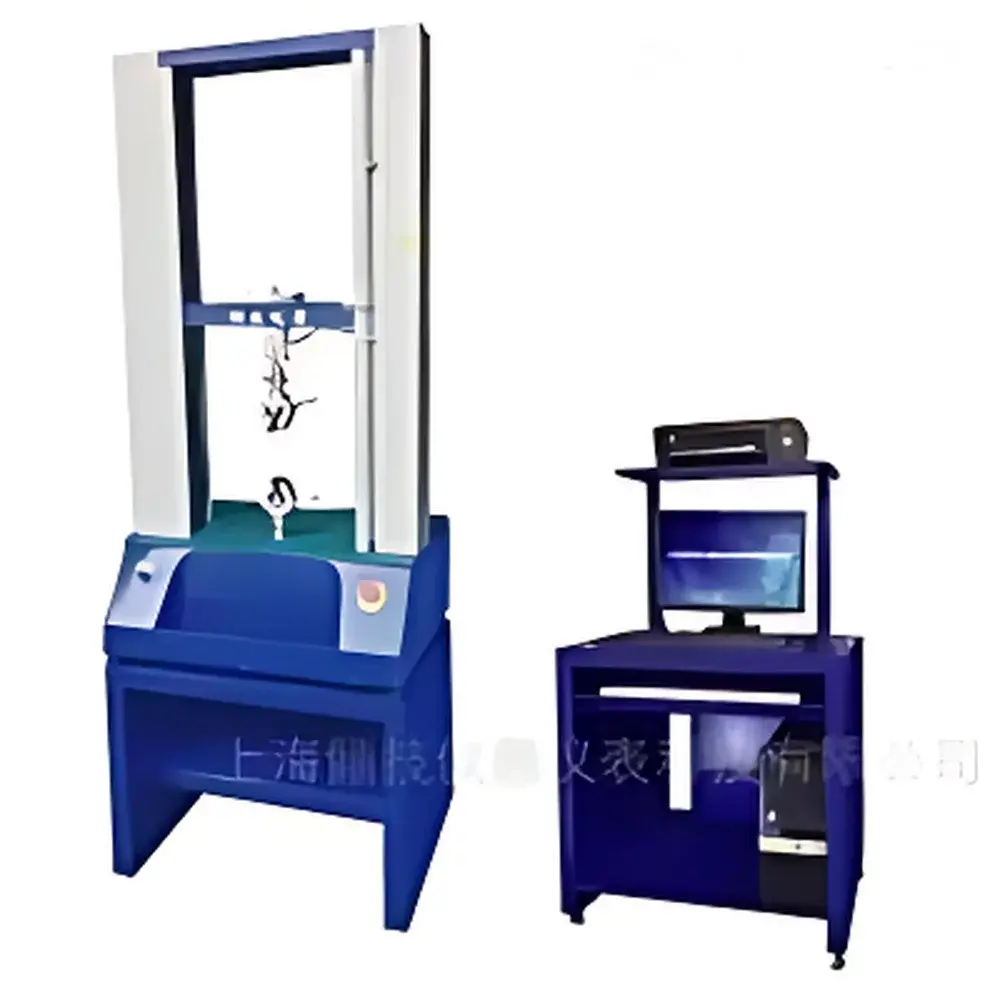
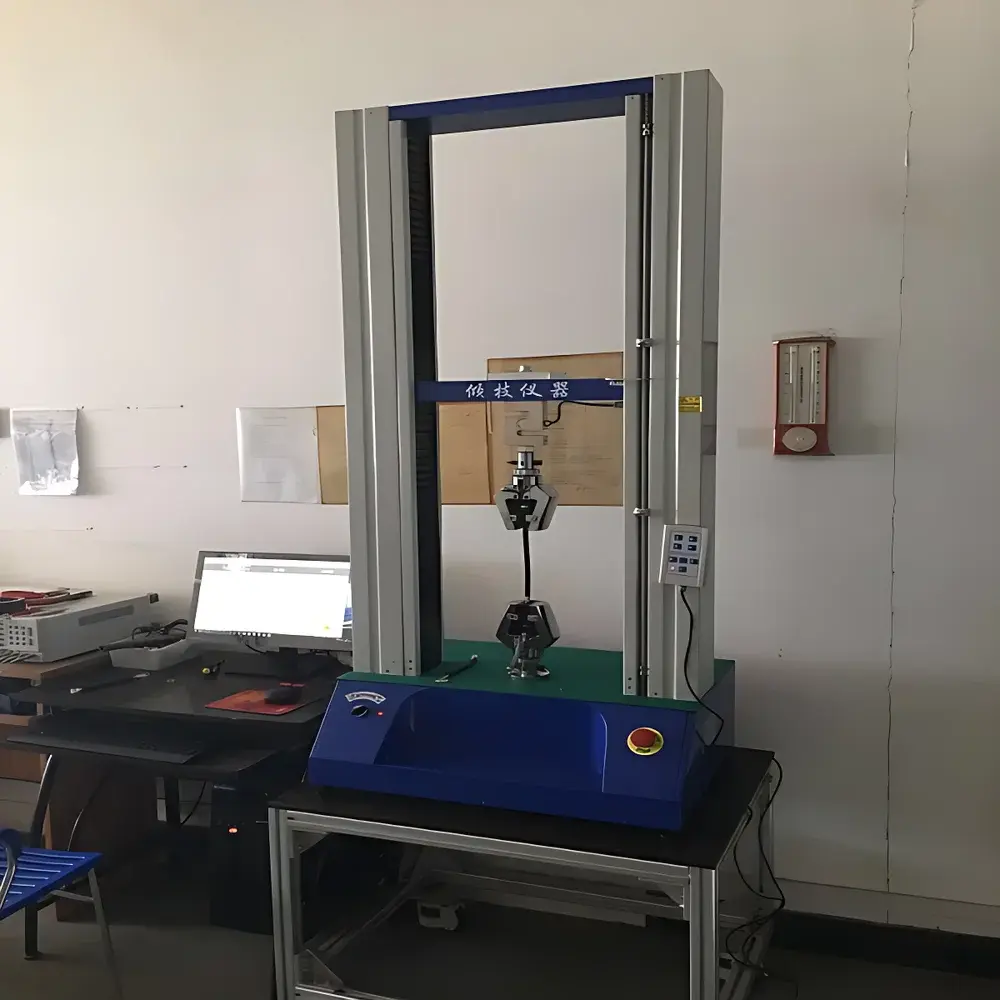
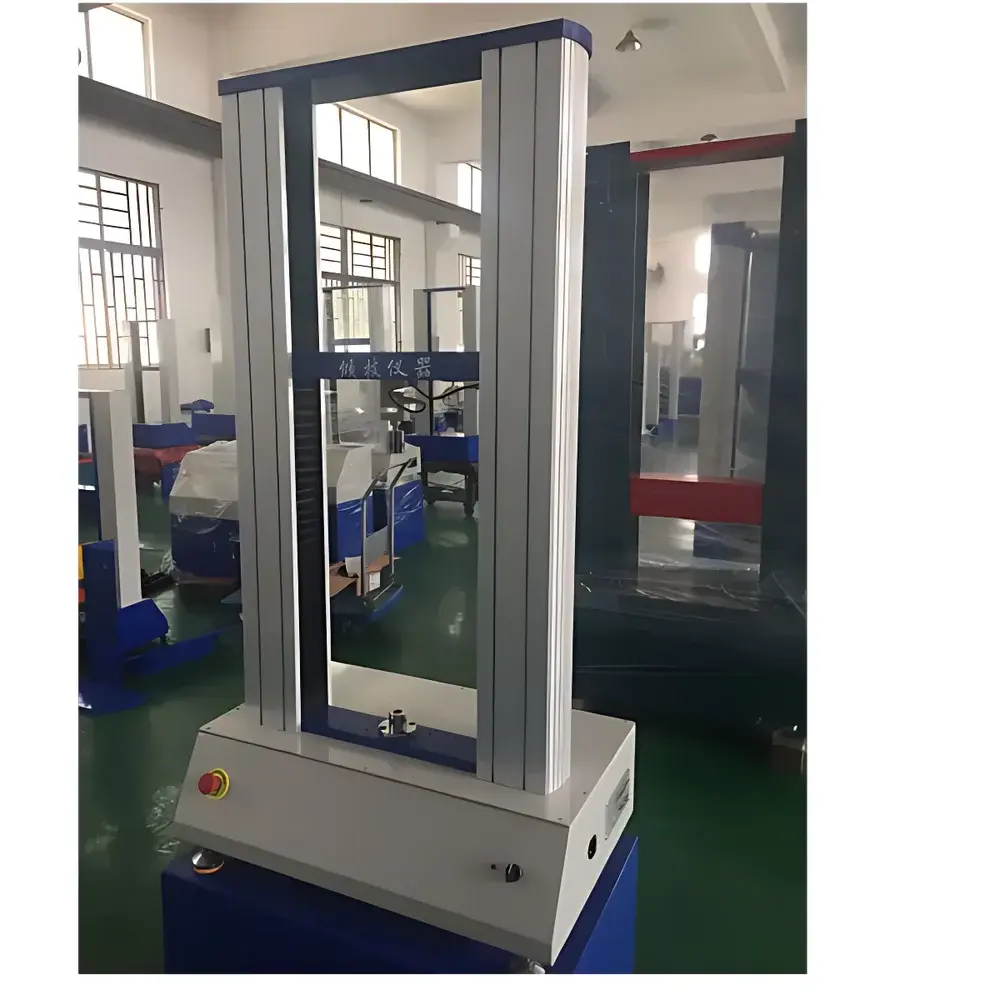
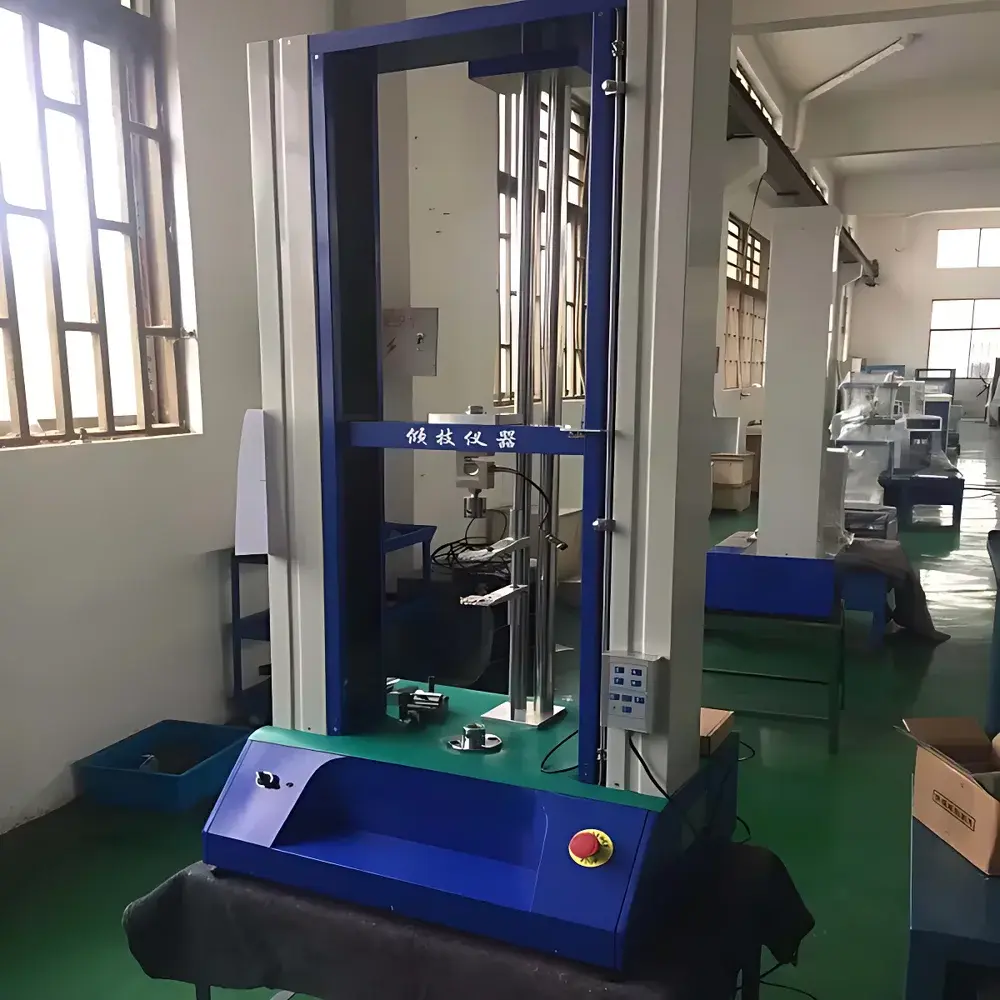
QJ211S Universal Tensile Testing Machine
| Brand | Qinsun |
|---|---|
| Origin | Shanghai, China |
| Type | Electromechanical Tensile Tester |
| Max Test Load | 30 kN |
| Force Range | 0.02–100% of Full Scale |
| Force Accuracy | ±0.5% FS |
| Crosshead Travel | 800 mm |
| Effective Test Width | 420 mm |
| Stroke Resolution | 500,000 counts (full-scale, unsegmented) |
| Speed Range | 0.01–300 mm/min |
| Speed Accuracy | ±0.5% of set value |
| Displacement Accuracy | ±0.5% of reading |
| Strain Measurement Accuracy | ±0.5% of reading |
| Load Cell | High-precision imported sensor |
| Controller | Panasonic full-digital AC servo drive system |
| Control Mode | Closed-loop digital control supporting constant load, constant strain, and constant displacement testing |
| Safety Features | Software diagnostics, electronic limit switches, overload protection at 110% FS |
| Weight | ~145 kg |
Overview
The QJ211S Universal Tensile Testing Machine is an electromechanical materials testing system engineered for precision mechanical property evaluation of metallic and non-metallic specimens under uniaxial tension, compression, bending, peel, and shear loading conditions. Based on the principle of force transduction via high-stability load cells and displacement measurement through encoder-coupled ball-screw actuation, the QJ211S delivers traceable, repeatable, and standards-compliant mechanical data across a broad spectrum of industrial and academic applications. Its modular architecture supports both standalone operation via integrated LCD controller and full PC-based control with real-time data acquisition, curve plotting, and report generation — making it suitable for routine quality assurance, R&D validation, and accredited laboratory workflows.
Key Features
- Robust dual-speed crosshead drive system powered by a high-torque Panasonic AC servo motor and optimized synchronous belt reduction, ensuring smooth, low-vibration motion across the full 800 mm travel range.
- High-resolution force measurement using imported precision strain-gauge load cells with 500,000-count A/D resolution and no internal range switching — maintaining consistent sensitivity from 0.02% to 100% of full scale (30 kN).
- Digital closed-loop control firmware enabling precise execution of ASTM E4, ISO 527, GB/T 228.1, JIS Z 2241, and other standardized test protocols including tensile strength, yield point, elongation at break, modulus of elasticity, and peel adhesion (90°, 180°, and angular configurations).
- Integrated safety architecture featuring software-based diagnostic monitoring, hardware-triggered electronic limits, automatic overload shutdown at 110% FS, and programmable return-to-start functionality post-test.
- Modular fixture interface accommodating custom-designed grips, peel fixtures, bend jigs, and compression platens — configurable per specimen geometry and industry-specific requirements (e.g., ISO 8510-2 for adhesive peel, ASTM D903 for rubber adhesion).
Sample Compatibility & Compliance
The QJ211S accommodates flat, cylindrical, and irregularly shaped specimens up to 420 mm in width and 800 mm in effective extension length. It is routinely deployed for testing polymers (thermoplastics, elastomers), composites, textiles, paperboard, foams, thin metal sheets, medical device components (catheter tubing, suture anchors), and adhesive bonds. The system meets essential metrological and operational criteria for GLP-compliant environments: force calibration traceable to national standards (e.g., NIM, NIST-equivalent references), displacement linearity verified per ISO 7500-1 Class 0.5, and mechanical stability validated per ASTM E4 verification procedures. While not pre-certified for FDA 21 CFR Part 11, its audit-ready data logging — including user ID, timestamp, parameter settings, raw channel values, and digital signature fields — supports implementation of compliant electronic records in regulated manufacturing settings.
Software & Data Management
The QJ211S operates with a Windows-based test management platform offering multi-language UI support, customizable test templates, real-time stress–strain curve overlay, and automated pass/fail decision logic based on user-defined thresholds. All acquired data — including load, displacement, strain, time, and calculated metrics — are stored in encrypted binary archives with embedded metadata (test ID, operator, date/time, calibration status). Export options include CSV, PDF (ISO/IEC 17025-compliant report format), and XML for LIMS integration. Audit trail functionality logs all parameter modifications, test executions, and system events with immutable timestamps — satisfying documentation requirements for ISO/IEC 17025 accreditation and internal QA audits.
Applications
- Tensile characterization of polymer films and packaging materials per ASTM D882 and ISO 527-3.
- Peel strength assessment of pressure-sensitive adhesives (PSAs), laminated structures, and medical tapes per ASTM D3330 and ISO 8510-2.
- Mechanical validation of biomedical polymers (e.g., PEEK, polyurethane) per ISO 5832-7 and ASTM F2129.
- Quality control of automotive interior trim, seat fabrics, and gasket materials per SAE J211 and VW 50187.
- Educational use in materials science laboratories for hands-on instruction in Hooke’s law, necking behavior, ductile-brittle transitions, and fracture mechanics fundamentals.
FAQ
What standards does the QJ211S support out-of-the-box?
Preconfigured test methods include ASTM D638, D882, D903, ISO 527, ISO 8510-2, GB/T 228.1, and JIS Z 2241 — with additional protocols programmable via the software’s method editor.
Can the system be integrated into an existing LIMS or MES environment?
Yes — raw data export in CSV/XML and optional OPC UA or TCP/IP communication modules enable seamless connectivity with enterprise-level laboratory and production systems.
Is calibration documentation provided with delivery?
Each unit ships with a factory calibration certificate referencing traceable standards; annual recalibration services and on-site verification are available through authorized service partners.
What maintenance is required to sustain measurement accuracy?
Routine verification using certified reference load cells and displacement gauges every 6 months is recommended; preventive maintenance includes lubrication of lead screws, inspection of belt tension, and validation of emergency stop functionality.
Does the system comply with ISO/IEC 17025 requirements for accredited testing labs?
The QJ211S provides the metrological foundation and data integrity features required for ISO/IEC 17025 compliance; final accreditation depends on lab-specific procedures, personnel training, and documented uncertainty budgets — all supported by the system’s traceability and audit trail capabilities.



