
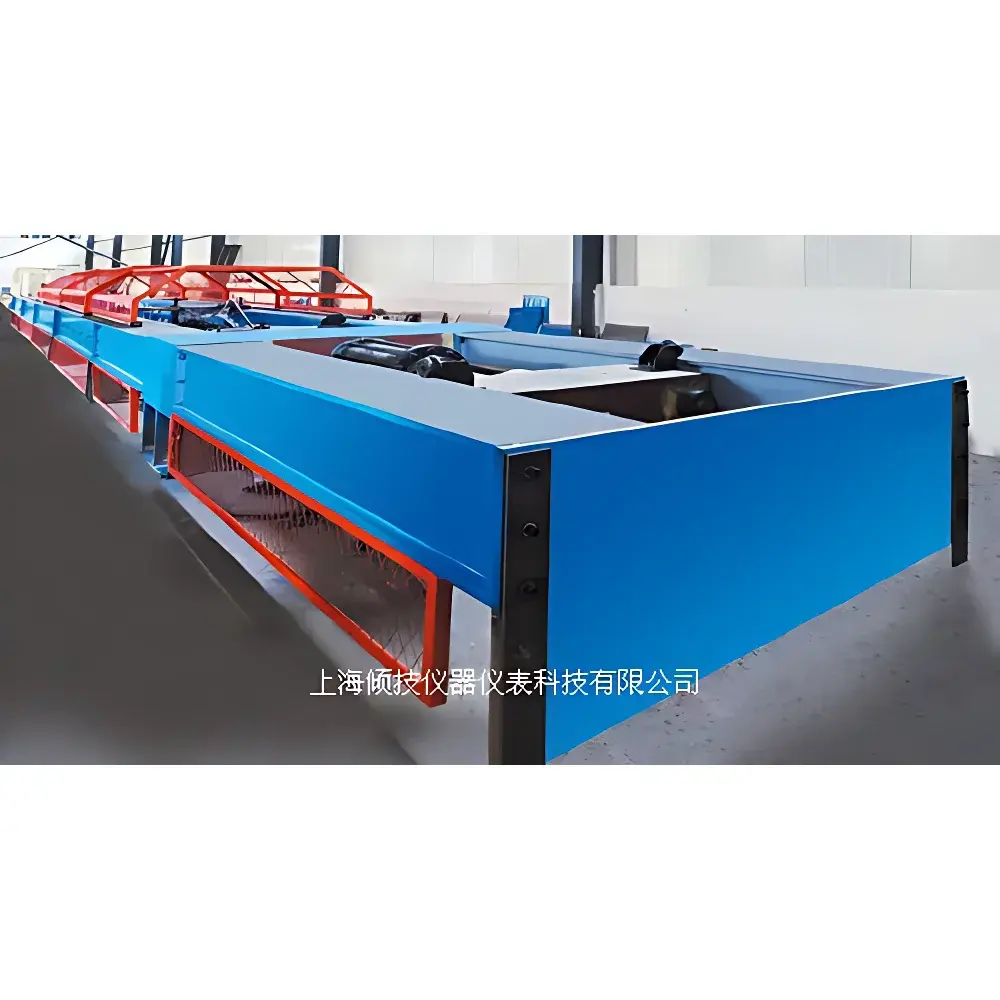
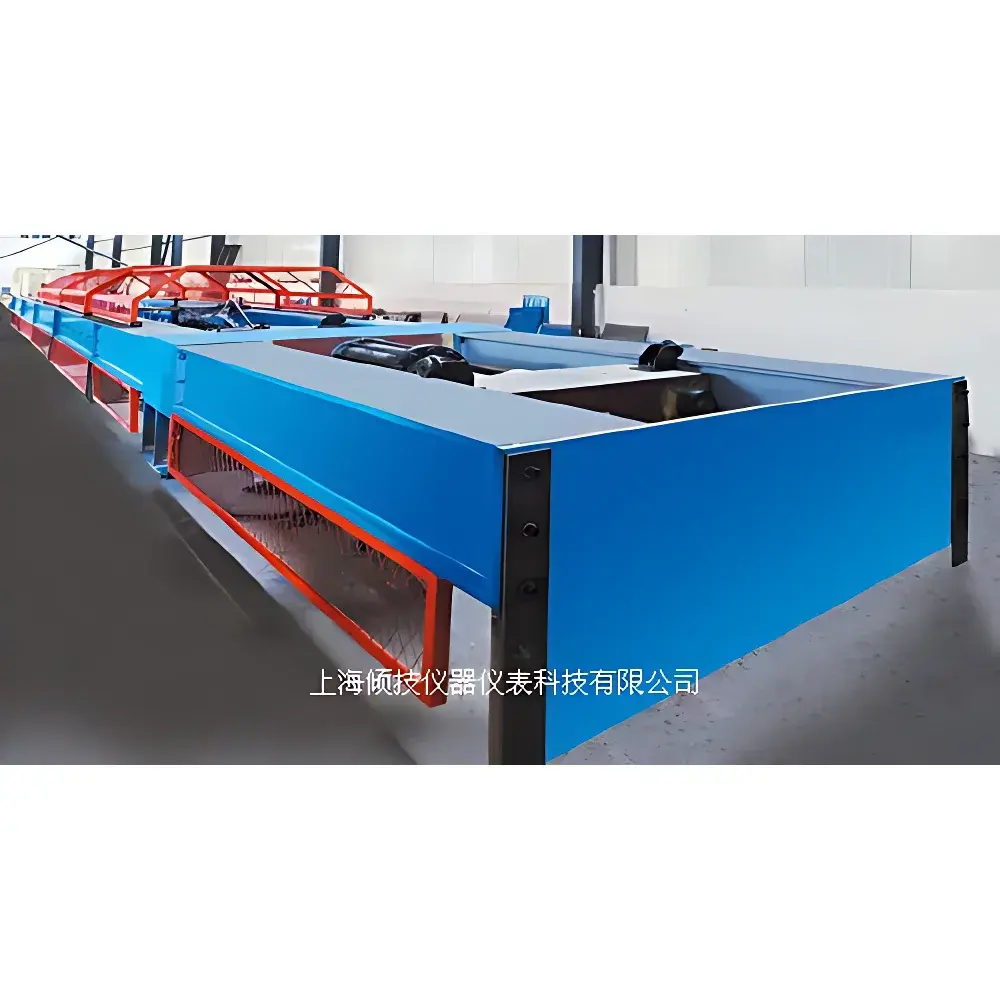
Qinji QJDW311 High-Capacity Horizontal Tensile Testing Machine
| Brand | Qinji |
|---|---|
| Origin | Shanghai, China |
| Model | QJDW311 |
| Maximum Load Capacity | Up to 10,000 kN |
| Force Sensor Accuracy | ±0.01% FS |
| Test Accuracy Class | Class 1 (per ISO 7500-1 & ASTM E4) |
| Repeatability | ≤1% |
| Displacement Measurement Accuracy | ≤1% |
| Strain/Deformation Measurement Accuracy | ≤1% |
| Control System | Full PC-based closed-loop control |
| Test Space | Custom-engineered per application requirement |
| Actuation Type | Hydraulic |
Overview
The Qinji QJDW311 High-Capacity Horizontal Tensile Testing Machine is a heavy-duty, floor-mounted hydraulic testing system engineered for static tensile evaluation of elongated, flexible, and high-strength structural components under loads up to 10,000 kN. Unlike vertical tensile frames, its horizontal configuration eliminates gravitational bending moments and enables stable, alignment-controlled loading of specimens exceeding several meters in length—critical for validating mechanical integrity in safety-critical infrastructure elements. The machine operates on a dual-cylinder synchronized hydraulic actuation principle, delivering smooth, low-noise force application with real-time pressure feedback and adaptive load regulation. It complies with the fundamental metrological requirements of ISO 7500-1 (static calibration of force-proving instruments), ASTM E4 (load verification of testing machines), and EN 10002-2 (tensile testing of metallic materials), ensuring traceable, auditable results suitable for third-party certification and regulatory submissions.
Key Features
- Hydraulic servo-controlled actuation system with dual symmetric cylinders for balanced axial loading and minimized lateral deflection
- High-stiffness steel frame with reinforced anchoring baseplate, designed to withstand reaction forces without foundation reinforcement
- Integrated high-resolution load cell with ±0.01% full-scale accuracy, factory-calibrated against NIST-traceable deadweight standards
- Class 1 test accuracy certified per ISO 7500-1 and ASTM E4, validated across the entire 1–100% load range
- Full PC-based control interface supporting programmable ramp-hold cycles, multi-step loading profiles, and real-time PID parameter tuning
- Modular grip systems—including wedge-action hydraulic grips, swivel-type anchor clamps, and custom-designed cable termination fixtures—engineered for secure engagement of high-ductility or irregular-section specimens
- Comprehensive safety architecture: dual-channel emergency stop circuitry, hydraulic pressure relief valves, mechanical overload stops, and interlocked access guarding compliant with ISO 13857
Sample Compatibility & Compliance
The QJDW311 is specifically configured for testing elongated, quasi-one-dimensional specimens where axial alignment and minimal bending are essential. Typical applications include marine-grade anchor chains (ISO 1704, ISO 1807), galvanized steel wire ropes (ISO 3154, ASTM A1023), high-voltage porcelain insulators (IEC 60383), fiber-reinforced polymer (FRP) cables, and fall-arrest safety harness assemblies (EN 361, ANSI Z359.1). Its horizontal layout accommodates specimen lengths from 2 m to over 30 m, with optional extended travel crossheads and modular anchorage solutions. All measurement data generated meets GLP and GMP documentation requirements, including audit-trail-enabled test logs, electronic signatures (21 CFR Part 11 compliant when paired with validated software), and exportable XML/CSV reports aligned with ISO/IEC 17025 laboratory accreditation criteria.
Software & Data Management
The system runs on Qinji’s proprietary TensileMaster v5.2 software platform—a Windows-based application developed in accordance with IEC 62304 (medical device software lifecycle) and ISO/IEC 12207 (software engineering standards). It provides real-time visualization of load–displacement, stress–strain, and time–load curves; automatic yield point detection per ISO 6892-1 Annex B; and batch reporting with statistical process control (SPC) metrics (mean, SD, Cp/Cpk). Raw data files retain full metadata—including operator ID, environmental conditions (optional sensor integration), calibration timestamps, and firmware revision—enabling full forensic traceability. Data export supports ASTM E1434-compliant .tdf format, as well as direct integration with LIMS platforms via ODBC and RESTful API endpoints.
Applications
- Qualification testing of mooring and anchoring systems for offshore wind turbine foundations
- Proof-load validation of submarine power cables and dynamic umbilicals per DNV-ST-F201
- Breaking strength and elongation-at-break assessment of synthetic fiber ropes used in naval towing operations
- Mechanical verification of composite insulator strings under sustained tension per IEC 61109
- Load-to-failure characterization of personal protective equipment (PPE) anchorage points and energy-absorbing lanyards
- R&D-level cyclic preloading and creep behavior analysis of high-modulus polyethylene (HMPE) and aramid fibers
FAQ
What standards does the QJDW311 comply with for force calibration and test accuracy?
It conforms to ISO 7500-1 (Class 1), ASTM E4, and EN 10002-2 for static force measurement and tensile testing performance.
Can the machine accommodate non-standard specimen geometries such as twisted rope bundles or multi-leg slings?
Yes—custom fixture design services are available, including swivel joint adapters, multi-point load distribution platens, and rotating end terminations to preserve natural torsional state during loading.
Is remote diagnostics and software update support provided post-installation?
Yes—Qinji offers secure remote maintenance access via encrypted VPN channels, with version-controlled firmware updates and annual calibration reminder notifications integrated into the software dashboard.
What is the typical lead time for site-specific engineering and installation commissioning?
Standard delivery and commissioning require 12–16 weeks from order confirmation, inclusive of foundation review, hydraulic fluid conditioning, and on-site performance verification per ISO 7500-1 Annex D.



