
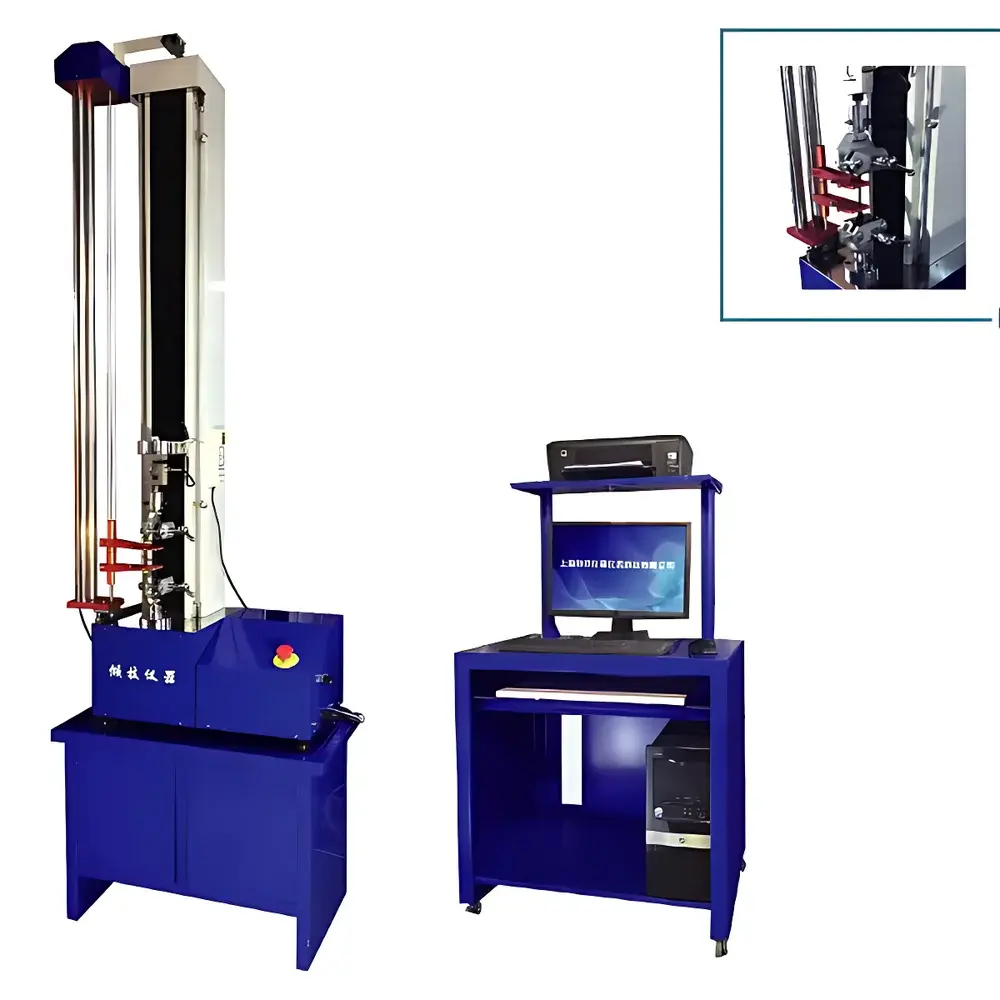
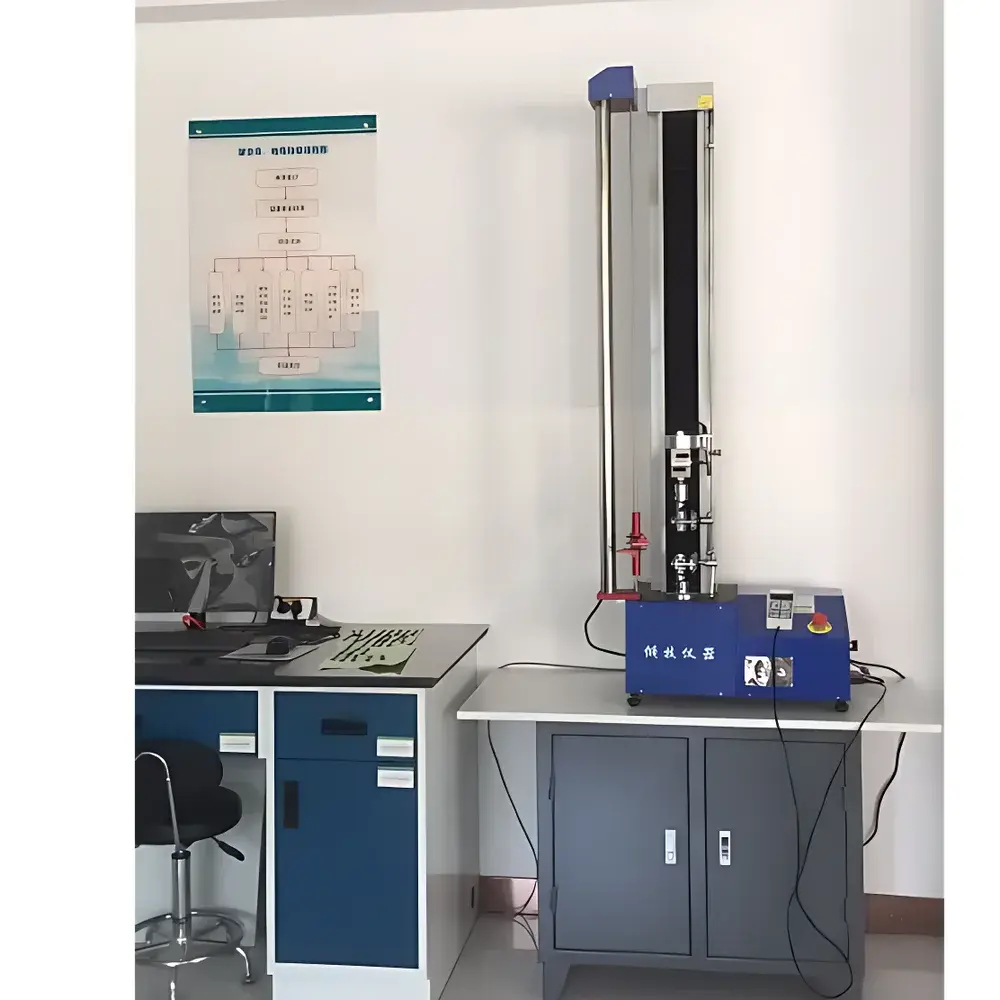
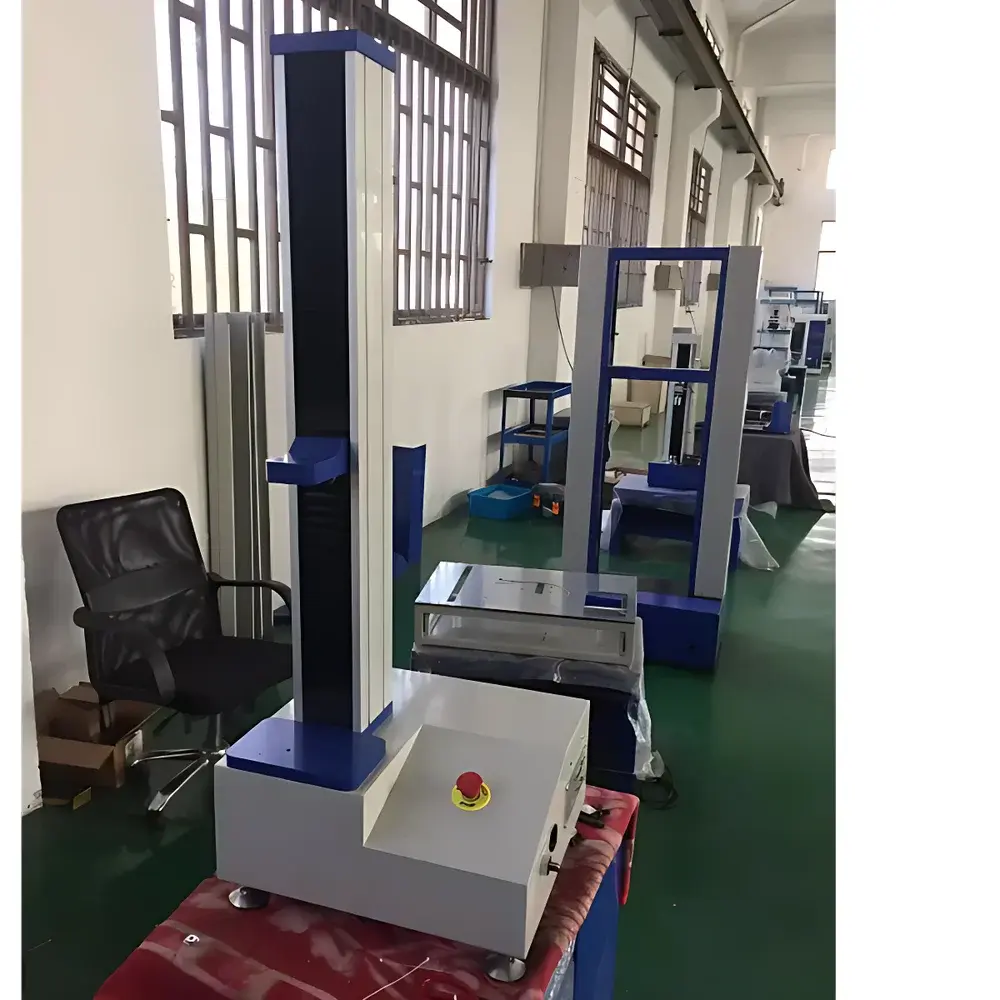
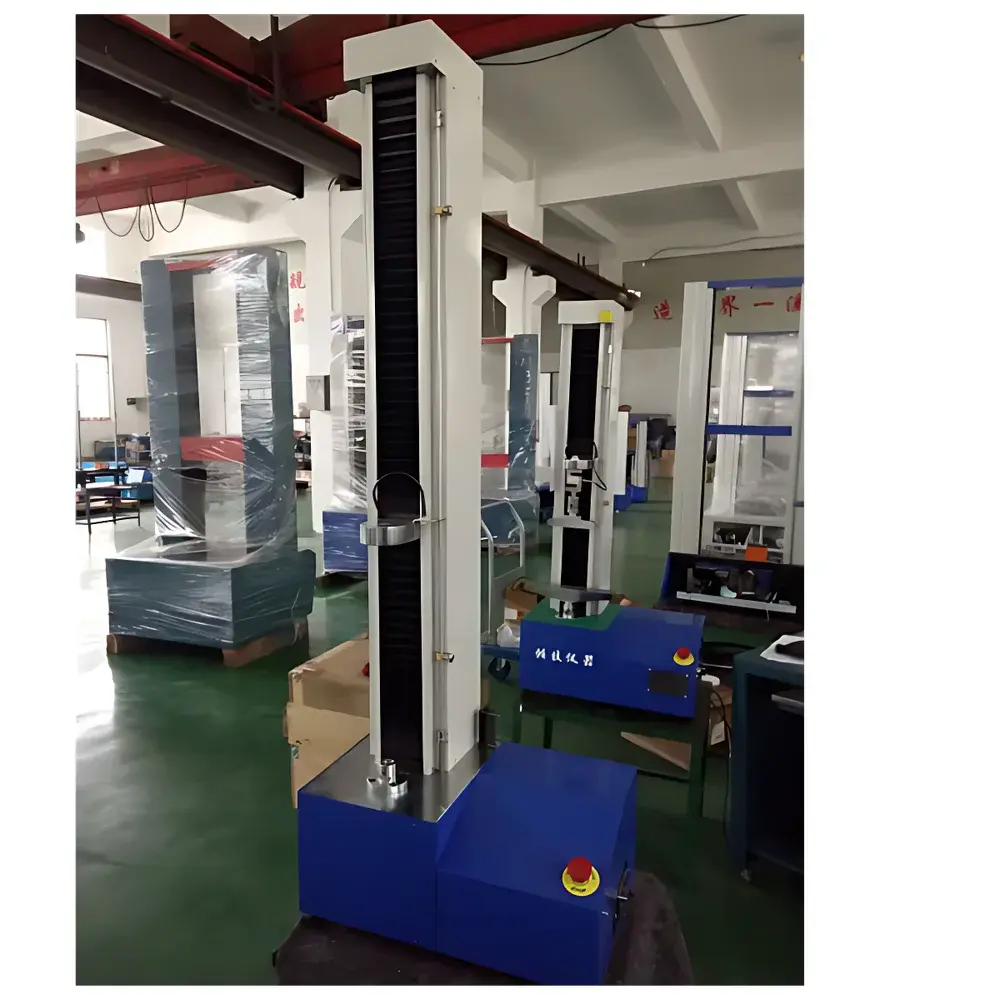
Qinsun QJ210A Electronic Tensile Testing Machine
| Brand | Qinsun |
|---|---|
| Origin | Shanghai, China |
| Model | QJ210A |
| Maximum Test Load | 5 kN (adjustable up to 30 kN full-scale) |
| Force Accuracy | ±0.5% of reading |
| Effective Test Width | 150 mm |
| Stroke | 800 mm (extendable) |
| Test Speed Range | 0.001–500 mm/min |
| Speed Accuracy | ±0.5% |
| Displacement Accuracy | ±0.5% |
| Safety Features | Electronic stroke limit protection, emergency stop button |
| Unit Weight | ~85 kg |
| Control System | PC-based closed-loop control with real-time data acquisition and ASTM/ISO-compliant reporting |
Overview
The Qinsun QJ210A Electronic Tensile Testing Machine is a precision-engineered universal testing system designed for static mechanical characterization of thin films, foils, polymer sheets, packaging materials, biomedical membranes, and other low-to-moderate strength flexible substrates. It operates on the principle of controlled uniaxial force application in tension, compression, bend, peel, and puncture modes, adhering to fundamental mechanics-of-materials test methodologies defined in ISO 527-3, ASTM D882, ASTM D3763, and ISO 11339. The system employs a high-stiffness dual-column frame, servo-controlled electromechanical actuation, and a calibrated load cell with 0.01% internal resolution to ensure traceable force measurement across its 5 kN nominal capacity (extendable to 30 kN full-scale). Its modular architecture supports standardized grips—including pneumatic film clamps, roller-type peel fixtures, and spherical probe assemblies—enabling reproducible specimen alignment and minimal slippage during high-strain-rate tests.
Key Features
- High-resolution closed-loop motion control with programmable speed profiles from 0.001 to 500 mm/min, enabling quasi-static creep, stress-relaxation, and rate-dependent modulus evaluation
- Real-time synchronized display of load (N), displacement (mm), and strain (%) on integrated LCD interface, with optional overlay of stress–strain curves during active testing
- PC-integrated control software supporting multi-step test sequences, automatic yield point detection, modulus calculation (secant/tangent), and fracture energy integration
- Rigid aluminum extrusion housing with industrial-grade powder coating, optimized for laboratory benchtop deployment and long-term dimensional stability
- Dual safety architecture: hardware-based electronic stroke limits and software-enforced travel boundaries, plus front-panel emergency stop with mechanical cut-off relay
- Modular grip compatibility—including 150 mm wide parallel jaw sets for ASTM D882-compliant film specimens—and optional environmental chamber interfaces for temperature-controlled testing
Sample Compatibility & Compliance
The QJ210A accommodates specimens up to 150 mm wide and 800 mm effective travel length, making it suitable for standard film strips (e.g., PET, BOPP, LDPE, PTFE), laminated pouches, hydrogel sheets, and electrospun nanofiber mats. Specimen thickness range spans 10 µm to 3 mm, with grip pressure independently adjustable to prevent crushing of brittle or viscoelastic layers. All calibration procedures follow ISO 7500-1 Class 1 requirements, and force verification is traceable to national metrology institutes via optional NIST-traceable load cell certification. The system supports audit-ready documentation per GLP and GMP environments, including electronic signatures, change logs, and 21 CFR Part 11–compliant data archiving when configured with validated software modules.
Software & Data Management
Control and analysis are executed via Qinsun’s proprietary TensilePro v4.x software suite, compliant with Windows 10/11 64-bit platforms. The software provides real-time graphing with customizable axes (e.g., engineering vs. true stress–strain), batch processing of replicate samples, statistical summary reports (mean, SD, CV%), and export to CSV, PDF, or XML formats compatible with LIMS integration. Raw data files include timestamped metadata (operator ID, sample ID, environmental conditions, calibration status), and all modifications to test parameters or post-processing filters are logged with user attribution and timestamps. Optional add-ons include automated report generation aligned with ASTM D882 Annex A1 templates and third-party API support for MES/ERP synchronization.
Applications
- Quantitative tensile strength, elongation at break, and Young’s modulus determination for food-grade plastic films per FDA-regulated packaging validation protocols
- Peel adhesion testing of pressure-sensitive labels and medical device backing layers under ISO 8510-2 conditions
- Mechanical screening of biodegradable mulch films in agricultural R&D, including wet-state tensile retention after simulated rainfall exposure
- Quality control of lithium-ion battery separator membranes under dry and humidified conditions using custom humidity chamber coupling
- Comparative evaluation of surface-modified polymer films (e.g., plasma-treated PET) for improved interfacial toughness in lamination processes
- Accelerated aging studies involving sequential UV exposure and subsequent mechanical retesting to assess embrittlement kinetics
FAQ
What is the maximum specimen width supported by the QJ210A?
The standard test zone accommodates specimens up to 150 mm wide; wider configurations require frame modification and are available upon request.
Can the system perform compression testing on foam or gel materials?
Yes—equipped with flat platens and low-force load cells, the QJ210A supports ISO 1797-1 compression tests on soft polymeric materials down to 0.1 N resolution.
Is calibration documentation included with shipment?
Each unit ships with a factory calibration certificate referencing ISO/IEC 17025-accredited verification; optional on-site recalibration services are available through authorized regional partners.
Does the software support multi-language UI and report output?
TensilePro v4.x offers English, German, French, Japanese, and Simplified Chinese language packs, with report templates fully localizable for regional regulatory submissions.
How is data integrity ensured during power interruption or system crash?
The controller features non-volatile memory buffering: all active test data up to the last 5 seconds is retained and recoverable upon restart, minimizing experimental loss.



