
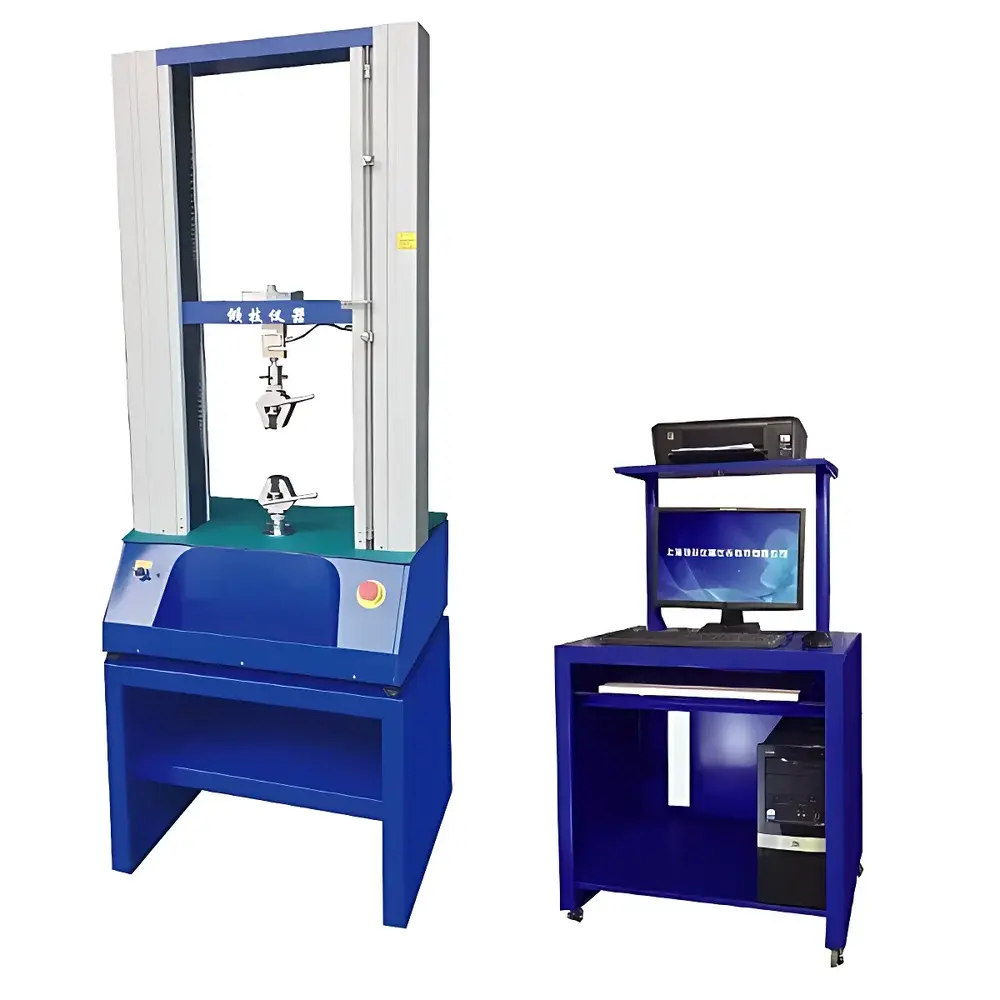
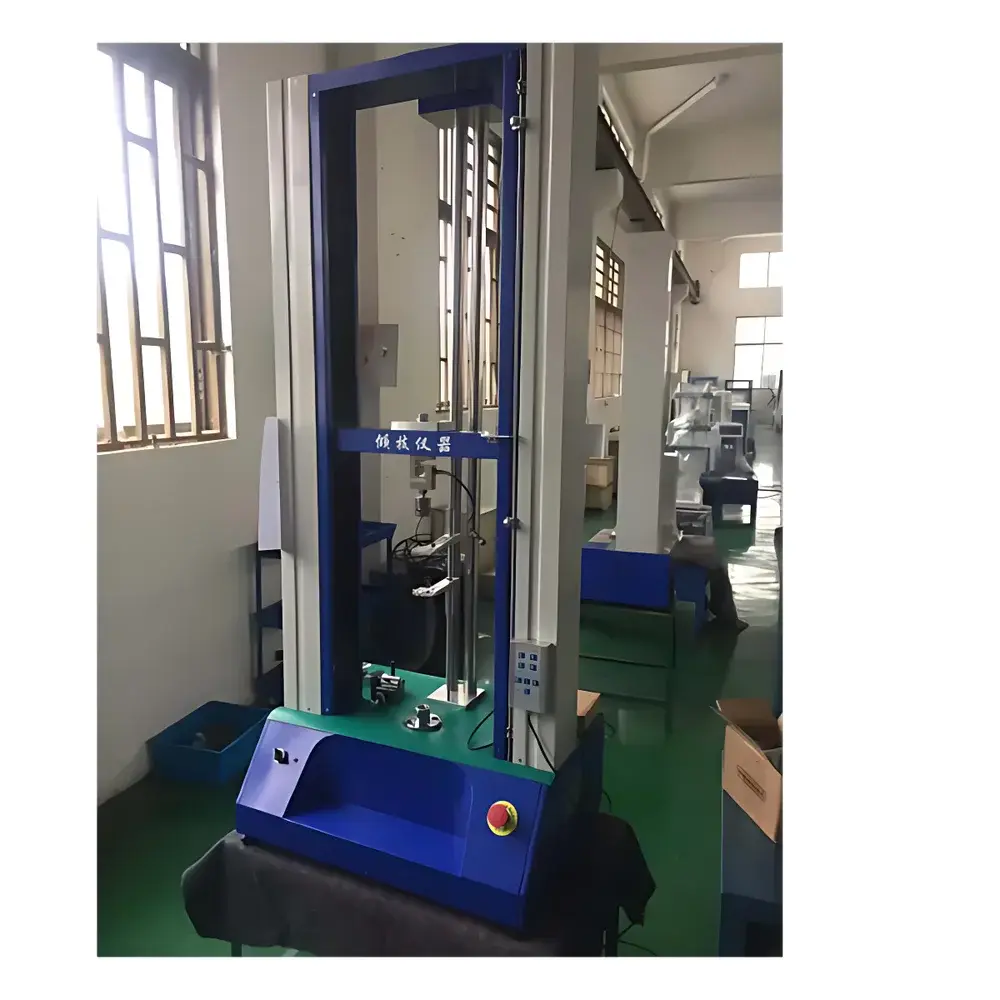
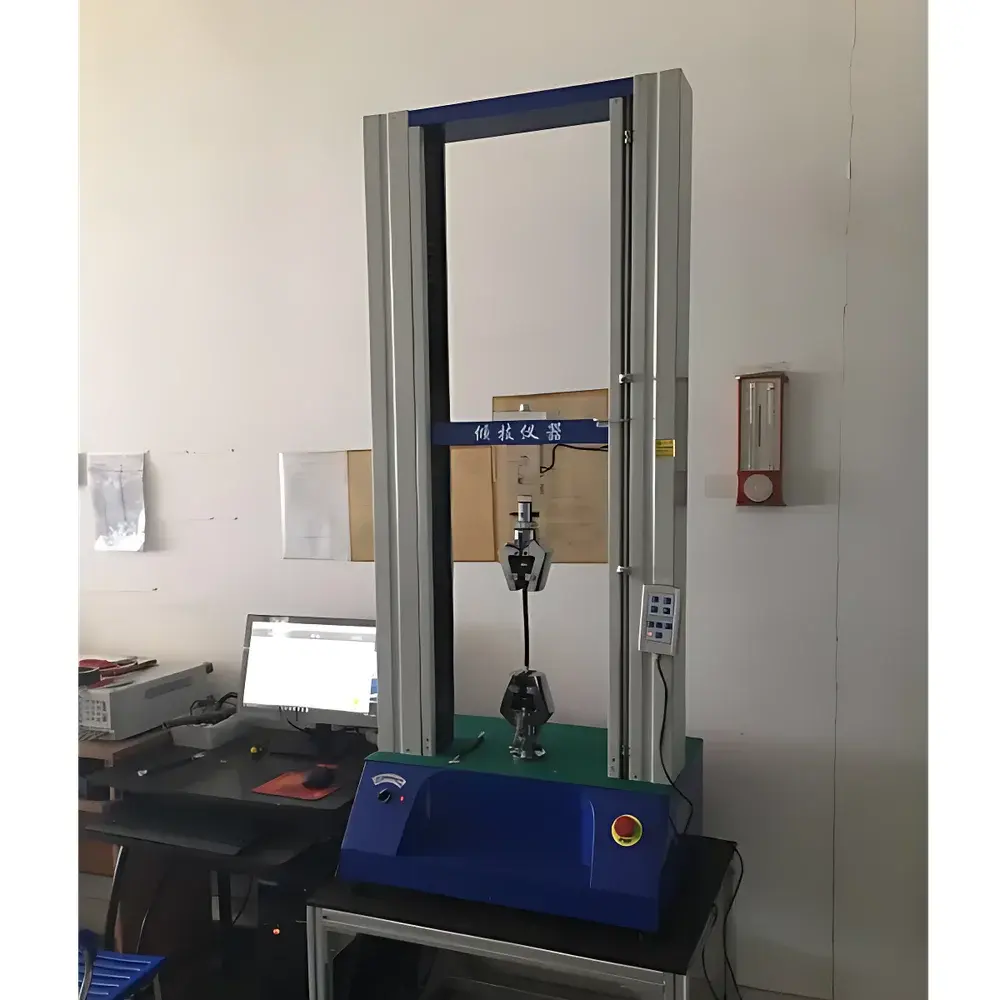
QJ211S-20kN Qinsun Universal Testing Machine
| Brand | Qinsun |
|---|---|
| Origin | Shanghai, China |
| Model | QJ211S-20kN |
| Load Capacity | 0–20 kN |
| Load Accuracy | ±0.5% of reading |
| Force Resolution | 300,000 counts (full-scale, no range switching) |
| Effective Test Width | 420 mm |
| Effective Vertical Travel | 800 mm (excluding fixtures) |
| Test Speed Range | 0.001–500 mm/min |
| Speed Accuracy | ±0.5% of set value |
| Displacement Measurement Accuracy | ±0.5% of reading |
| Strain/Deformation Measurement Accuracy | ±0.5% of reading |
| Motor Power | 750 W |
| Dimensions (W×D×H) | 700 × 420 × 1600 mm |
| Weight | 145 kg |
| Safety Features | Electronic travel limit protection, overload protection at 110% of full scale, manual/auto return to home position |
| Control System | Windows-based real-time data acquisition and curve visualization software |
Overview
The QJ211S-20kN Qinsun Universal Testing Machine is a microprocessor-controlled electromechanical system engineered for precision mechanical property characterization of metallic, polymeric, composite, ceramic, and elastomeric materials. It operates on the fundamental principle of axial force application—tensile, compressive, flexural, or shear—while synchronously measuring load, displacement, and optional strain via extensometry. Designed in accordance with ISO 7500-1 (static calibration of uniaxial testing machines), ASTM E4 (load verification), and ASTM E8/E8M (tensile testing of metallic materials), the system delivers traceable, repeatable, and compliant test data across R&D laboratories, quality control departments, and third-party certification facilities. Its modular architecture supports standardized test protocols—including tensile strength, yield point, elongation at break, modulus of elasticity, bending stiffness, tear resistance, and low-cycle fatigue—under fully programmable displacement- or load-controlled conditions.
Key Features
- High-fidelity load measurement using a precision load cell calibrated to ±0.5% accuracy over the full 0–20 kN range, with 300,000-count resolution and no internal range switching.
- Smooth, low-noise motion control enabled by a 750 W AC servo motor and planetary gear reducer, supporting test speeds from 0.001 to 500 mm/min with ±0.5% speed fidelity.
- Dual-mode positioning: rapid coarse adjustment and fine incremental movement via jog controls; electronic upper/lower limit switches prevent mechanical overtravel.
- Integrated safety logic includes automatic overload shutdown at 110% of rated capacity, emergency stop circuitry compliant with IEC 60204-1, and configurable hardware interlocks for fixture compatibility.
- Robust structural frame fabricated from high-rigidity steel with 420 mm clear test width and 800 mm vertical stroke (fixture-free), accommodating standard ASTM/ISO specimen geometries and custom configurations.
- Real-time Windows-based software platform enabling dynamic multi-curve plotting, post-test data editing (add/delete points), overlay comparison, zoom/pan navigation, and export to CSV, Excel, or PDF formats.
Sample Compatibility & Compliance
The QJ211S accommodates specimens ranging from thin films (<0.1 mm) to structural bars (up to Ø25 mm), leveraging interchangeable mechanical grips—including wedge-action, pneumatic, hydraulic, and custom-designed fixtures—for tensile, compression, peel, shear, and bend testing. Standard compliance includes ISO 527 (plastics), ISO 6892-1 (metals), ASTM D638/D790/D3763, and GB/T 228.1. Optional extensometers (contact or non-contact) enable strain-controlled testing per ISO 527-2 or ASTM E83 Class B-1 requirements. The system supports GLP/GMP-aligned audit trails when paired with validated software modules meeting FDA 21 CFR Part 11 criteria for electronic records and signatures.
Software & Data Management
The embedded Windows application provides intuitive test method setup via wizard-driven templates aligned with ASTM, ISO, and EN standards. All test parameters—including ramp rates, hold durations, crosshead positions, and trigger conditions—are stored as reusable method files. Raw data streams are timestamped and logged at ≥100 Hz sampling rate. Software features include automatic calculation of engineering stress-strain curves, secant/tangent modulus, yield offset (0.2%), ultimate tensile strength, fracture elongation, and bending modulus. Audit-ready reports include operator ID, calibration certificate IDs, environmental conditions (if interfaced with external sensors), and digital signatures. Data integrity is preserved through write-protected archives and role-based user access control.
Applications
- Mechanical validation of injection-molded thermoplastics and thermosets per ISO 527 and ASTM D638.
- Tensile and compressive performance assessment of aluminum alloys, stainless steels, and titanium grades under ambient and elevated temperature conditions (when integrated with environmental chambers).
- Peel and tack testing of pressure-sensitive adhesives and laminated packaging films.
- Bending stiffness evaluation of fiber-reinforced composites per ASTM D7264.
- Low-frequency cyclic loading for fatigue life estimation in elastomers and soft biomaterials (e.g., hydrogels, silicone rubbers).
- Quality conformance testing in automotive component suppliers, medical device manufacturers, and construction material producers.
FAQ
What international standards does the QJ211S-20kN comply with for calibration and testing?
It meets ISO 7500-1 for static force calibration, ASTM E4 for verification of force-measuring systems, and supports test execution per ASTM E8/E8M, ISO 6892-1, ISO 527, and GB/T 228.1.
Can the system be configured for closed-loop strain control?
Yes—when equipped with an ASTM E83 Class B-1 compliant extensometer and activated strain-control firmware module.
Is the software compatible with LIMS or ERP integration?
The system exports ASCII-delimited data (CSV) and supports OPC UA connectivity for enterprise-level data exchange.
What maintenance is required during the first year of operation?
Routine checks include load cell zero verification, lubrication of lead screws, and validation of limit switch functionality—no scheduled recalibration is needed unless subjected to shock loading or environmental extremes.
Does the machine support automated test sequences for batch processing?
Yes—scripted multi-step tests (e.g., preload → ramp → hold → unload → return) can be saved and executed without operator intervention.



