
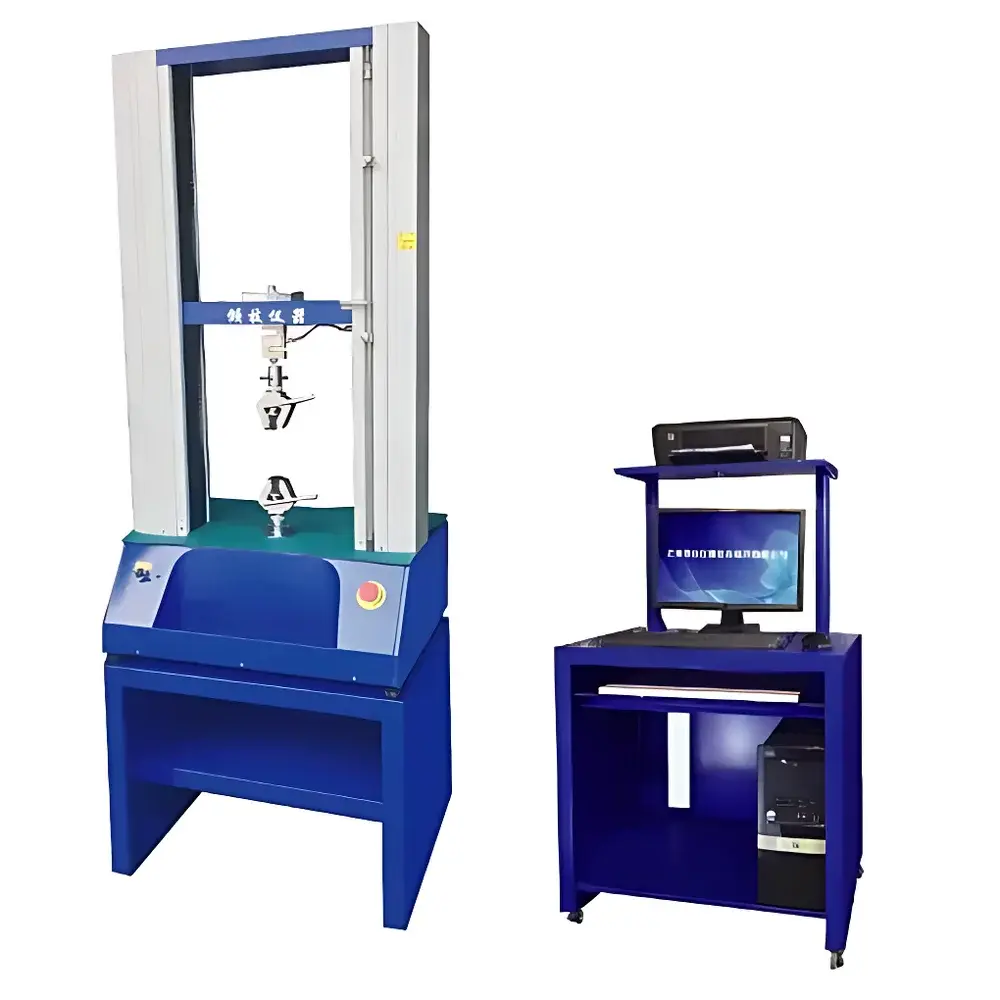
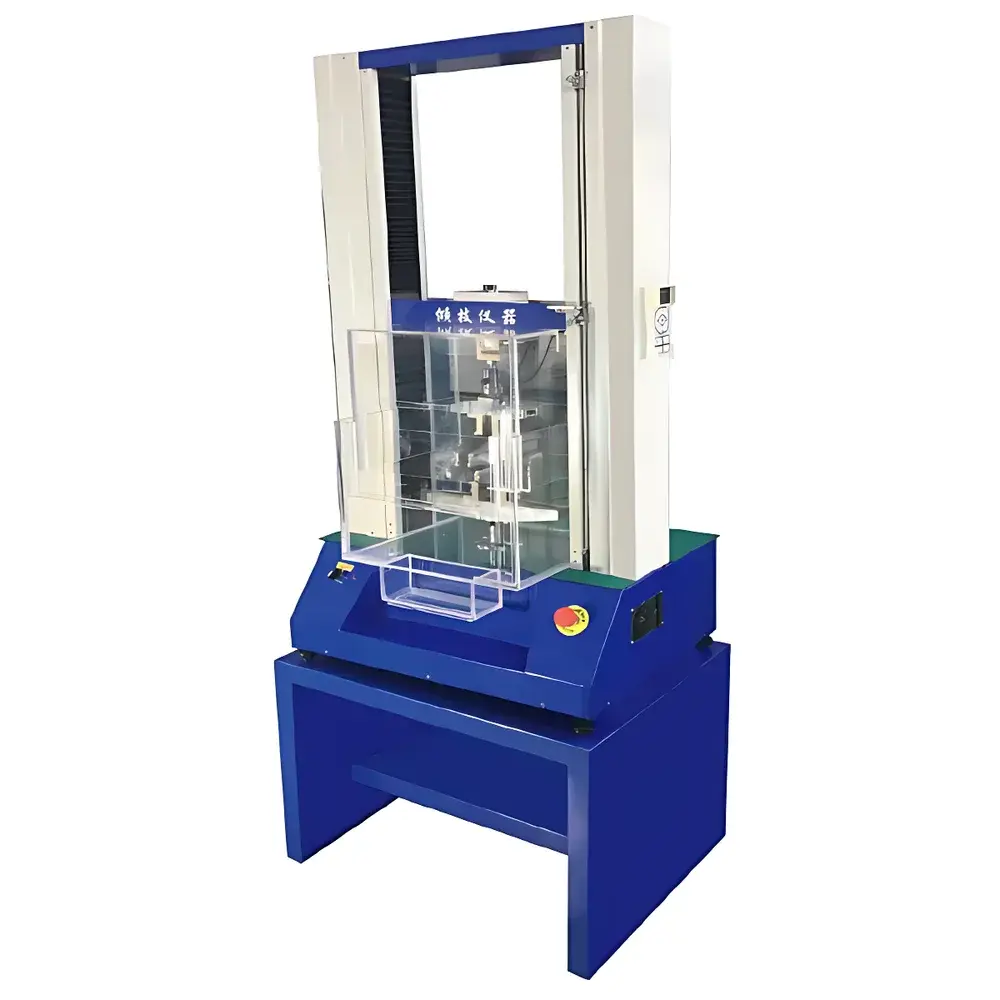
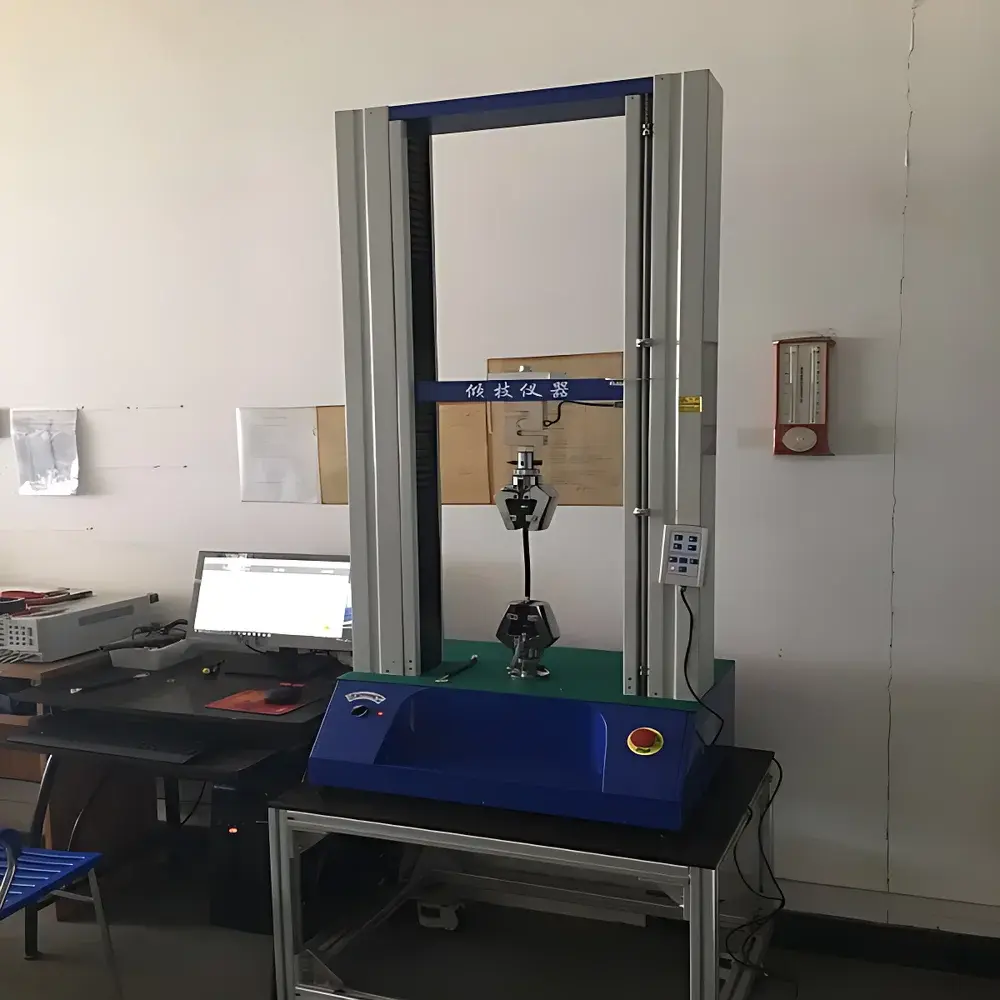
Qinji QJ211S-30KN Universal Flexural Strength Tester
| Brand | Qinji |
|---|---|
| Origin | Shanghai, China |
| Model | QJ211S-30KN |
| Max Test Load | 30 kN |
| Load Speed Range | 0.01–500 mm/min |
| Force Accuracy | ±0.5% of reading |
| Displacement Accuracy | ±0.5% of reading |
| Deformation Accuracy | ±0.5% of reading |
| Effective Test Width | 420 mm |
| Effective Vertical Travel | 500 mm |
| Force Resolution | 500,000 counts (full-scale, no range switching) |
| Crosshead Return | Manual rapid return & automatic post-test return |
| Overload Protection | Activates at >110% of full scale |
| Motor Power | 400 W |
| Net Weight | 145 kg |
Overview
The Qinji QJ211S-30KN Universal Flexural Strength Tester is a microprocessor-controlled electromechanical testing system engineered for precision flexural (bending), tensile, tear, and peel evaluations of structural and polymeric materials. It operates on the principle of controlled displacement-driven loading, where a servo-motor actuates a crosshead to apply defined force or displacement profiles to specimens constrained in standardized three-point or four-point bending configurations per ASTM D790, ISO 178, and GB/T 9341. Designed for laboratory and quality control environments, the system delivers high reproducibility in flexural modulus, flexural strength, and load-deflection behavior—critical parameters for validating material compliance in aerospace composites, reinforced plastics, civil engineering textiles (e.g., geotextiles), wire-and-cable insulation, and metal sheet stock.
Key Features
- High-resolution force measurement with 500,000-count A/D conversion across full 30 kN capacity—no internal range switching ensures consistent resolution from 0.06 kN (0.2% FS) to maximum load.
- Wide-speed actuation capability: programmable crosshead velocity from 0.01 mm/min (for creep/stress-relaxation studies) to 500 mm/min (for high-throughput screening), with speed accuracy maintained within ±0.5% of setpoint.
- Robust dual-mode crosshead control: manual jog operation for precise specimen alignment; automated return-to-start function triggered upon test completion or emergency stop.
- Integrated safety architecture including electronic travel limits, overload cutoff (>110% FS), and hardware-based emergency stop circuitry compliant with IEC 61800-5-2 functional safety guidelines.
- Modular fixture interface supporting ISO/ASTM-compliant three-point bend fixtures (span lengths adjustable from 10–100 mm), four-point bend assemblies, tensile grips (pneumatic and wedge-type), peel blocks, and tear fixtures—enabling full multi-test protocol deployment on a single platform.
- Statically rigid two-column frame (420 mm effective test width, 500 mm vertical clearance) minimizes deflection-induced measurement error during high-load flexural testing of stiff composites or metallic specimens.
Sample Compatibility & Compliance
The QJ211S-30KN accommodates flat, rectangular, or cylindrical specimens up to 420 mm wide and 500 mm tall—including unreinforced and fiber-reinforced polymers, elastomeric sheets, textile laminates, asphalt binders, ceramic tiles, aluminum extrusions, and copper busbars. Its mechanical design and control firmware support testing protocols aligned with ISO 178 (plastics – flexural properties), ASTM D790 (flexural properties of unreinforced and reinforced plastics), ASTM D6272 (flexural properties of rigid plastics by four-point bending), EN 13379 (fiber-cement slabs), and GB/T 9341 (Chinese national standard for plastic flexural testing). All force, displacement, and strain data acquisition meets GLP audit requirements, with timestamped raw data export compatible with FDA 21 CFR Part 11–compliant validation packages when paired with validated software.
Software & Data Management
The system ships with Qinji TestMaster v3.x—a Windows-based control and analysis suite supporting real-time curve plotting (force vs. displacement, stress vs. strain), multi-curve overlay, automatic yield point detection (0.2% offset method), tangent/E-modulus calculation, and statistical batch reporting (mean, SD, CV%, min/max). Raw data exports to CSV, Excel, and XML formats; test methods are stored as reusable templates with user-defined pass/fail criteria. Audit trail functionality logs operator ID, test start/stop timestamps, parameter modifications, and calibration events—ensuring traceability for ISO/IEC 17025-accredited laboratories. Optional API integration enables direct data ingestion into LIMS platforms via TCP/IP or OPC UA protocols.
Applications
- Quality assurance of thermoplastic injection-molded components (e.g., automotive interior panels) under ISO 178 bending loads.
- Evaluation of flexural stiffness degradation in UV-aged PVC roofing membranes per ASTM D790.
- Mechanical validation of carbon-fiber-reinforced polymer (CFRP) laminates used in UAV airframes using four-point bending per ASTM D6272.
- Testing of geotextile tensile and bending resistance in civil engineering projects conforming to GRI-GT12 and ISO 10319.
- Routine verification of wire insulation brittleness and flex life per UL 1581 Section 1060 (mandrel bend test).
- Research-grade characterization of bio-based composites (e.g., flax/PLA) for packaging applications, including load-deflection hysteresis and permanent set analysis.
FAQ
What standards does the QJ211S-30KN support for flexural testing?
It natively supports ASTM D790, ISO 178, ASTM D6272, EN 13379, and GB/T 9341 through preloaded test templates and calibrated transducers.
Can the system perform tests beyond flexure, such as tensile or peel?
Yes—by installing optional accessory kits (e.g., pneumatic tensile grips, 90° peel fixtures, or trouser tear clamps), it functions as a full-featured universal testing machine.
Is the force measurement system traceably calibrated?
Each unit ships with a NIST-traceable calibration certificate covering the full 30 kN range; annual recalibration services are available with certified documentation.
Does the software meet regulatory requirements for pharmaceutical or medical device testing?
When deployed with IQ/OQ/PQ documentation and 21 CFR Part 11 add-on modules (including electronic signatures and audit trail encryption), it satisfies GMP/GLP data integrity mandates.
What maintenance is required to sustain measurement accuracy?
Routine checks include lubrication of lead screws every 6 months, verification of encoder alignment quarterly, and annual verification of load cell linearity and zero drift using certified deadweight standards.



