
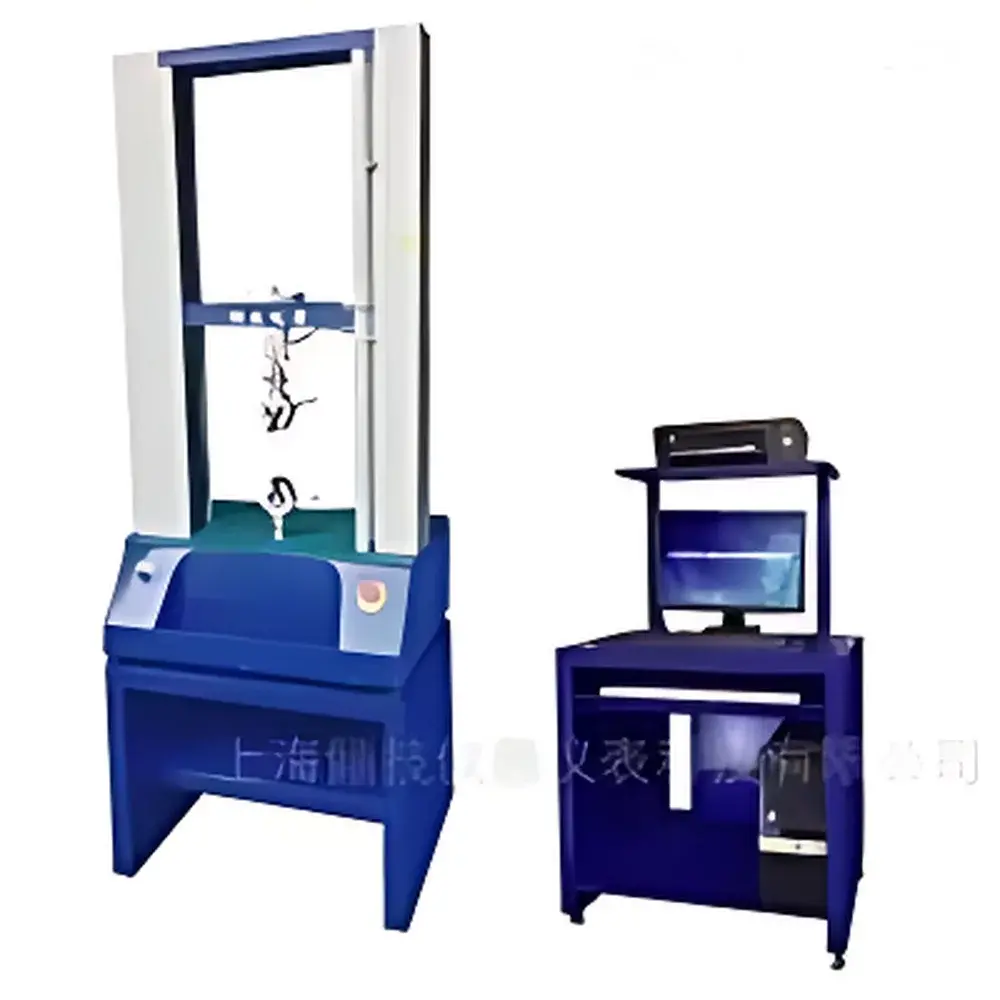
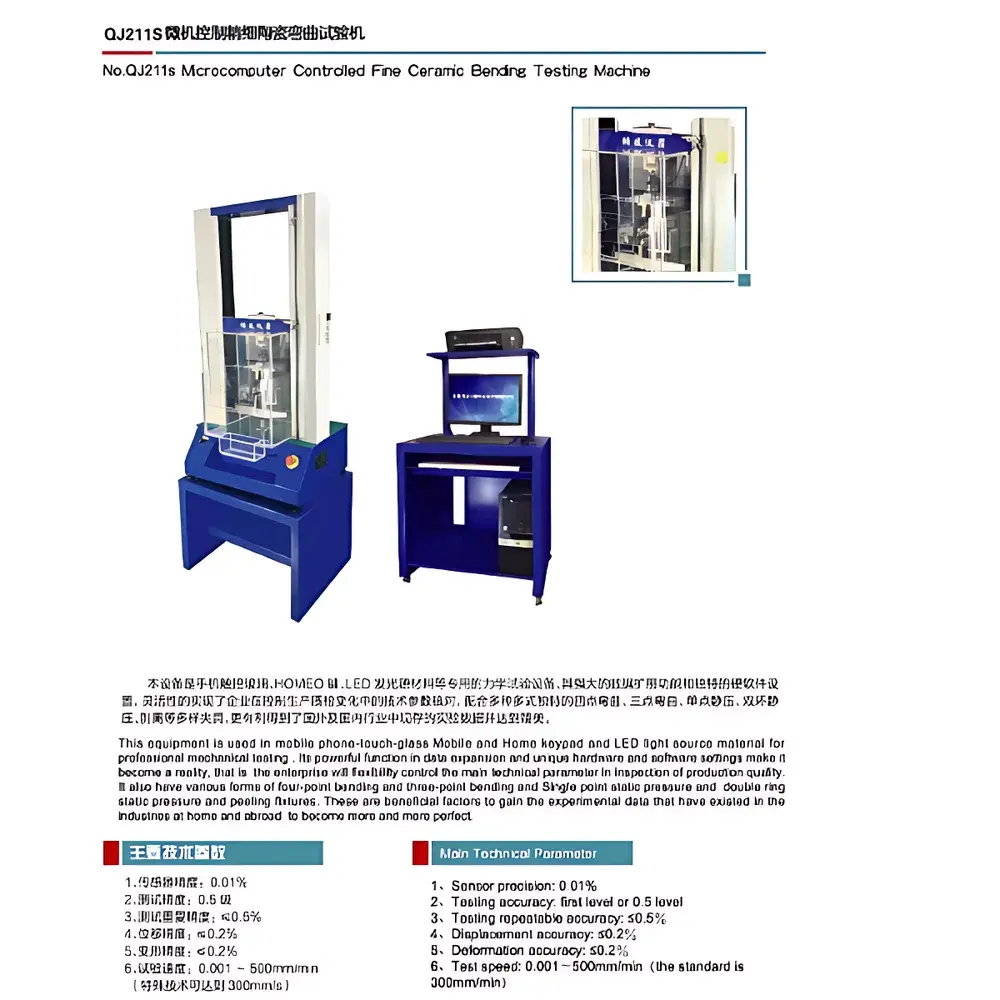
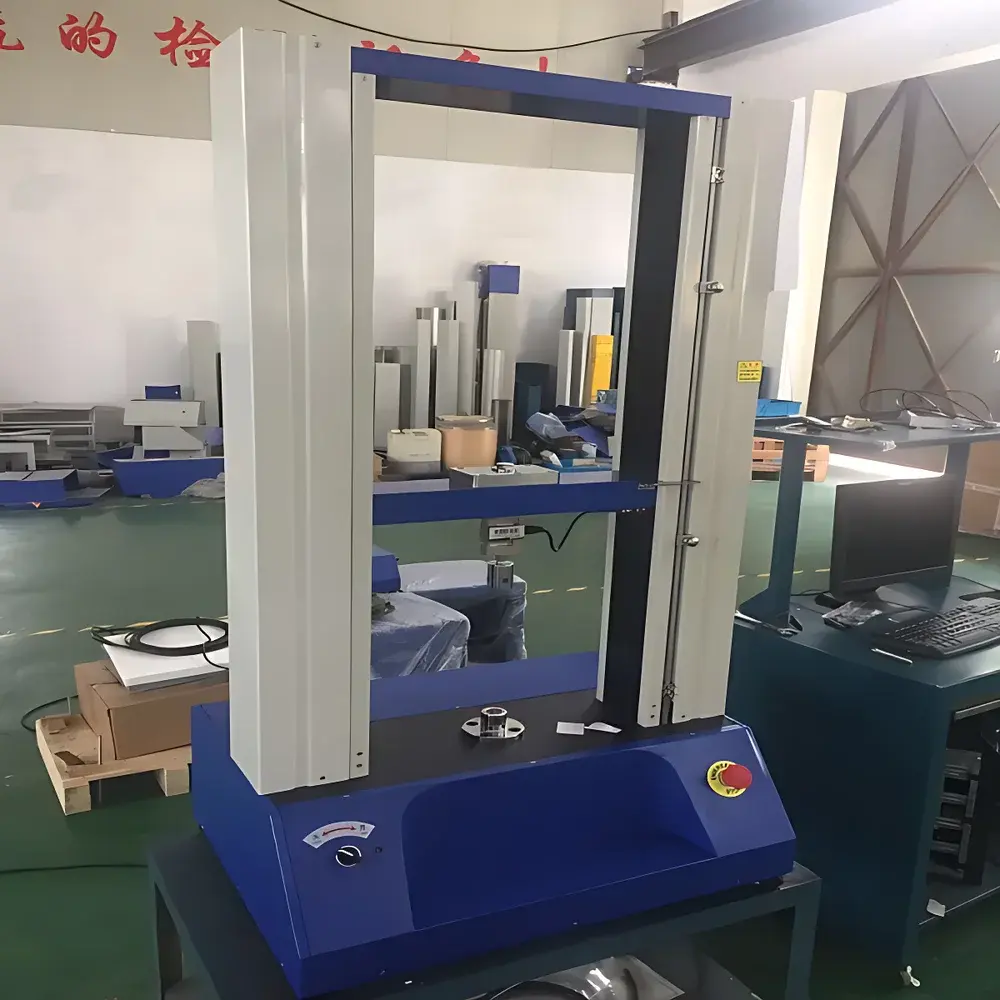
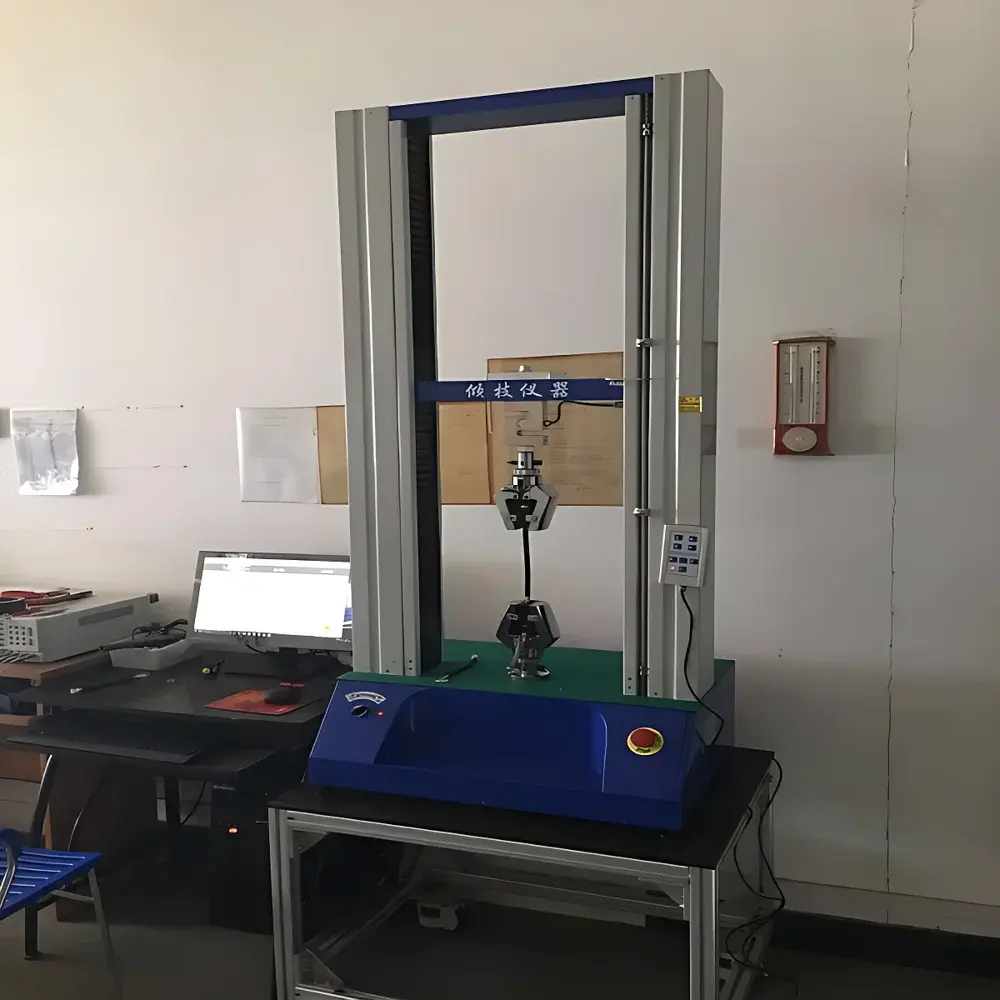
QJ211S Universal Testing Machine by Qinsun
| Brand | Qinsun |
|---|---|
| Model | QJ211S |
| Type | Electromechanical Universal Testing Machine |
| Load Capacity | 0.00 N to 30 kN |
| Load Accuracy | ±0.5% of reading |
| Effective Test Width | 420 mm |
| Vertical Test Space (excluding fixtures) | 800 mm |
| Crosshead Speed Range | 0.001–500 mm/min |
| Speed Accuracy | ±0.5% of set value |
| Displacement Measurement Accuracy | ±0.5% of reading |
| Strain/Deformation Measurement Accuracy | ±0.5% of reading |
| Force Resolution | 300,000 counts (full-scale, single-range, constant resolution) |
| Motor Power | 750 W |
| Dimensions (W×D×H) | 700 × 420 × 1600 mm |
| Weight | 145 kg |
| Compliance | Meets ISO 7500-1 Class 0.5, ASTM E4, ASTM E8/E21, GB/T 228.1 |
Overview
The QJ211S Universal Testing Machine by Qinsun is an electromechanical materials testing system engineered for precision tensile, compression, bending, shear, tear, and fatigue characterization of metallic, polymeric, composite, and elastomeric specimens. It operates on a closed-loop servo-controlled architecture with high-fidelity load cell feedback and real-time displacement monitoring, enabling accurate determination of mechanical properties including ultimate tensile strength (UTS), yield strength, Young’s modulus, elongation at break, Poisson’s ratio, and flexural modulus. Designed in accordance with international metrological standards—including ISO 7500-1 (Class 0.5 force verification), ASTM E4 (load verification procedures), and ASTM E8/E21 (tensile testing of metallic materials)—the system delivers traceable, repeatable, and auditable test data suitable for R&D laboratories, quality control departments, and third-party certification facilities.
Key Features
- High-resolution force measurement: 300,000-count A/D conversion across full 0–30 kN range, no internal range switching required—ensures consistent resolution and linearity throughout the entire load spectrum.
- Precise crosshead motion control: Adjustable speed from 0.001 to 500 mm/min with ±0.5% speed accuracy; dual-speed motorized lift mechanism supports rapid positioning and fine-load application.
- Robust mechanical architecture: Heavy-duty cast-iron frame with reinforced column design minimizes deflection during high-load tests, maintaining alignment integrity per ASTM E1012 requirements.
- Integrated safety systems: Electronic travel limit protection, overload cutoff at 110% of full scale, emergency stop circuitry, and programmable return-to-home function post-test.
- Windows-based control software with real-time graphical interface: Dynamic stress–strain curve rendering, multi-curve overlay, zoom/pan functionality, customizable report templates, and export to CSV, PDF, or XML formats.
- Modular fixture compatibility: Standard wedge-action tensile grips, compression platens, and 3-/4-point bend fixtures included; custom fixtures available upon specification (e.g., peel, puncture, torsion, or environmental chamber integration).
Sample Compatibility & Compliance
The QJ211S accommodates specimens conforming to ISO 6892-1, ASTM D638, ASTM D790, ASTM D3039, ISO 527-2, and GB/T 228.1 dimensional requirements. Its 420 mm effective test width and 800 mm vertical clearance support flat, round, and irregular cross-sections up to 25 mm thickness (tensile) or 100 mm diameter (compression). All calibration and verification protocols align with ISO/IEC 17025 documentation practices. The system supports GLP/GMP-compliant operation when paired with audit-trail-enabled software modules meeting FDA 21 CFR Part 11 requirements for electronic records and signatures.
Software & Data Management
The embedded Windows application provides full test method configuration, parameter scripting, and automated sequence execution. Raw data—including time-stamped load, displacement, and strain values—is stored in a relational database with metadata tagging (operator ID, sample ID, environmental conditions, calibration certificate ID). Version-controlled firmware updates ensure long-term interoperability. Exported datasets are compatible with MATLAB, OriginLab, and Minitab for advanced statistical analysis. Optional add-ons include password-protected user roles, digital signature workflows, and LIMS integration via OPC UA or RESTful API.
Applications
- Mechanical validation of structural alloys, aerospace fasteners, and weld joints per ASTM E8 and ISO 6892-1.
- Quality assurance of polymer films, medical tubing, and packaging materials under controlled humidity/temperature conditions (when integrated with environmental chambers).
- Characterization of composite laminates (carbon fiber, glass-reinforced plastics) for flexural stiffness and interlaminar shear strength (ASTM D7264, D2344).
- Rubber and elastomer testing per ISO 37 and ASTM D412, including stress relaxation and hysteresis loop analysis.
- Biomedical device evaluation—including suture tensile strength (ISO 10555-1), stent radial force (ASTM F2082), and orthopedic implant fixation testing.
FAQ
What international standards does the QJ211S comply with for force calibration?
It conforms to ISO 7500-1 Class 0.5 accuracy requirements and supports verification per ASTM E4 using certified reference load cells.
Can the system be validated for regulated environments (e.g., pharmaceutical or medical device QA)?
Yes—when equipped with 21 CFR Part 11-compliant software, it supports electronic signatures, audit trails, and role-based access control required for GxP compliance.
Is third-party calibration documentation provided with delivery?
Each unit ships with a factory-issued calibration certificate traceable to NIM (China National Institute of Metrology) or equivalent national metrology institute.
What is the warranty coverage and service response protocol?
Standard warranty includes 12 months parts-and-labor coverage; extended service contracts offer on-site preventive maintenance, remote diagnostics, and priority spare parts logistics.
Are environmental chamber integrations supported?
Yes—the machine features standardized mounting interfaces and analog/digital I/O ports for seamless synchronization with temperature/humidity chambers operating from –70 °C to +300 °C.



