
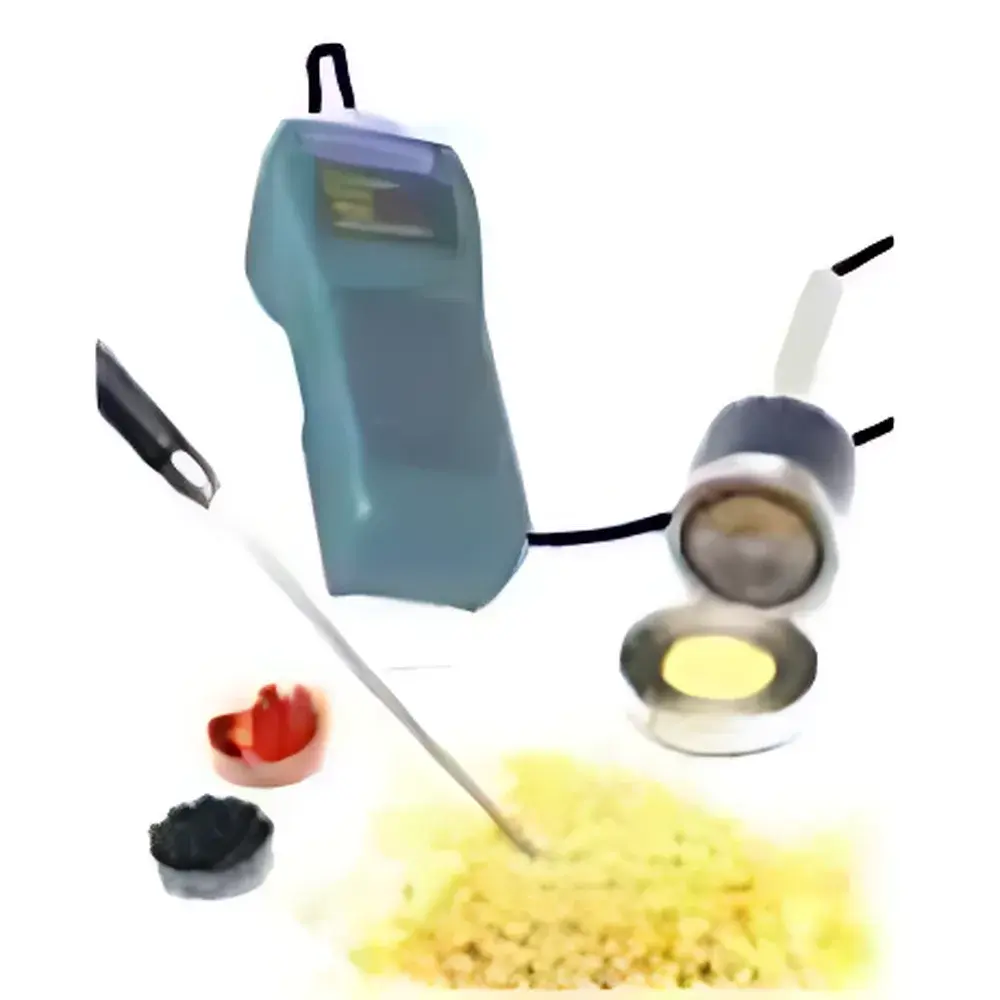
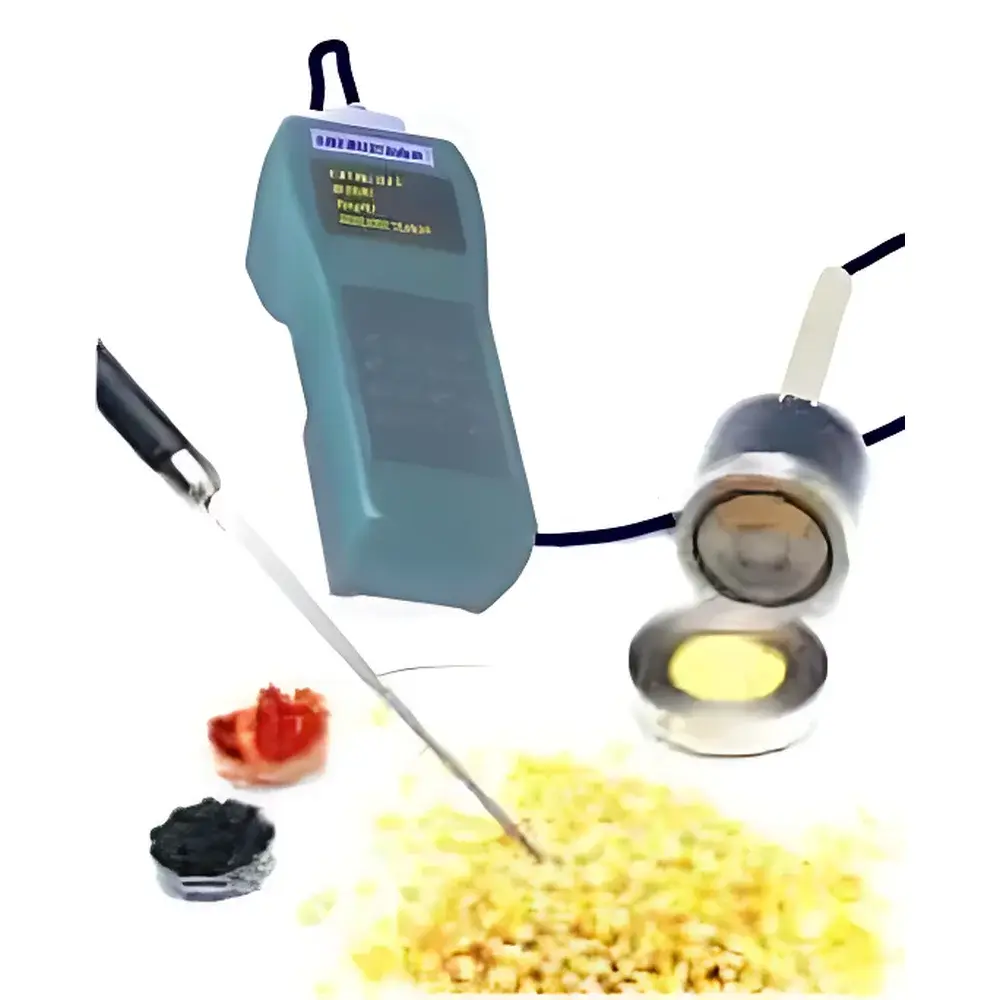
MS2100 Advanced Water Activity Analyzer for Food, Pharma & Industrial Quality Control
| Origin | Shanghai, China |
|---|---|
| Manufacturer Type | Authorized Distributor |
| Regional Classification | Domestic (China) |
| Model | MS2100 |
| Pricing | Upon Request |
| Measurement Range (aw) | 0.000–1.000 aw |
| Accuracy | ±0.015 aw |
| Repeatability | ±0.005 aw |
| Resolution | 0.001 aw |
| Moisture Content Range | 0–100% w/w |
| Moisture Accuracy | ±2% abs |
| Moisture Repeatability | ±0.5% abs |
| Moisture Resolution | 0.1% |
| Sample Temperature Range | −40 to +85 °C |
| Power Supply | Internal rechargeable battery (4 h continuous operation |
| Intrinsic Safety Rating | Ia, Class 1, Groups A/B/C/D |
| Communication Interface | RS-232 & RS-485 dual-port |
| Data Storage | 100 sample records with timestamp, auto/manual logging |
| Calibration Options | Saturated salt solutions (ERH method) or certified reference standards |
| Sensor Principle | Capacitive polymer humidity sensor with integrated temperature compensation |
| Data Retention | Non-volatile memory (2 MB), retains all settings and logs after power loss |
Overview
The MS2100 Advanced Water Activity Analyzer is a precision-engineered instrument designed for direct, thermodynamic measurement of water activity (aw) in solids, semi-solids, and liquids using the Equilibrium Relative Humidity (ERH) principle. Unlike total moisture content analyzers, the MS2100 quantifies the *energetically available* (unbound or loosely adsorbed) water fraction—defined as the ratio of the vapor pressure of water in the sample to that of pure water at the same temperature (aw = p/p0). This parameter governs microbial growth limits, chemical stability, physical texture, and shelf-life kinetics across food, pharmaceutical, chemical, and materials science applications. The analyzer employs a high-stability capacitive polymer humidity sensor coupled with a precision Pt1000 temperature probe, enabling simultaneous ERH and temperature measurement within a sealed sample chamber. Its intrinsic safety certification (Ia, Class 1/II) permits deployment in hazardous environments, including solvent-handling zones in coatings and lubricant manufacturing. The device complies with core regulatory frameworks governing food safety (FDA 21 CFR Part 11 data integrity requirements when connected to validated software), pharmaceutical quality control (ICH Q5C, USP ), and industrial process validation (ISO 21807, ISO 22000 Annex H).
Key Features
- Thermodynamically traceable ERH-based aw measurement per ISO 21807 and AOAC Official Method 978.18
- Integrated dual-parameter sensing: simultaneous aw, temperature, and optional moisture content (via pre-loaded isotherm models)
- Eight built-in calibration tables—including DKA and 3D adaptive models—for rapid method switching across diverse matrices (e.g., hygroscopic powders, viscous pastes, low-aw oils)
- Non-volatile 2 MB memory with full audit trail: stores timestamps, operator IDs, calibration history, and environmental conditions for GLP/GMP compliance
- Dual serial interface (RS-232 & RS-485) supporting Modbus RTU protocol for integration into SCADA, LIMS, or MES systems
- Self-diagnostic firmware with real-time sensor health monitoring and drift alerting
- Field-configurable alarm thresholds for aw, temperature, and moisture content with visual/audible notification
- Robust mechanical design: IP54-rated enclosure, chemically resistant sensor housing, and intrinsically safe electronics for Class I/II hazardous locations
Sample Compatibility & Compliance
The MS2100 accommodates heterogeneous samples without preprocessing: granular foods (flour, spices, dried fruits), pharmaceutical tablets and excipients, catalyst supports, polymer pellets, paper substrates, adhesives, transformer oils, and aqueous organic solvents. Its sealed chamber ensures stable equilibrium (<15 min typical for most matrices) while minimizing cross-contamination. Regulatory alignment includes adherence to FDA 21 CFR Part 11 (when paired with compliant data acquisition software), ISO/IEC 17025:2017 clause 7.8.2 for measurement uncertainty reporting, and ASTM F1980-21 for accelerated stability testing of medical devices. For food safety, it satisfies Codex Alimentarius CAC/RCP 1-1969 Annex II requirements for aw-based pathogen inhibition controls and supports HACCP critical limit verification. All calibration protocols follow NIST-traceable saturated salt standards (e.g., LiCl, MgCl2, NaCl) per ISO 21807 Annex B.
Software & Data Management
The analyzer operates autonomously via its embedded BD5 microcontroller but interfaces seamlessly with PC-based analytical software for advanced reporting. Raw data export (CSV/Excel) includes aw, T, RH%, moisture %, equilibrium time, and calibration status. Software modules support ISO 21807-compliant isotherm curve fitting (GAB, BET, Oswin models), predictive shelf-life modeling (using Arrhenius-based MFSL algorithms), and statistical process control (SPC) charting (X-bar/R charts). Audit trails meet ALCOA+ principles (Attributable, Legible, Contemporaneous, Original, Accurate, Complete, Consistent, Enduring, Available) and support 21 CFR Part 11 electronic signature workflows when deployed on validated Windows platforms. Firmware updates are delivered via secure USB or serial download with SHA-256 checksum verification.
Applications
- Food Industry: Predictive shelf-life modeling for baked goods, dairy powders, pet food, and ready-to-eat meals; validation of drying, extrusion, and packaging processes; HACCP monitoring of pathogen growth limits (e.g., aw < 0.85 for Staphylococcus aureus inhibition)
- Pharmaceuticals: Excipient characterization for tablet compression; lyophilized product residual moisture assessment; stability-indicating testing per ICH Q1E; coating uniformity verification in film-coated tablets
- Chemicals & Coatings: Monitoring hydrolytic stability of polyurethane prepolymers; quality control of catalyst carriers (e.g., silica gel, alumina); moisture specification enforcement for epoxy resins and adhesives
- Materials Science: Paper moisture equilibration studies affecting tensile strength; polymer pellet drying validation prior to injection molding; catalyst deactivation analysis in hydrogenation processes
- Energy Sector: Transformer oil aw monitoring per IEEE C57.106-2015; lubricant degradation tracking in turbine systems; biofuel blend stability assessment
FAQ
How does water activity differ from total moisture content?
Water activity (aw) measures the *thermodynamic availability* of water—governing microbial growth, chemical reactivity, and physical stability—whereas total moisture quantifies mass fraction regardless of binding state. Two samples with identical moisture % may exhibit vastly different aw values due to matrix effects.
Can the MS2100 measure aw in non-aqueous solvents like hexane or toluene?
Yes. The ERH method is solvent-agnostic. The instrument reports aw relative to pure water vapor pressure, enabling consistent comparison across aqueous, alcoholic, and hydrocarbon-based systems.
Is calibration required before each use?
No. The MS2100 features long-term sensor stability (±0.005 aw/year drift) and factory calibration against NIST-traceable standards. Routine verification using saturated salt solutions is recommended weekly per ISO 21807.
Does the analyzer comply with FDA 21 CFR Part 11 for electronic records?
The hardware supports Part 11 requirements (audit trail, electronic signatures, data integrity) when operated with validated third-party software; standalone operation meets GLP documentation standards per ISO/IEC 17025.
What sample preparation is needed for powders or viscous pastes?
Minimal preparation: homogenize representative subsamples and load into the standard 35-mm chamber. No grinding, sieving, or dilution is required—ensuring measurement of the native matrix state.






