
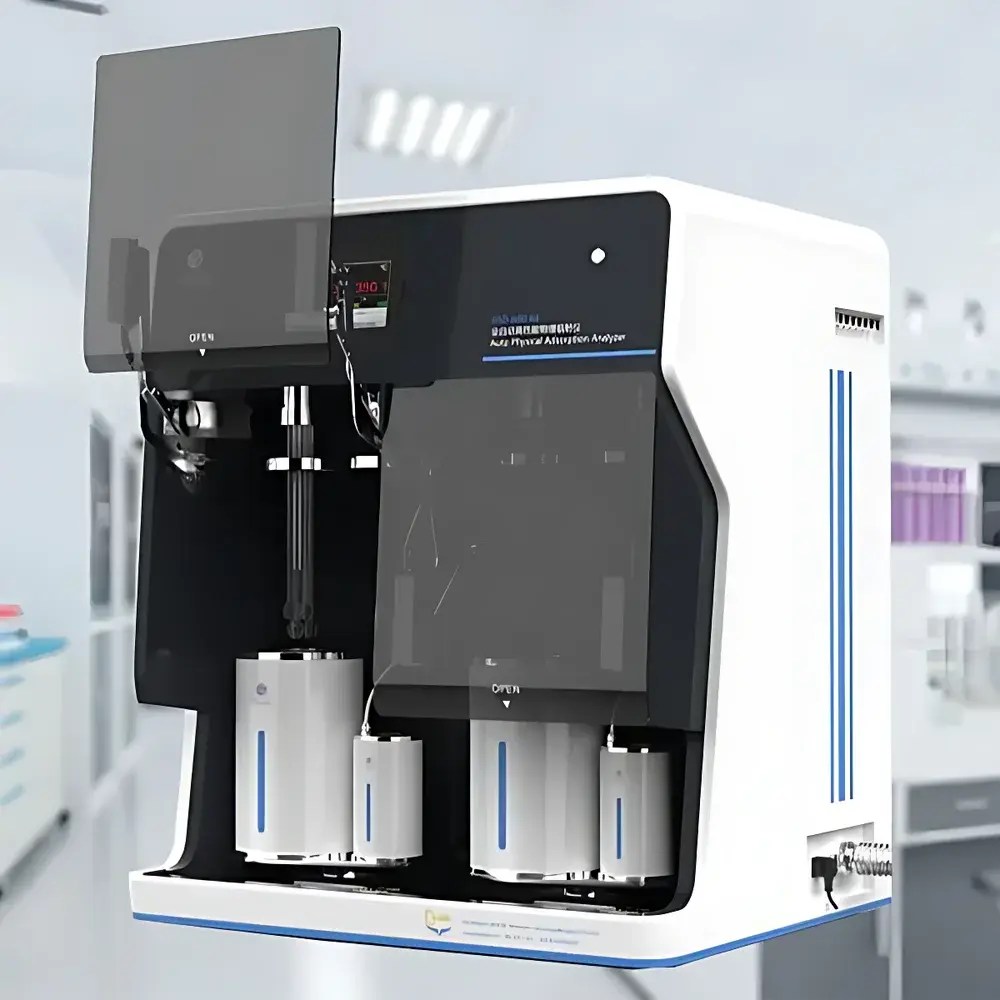
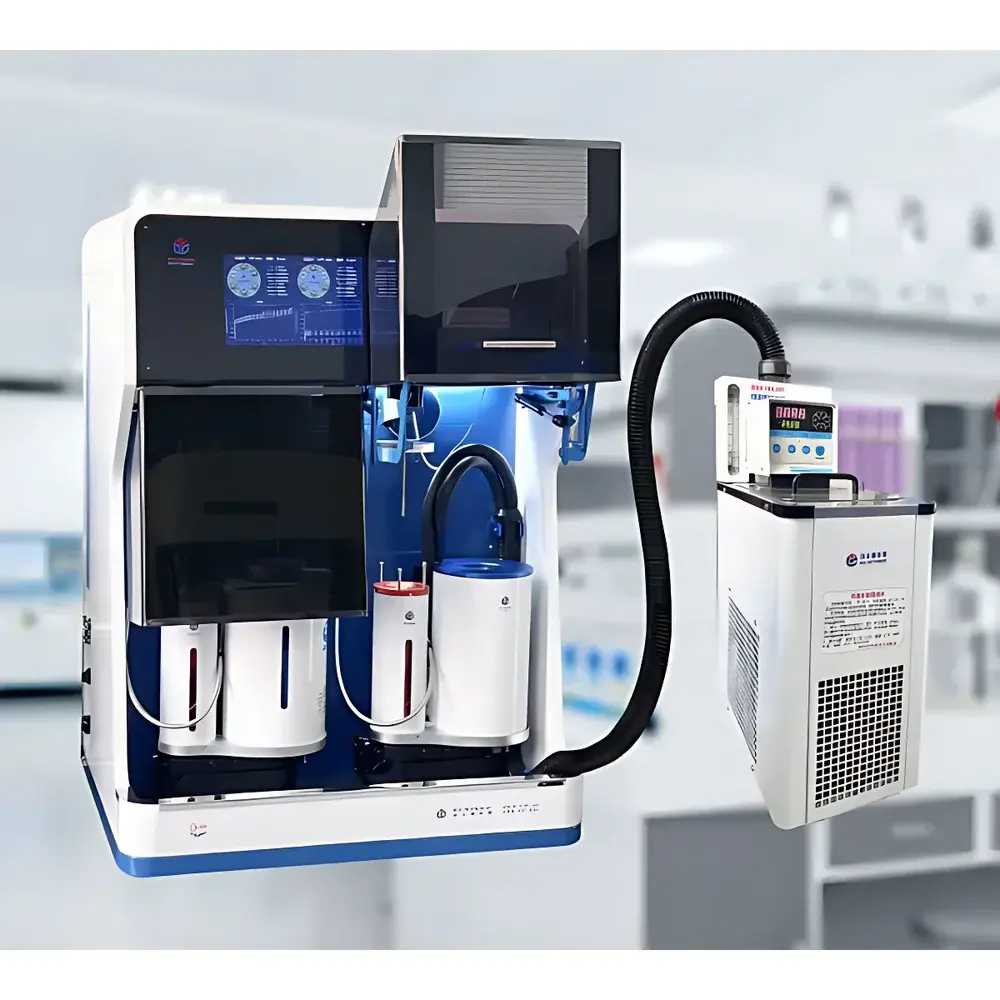
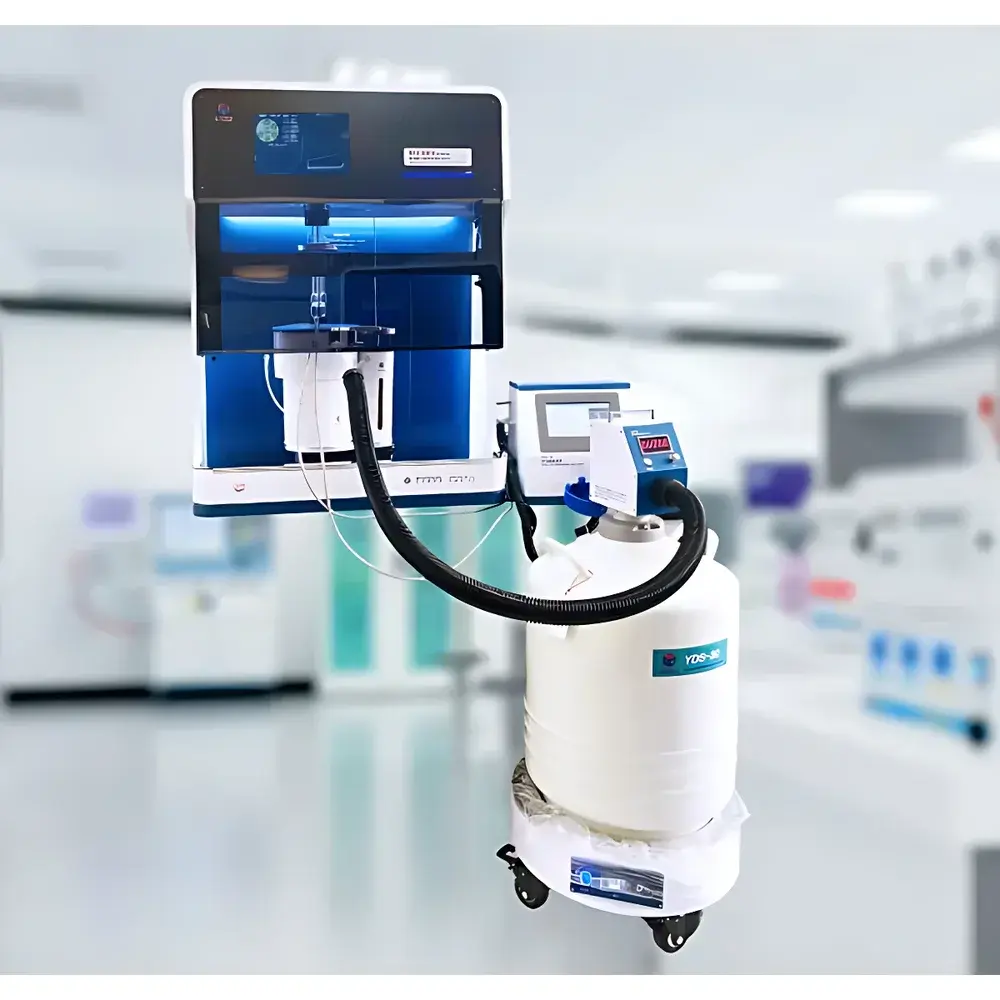
Beishide BSD-660A3MB3M Fully Automated High-Throughput Specific Surface Area and Micropore Analyzer
| Brand | Beishide Instrument |
|---|---|
| Origin | Beijing, China |
| Manufacturer Type | OEM Manufacturer |
| Product Category | Domestic |
| Model | BSD-660A3MB3M |
| Instrument Type | Specific Surface Area and Pore Size Analyzer |
| Measurement Principle | Static Volumetric Gas Adsorption |
| Number of Analysis Stations | 3 / 6 / 9 / 12 configurable |
| Surface Area Range | ≥ 0.0005 m²/g |
| Pore Diameter Range | 0.35–500 nm |
| Vacuum Level | Standard: 1×10⁻² Pa |
| Optional Turbo-Molecular Pump | ≤ 1×10⁻⁸ Pa |
| Repeatability | < 0.5% RSD (certified reference material) |
Overview
The Beishide BSD-660A3MB3M is a fully automated, high-throughput specific surface area and micropore analyzer engineered for precision gas adsorption characterization of advanced porous and non-porous materials. It operates on the static volumetric principle—measuring equilibrium gas uptake at controlled pressures and temperatures to derive Brunauer-Emmett-Teller (BET) surface area, Langmuir surface area, total pore volume, and pore size distribution across micro-, meso-, and macroporous regimes. Designed for laboratories requiring rigorous QC/QA, R&D scalability, and regulatory traceability, the instrument supports nitrogen, argon, carbon dioxide, oxygen, hydrogen, methane, ethane, and other non-corrosive or corrosive gases (with optional configuration), enabling comprehensive physisorption analysis from ultramicropores (< 0.7 nm) to large mesopores (up to 500 nm). Its architecture integrates vacuum integrity, thermal stability, and gas handling fidelity to meet ASTM D3663, ISO 9277, ISO 15901-1/2/3, GB/T 19587–2017, and GB/T 21650.2–2008 requirements.
Key Features
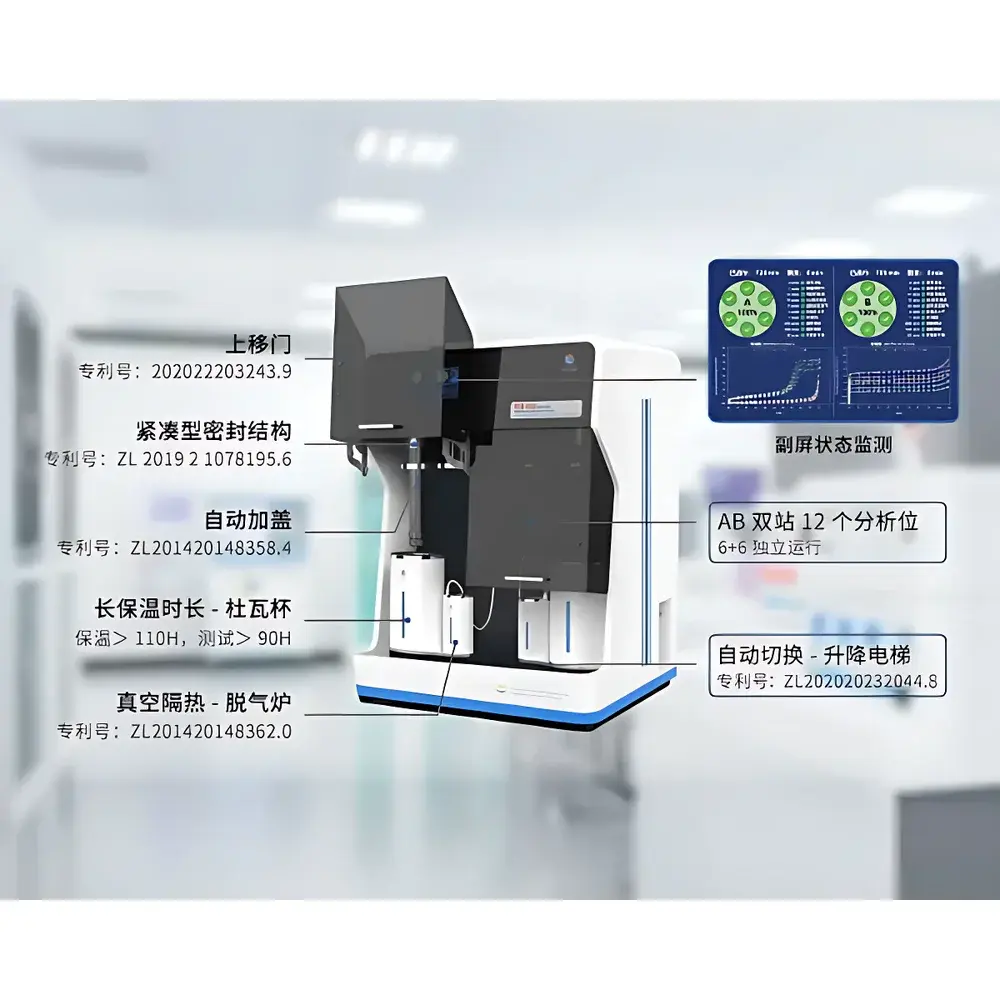
- Fully automated workflow: Integrated sample degassing → gas dosing → adsorption/desorption measurement without manual intervention; patented auto-switching between degas furnace and cryostat ensures uninterrupted overnight operation.
- Modular station configuration: Selectable 3-, 6-, 9-, or 12-analysis-station layouts maximize throughput—up to 12 samples per cycle in rapid mode (15 min excluding degassing).
- Ultra-high vacuum capability: Base pressure down to 1×10⁻⁸ Pa with optional dual turbo-molecular pump system, critical for low-pressure micropore filling and accurate t-plot/DFT modeling.
- Helium-free dead-volume calibration: Sequential helium pycnometry → vacuum degassing → adsorption measurement eliminates helium residue interference in micropore analysis—a proprietary solution validated per ISO 15901-3.
- Pressure-controlled ramped degassing (“Pressurized Temperature Ramp”): Real-time pressure feedback dynamically modulates heating rate and furnace position to suppress sample fluidization and mass loss during thermal treatment.
- Thermal management: Entire gas manifold maintained at 40 °C ±0.01 °C; adsorption chamber temperature zone stabilized via servo-controlled liquid nitrogen level regulation (drift < 0.10% over 24 h).
- Corrosive & vapor-compatible options: Configurable stainless-steel valves, Hastelloy™ lines, and vapor-tight seals support CO₂, NH₃, H₂S, H₂O, and organic vapor sorption studies under GLP-compliant conditions.
Sample Compatibility & Compliance
The BSD-660A3MB3M accommodates diverse solid-state materials including battery cathode/anode powders (LiCoO₂, Si/C composites), metal–organic frameworks (MOFs), covalent organic frameworks (COFs), activated carbons, zeolites, silica gels, metal oxides, hydroxides, catalysts, pharmaceutical excipients, and ceramic precursors. It complies with international standards governing surface area and porosity determination: ISO 9277 (BET method), ISO 15901-1 (meso/macropores), ISO 15901-2 (micropores), ASTM D3663, USP , and Chinese national standards GB/T 19587, GB/T 21650.2, and GB/T 21650.3. All hardware and software components are designed to support 21 CFR Part 11–compliant audit trails, electronic signatures, and data integrity protocols when integrated with validated LIMS environments.
Software & Data Management
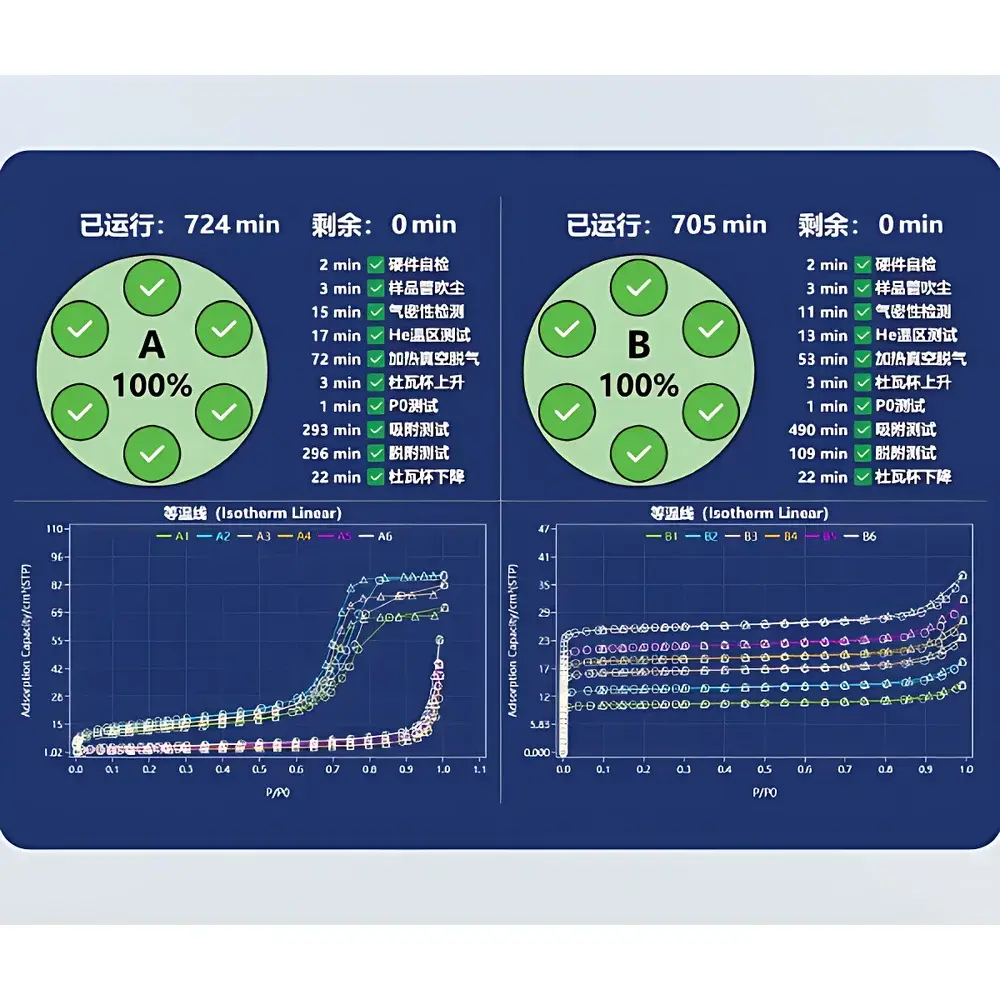
The proprietary BDSorb™ v5.0 software provides intuitive method setup, real-time monitoring, automated quality checks (e.g., degas completion detection via pressure derivative thresholding), and ISO-compliant reporting. Raw isotherm data are stored in ASCII and XML formats with full metadata (timestamp, operator ID, calibration history, environmental logs). The system features an open API for bidirectional integration with laboratory information management systems (LIMS), enabling automatic result upload, batch traceability, and statistical process control (SPC) charting. All data files include embedded digital signatures and immutable audit trails meeting ALCOA+ principles (Attributable, Legible, Contemporaneous, Original, Accurate, Complete, Consistent, Enduring, Available).
Applications
This analyzer serves core applications in energy storage (battery electrode optimization), catalysis (active site density mapping), pharmaceutical development (excipient porosity and stability), environmental science (adsorbent capacity screening), and nanomaterials research (MOF/COF structure–property validation). Typical use cases include BET surface area benchmarking of commercial activated carbon batches, DFT-based micropore distribution analysis of ZIF-8 derivatives, cyclic CO₂ adsorption–desorption performance evaluation for amine-functionalized silicas, and humidity-dependent water vapor isotherms for desiccant qualification—all executed with metrological rigor and inter-laboratory reproducibility.
FAQ
What gases can be used for analysis?
Standard configurations support N₂, Ar, O₂, CO, and CO₂. Optional modules enable H₂, CH₄, C₂H₆, and corrosive gases (e.g., NH₃, SO₂) or vapors (e.g., H₂O, ethanol) with appropriate material upgrades.
Is the instrument compliant with FDA 21 CFR Part 11?
Yes—when deployed with password-protected user roles, electronic signature workflows, and encrypted audit logs, the BDSorb™ software satisfies Part 11 requirements for electronic records and signatures.
How is degassing optimized for sensitive or low-density samples?
The “pressure-controlled ramped degassing” algorithm dynamically adjusts heating rate and furnace elevation based on in-situ pressure feedback, preventing particle entrainment while ensuring complete contaminant removal.
Can the system perform long-term cyclic adsorption testing?
Yes—automated multi-cycle adsorption/desorption sequences with programmable dwell times and regeneration steps enable lifetime assessment of sorbent materials under simulated service conditions.
What vacuum performance is required for reliable micropore analysis?
For sub-nanometer pore characterization, a base pressure ≤1×10⁻⁸ Pa is recommended; this is achieved using the optional dual turbo-molecular pump configuration with active vibration isolation and cold trap integration.



