
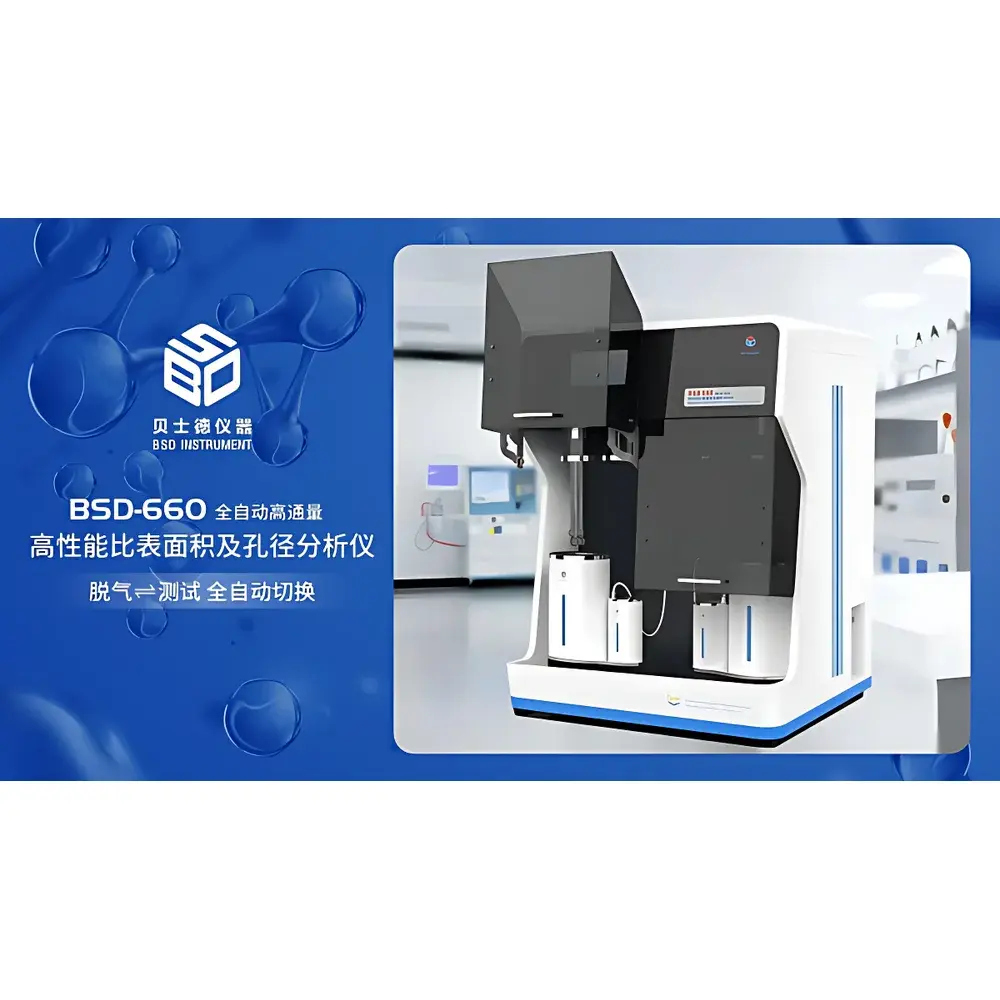
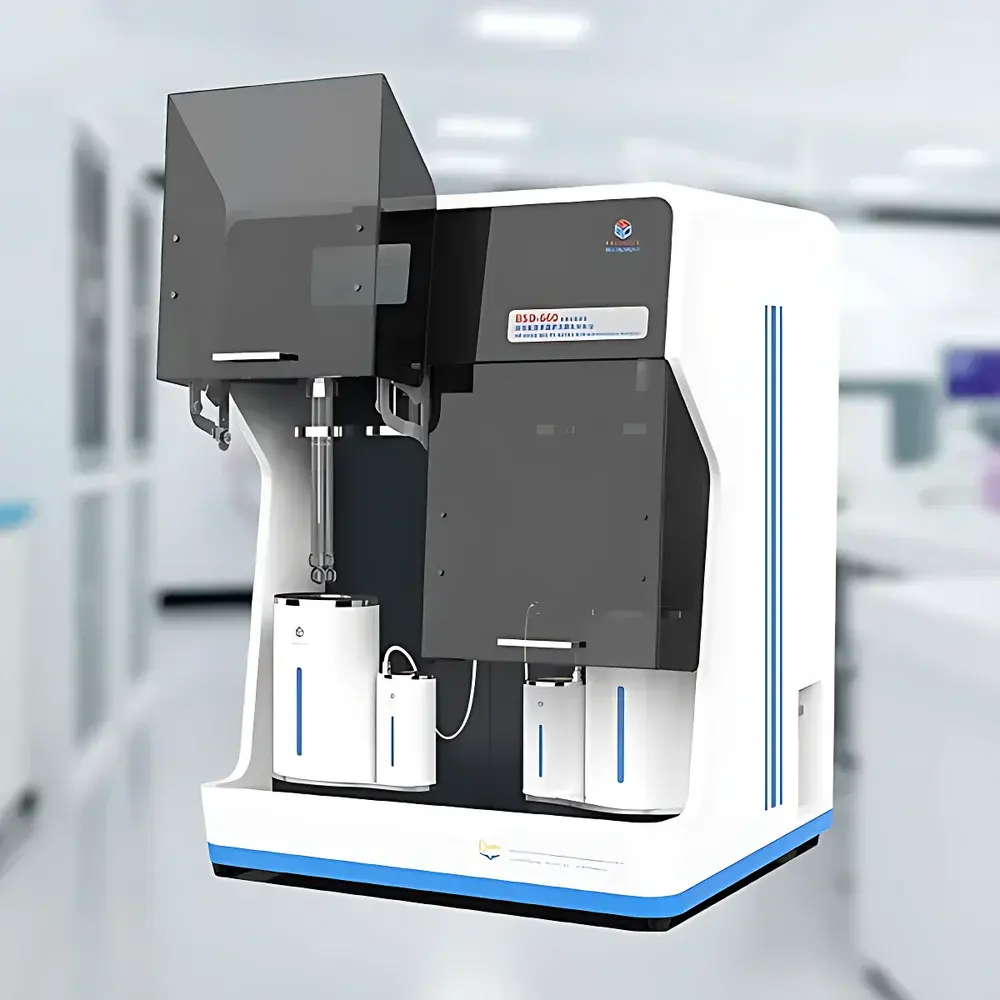
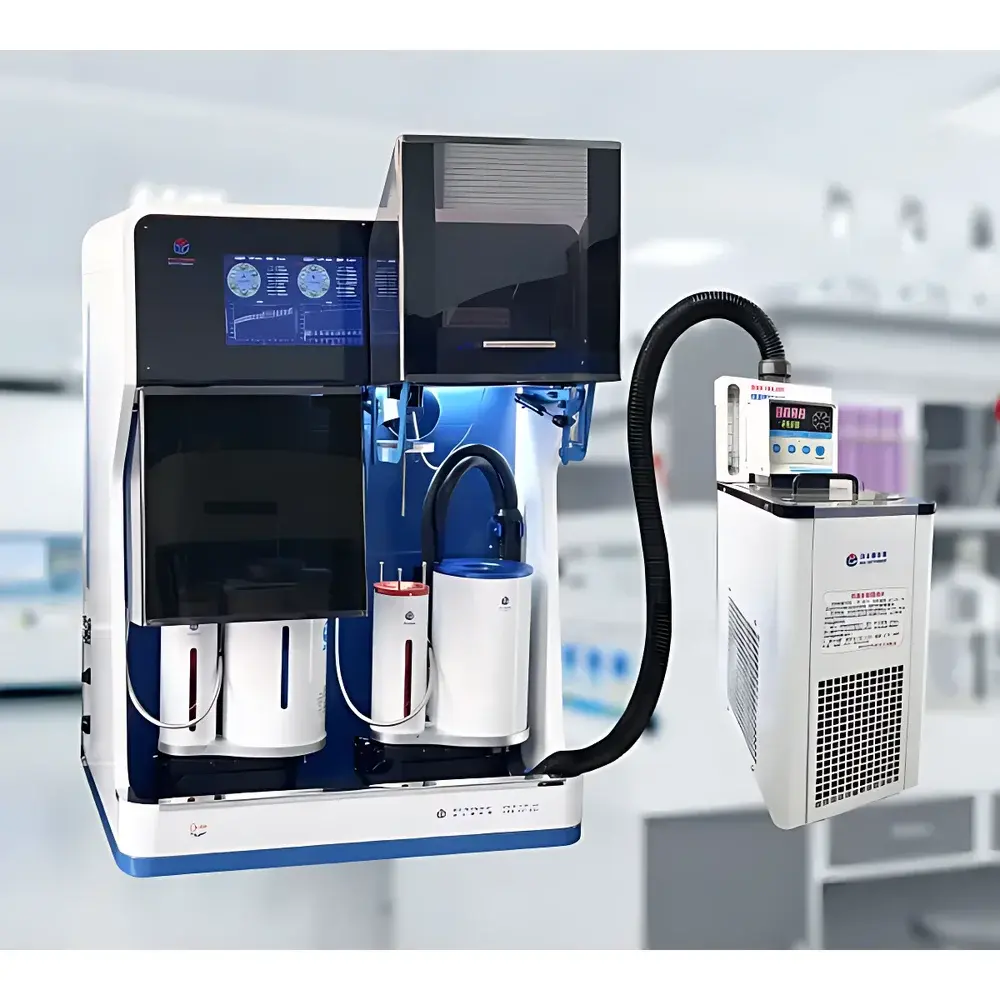
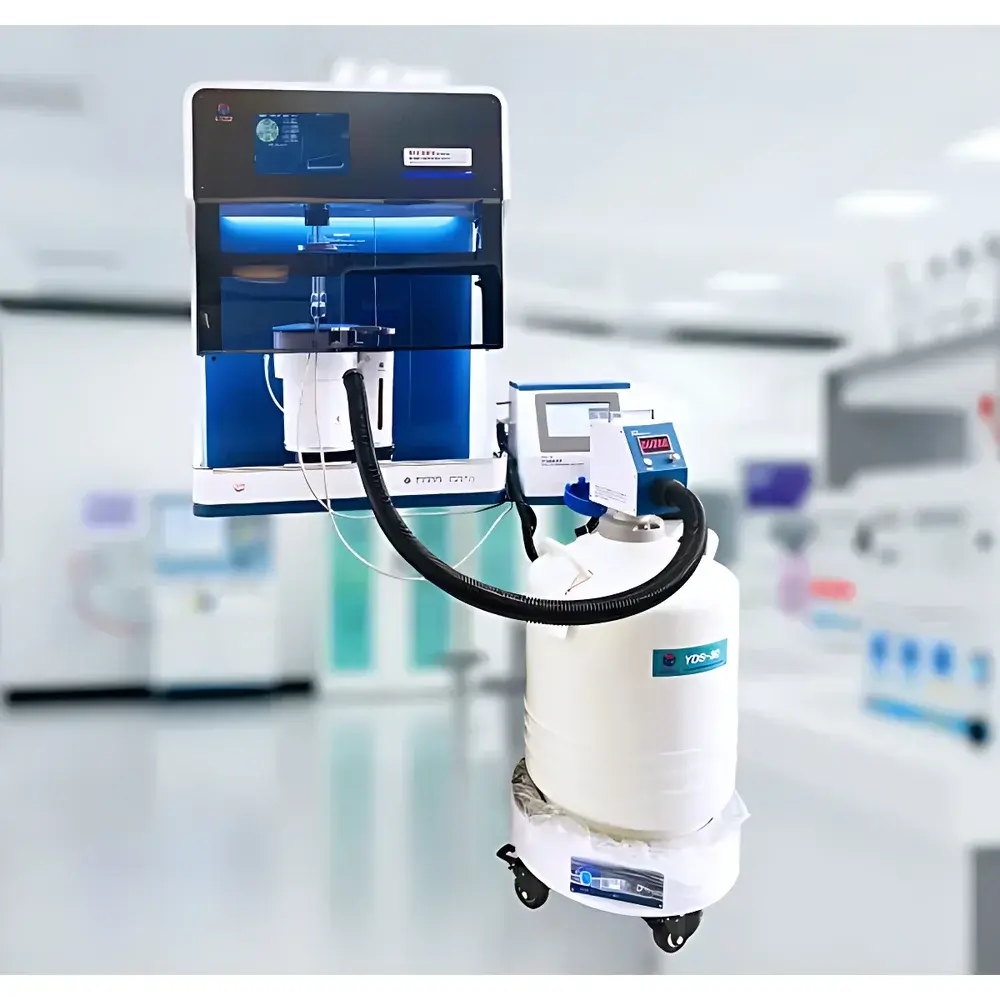
Beishide BSD-660A3S Specific Surface Area and Pore Size Analyzer
| Brand | Beishide Instrument |
|---|---|
| Origin | Beijing, China |
| Manufacturer Type | Original Equipment Manufacturer (OEM) |
| Instrument Category | Domestic |
| Model | BSD-660A3S |
| Instrument Principle | Static Volumetric Gas Adsorption |
| Number of Analysis Stations | 3 / 6 / 9 / 12 |
| Pore Size Range | 0.35–500 nm |
| Specific Surface Area Range | ≥0.0005 m²/g |
| Vacuum Level | ≤1×10⁻⁹ Pa |
| Temperature Control Accuracy | ±0.1 °C (RT–400 °C) |
| Quantitative Repeatability | <0.5% RSD (BET standard reference material) |
| Adsorption Gases | N₂, O₂, Ar, CO, CO₂, H₂, CH₄, C₂H₆ (non-corrosive & combustible) |
| Optional Thermal Control | –10–80 °C (with恒温 water bath) or 100 K–RT (with LNT level stabilization) |
Overview
The Beishide BSD-660A3S Specific Surface Area and Pore Size Analyzer is a high-precision, fully automated static volumetric gas adsorption instrument engineered for comprehensive characterization of porous solids. It operates on the fundamental principles of physical adsorption—applying the Brunauer–Emmett–Teller (BET) theory for specific surface area quantification, Barrett–Joyner–Halenda (BJH), Dollimore–Heal (DH), and Non-Local Density Functional Theory (NLDFT) models for mesopore and macropore analysis, and Horvath–Kawazoe (HK), Dubinin–Astakhov (DA), and Density Functional Theory (DFT) methods for micropore and ultramicropore evaluation. Designed for rigorous materials science, catalysis, battery electrode development, pharmaceutical excipient qualification, and advanced carbon material R&D, the BSD-660A3S delivers traceable, reproducible data compliant with ISO 9277:2010, GB/T 19587–2017, ISO 15901-1/2/3, and ASTM D3663. Its static volumetric architecture ensures thermodynamic equilibrium measurement integrity without flow-induced artifacts common in dynamic systems.
Key Features
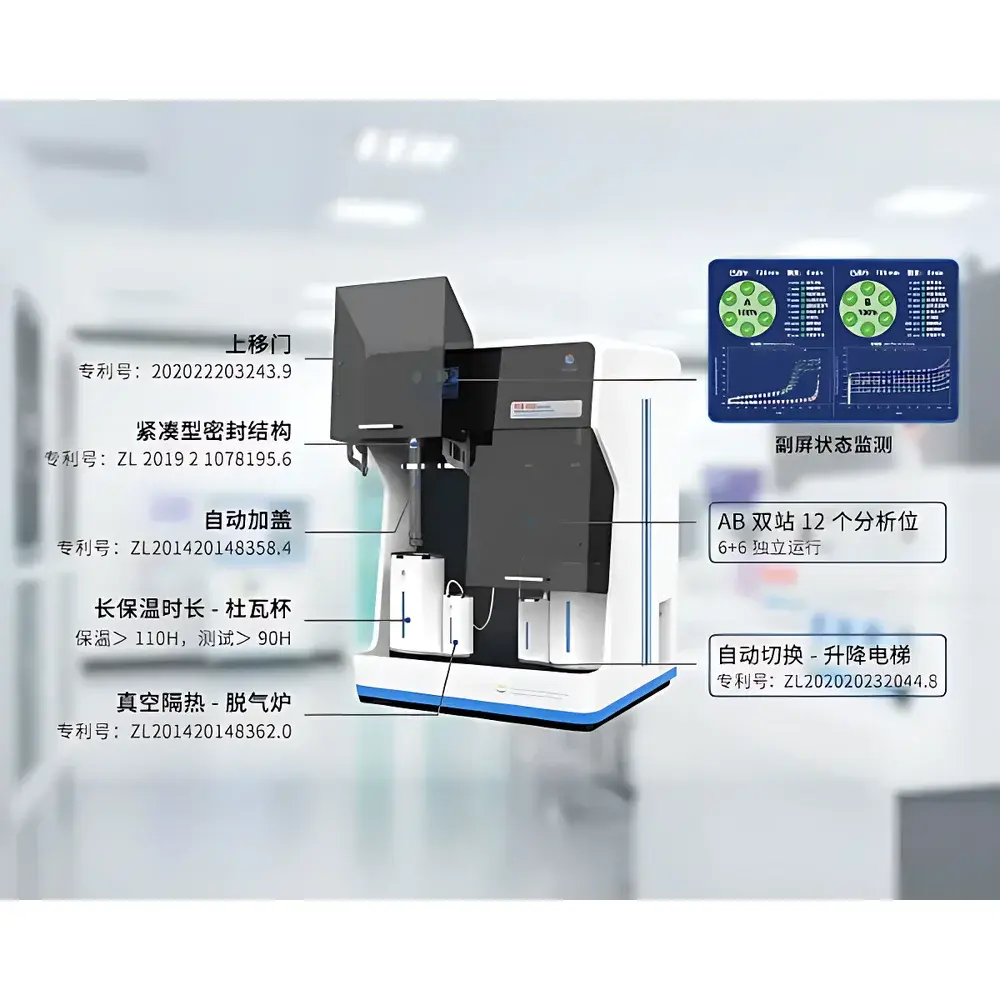
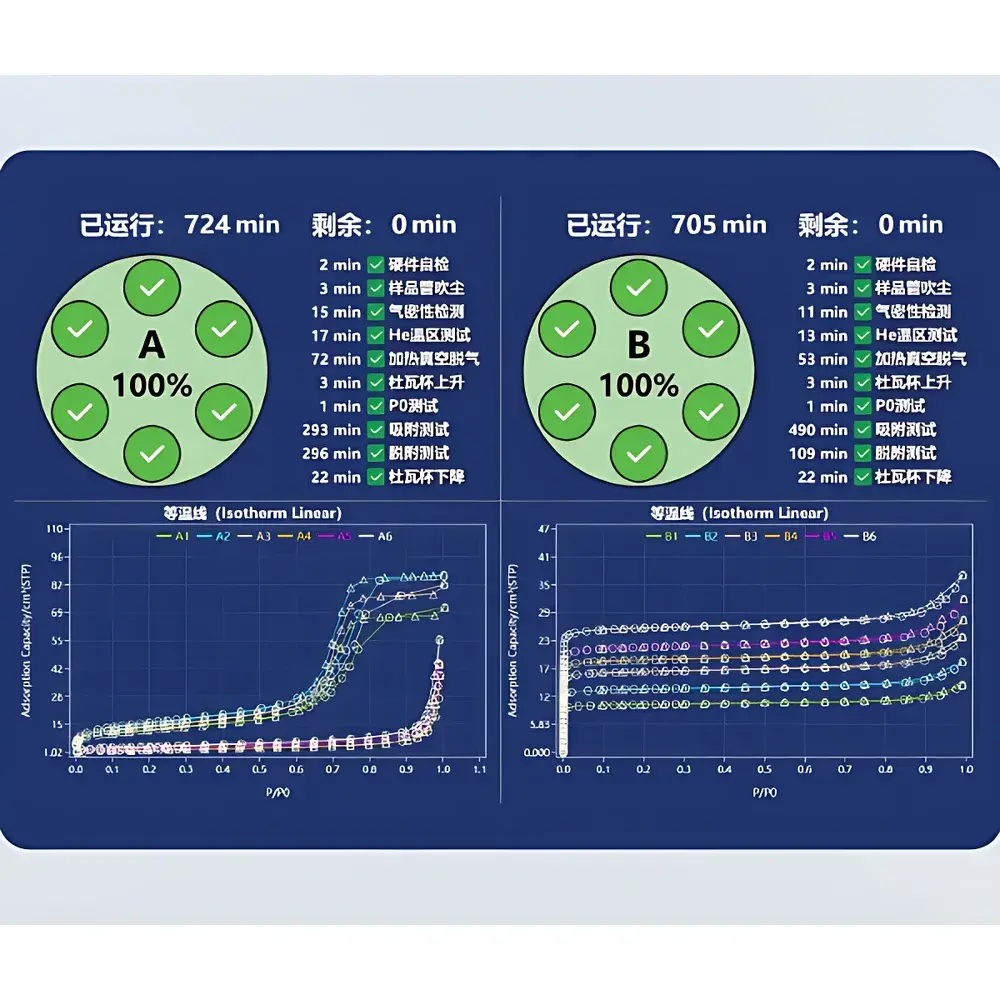
- Fully automated workflow: Integrated dual-stage process control enables unattended sequential degassing → thermal equilibration → gas dosing → adsorption isotherm acquisition across up to 12 independent analysis stations.
- Patented dual-motion degassing system: Combines programmable pressure control (“pressure-regulated heating”) with motorized furnace lift to suppress sample fluidization during high-temperature degassing—validated under ZL202020230457.2.
- Helium-free dead volume calibration: Pre-test helium pycnometry at ambient temperature followed by in-situ vacuum degassing eliminates helium retention in micropores—a critical advancement for accurate sub-2 nm pore assessment.
- Auto-switching thermal enclosure: Patented mechanical actuation (ZL202020232044.8) seamlessly transitions between degassing furnace and cryogenic Dewar positions without manual tube handling, reducing operator error and cross-contamination risk.
- Stabilized thermal environment: Entire gas manifold maintained at 40.00 ± 0.01 °C; adsorption chamber temperature servo-controlled via LNT-level stabilization (ZL201820401132.9), ensuring <0.10% 24-hour drift in equivalent dead volume.
- Modular gas compatibility: Supports non-corrosive and certified combustible gases (H₂, CH₄, C₂H₆) with integrated safety interlocks, pressure relief valves, and leak-tight stainless-steel manifolds.
- Electric turbo liquid nitrogen pump: Brushless DC motor-driven impeller (ZL201720864873.6) enables silent, vibration-free, contamination-free LN₂ transfer with variable speed control and mobile operation.
Sample Compatibility & Compliance
The BSD-660A3S accommodates powders, granules, monoliths, fibers, and coated substrates ranging from catalysts and MOFs to activated carbons, battery cathodes (e.g., NMC, LFP), pharmaceutical APIs, and ceramic precursors. Its robust sample cell design supports masses from 10 mg to 5 g, with optional low-mass microcells for precious or limited-availability samples. All measurement protocols adhere to internationally recognized standards: ISO 9277 (BET surface area), ISO 15901-2 (meso/macropore distribution), ISO 15901-3 (micropore analysis), GB/T 21650 series, ASTM D3663, and USP . Data audit trails, electronic signatures, and full 21 CFR Part 11 compliance are enabled via optional GLP/GMP software modules. Instrument validation documentation—including IQ/OQ/PQ templates—is provided for regulated laboratory environments.
Software & Data Management
The proprietary BDS-Analyzer v4.2 software provides intuitive method setup, real-time isotherm visualization, multi-model pore size distribution deconvolution, and automated report generation in PDF/CSV/XLSX formats. It features built-in uncertainty propagation algorithms per IUPAC recommendations and supports raw-data export for third-party modeling (e.g., MATLAB, Python). An open RESTful API and native LIMS integration allow bidirectional data exchange with enterprise laboratory information management systems. All user actions—including parameter edits, calibration events, and result approvals—are time-stamped and logged with immutable audit trails. Software validation packages include traceable test scripts aligned with GAMP5 guidelines.
Applications
- Catalysis: Quantifying active site density, support porosity evolution after calcination/reduction, and metal dispersion via chemisorption (when configured with TPD/TPR modules).
- Battery Materials: Correlating electrode specific surface area with SEI formation kinetics; evaluating pore tortuosity in separator membranes using argon adsorption at 87 K.
- Pharmaceuticals: Assessing crystallinity impact on dissolution rate via nitrogen BET and water vapor sorption hysteresis analysis.
- Carbon Capture: Screening amine-functionalized adsorbents using CO₂ isotherms at 273 K and 298 K, with DFT kernel selection optimized for narrow micropores.
- Quality Control: Routine batch release testing of silica gels, zeolites, and activated alumina per ASTM D3663 and GB/T 6609.35.
FAQ
What gases can be used for adsorption analysis on the BSD-660A3S?
Nitrogen (77 K), argon (87 K), krypton (77 K), carbon dioxide (273 K), hydrogen (77 K), methane (112 K), and ethane (189 K) are supported. Combustible gases require optional explosion-proof configuration and certified gas handling protocols.
How does the instrument ensure long-term thermal stability during extended isotherm acquisition?
Through active thermal servo-control of the entire gas path at 40.00 ± 0.01 °C and LNT-level stabilization of the cryostat, achieving <0.10% 24-hour dead-volume drift—verified per ISO 15901-1 Annex B.
Is GLP/GMP compliance supported out-of-the-box?
Yes. With the optional Compliance Edition software, the system provides 21 CFR Part 11–compliant electronic records, role-based access control, biometric or PKI-based e-signatures, and automated backup of audit logs to network storage.
Can the BSD-660A3S perform cyclic adsorption–desorption testing?
Yes. The software supports fully automated multi-cycle protocols for assessing adsorbent durability, regeneration efficiency, and performance decay over repeated exposure—critical for MOF and COF lifetime evaluation.
What vacuum performance is achieved, and how is it verified?
Ultimate vacuum ≤1×10⁻⁹ Pa is attained using dual-stage molecular pumps (optional dual-pump configuration available). Vacuum integrity is validated daily via helium leak detection and documented in instrument logbooks per ISO/IEC 17025 requirements.



