
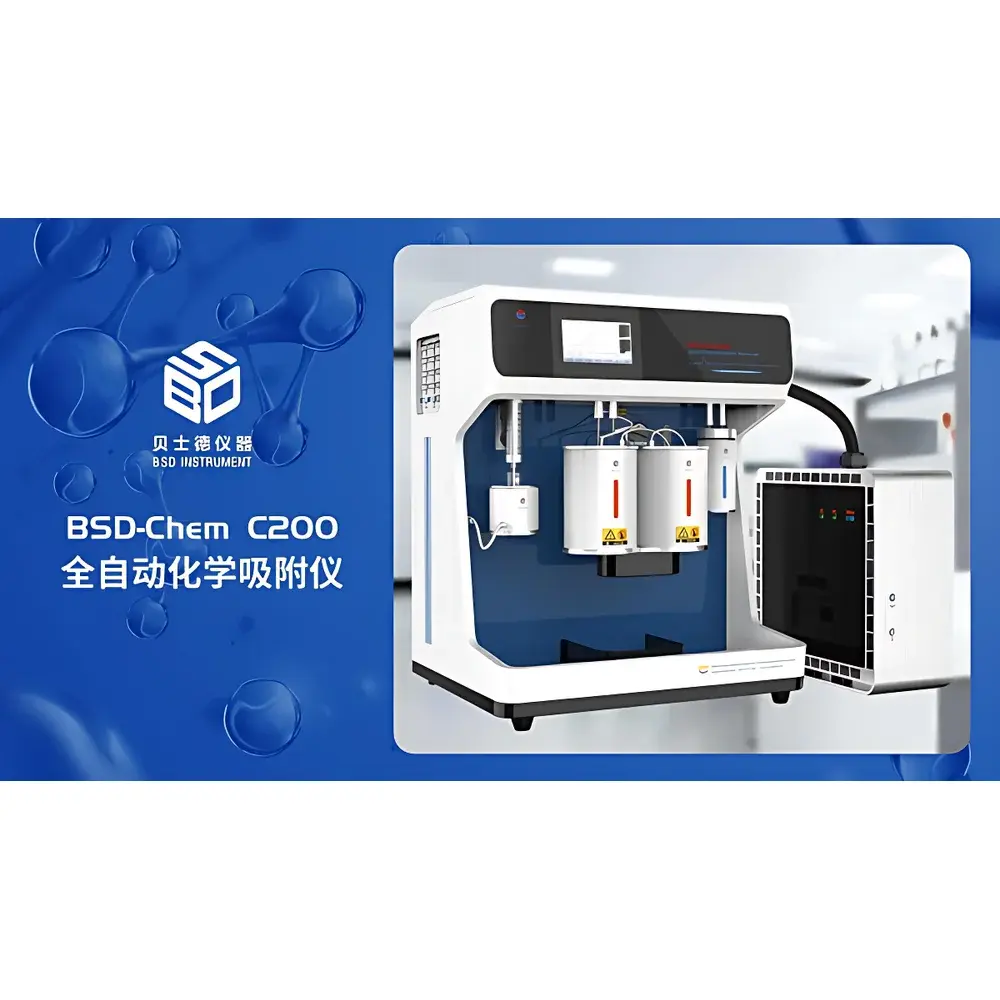
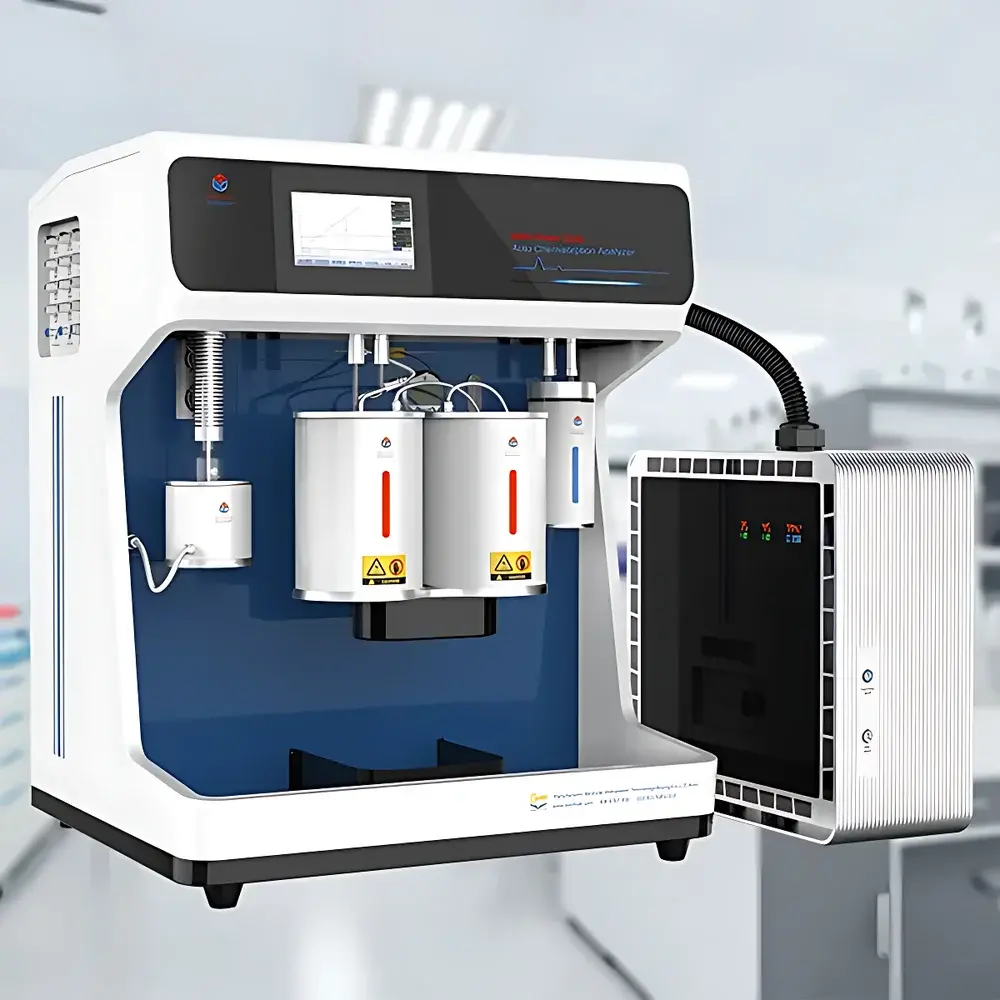
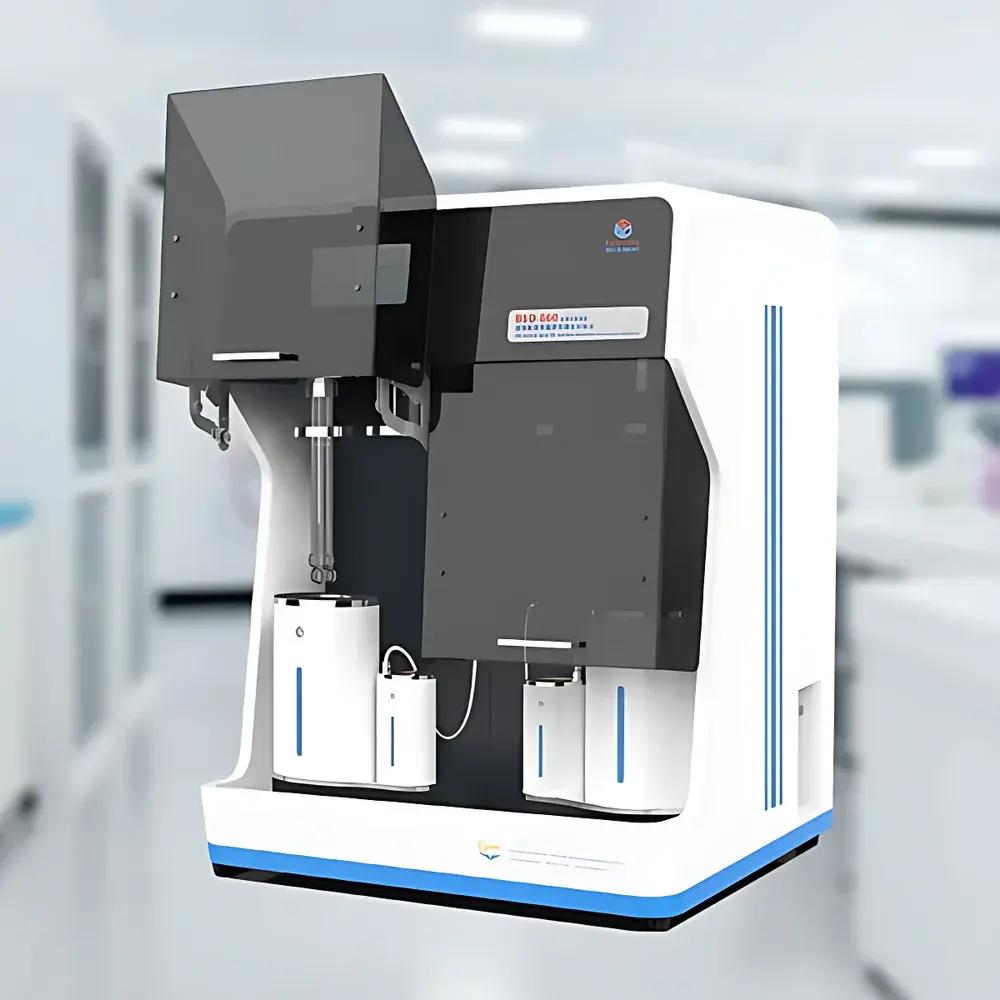
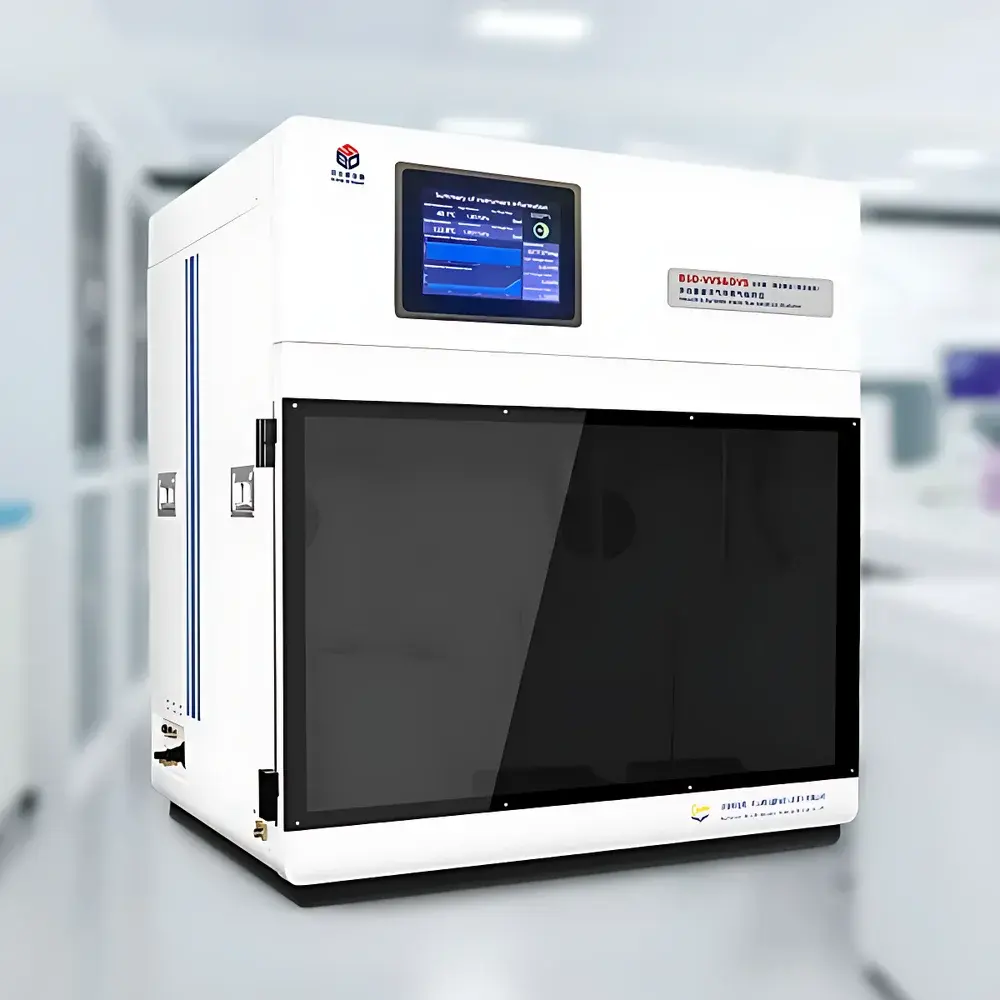
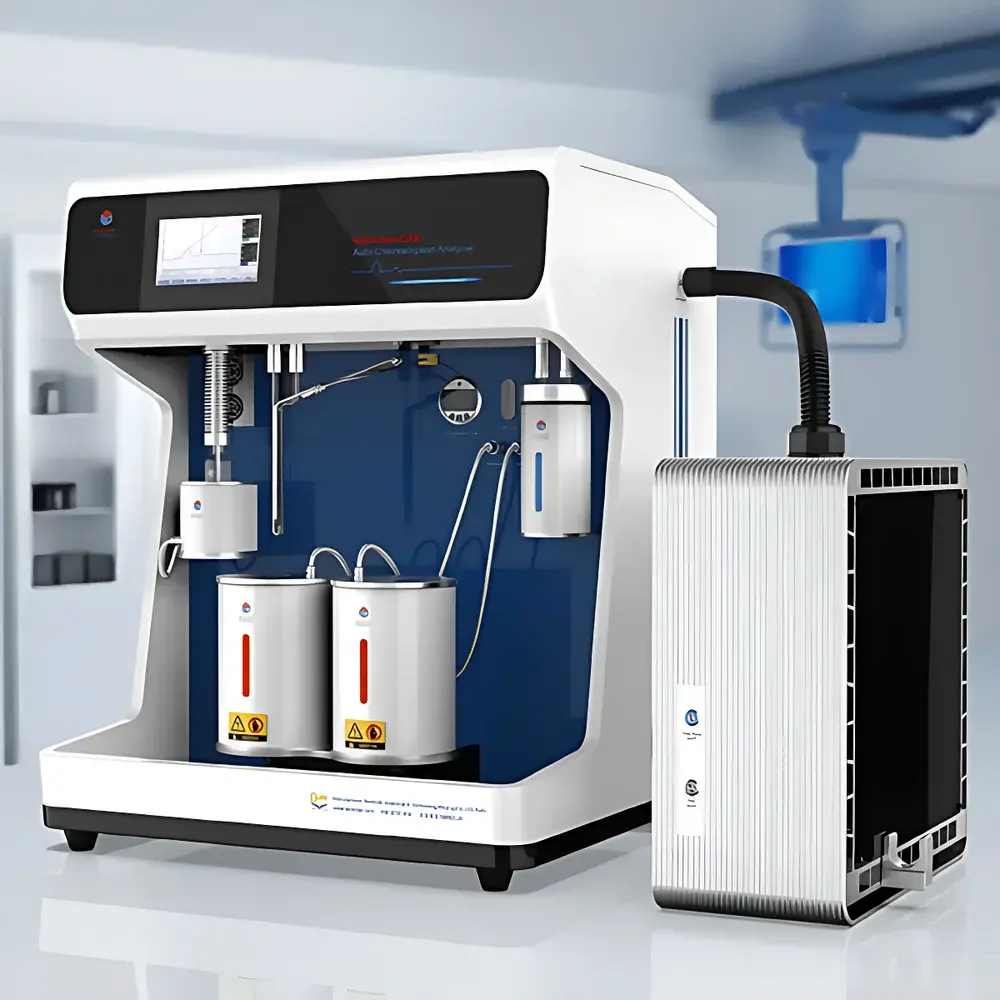
Beishide BSD-Chem C200 Automated Chemisorption Analyzer
| Brand | Beishide Instrument |
|---|---|
| Origin | Beijing, China |
| Manufacturer Type | Direct Manufacturer |
| Instrument Type | Chemisorption Analyzer |
| Model | BSD-Chem C200 |
| Testing Principle | Continuous Flow Method |
| Gas Inlet Channels | 12 |
| Heating Temperature Range | Ambient to 1200 °C |
| Isothermal Stability | Ambient to 60 °C |
| Heating Rate | 1–100 °C/min |
| Pressure Options | Atmospheric (standard), optional 1 MPa / 3 MPa / 10 MPa |
| Core Functions | TPD, TPR, TPO, TPSR, TPS, Pulse Titration, Desorption Kinetics (Ed, Ad, n), Adsorption Kinetics (Ea, ΔH, Aa) |
Overview
The Beishide BSD-Chem C200 Automated Chemisorption Analyzer is an advanced, dual-furnace thermal analysis platform engineered for quantitative characterization of surface chemical interactions under controlled gas-phase environments. It operates on the continuous flow principle—introducing precisely metered reactant gases over a solid catalyst or adsorbent while monitoring effluent composition in real time via thermal conductivity detection (TCD). The system supports full temperature-programmed reaction protocols including temperature-programmed desorption (TPD), reduction (TPR), oxidation (TPO), surface reaction (TPSR), and sulfidation (TPS), enabling rigorous kinetic and thermodynamic analysis of adsorption/desorption processes. Its architecture integrates vacuum-assisted gas line purging, dual independent high-temperature furnaces (each 0–1200 °C), and embedded temperature referencing to ensure traceable thermal control and measurement fidelity—critical for reproducible catalytic surface science in R&D and QC laboratories.
Key Features
- Dual high-temperature furnaces (0–1200 °C) with automatic switching: Enables uninterrupted sequential testing—while one furnace cools, the other initiates pre-treatment or analysis—eliminating manual intervention and downtime.
- Vacuum-assisted gas line conditioning: Integrated vacuum pump removes residual gases from dead volumes prior to analysis, minimizing baseline drift and cross-contamination, particularly essential for low-concentration or reactive species detection.
- U-shaped quartz sample tube with integrated temperature reference tube: Houses the thermocouple in direct thermal contact with the sample environment, ensuring ±0.5 °C temperature accuracy during ramping and isothermal holds.
- Triple mass flow controllers (MFCs): Support simultaneous delivery and blending of up to three non-corrosive or corrosive gases—including NH₃, H₂, O₂, CO, CO₂, SO₂, and steam—for complex multi-step reaction sequences.
- Configurable detection: Standard TCD with dual-mode operation (high-sensitivity and wide-dynamic-range); optional coupling to INFICON online quadrupole mass spectrometer (100/200/300 amu) or Thermo Fisher Nicolet iS20/iS5 FT-IR for species-specific identification and mechanistic insight.
- Automated pulse titration: Equipped with calibrated dosing loops (0.5 mL, 1 mL, 5 mL) for precise quantification of active sites, including metal dispersion and acid/base site density.
- Integrated steam generator and cold trap: Enables vapor-phase chemisorption (e.g., H₂O, alcohols) while suppressing interference from condensable byproducts in the detector stream.
- Programmable multi-step protocols: Supports automated execution of sequences combining pretreatment (calcination, reduction), adsorption, purge, and temperature-ramped reactions—fully compliant with GLP documentation requirements.
Sample Compatibility & Compliance
The BSD-Chem C200 accommodates heterogeneous catalysts, supported metals, zeolites, metal oxides, carbons, and MOFs in powder, pellet, or extrudate form (max. 1 g typical). Its corrosion-resistant gas path—validated for HCl, H₂S, NH₃, and halogenated vapors—meets ASTM D7214 (catalyst acidity measurement) and ISO 18387 (surface area and pore structure by chemisorption) methodological frameworks. Vacuum purging and inert gas handling comply with OSHA PSM and IEC 60079-10-1 hazardous area guidelines. Dual combustible gas sensors provide real-time leak detection across furnace and manifold zones. All thermal and gas control parameters are timestamped and audit-trail enabled, supporting FDA 21 CFR Part 11 compliance when paired with validated LIMS or ELN integration.
Software & Data Management
The proprietary ChemAnalyst™ software provides full instrument control, method scripting, real-time data visualization, and kinetic modeling. It includes built-in modules for Ed/Ad/n calculation (via Redhead, Kissinger, or Polanyi–Wigner methods) and Ea/ΔH/Aa derivation using Arrhenius and van’t Hoff analyses. Raw TCD/MS/FT-IR signals are exported in ASCII or HDF5 format; processed reports include peak deconvolution, calibration curves, and uncertainty propagation per ISO/IEC 17025 Annex A. Audit trails record user actions, parameter changes, and calibration events with electronic signatures. Data integrity is reinforced through role-based access control and encrypted local storage—aligned with GxP laboratory computing standards.
Applications
- Catalyst characterization: Quantifying acid site strength/distribution (NH₃-TPD), reducibility (H₂-TPR), oxidative stability (O₂-TPO), and sulfur tolerance (H₂S-TPS).
- Adsorption mechanism studies: Differentiating physisorption vs. chemisorption pathways; resolving overlapping desorption events (e.g., NH₃ vs. H₂O in zeolite TPD) via MS/FT-IR hyphenation.
- Material lifetime assessment: Automated cycling of pretreatment–adsorption–reaction sequences to evaluate deactivation kinetics and regeneration efficiency.
- Surface reaction engineering: Mapping surface intermediates in TPSR experiments (e.g., CO + NO → N₂ + CO₂ on automotive catalysts) with time-resolved product speciation.
- Energy materials R&D: Characterizing oxygen vacancy formation in perovskite oxides (O₂-TPD), hydrogen spillover in Pt/CeO₂ systems (H₂-TPD), or CO₂ capture capacity on amine-functionalized sorbents (CO₂-TPD).
FAQ
What detection methods are supported beyond standard TCD?
The system natively supports TCD but offers factory-integrated interfaces for INFICON online mass spectrometry (100–300 amu) and Thermo Fisher FT-IR (gas cell or DRIFTS configurations), enabling unambiguous identification of co-eluting species.
How does the dual-furnace architecture improve throughput?
One furnace performs thermal pretreatment while the other executes analysis; software-controlled switching eliminates cooldown wait times, reducing cycle duration by up to 60% compared to single-furnace systems.
Can the BSD-Chem C200 operate under elevated pressure?
Yes—standard configuration is atmospheric, but optional pressure-rated manifolds and reactors support testing at 1 MPa, 3 MPa, or 10 MPa, with pressure transducers and safety interlocks certified to PED 2014/68/EU.
Is steam chemisorption supported out-of-the-box?
Yes—the integrated steam generator and cold trap are standard, enabling quantitative H₂O-TPD, alcohol adsorption, and hydrothermal stability screening without external accessories.
What level of kinetic analysis is possible with the included software?
ChemAnalyst™ delivers model-free (isoconversional) and model-fitting (first-/second-order, Langmuir-Hinshelwood) kinetic solutions for both adsorption and desorption processes, with uncertainty quantification and statistical validation per IUPAC recommendations.



