
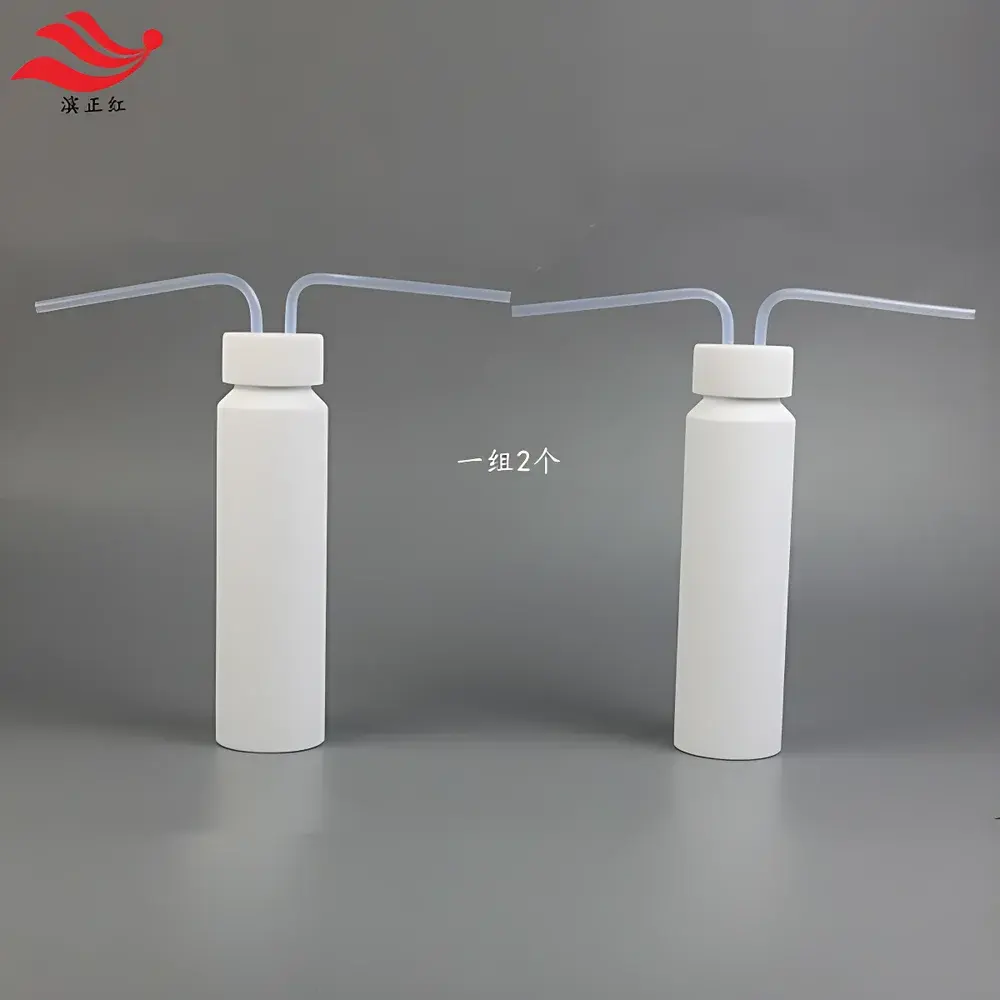
PTFE Gas Washing Bottle (100 mL, 1/8″ Inlet/Outlet Tubing)
| Brand | Binzhenghong |
|---|---|
| Origin | Jiangsu, China |
| Manufacturer Type | OEM Producer |
| Country of Origin | China |
| Capacity | 100 mL |
| Tubing Connection | 1/8" (3.2 mm) Metric |
| Material | PTFE (Polytetrafluoroethylene) |
| Compliance | Lab-Scale Chemical Resistance Standard |
Overview
The Binzhenghong PTFE Gas Washing Bottle is a chemically inert, laboratory-grade gas purification and absorption device engineered for precise control of gas-phase reactions, scrubbing, and sample conditioning in analytical, synthetic, and environmental testing workflows. Constructed entirely from high-purity polytetrafluoroethylene (PTFE), this bottle operates on the principle of counter-current or co-current gas–liquid contact within a vertically oriented chamber—enabling efficient mass transfer between gaseous analytes and liquid reagents (e.g., acid traps, alkaline solutions, oxidizing agents, or water). Its design conforms to standard lab-scale gas handling practices where corrosion resistance, low extractables, and thermal stability (−200 °C to +260 °C continuous) are critical. Unlike glass or borosilicate alternatives, PTFE eliminates risk of alkali leaching, hydrolytic degradation, or HF-induced etching—making it suitable for aggressive halogenated, fluorinated, or strongly acidic/alkaline gas streams.
Key Features
- Monolithic PTFE construction—no adhesives, seals, or metallic components—ensuring zero contamination and full compatibility with HF, fuming nitric acid, aqua regia, and molten alkali metals.
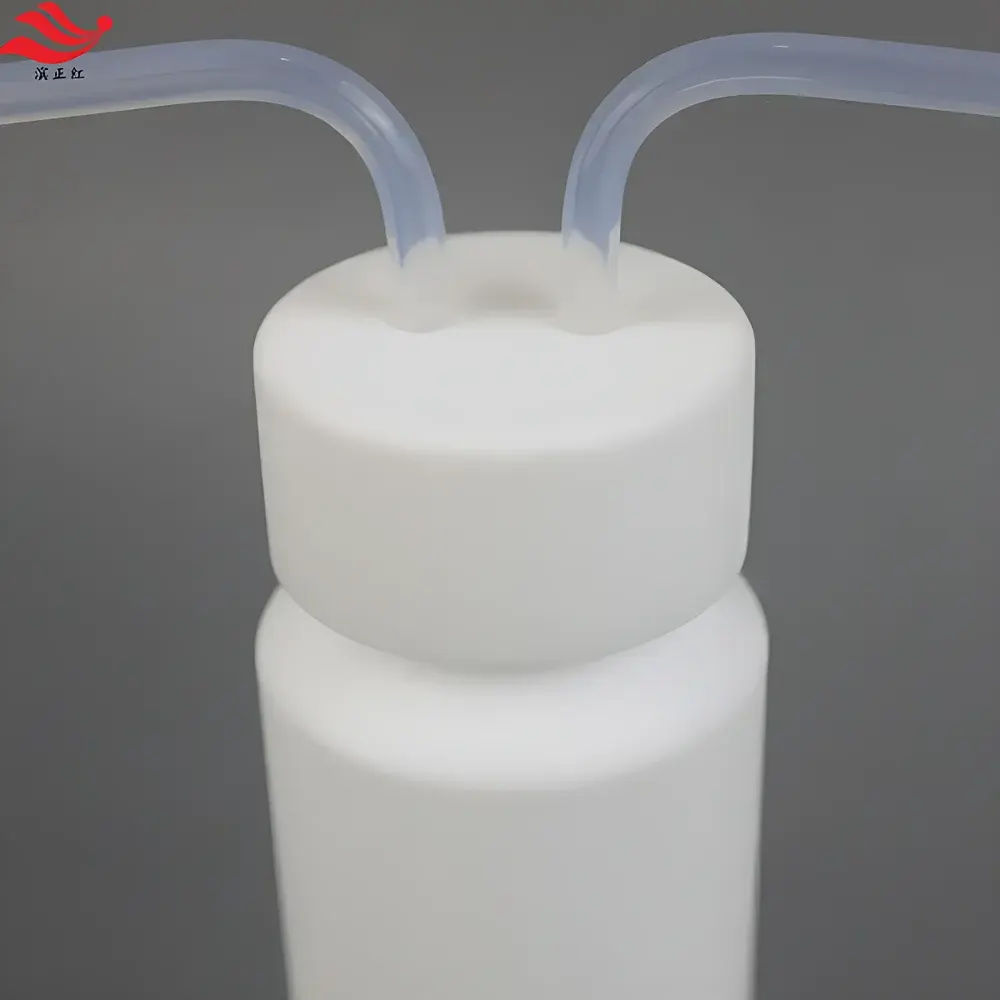
- Standardized 1/8″ (3.2 mm) OD tapered inlet/outlet ports with integrated PTFE ferrules for leak-tight compression sealing against compatible tubing (FEP, PFA, or PTFE-lined stainless steel).
- Optimized internal baffle geometry promoting uniform bubble dispersion and extended gas residence time without channeling or foaming.
- Graduated volume markings (±2% accuracy) laser-etched directly onto the PTFE surface—resistant to solvent erosion and autoclave cycling.
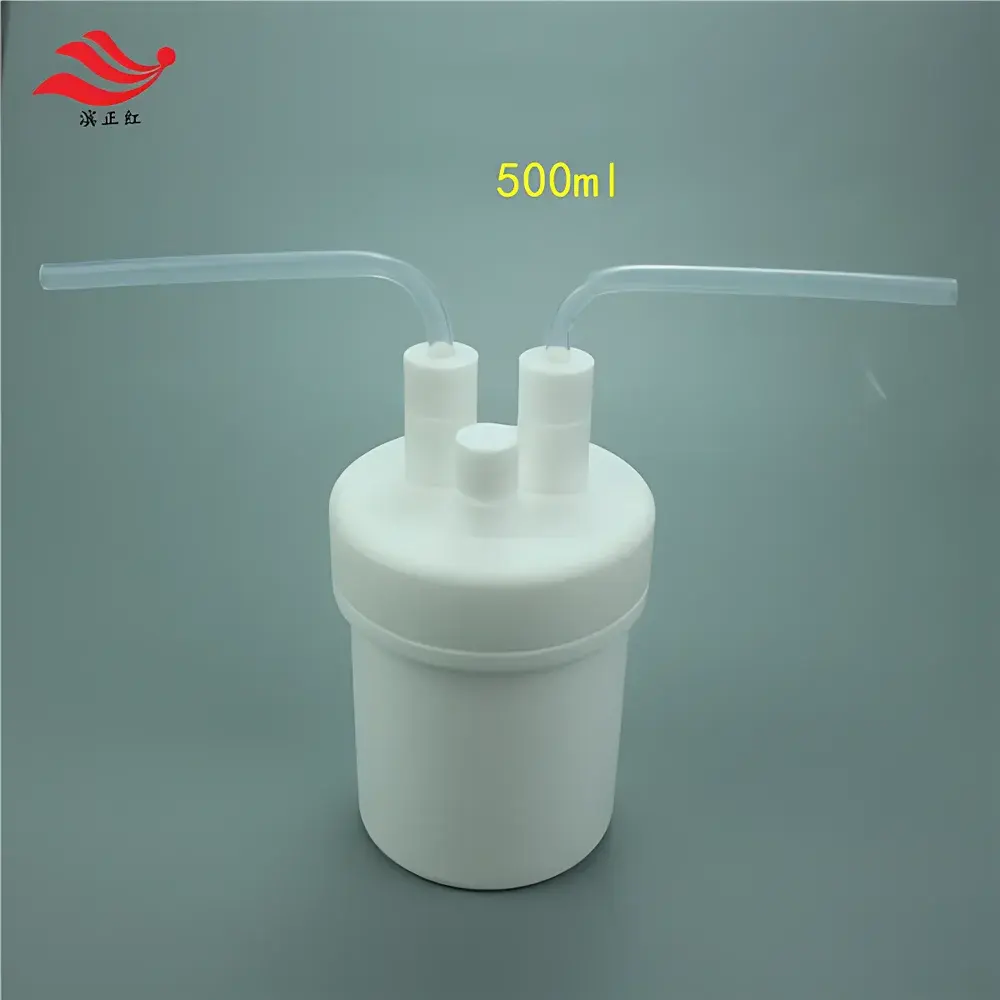
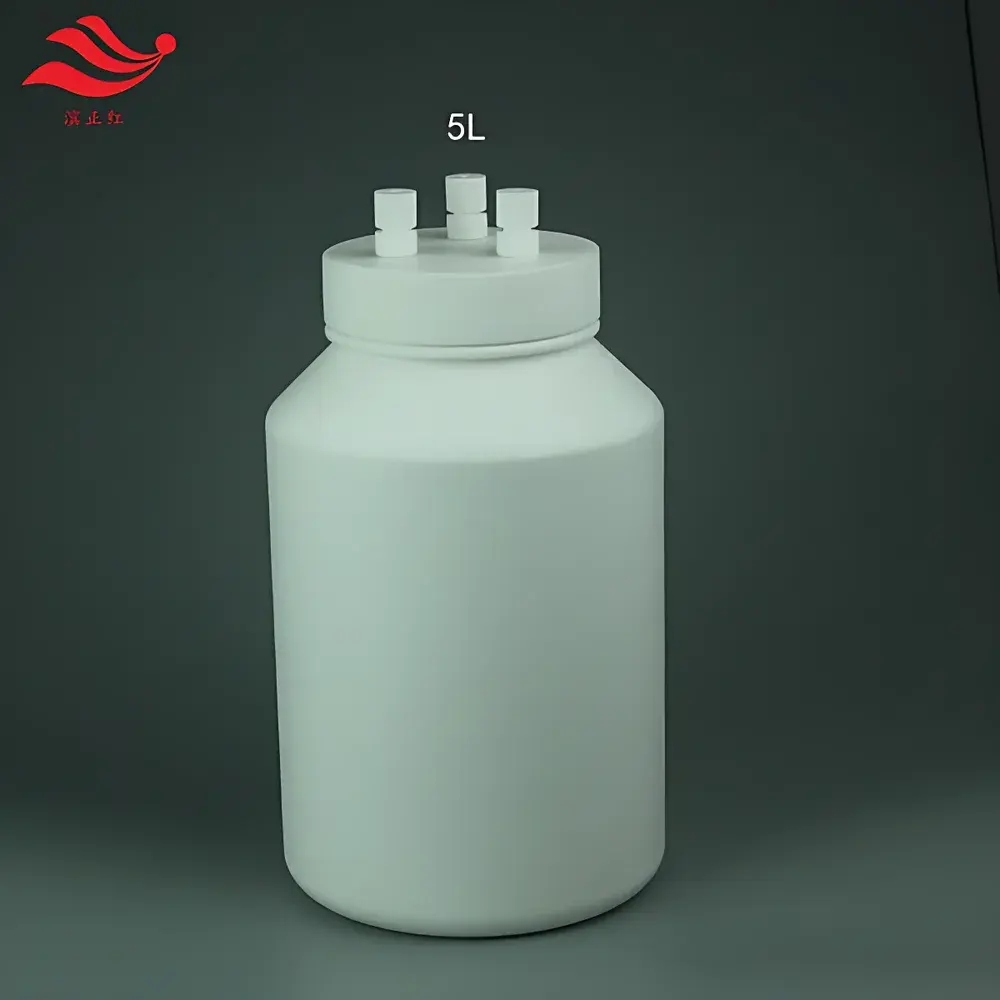
- Available in multiple capacities (100 mL, 250 mL, 500 mL) with interchangeable neck configurations (straight, angled, dual-port) to support series-connected multi-stage scrubbing setups.
- Non-pyrogenic, USP Class VI compliant material formulation—validated for use in regulated QC/QA environments requiring low particulate and metal ion release (e.g., semiconductor process gas monitoring, pharmaceutical residual solvent analysis).
Sample Compatibility & Compliance
This washing bottle accommodates aqueous, organic, and mixed-phase absorbents—including 30% H2O2, 10% NaOH, saturated KMnO4, and 5% HCl—without swelling, stress cracking, or dimensional drift. It is routinely deployed in ASTM D5197 (determination of formaldehyde in air), ISO 10156 (gas cylinder content verification), and EPA Method TO-15 (VOC sampling) pre-concentration trains. While not certified to ISO/IEC 17025 as a standalone instrument, its material traceability (certified PTFE resin lot numbers), dimensional repeatability (< ±0.3 mm tolerance), and absence of leachable fluoropolymers support GLP-compliant documentation when integrated into validated gas sampling systems.
Software & Data Management
As a passive, non-electronic component, the PTFE Gas Washing Bottle does not incorporate embedded firmware, sensors, or digital interfaces. Its operational parameters—flow rate, pressure drop, and absorption efficiency—are determined externally via upstream mass flow controllers (MFCs), downstream pressure transducers, and post-scrubbing analytical instrumentation (e.g., GC-FID, IC, or ICP-MS). Users maintain traceability through standardized logbook entries documenting batch number, absorbent lot ID, exposure duration, and post-use visual inspection for discoloration or cloudiness—practices aligned with FDA 21 CFR Part 11 audit-trail expectations when paired with electronic lab notebooks (ELNs).
Applications
- Purification of carrier gases (N2, Ar, He) prior to GC or ICP-MS analysis to remove O2, moisture, and hydrocarbon contaminants.
- Acid gas removal (SO2, HCl, Cl2) from flue gas or industrial exhaust streams during stack emission testing.
- In-line scrubbing of reaction off-gases in Schlenk-line or glovebox synthesis to protect vacuum pumps and prevent cross-contamination.
- Calibration gas generation via controlled dilution and chemical conversion (e.g., NO → NO2 oxidation using air-saturated H2O2).
- Pre-concentration of volatile mercury species (Hg⁰) using gold-coated quartz wool traps mounted downstream of KI/I2 oxidative wash stages.
FAQ
Can this bottle be sterilized via autoclaving?
Yes—PTFE withstands repeated autoclave cycles (121 °C, 15 psi, 20 min) without deformation or loss of mechanical integrity. However, avoid rapid quenching post-cycle to prevent thermal shock-induced microcracking.
Is the 1/8″ port compatible with Swagelok® or Parker fittings?
The port accepts standard 1/8″ compression fittings with PTFE or FKM ferrules; however, direct Swagelok® SS-400-1-8 compatibility requires optional PTFE-lined adapter sleeves (sold separately) due to minor thread pitch variations.
What is the maximum recommended operating pressure?
Rated for continuous service up to 100 kPa (14.5 psi) gauge pressure at 25 °C; derate linearly to 60 kPa at 150 °C per ASTM D638 tensile retention data.
Does Binzhenghong provide material certification (CoA)?
Yes—each production lot includes a Certificate of Conformance listing resin grade (e.g., DuPont™ Teflon® PTFE 30B), melt flow index (2.5–3.5 g/10 min), and heavy metal impurity limits (<1 ppm Pb, Cd, Cr(VI)).
Can I use this bottle for ozone (O₃) generation or decomposition studies?
PTFE exhibits excellent ozone resistance; however, prolonged exposure to >100 ppm O₃ above 40 °C may accelerate surface oxidation—monitor via FTIR ATR for C–F bond attenuation at 1200 cm⁻¹.



