
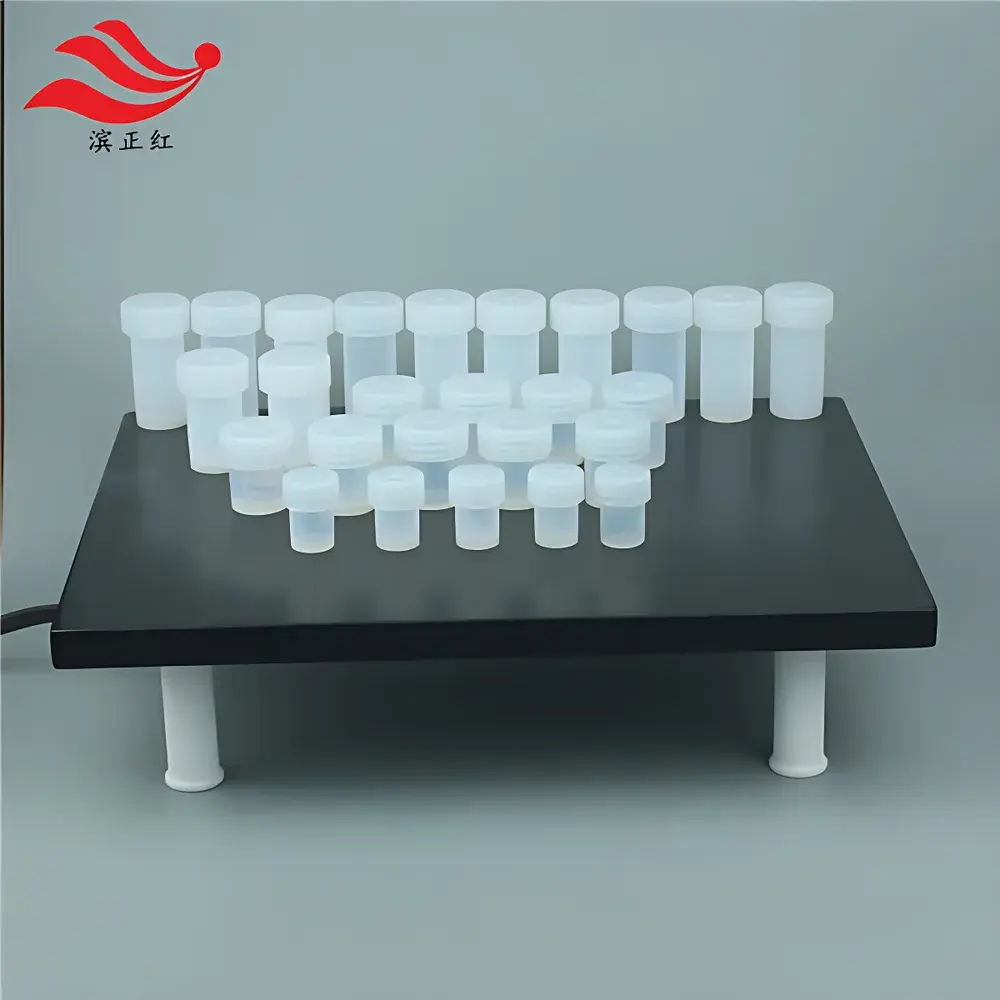
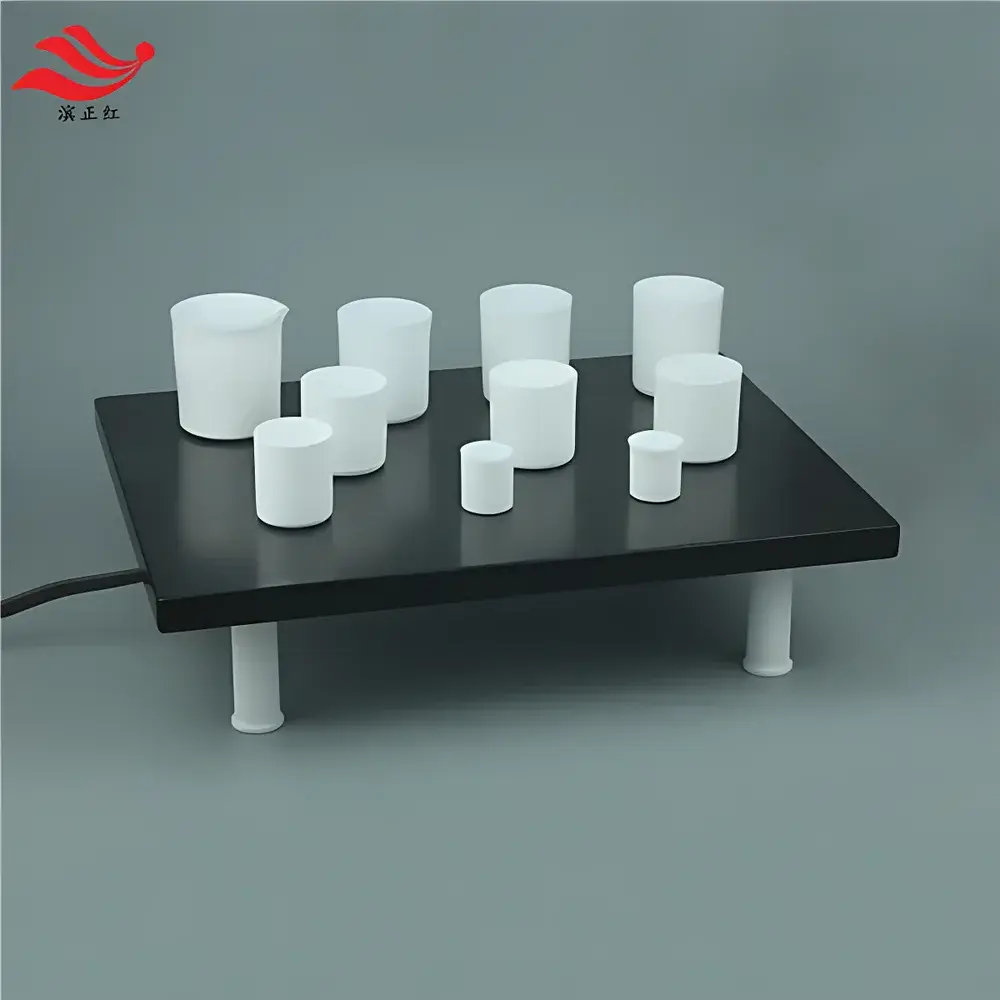
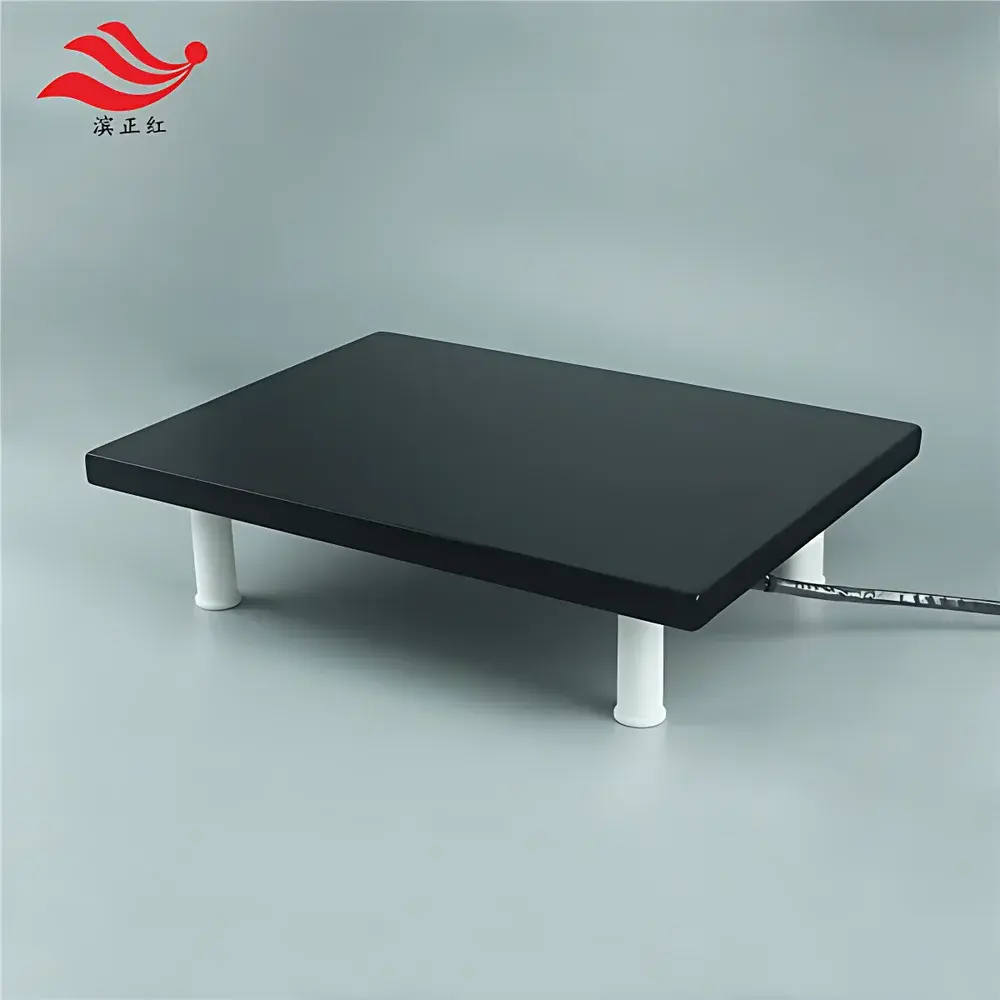
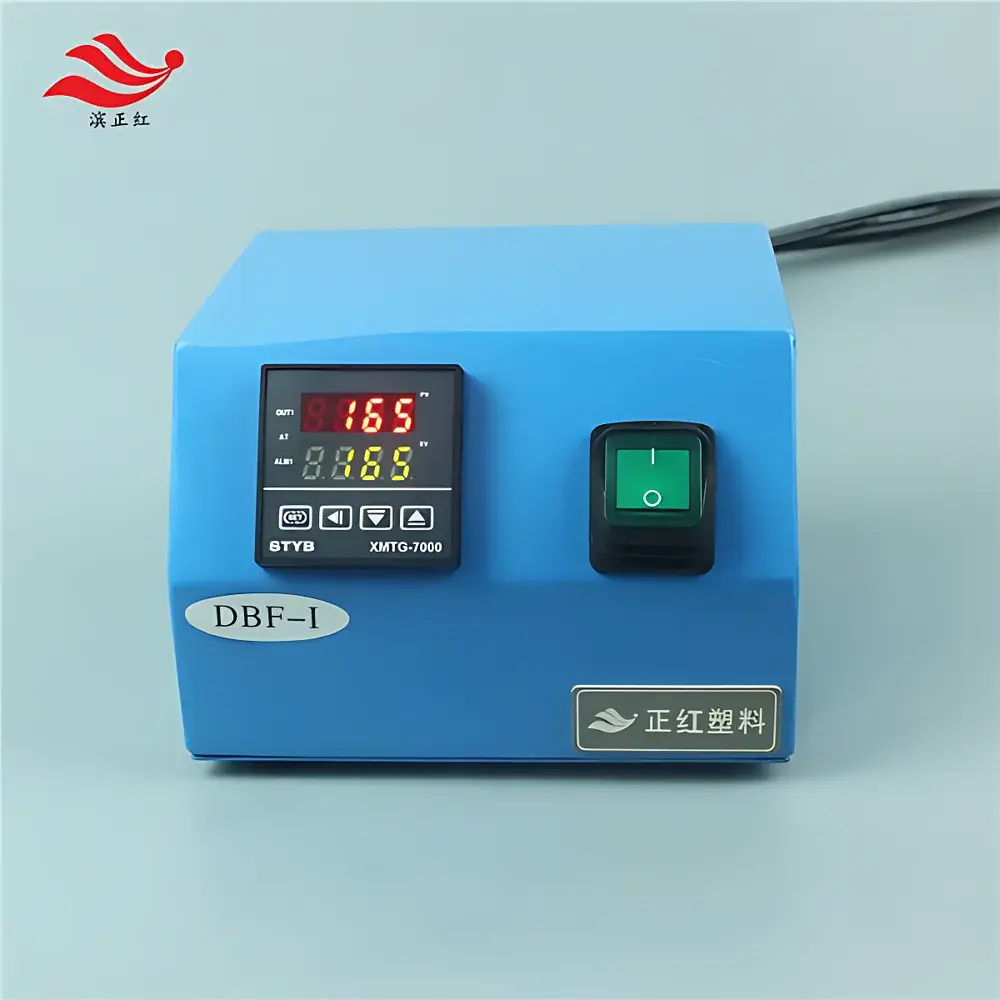
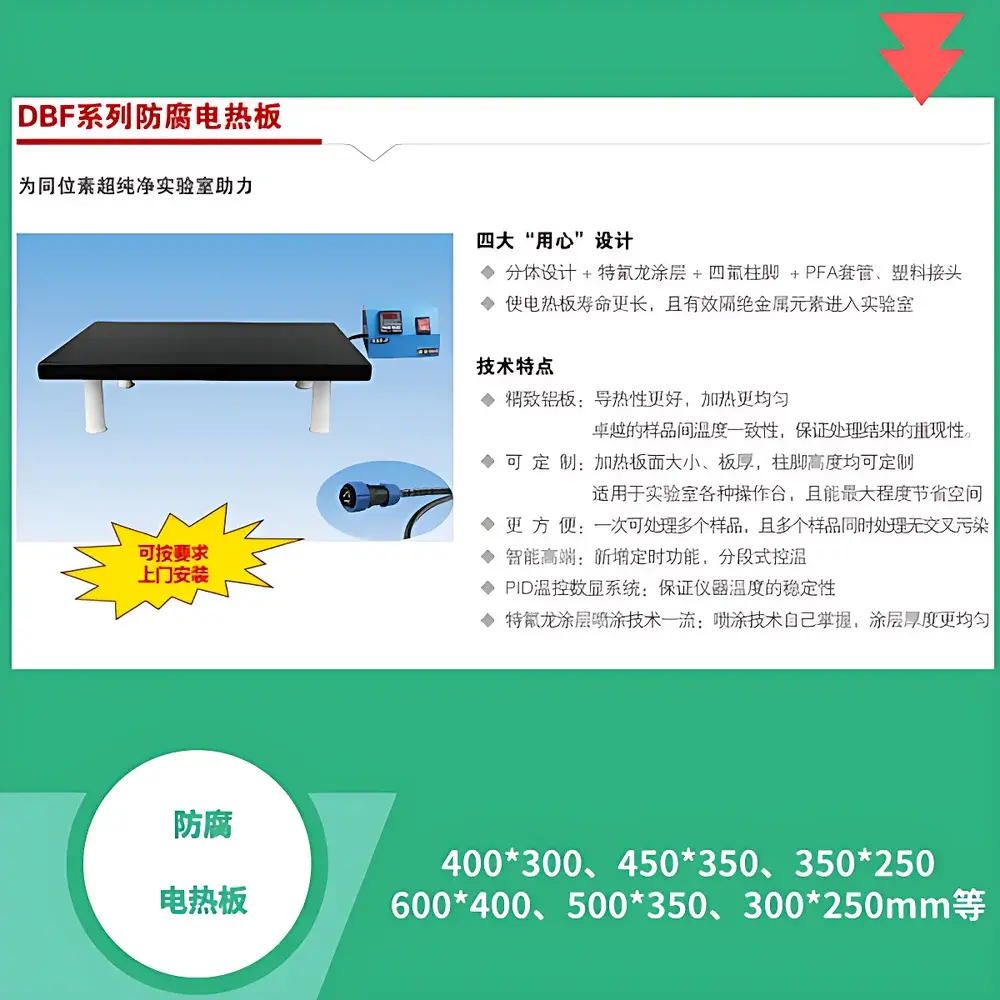
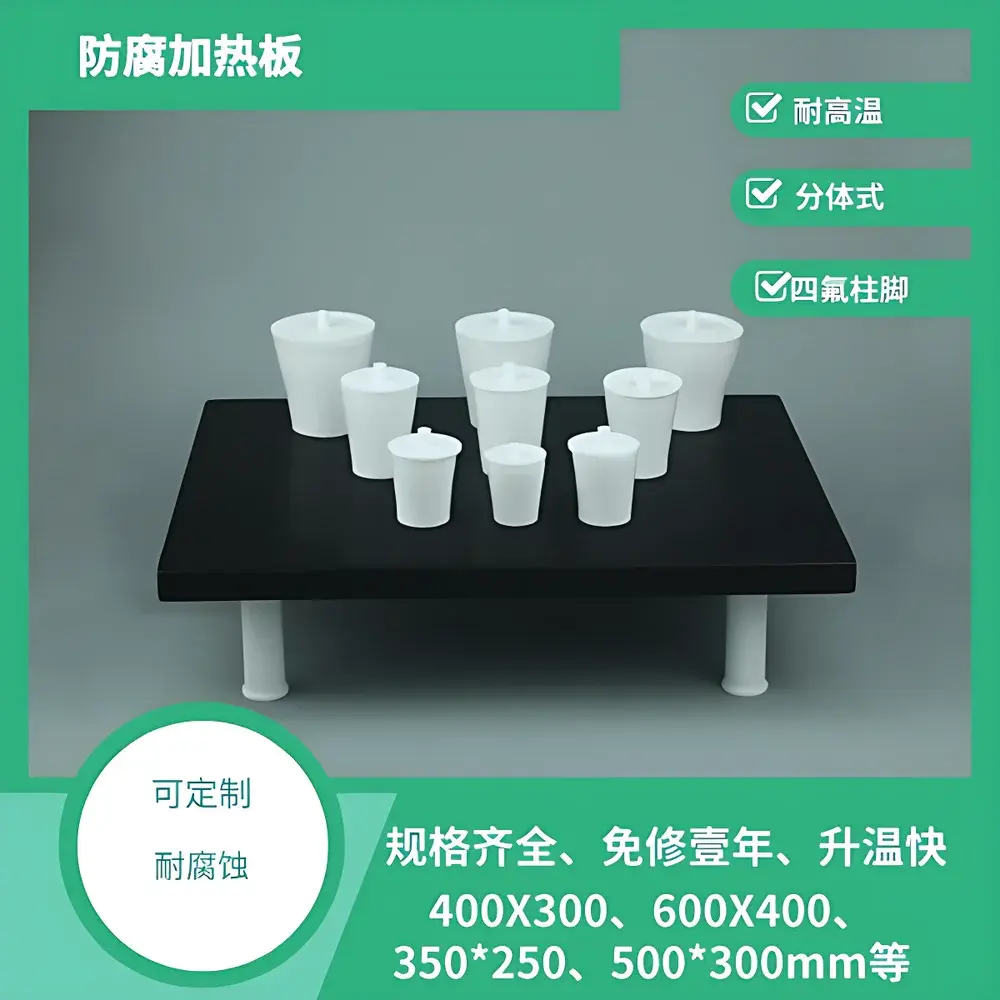
Binzhenghong NJ-DBF-I Corrosion-Resistant PFA-Coated Electric Heating Plate
| Brand | Binzhenghong |
|---|---|
| Origin | Jiangsu, China |
| Manufacturer Type | Direct Manufacturer |
| Country of Origin | China |
| Model | NJ-DBF-I |
| Price Range | USD 700–1400 (FOB) |
| Heating Power | 2 kW |
| Maximum Operating Temperature | 350 °C |
| Temperature Uniformity | ±1 °C |
| Heating Surface Material | Cast Aluminum with Imported PFA Coating |
| Control Interface | PID Digital Display Controller with LCD Screen |
| Voltage Rating | 220 V AC |
| Continuous Operation Time | >48 h |
| Optional Features | Programmable Timer, Multi-Stage Temperature Ramp, Customizable Plate Dimensions |
| Compliance | Designed for GLP-compliant laboratories |
Overview
The Binzhenghong NJ-DBF-I Corrosion-Resistant PFA-Coated Electric Heating Plate is a precision-engineered laboratory heating platform designed for demanding sample preparation workflows—including acid digestion, solvent evaporation, acid reflux, and residue concentration—under highly corrosive chemical environments. Unlike conventional aluminum or stainless-steel hotplates, the NJ-DBF-I integrates a seamless, imported perfluoroalkoxy alkane (PFA) coating applied via high-temperature fusion bonding to a high-purity cast aluminum heating block. This architecture eliminates metal ion leaching, prevents surface pitting from HNO₃, HF, HCl, and aqua regia exposure, and ensures long-term thermal stability across repeated thermal cycles. Its operational range spans ambient temperature to 350 °C with ±1 °C spatial uniformity across the active heating zone—validated per ISO/IEC 17025 calibration traceability requirements. The unit operates on standard 220 V AC power and delivers consistent 2 kW thermal output, supporting sustained operation beyond 48 hours without performance degradation.
Key Features
- PFA-coated cast aluminum heating surface: Chemically inert, non-wetting, and resistant to aggressive mineral acids, organic solvents, and halogenated reagents—enabling easy wipe-clean maintenance and eliminating cross-contamination between samples.
- Modular split-body design: Separates the heating plate from the control module via an extended, chemically shielded cable assembly; isolates sensitive electronics from acidic fumes generated during open-vessel digestion procedures.
- PID-controlled digital temperature regulation: Equipped with an LCD interface supporting real-time setpoint adjustment, ramp-hold programming, over-temperature cutoff, audible alarm, and auto-shutdown upon timer expiration.
- Enhanced corrosion protection at critical junctions: All external fasteners, support pillars, and cable entry points utilize polytetrafluoroethylene (PTFE) or PFA components—minimizing metallic exposure in Class A analytical laboratories.
- Customizable thermal footprint: Standard configurations include 600 × 400 mm, 400 × 300 mm, and 500 × 250 mm heating zones; bespoke dimensions and multi-zone partitioning are available upon request to accommodate specialized vessel arrays (e.g., digestion racks, ceramic crucibles, quartz beakers).
Sample Compatibility & Compliance
The NJ-DBF-I accommodates a broad spectrum of laboratory vessels—including borosilicate glass, quartz, PTFE, PFA, and ceramicware—without risk of surface adhesion or thermal stress-induced cracking. Its uniform heat distribution supports parallel processing of up to 12 × 50 mL digestion tubes or 6 × 100 mL beakers under reproducible conditions. The system complies with core regulatory frameworks governing analytical sample preparation: it meets mechanical and electrical safety requirements outlined in IEC 61010-1; supports audit-ready documentation when integrated with validated SOPs for EPA SW-846 Methods 3050B (acid digestion of sediments and soils) and 3051A (microwave-assisted acid digestion); and aligns with GLP principles for instrument qualification (IQ/OQ/PQ), including temperature mapping and stability testing per USP Analytical Instrument Qualification guidelines.
Software & Data Management
While the NJ-DBF-I operates as a standalone benchtop device, its PID controller includes RS-232 or optional RS-485 serial output for integration into centralized laboratory data acquisition systems. When paired with compliant LIMS or ELN platforms, temperature logs—including setpoint history, actual process values, alarm timestamps, and hold durations—can be exported in CSV or XML format. The controller firmware supports 21 CFR Part 11–compliant user access levels (administrator/operator), electronic signature capture for method execution, and immutable audit trails for all parameter modifications—ensuring full traceability during regulatory inspections.
Applications
- Environmental analysis: Acid digestion of soil, sludge, sediment, and plant tissue per EPA and ISO protocols prior to ICP-MS or AAS quantification.
- Pharmaceutical QA/QC: Residue-on-ignition (ROI) testing, loss-on-drying (LOD), and forced degradation studies requiring controlled thermal ramping.
- Food & beverage testing: Nitrogen determination (Kjeldahl), fat extraction (Soxhlet pre-concentration), and heavy metal screening in raw ingredients and finished products.
- Academic research: Teaching labs performing gravimetric analysis, crystallization kinetics, and solvent removal experiments under reproducible thermal conditions.
- Geochemical laboratories: Fusion bead preparation and flux-assisted dissolution of refractory silicates and oxides.
FAQ
Is the PFA coating FDA-approved for contact with food-grade samples?
Yes—the imported PFA resin used conforms to FDA 21 CFR §177.1550 for repeated-use food-contact applications and exhibits no extractables under typical heating conditions below 300 °C.
Can the NJ-DBF-I be used with hydrofluoric acid (HF)?
It is suitable for low-concentration (<5%) HF solutions when operated below 150 °C; however, prolonged exposure above this threshold may compromise coating longevity—consult technical specifications before routine HF use.
Does the unit support programmable multi-step temperature profiles?
Yes—via optional firmware upgrade, users can define up to 8 segmented ramps with independent dwell times and slope rates, enabling complex digestion protocols such as EPA Method 3051A’s two-stage heating sequence.
What calibration documentation is provided?
Each unit ships with a factory-issued temperature uniformity report (measured at 100 °C, 200 °C, and 300 °C using NIST-traceable PT100 probes) and a CE Declaration of Conformity.
Is remote monitoring possible via Ethernet or Wi-Fi?
Native Ethernet/Wi-Fi is not supported; however, third-party industrial gateways (e.g., Modbus TCP converters) can bridge the RS-485 port to networked SCADA or LabView environments.



