
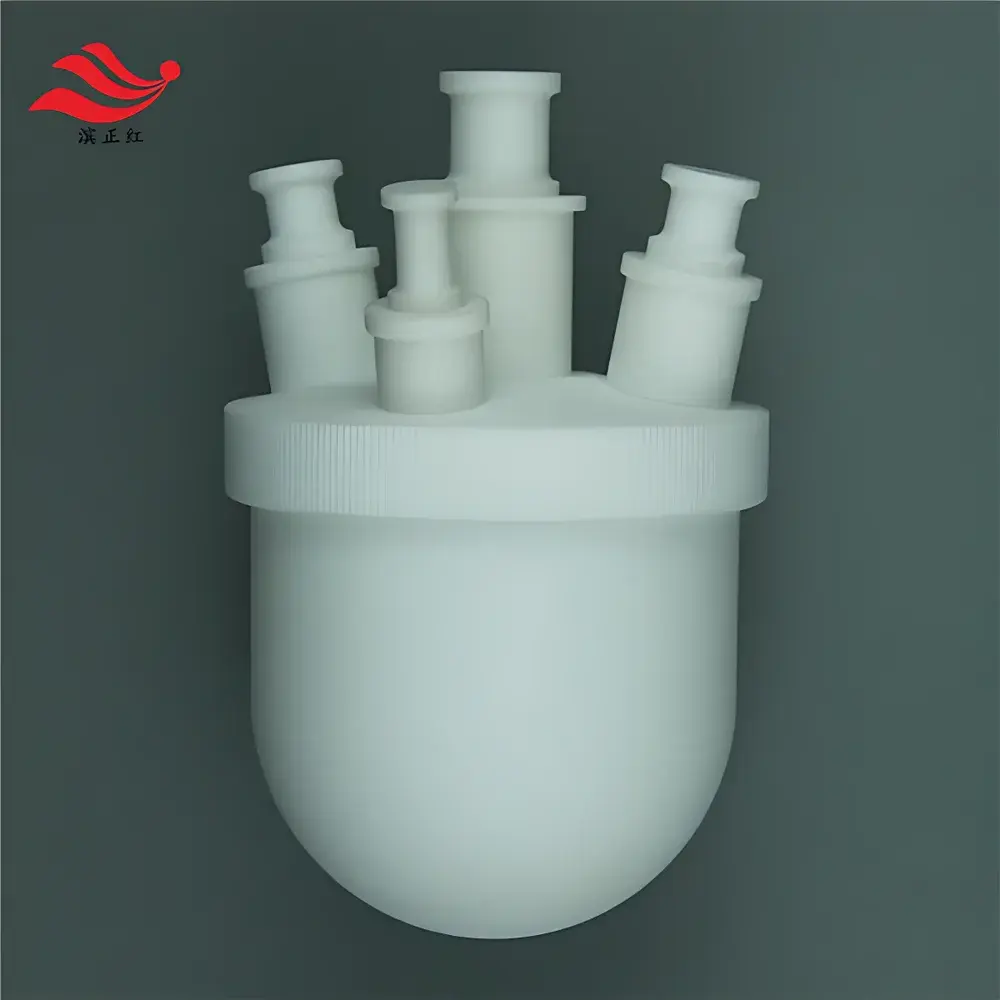
Binzhenghong PTFE Multi-Neck Reaction Flask (Customizable Volume: 250–1000 mL)
| Brand | Binzhenghong |
|---|---|
| Origin | Jiangsu, China |
| Manufacturer Type | Direct Manufacturer |
| Product Origin | Domestic (China) |
| Model Range | 250 mL, 500 mL, 1000 mL (customizable) |
| Pricing | Upon Request |
Overview
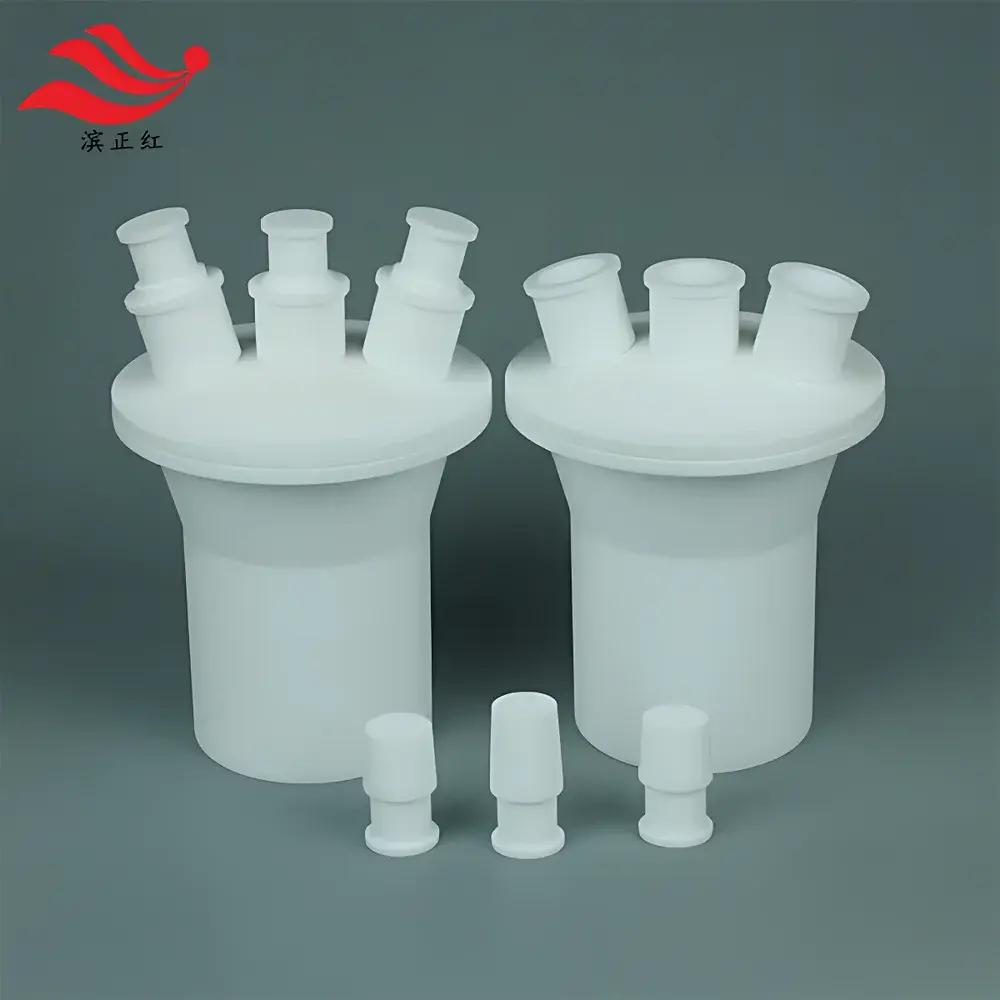
The Binzhenghong PTFE Multi-Neck Reaction Flask is a high-purity, chemically inert laboratory reactor engineered for demanding synthetic, distillation, and gas-generation applications involving aggressive reagents—including hydrofluoric acid (HF), fuming nitric acid, molten alkali metals, and halogenated solvents. Constructed entirely from virgin polytetrafluoroethylene (PTFE), this flask leverages the material’s intrinsic properties—exceptional chemical resistance across pH 0–14, thermal stability from –200 °C to +250 °C, ultra-low surface energy, and non-stick smoothness—to ensure sample integrity, minimal adsorption, and long-term dimensional stability under cyclic thermal and mechanical stress. Unlike glass or quartz reactors, PTFE flasks eliminate risks of etching, leaching, or catastrophic failure when exposed to HF or anhydrous fluorinating agents—making them indispensable in fluorochemical synthesis, nuclear fuel processing support labs, and semiconductor precursor development. The multi-neck configuration (1-, 3-, or 4-neck variants) with standardized taper joints (ISO K 17/21, 19/22, 24/29) enables modular integration with condensers, thermometers, dropping funnels, gas inlets, and magnetic stir bars—supporting reflux, inert-atmosphere reactions, and controlled addition protocols per ASTM E2654 and ISO 17025-compliant workflows.
Key Features
- Full-body PTFE construction (ASTM D4894 compliant) — zero metal ion contamination, certified extractables < 1 ppb per USP Class VI testing
- Standardized conical ground-glass joints (17/21, 19/22, 24/29) with precision-machined PTFE stoppers for leak-tight sealing under vacuum or positive pressure (tested to 0.5 bar differential)
- Threaded neck-to-body and cap-to-neck connections — fully disassemblable for ultrasonic cleaning, residue inspection, and validation traceability
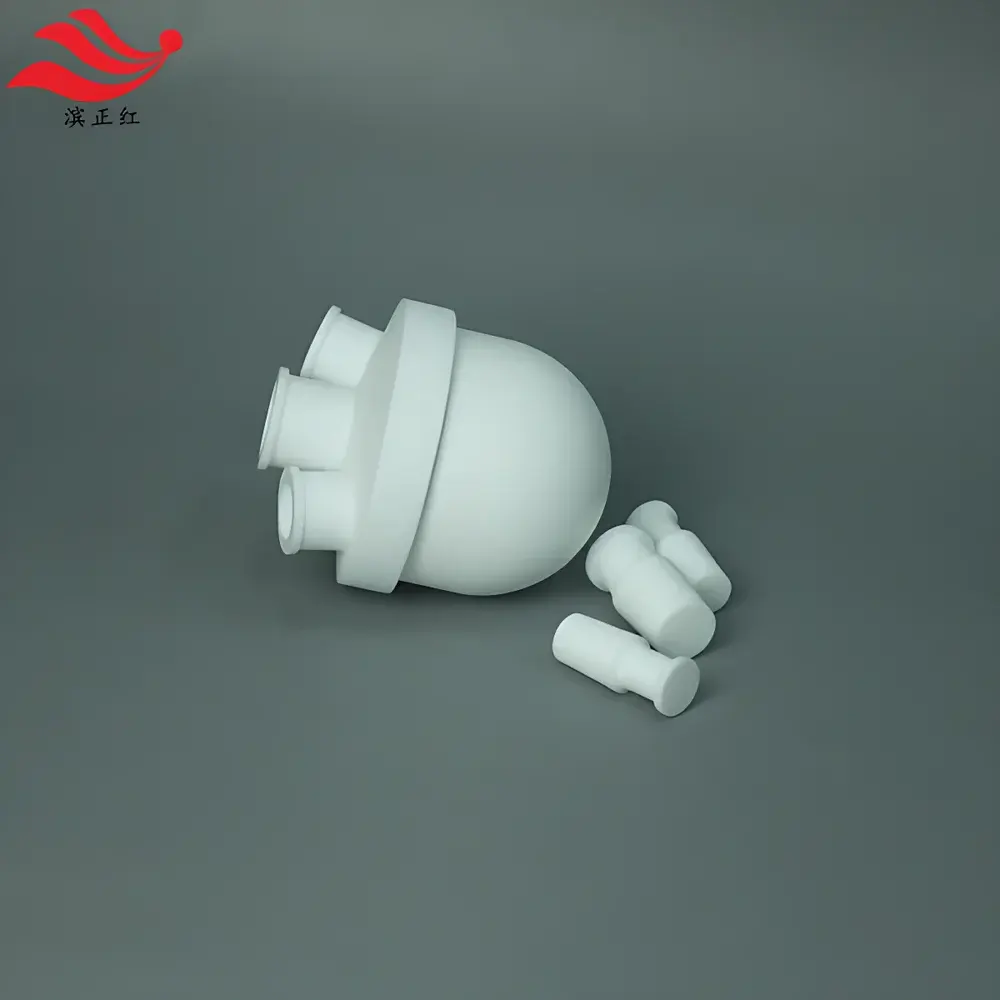
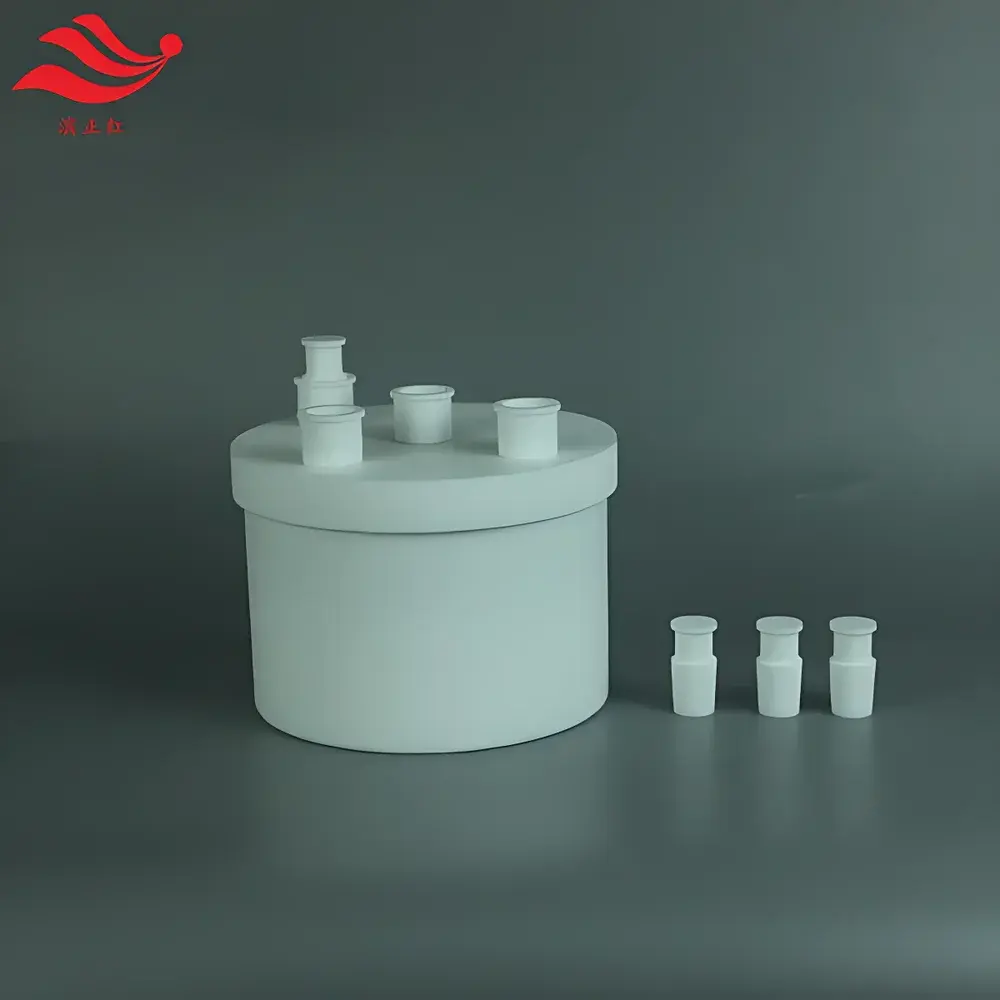
- Optimized geometry: spherical bottom (for uniform heating and efficient mixing) or flat-bottom variants (for stable benchtop use without clamping)
- Smooth, non-porous interior surface (Ra < 0.2 µm) — prevents nucleation sites, minimizes hold-up volume, and ensures quantitative recovery of viscous or crystalline products
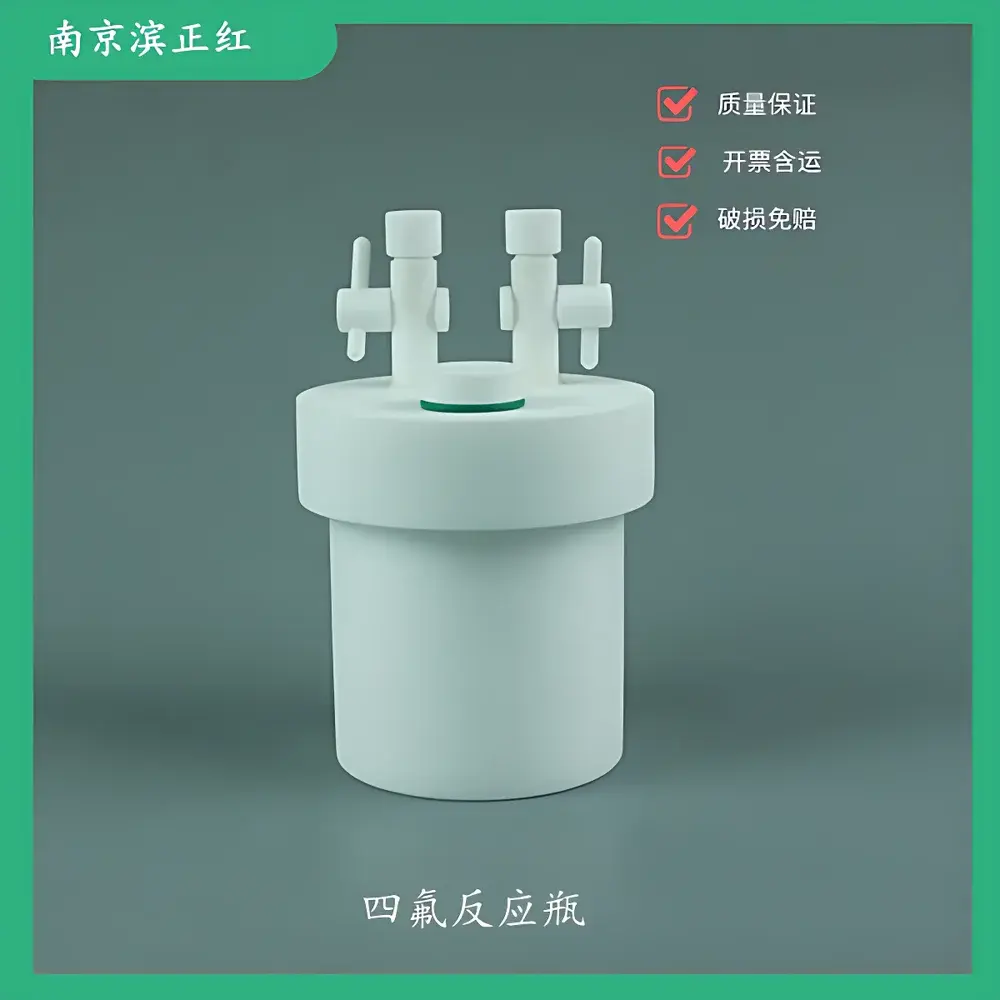
- Custom fabrication available: bespoke neck count, angled necks, integrated PTFE-coated thermowells, or flanged interfaces for reactor manifold integration
Sample Compatibility & Compliance
This reactor demonstrates full compatibility with Class 1–4 corrosives per NACE MR0175/ISO 15156, including anhydrous HF, ClF₃, BrF₅, oleum, and molten KF·2HF. It is routinely deployed in GLP-regulated environments for API intermediate synthesis where residual metal catalysts (e.g., Fe, Ni, Cr) must remain below ICH Q3D Stage 2 limits. All units undergo batch-certified FTIR verification (per ASTM E1252) confirming absence of PFA, FEP, or ETFE copolymers. Documentation includes material traceability (lot-specific resin certification), dimensional inspection reports, and optional third-party leach testing (ICP-MS per EPA Method 200.8). Not intended for autoclave sterilization or mechanical agitation exceeding 300 rpm without external support.
Software & Data Management
As a passive reactor, this PTFE flask requires no embedded electronics or firmware. However, it integrates seamlessly into digitally controlled reaction systems: compatible with ChemSpeed AutoMate™, ThalesNano H-Cube® Pro, and Radleys Reactor-Ready™ platforms via standard joint adapters. When used with validated temperature probes (e.g., Pt100 sensors in PTFE-sheathed housings), data acquisition complies with FDA 21 CFR Part 11 requirements when paired with ELN systems such as LabArchives or Benchling—enabling full audit trails for heating profiles, addition sequences, and vacuum cycles. Cleaning logs and usage history can be maintained within LIMS using configurable asset IDs.
Applications
- Synthesis of fluorinated pharmaceuticals (e.g., ¹⁸F-radiotracers) requiring HF-mediated deprotection
- Preparation of metal–organic frameworks (MOFs) under acidic hydrothermal conditions
- Distillation of low-boiling, moisture-sensitive organometallics (e.g., trimethylaluminum)
- Inert-atmosphere Grignard and lithiation reactions using Schlenk-line or glovebox integration
- Long-duration stability studies of battery electrolyte formulations (LiPF₆ in EC/DMC) at elevated temperatures
- Calibration reference vessels for Raman spectroscopy of corrosive standards (e.g., concentrated H₂SO₄)
FAQ
Can this PTFE flask be used under vacuum or pressure?
Yes — rated for continuous operation at –0.95 bar (absolute) and short-term exposure up to +0.5 bar gauge when assembled with certified PTFE stoppers and proper joint grease (e.g., Dow Corning High Vacuum Grease).
Is it suitable for microwave-assisted synthesis?
No — PTFE is microwave-transparent but lacks dielectric loss; direct microwave heating is inefficient. Use only with external heating mantles or oil baths.
How should I clean residues after HF reactions?
Rinse immediately with cold water, then soak in 5% NaOH solution for 30 min, followed by triple DI water rinses and drying under nitrogen. Avoid abrasive tools — use PTFE scrapers only.
Does the flask comply with USP for pharmaceutical use?
Yes — supplied with CoA confirming compliance with USP Class VI biological reactivity and extractables testing per .
Can I order a custom neck angle or internal baffle?
Yes — Binzhenghong offers OEM engineering support for application-specific modifications, subject to minimum order quantities and lead-time confirmation.



