
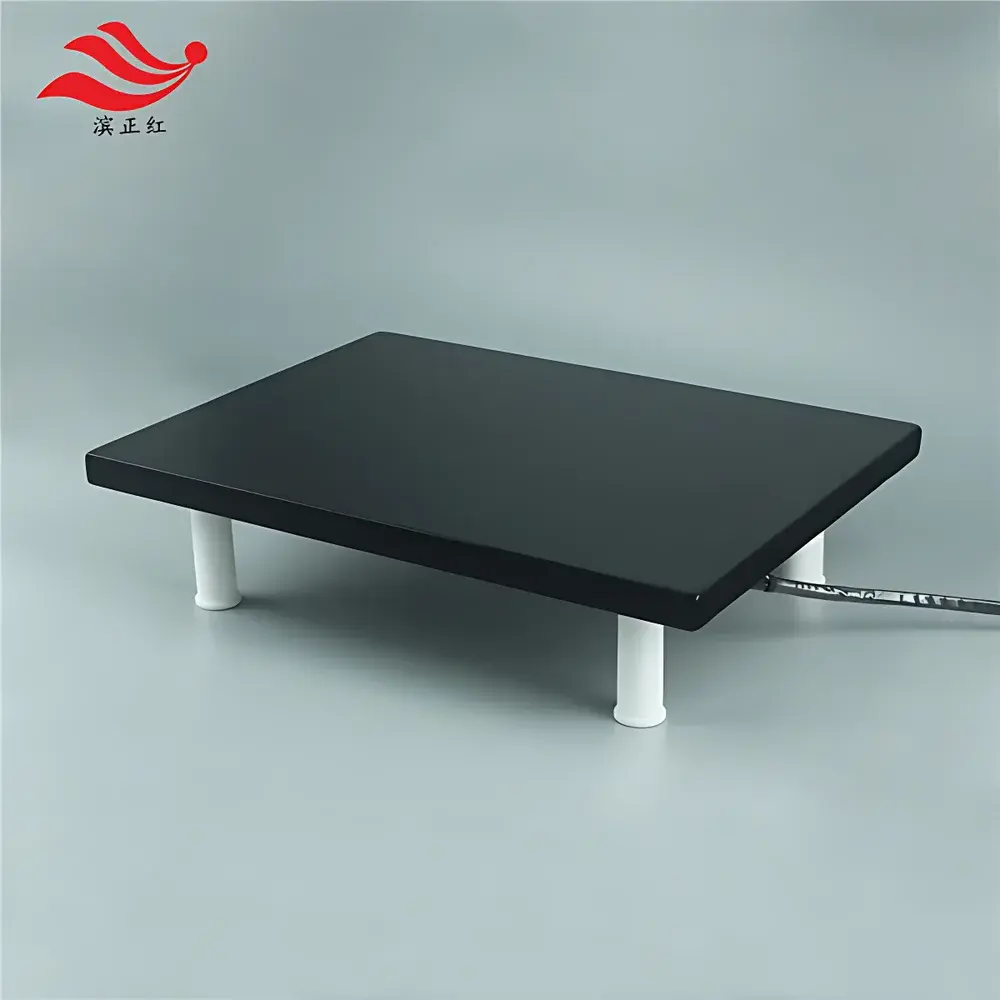
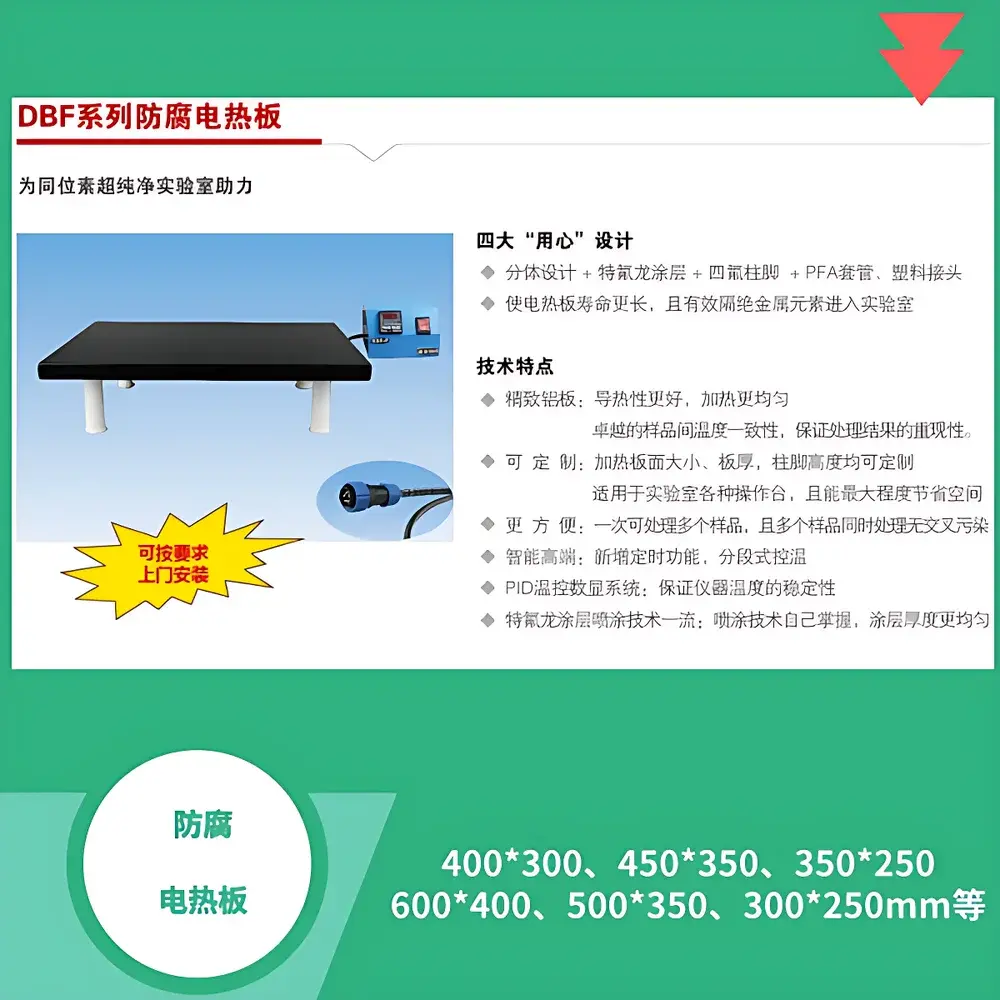
Binzhenghong DBF Series Corrosion-Resistant High-Temperature Electric Heating Plate (600 × 400 mm)
| Brand | Binzhenghong |
|---|---|
| Origin | Jiangsu, China |
| Manufacturer Type | Direct Manufacturer |
| Product Category | Domestic |
| Model | DBF Series |
| Heating Power | 2 kW |
| Max. Operating Temperature | 260 °C |
| Temperature Uniformity | ±1 °C |
| Heating Surface Dimensions | 600 × 400 mm (customizable) |
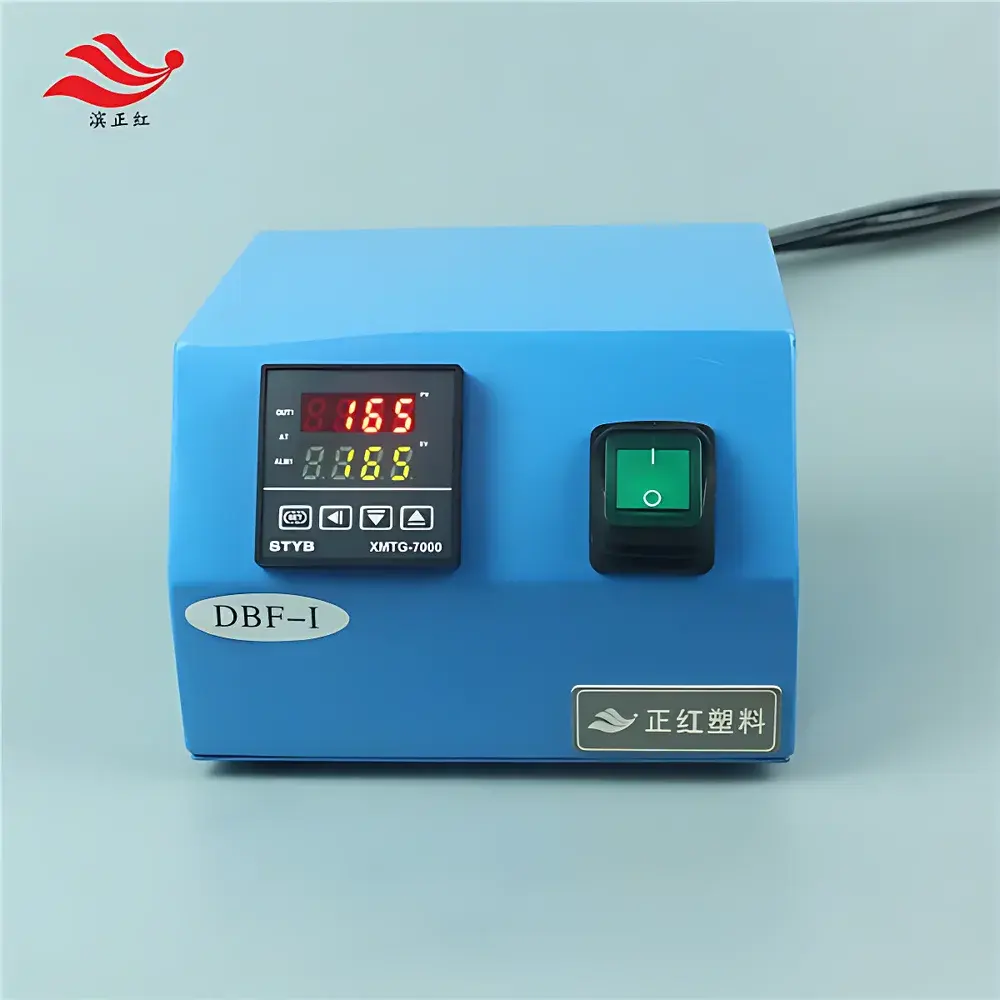
| Control Interface | PID Digital Display |
| Voltage/Frequency | 220 V / 50 Hz |
| Continuous Operation Duration | Up to 48 h |
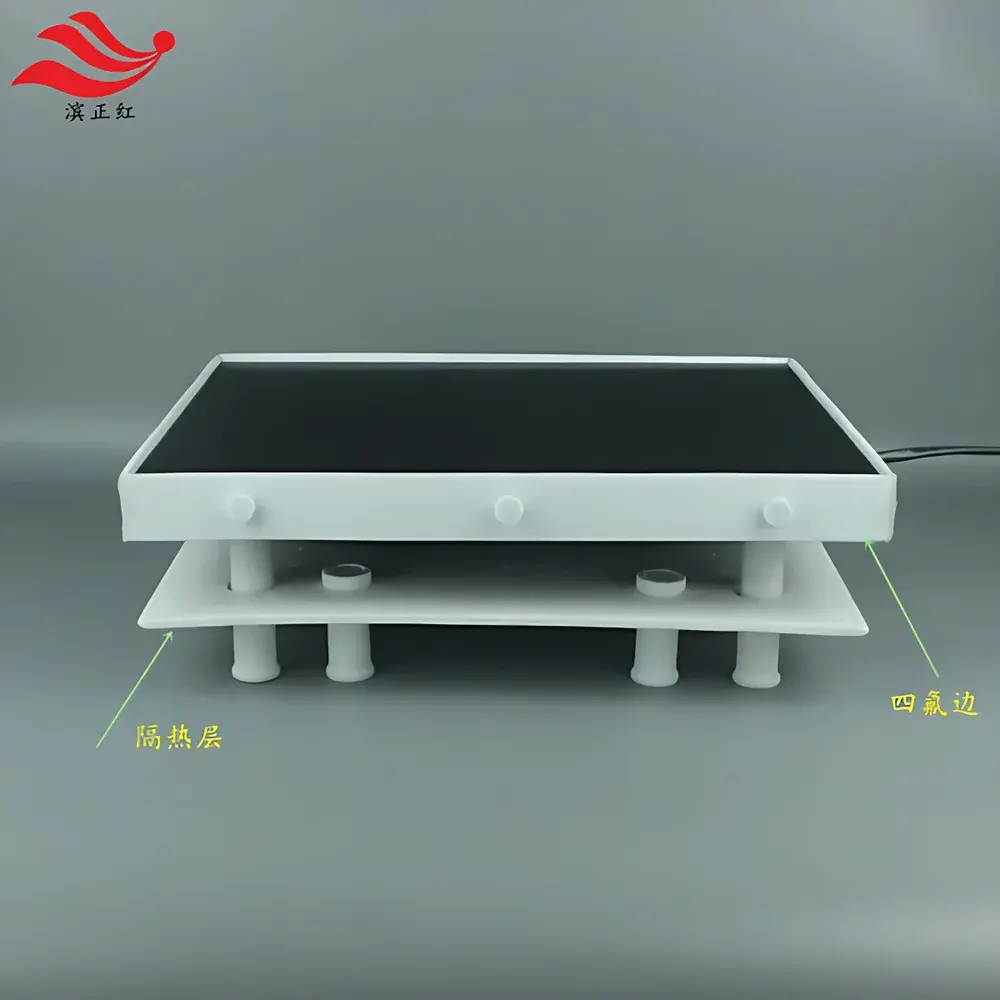
| Construction | Aluminum Alloy or Graphite Heating Block with PTFE Coating |
| Foot Design | PTFE-Coated Adjustable Feet |
| Connectivity | Aviation-Grade Electrical Connector |
| Cable Length | Standard 1.5 m (power + signal), customizable to 2.5–3 m |
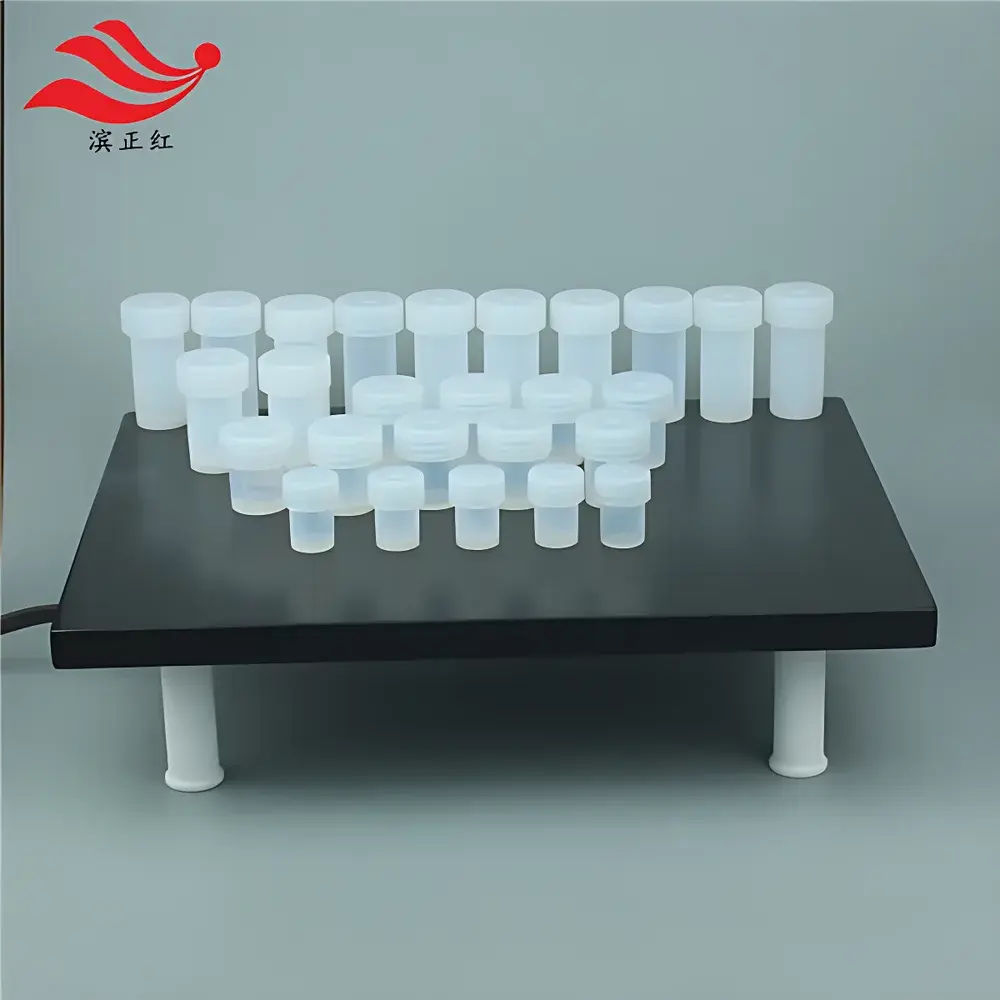
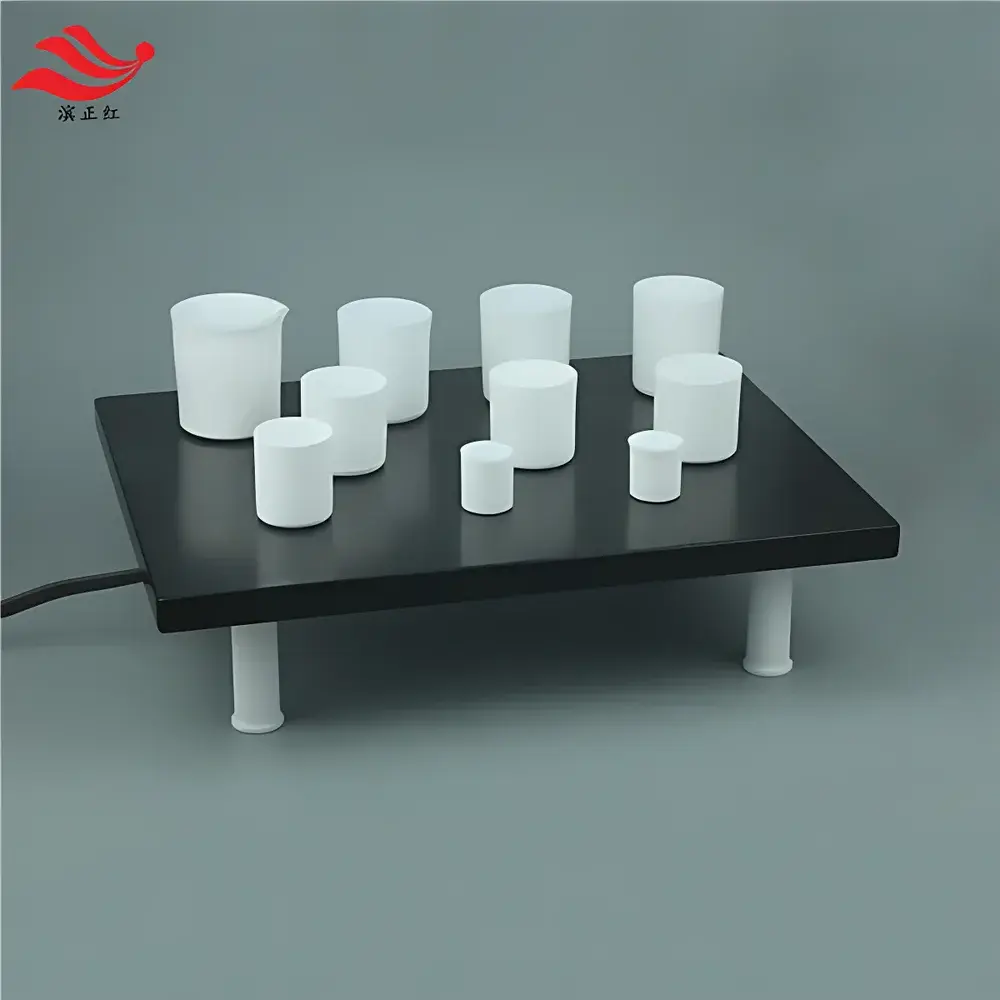
| Optional Accessories | PTFE-Coated Multi-Position Sample Holder Stands |
Overview
The Binzhenghong DBF Series Corrosion-Resistant High-Temperature Electric Heating Plate is an engineered solution for controlled, uniform thermal treatment of samples in demanding laboratory environments—particularly during acid digestion, sample evaporation, solvent removal, and pre-concentration protocols. Designed around a robust conductive heating architecture, the unit employs either precision-cast aluminum or high-purity graphite as the primary heat-transfer medium, both fully coated with polytetrafluoroethylene (PTFE) to ensure chemical inertness against aggressive reagents including concentrated HNO₃, HF, HCl, and aqua regia. Unlike conventional hotplates with exposed metal surfaces or ceramic tops susceptible to etching and pitting, the DBF series integrates full-surface PTFE encapsulation—including edge sealing and base insulation—to eliminate metallic leaching and prevent cross-contamination across multiple simultaneous samples. Its operational range spans ambient temperature to 260 °C with a certified uniformity of ±1 °C across the entire 600 × 400 mm active heating zone, enabling reproducible thermal profiles essential for method validation under GLP and ISO/IEC 17025 frameworks.
Key Features
- Corrosion-immune construction: All external surfaces—including heating block, frame, feet, and cable sheathing—are coated with high-adhesion, high-temperature PTFE (up to 260 °C continuous service), eliminating bare metal exposure and ensuring compatibility with corrosive fumes and spills.
- Modular split-system design: Controller unit is physically separated from the heating plate via an aviation-grade connector, allowing remote placement outside fume hoods while maintaining precise PID regulation and real-time temperature feedback.
- Two material variants: Cast aluminum version offers rapid thermal response and cost-effective performance; graphite variant delivers superior thermal stability and minimal thermal gradient drift over extended operation (>48 h).
- PTFE-insulated support system: Includes PTFE-coated adjustable leveling feet and PFA-sheathed signal/power cables, minimizing heat transfer to lab benches and enhancing operator safety during prolonged use.
- Configurable sample handling: Compatible with optional PTFE-coated multi-position stands (e.g., 2 × 200 × 300 mm or 2 × 300 × 400 mm configurations), supporting parallel processing of up to four vessels without thermal interference or physical contact.
Sample Compatibility & Compliance
The DBF Series is routinely deployed in EPA Method 3050B, 3051A, and 3052 digestion workflows, as well as ASTM D5191 and ISO 11885 compliant sample preparation for trace metal analysis by ICP-MS or AAS. Its non-reactive surface meets USP requirements for extractables testing in pharmaceutical development. The absence of metallic components in direct contact with samples supports compliance with FDA 21 CFR Part 11 when paired with validated digital controllers (optional upgrade). All units undergo factory calibration traceable to NIST-certified reference standards, with documented uncertainty ≤ ±0.5 °C at 100 °C and ≤ ±1.0 °C at 260 °C.
Software & Data Management
While the standard DBF model features a front-panel PID controller with digital LED readout, optional RS-485 or USB interfaces enable integration into LIMS or ELN platforms via Modbus RTU or ASCII protocol. When equipped with the advanced control module, the system logs timestamped temperature profiles with audit-trail functionality—including user ID, setpoint changes, and deviation alerts—satisfying 21 CFR Part 11 electronic record requirements. Data export is supported in CSV format for post-run statistical analysis (e.g., ANOVA of zone uniformity or thermal ramp consistency).
Applications
- Open-vessel acid digestion of soils, sediments, and biological tissues prior to elemental analysis
- Controlled evaporation of digestates to near-dryness without bumping or splattering
- Pre-concentration of aqueous environmental samples (e.g., wastewater, rainwater) for anion/cation profiling
- Thermal conditioning of calibration standards and reference materials in metrology labs
- Heating baths for reflux setups where oil-free, low-maintenance alternatives to silicone oil plates are required
FAQ
Is the heating surface truly metal-free?
Yes—the entire top plate, mounting frame, and support feet are coated with ≥100 µm PTFE. No stainless steel, aluminum, or copper is exposed to the sample environment.
Can the unit be used inside a Class II biosafety cabinet?
Yes, provided adequate ventilation is maintained and the controller is located externally. The low electromagnetic emission profile complies with IEC 61326-1 for laboratory equipment.
What is the expected service life under continuous 260 °C operation?
With proper maintenance (e.g., periodic inspection of PTFE integrity and avoidance of mechanical abrasion), the graphite variant sustains >5,000 h of cumulative operation at max temperature; cast aluminum version exceeds 3,000 h.
Does the system support programmable ramp-hold cycles?
Standard configuration supports single-setpoint PID control. Ramp-hold functionality requires the optional programmable controller module (model DBF-PC-24), offering up to 24 segments per program.
Are custom dimensions available beyond 600 × 400 mm?
Yes—standard customization includes 400 × 300 mm, 450 × 350 mm, and 800 × 500 mm formats. Larger sizes require structural reinforcement and are subject to lead-time adjustment.



